Hub Blogs contains fresh contributions written by Financial Independence Hub staff or contributors that have not appeared elsewhere first, or have been modified or customized for the Hub by the original blogger. In contrast, Top Blogs shows links to the best external financial blogs around the world.
The way you think, feel and act has an effect on your body and there is growing evidence that you can change your health just by changing your mindset. Emotions can impact the course of an illness and the mind can affect the outcome of disease. For example, a stomach ulcer may develop after a stressful event, such as the death of a loved one or loss of a job.
Body speaks to Mind
At the root of every physical symptom is an emotional connection; the body speaks the mind. Poor emotional health can weaken your immune system. Continue Reading…
We recommend that you base your investing for retirement on a sound financial plan. Here are the four key factors that your plan should address to ensure that your retirement investing generates enough income in retirement:
1.) How much you expect to save prior to retirement;
2.) The return you expect on your savings;
3.) How much of that return you’ll have left after taxes;
4.) How much retirement income you’ll need once you’ve left the workforce.
Stick with conservative estimates to account for unforeseen setbacks
As for the return you expect from investing for retirement, it’s best to aim low. If you invest in bonds, assume you will earn the current yield; don’t assume you can make money trading in bonds.
Over long periods, the total return on a well-diversified portfolio of high-quality stocks runs to as much as 10%, or around 7.5% after inflation. Aim lower in your retirement planning —5% a year, say — to allow for unforeseeable problems and setbacks.
Above all, it’s important to remember that while finances are important, the happiest retirees are those who stay busy. You can do that with travel, golf or sailing. But volunteering, or working part-time at something you enjoy, can work just as well.
One thing we encourage all investors to do is perform a detailed study of how you spend your money now. Then, you analyze your findings to see what personal expenses you can cut or eliminate. This too can have fringe benefits, especially if it helps you break unhealthy habits. You may be surprised at how much you’re spending and how much more you could be saving for retirement.
“Life,” philosopher Albert Camus contended, “is the sum of all your choices.”
Do you think otherwise?
Good or bad. Easy or hard. Right or wrong. Every choice you make will impact your life to some degree.
Choices with little impact are often made without much thought and the trouble is this casual approach to decision making tends to be deployed on bigger and more impactful choices.
In my profession, as a retirement income specialist, I see poorly made choices all the time. They, unfortunately, tend to be life altering, irreversible and totally avoidable. Like a doctor passing along a gloomy prognosis, I am heartbroken to see the look on peoples’ faces when I tell them how a choice they made will put them at a disadvantage for the rest of their lives.
And, as I said, many of these damaging financial choices are often avoidable.
The Retirement Risk Zone Years (TRRZY)
The years leading up to, and the early years of retirement are packed with important choices that can create turning points in your life. We call this period of your life ‘The Retirement Risk Zone Years’ (TRRZY).
TRRZY has aptly earned this acronym because this phase of life contains the highest concentration of high-impact choices that can lead to turning events, both good and bad, in people’s lives.
It is important to recognize that the number and frequency of tough and important choices increases during this time. In addition, the implications of choosing poorly intensify as both time and flexibility have turned from friend to foe. Successfully creating your best possible retirement years is directly linked to how well you navigate the challenging choices of TRRZY.
Over this nearly two-decade period we must adapt our thinking to a new reality. Strategies that served us well during our savings years can turn on their heads and start to work to our disadvantage as our flow of funds reverses from saving to spending. Those who fail to recognize and adapt to this new thinking have a high propensity for making poor choices, many of which they will regret in future years.
Over at MoneySense, my latest Retired Money column has been published, and it looks at the closely related topic of LIRAs (Locked-in Retirement Accounts, which have been termed “the RRSP’s less flexible cousin.” You can find the full column by clicking on this highlighted headline: Unlocking the Mystery of LIRAs.
In a nutshell, LIRAs are also known in some provinces as Locked-in RRSPs, which is exactly what they are. Unlike regular RRSPs, from which you can withdraw funds (and pay tax) if you need it at any time, LIRAs generally prohibit you from making any withdrawals before 55. Granted, when you’re younger that prohibition — illustrated above as a locked piggy bank — may seem frustrating but the idea is to protect our future retired selves from our current “tempted to spend it all” current selves.
As TriDelta Financial wealth advisor Matthew Ardrey told me, you’re going to see a lot more about LIRAs in the coming years. Whether you’re leaving a classic Defined Benefit pension plan or a more market-tied Defined Contribution pension plan, the job market these days is in such flux that a lot of people are going to have to start learning about what happens when you leave an employer pension plan earlier than you might once have envisaged.
LIRAs will multiply as Boomers reach Findependence
In the case of leaving an employer that provided you with a DB pension, you’ll be getting a lump sum based on the so-called “Commuted Value” of the pension at the time you leave (whether voluntarily or due to corporate layoffs or restructuring). I suggest that those who value the certainty of future DB pension payments plan eventually to annuitize such plans, likely the end of the year you turn 71. Continue Reading…
The TFSA and an expanded CPP means Millennials will depend less on RRSPs than the Boomers did
My contribution to the Financial Post’s first RRSP special report of the season can be found by clicking on this headline: For Boomers, the RRSP decision was easy but for Millennials, things are a little more complicated. The piece, which also appeared on page FP 10 of Wednesday’s print edition, recaps the three big advantages of RRSPs, articulated by regular Hub contributor Adrian Mastracci.
As baby boomers, both my wife and I have maximized contributions to our RRSPs almost from the moment we entered the workforce in the late ’70s (actually, in my case, only since 1984, when I rolled over a Defined Benefit pension into my first RRSP). And with no employer pension plan, my wife has continued to maximize her RRSP, to the point some of my sources tell me it’s time to stop, if we don’t wish to be subjected to onerous taxations and OAS clawbacks once we reach our 70s.
As for Millennials, the FP piece makes the argument that the Millennials enjoy two things the Boomers did not have for most of their investing careers: the Tax-free Savings Account (TFSAs, the Canadian equivalent of America’s Roth plans), and second, the newly expanded Canada Pension Plan or CPP.
As I noted in a Motley Fool special report in the fall, by the time the expanded CPP fully kicks in around the year 2065, someone who qualifies for maximum benefits and waits till 70 to receive them could get as much as $2,356 a month just from CPP, or $4,712 a month for a qualifying couple. Add in a giant untaxed TFSA and that might be all they’d need in retirement: assuming this high-saving couple maximized TFSA contributions at $5,500 a year (plus any inflation adjustments to come) from age 18 on.
To be sure, the eternal (well, eternal since TFSAs were introduced in 2009) question of TFSA, RRSP or both will depend on earning levels and tax brackets, which the FP article goes into in some depth. And it also bears mentioning that the TFSA advantage would be almost twice as compelling if the Liberal government had not acted to cut back on the $10,000 TFSA limit we enjoyed one year back to the current inflation-adjusted level of $5,500. So as it stands, high earners have roughly four times as much annual RRSP contribution room as they do for TFSAs, which is a pity.
My personal inclination is to maximize BOTH the RRSP and TFSAs, which certainly should be possible if you’ve eliminated all forms of consumer debt. Most dual-income couples should be able to do both, in my view, although of course if one of them is taking temporary stints outside the workforce (perhaps for child-raising), income-splitting practices like using spousal RRSPs may make sense.
Motley Fool blog on possible ban of trailer commissions


 Posted By
  Positive thinking is a state of mind that allows you to focus on the bright side of life and believe that you can overcome any obstacle and difficulty, including dis-ease. While not accepted by everyone, the concept is growing in popularity. Optimism is the key to effective stress management and we already know that stress negatively affects our health. The health benefits of positive thinking continue to be researched but may include an increased life span, lower rates of depression, greater resistance to the common cold and a reduced risk of cardiovascular disease related deaths.
 Posted By
 Posted By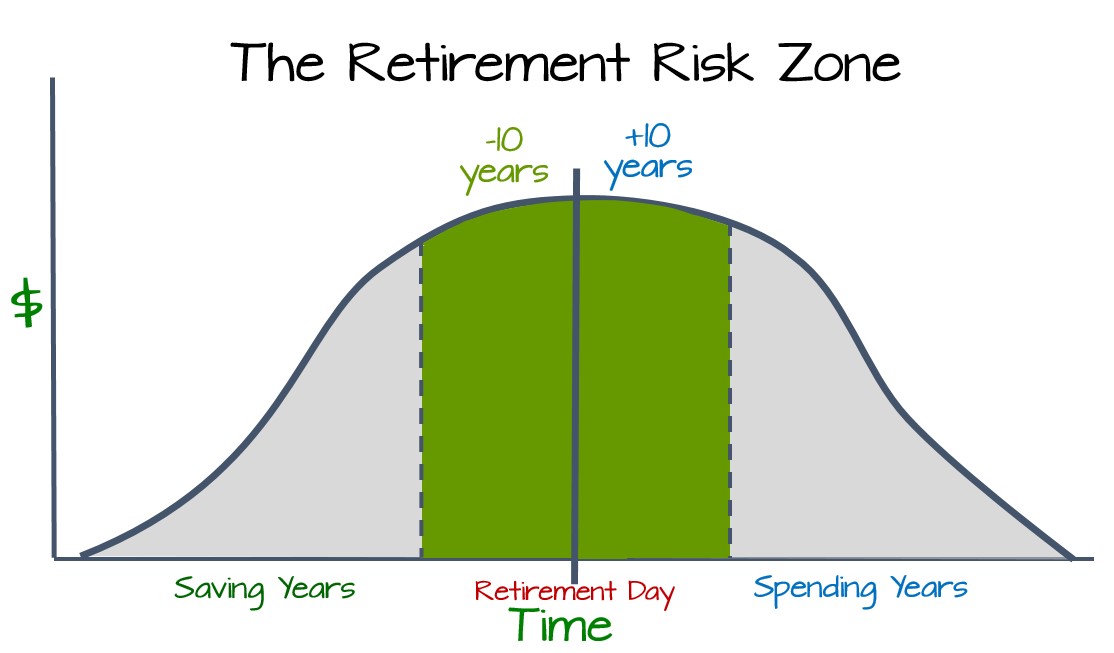
 Posted By