

 Posted By
By Chris Galipeau, Franklin Templeton Institute
(Sponsor Blog)
US midterm elections take place on Tuesday, November 3. Currently, the Republican party is in control of the House and the Senate. This vote will essentially be a referendum on the Republican party’s body of work. It’s likely the composition of either the House or the Senate will change. The question for investors is simple: Does this matter for your money?
What follows is a historical look at equity market performance under a Republican president and different compositions of Congress. Exhibit 1 illustrates equity market returns under a Republican president with differing congressional control.
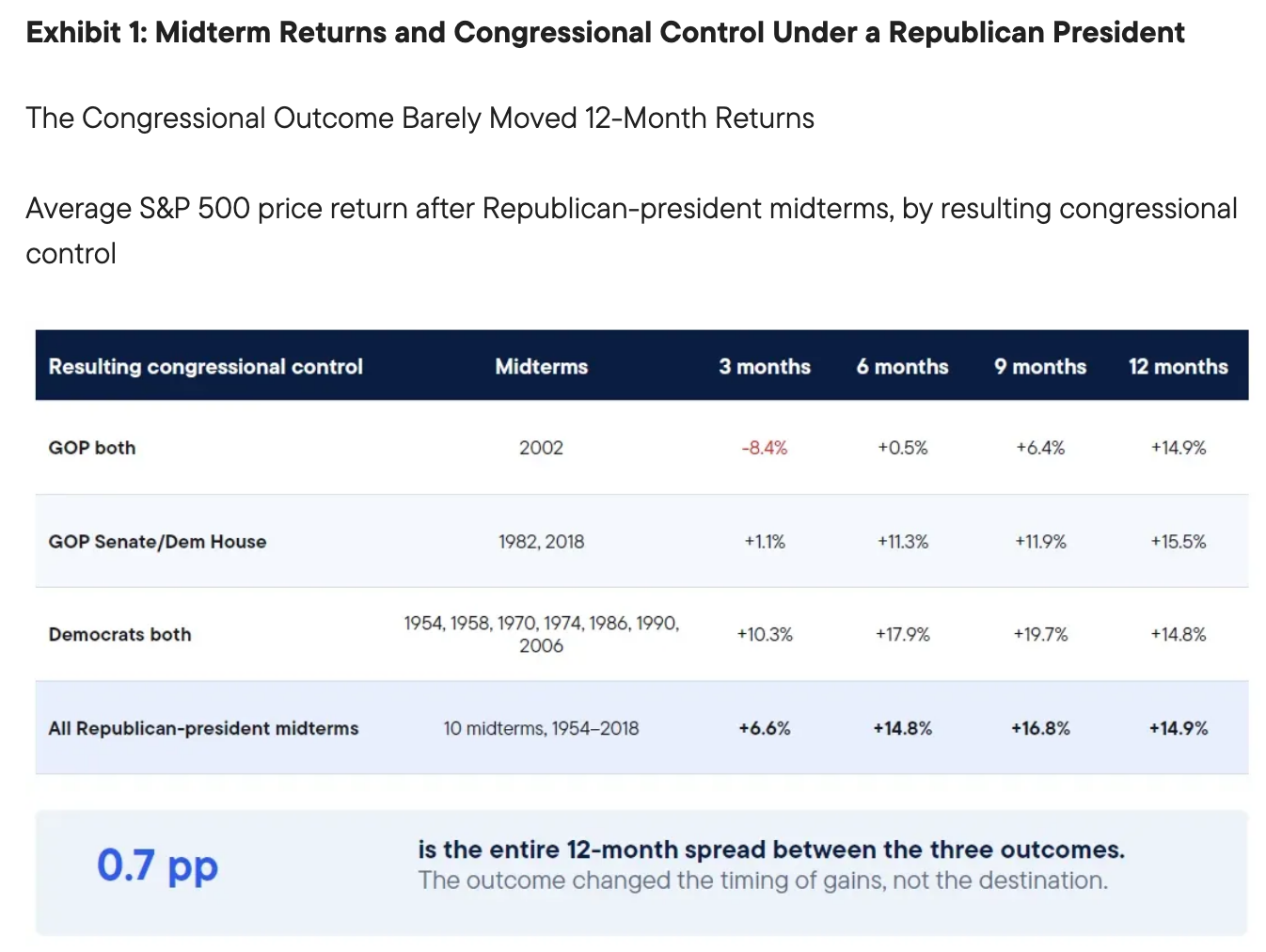
Small samples: GOP both reflects a single midterm (2002). Forward returns from the election-day close in trading days (12M = 252). Sources: Franklin Templeton Institute, S&P Global, Bloomberg, Macrobond. As of October 5, 2026. There is no assurance that any estimate, forecast or projection will be realized. Indexes are unmanaged and one cannot invest directly in an index. They do not reflect any fees, expenses or sales charges. Past performance does not predict future returns.
The key takeaway is that one-year forward S&P 500 returns were positive under all combinations of executive branch leadership under a Republican president going back to 1954.
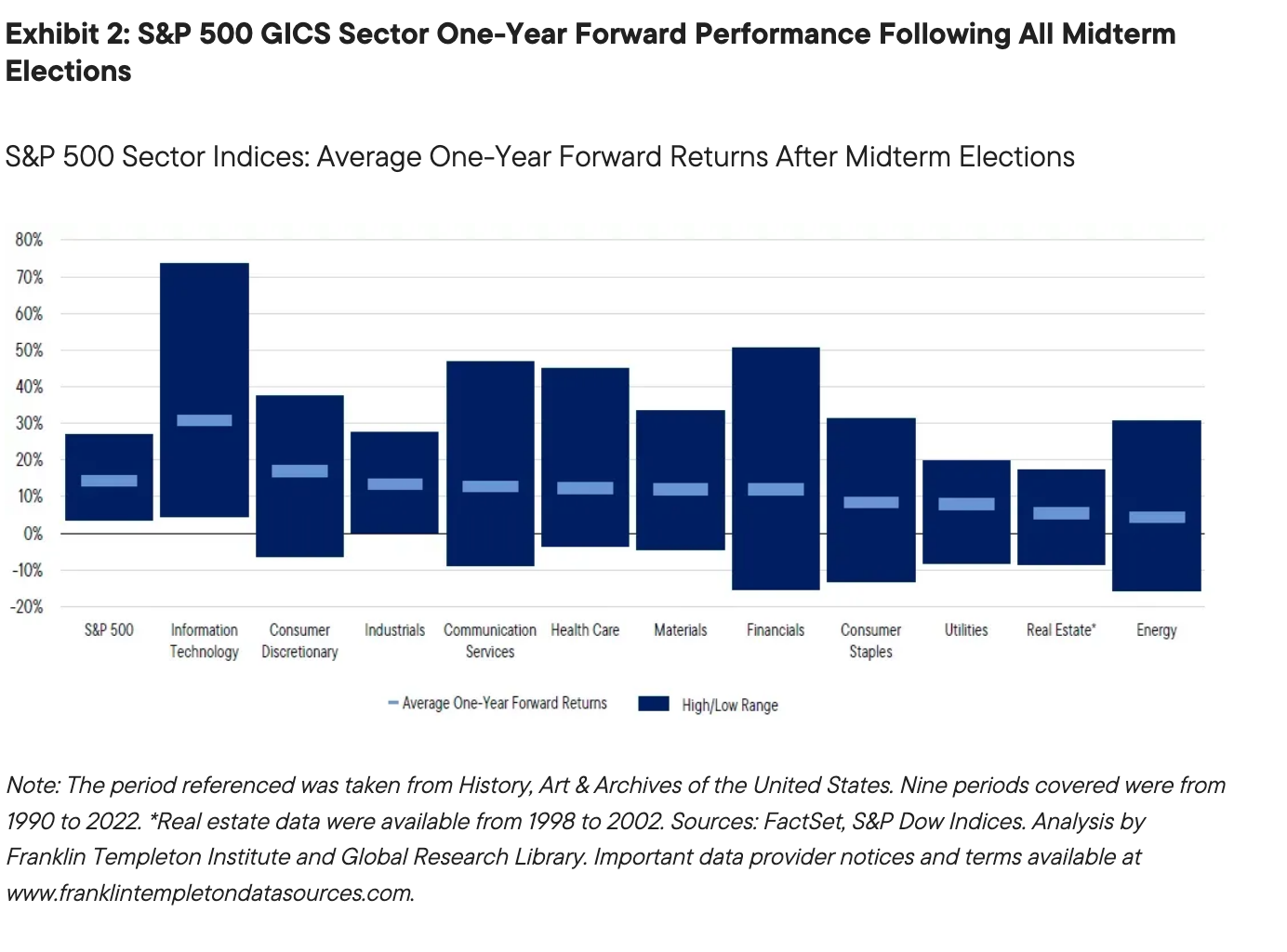
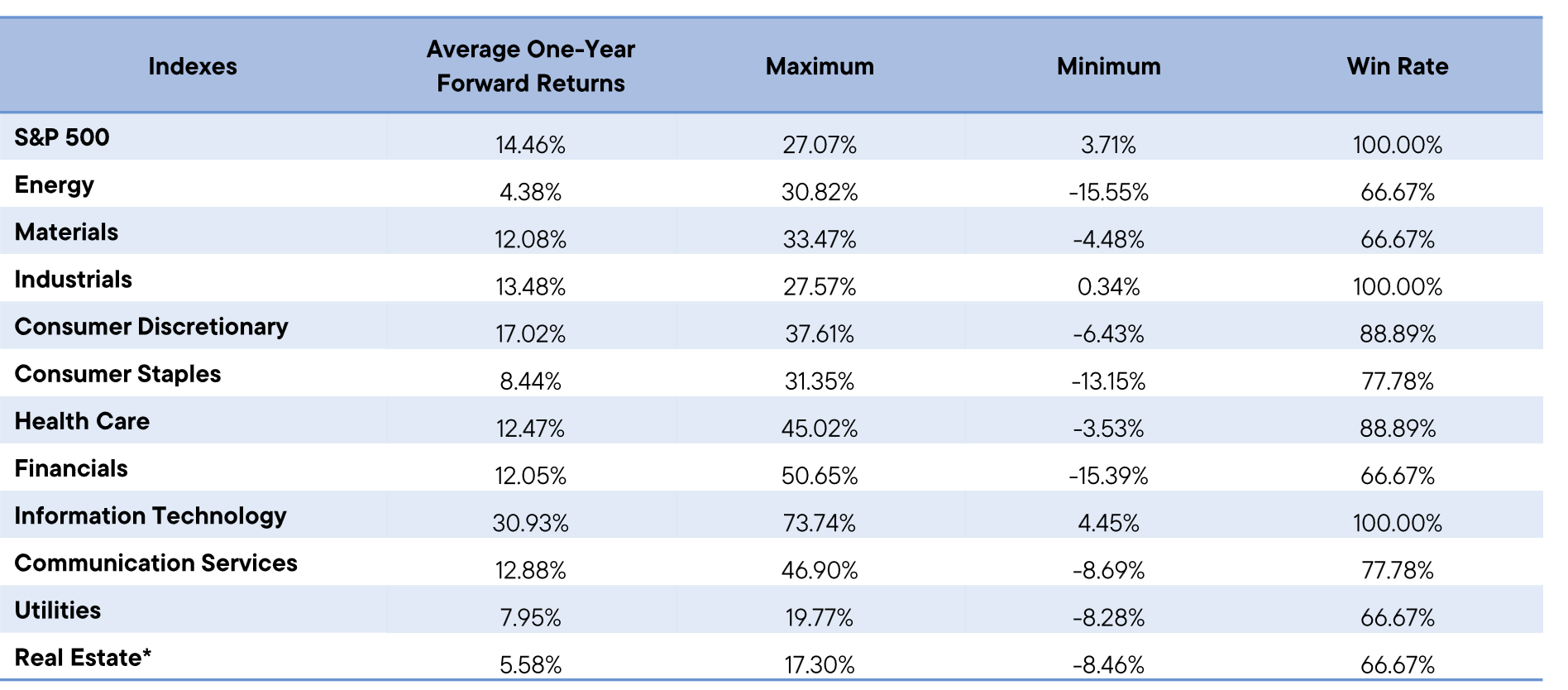
Exhibit 2 digs deeper and shows a breakdown of sector performance.
Conclusion
Investors have a tendency to believe that politics heavily influence equity markets. The reality is quite different historically after midterm elections. We can’t state with certainty that history will repeat and we must be cognizant that there are many other factors involved in returns; namely corporate fundamentals, the level and direction of interest rates, regulation, policy changes, etc.

Christian J. Galipeau is head market strategist at the Franklin Templeton Institute, where he serves as one of the firm’s foremost voices on global capital markets, economic trends, and investment strategy. Chris brings more than 30 years of investment industry experience to his role, anchored by an entrepreneurial career that spans equity research, portfolio management, and multi-asset strategy.
He began his career in 1992 as Marketing Director at Fidelity Investments, before founding Alpha Equity Research in 1994. His research excellence earned him national recognition — he was named the top-ranked equity research provider in the United States by CNN/Money Magazine in 2002, a distinction that reflects the analytical depth and client focus he has carried throughout his career. Following his tenure at Alpha, Chris served as Director of Equity Research and Portfolio Manager at DG Capital Management before joining Putnam Investments. He has been a member of the Franklin Templeton family since Putnam’s integration into the firm.
WHAT ARE THE RISKS?
All investments involve risks, including possible loss of principal.
Fixed income securities involve interest rate, credit, inflation and reinvestment risks, and possible loss of principal. As interest rates rise, the value of fixed income securities falls.
Equity securities are subject to price fluctuation and possible loss of principal.
Investments in lower-rated bonds include higher risk of default and loss of principal. Changes in the credit rating of a bond, or in the credit rating or financial strength of a bond’s issuer, insurer or guarantor, may affect the bond’s value.
International investments are subject to special risks, including currency fluctuations and social, economic, and political uncertainties, which could increase volatility. These risks are magnified in emerging markets.
Alternative strategies may be exposed to potentially significant fluctuations in value.
Privately held companies present certain challenges and involve incremental risks as opposed to investments in public companies, such as dealing with the lack of available information about these companies as well as their general lack of liquidity.
Real estate securities involve special risks, such as declines in the value of real estate and increased susceptibility to adverse economic or regulatory developments affecting the sector.
Because municipal bonds are sensitive to interest-rate movements, a municipal bond portfolio’s yield and value will fluctuate with market conditions. Bond prices generally move in the opposite direction of interest rates. Thus, as prices of bonds in an investment portfolio adjust to a rise in interest rates, the portfolio’s value may decline. Changes in the credit rating of a bond, or in the credit rating or financial strength of a bond’s issuer, insurer, or guarantor, may affect the bond’s value.
Dividends may fluctuate and are not guaranteed, and a company may reduce or eliminate its dividend at any time.
IMPORTANT LEGAL INFORMATION
This material is intended to be of general interest only and should not be construed as individual investment advice or a recommendation or solicitation to buy, sell or hold any security or to adopt any investment strategy. It does not constitute legal or tax advice.

The views expressed are those of the investment manager and the comments, opinions and analyses are rendered as at publication date and may change without notice. The information provided in this material is not intended as a complete analysis of every material fact regarding any country, region or market.

Data from third party sources may have been used in the preparation of this material and Franklin Templeton Investments (“FTI”) has not independently verified, validated or audited such data. FTI accepts no liability whatsoever for any loss arising from use of this information and reliance upon the comments opinions and analyses in the material is at the sole discretion of the user.

Products, services and information may not be available in all jurisdictions and are offered outside the U.S. by other FTI affiliates and/or their distributors as local laws and regulation permits. Please consult your own professional adviser or Franklin Templeton institutional contact for further information on availability of products and services in your jurisdiction.

Issued by Franklin Templeton Investments Corp., 200 King Street West, Suite 1500 Toronto, ON, M5H3T4, Fax: (416) 364-1163, (800) 387-0830, www.franklintempleton.ca.

CFA® and Chartered Financial Analyst® are trademarks owned by CFA Institute.
