Hub Blogs

Hub Blogs contains fresh contributions written by Financial Independence Hub staff or contributors that have not appeared elsewhere first, or have been modified or customized for the Hub by the original blogger. In contrast, Top Blogs shows links to the best external financial blogs around the world.

Falling Loonie strategies

The Canadian dollar or loonie is under pressure amid weak oil prices and a strengthening U.S. currency. Today, the loonie dropped to 78.39 cents for a U.S dollar the lowest in a many years.By Adrian Mastracci, KCM Wealth

Special to the Financial Independence Hub

“Investors who have US cash and/or US portfolios are advised to revisit their currency strategies.”

Canada’s Loonie has been falling to under 70 Cents against the US Dollar.
Recall it climbed from near 86 cents in mid-2009 to over parity.

Many market forces, such as currencies, are well beyond investor control.
Currency adds yet another potential hazard or reward to portfolios.

Of course, currencies are extremely hard to predict. They can also move very quickly in either direction.

Treat currency as an asset class

Treat currency as an investment with longer time horizons. Those with US cash and/or US portfolio may consider the merits, if any, of converting to Canadian Dollars.

It is important to get a handle on the Canadian tax cost of the US cash/portfolio before taking any action. It may also make good sense, depending on account values, to convert on more than one occasion.

Other considerations: Continue Reading…

The economy in 2016: half-speed ahead

Couple Relaxing on BoatBy Aubrey Basdeo

Special to the Financial Independence Hub

Coming off a tumultuous 2015, Canadians are ready for some good news in 2016. When it comes to the economy, however, they might have to wait a while longer.

This is not to say we foresee uniform doom and gloom. One bright spot remains the U.S. economy, which was given a vote of confidence last month when the Federal Reserve raised its target interest rate. If the U.S. expansion is as robust as the Fed thinks it is, that should bode well for the Canadian economy and exporters, which rely heavily on the American market.

On a broader level, the Fed liftoff was also a signal that monetary policy, which has dominated the macroeconomic landscape for years now, will be less important going forward. The days of easy money may have begun to draw (slowly) to a close, and as they recede we’ll have a clearer picture of other factors – like the business cycle and asset valuations – which have been masked by accommodative monetary policies for nearly a decade.

But we might not like what we see. Growth globally is poised to be slow in 2016. Canada’s prospects will be tied to this low-flying trajectory, in large part because there are so few potential growth drivers in the domestic economy.

5 reasons for only modest growth in 2016

Continue Reading…

Sell everything? Consider these costs and drawbacks first

Depositphotos_14227153_s-2015My latest Financial Post blog addresses the controversial call earlier this week from the Royal Bank of Scotland to “sell everything.” Click on this headline for the blog: If you try to time the market to sell everything you have to time it to get back in.

In a nutshell there are both commissions and taxes to consider. It all depends on whether you’re in discount brokers, full-service brokerages or use Managed Money, and the split between Registered and Non-Registered Funds. It’s going to cost much more to liquidate individual stocks in a taxable portfolio than a single “Go anywhere” global ETF held in registered accounts. And depending on the kind of mutual funds you own, the costs could be negligible or significant.

Guess what Buffett isn’t doing right now

See also an excellent piece by investment writer Dan Solin that ran in today’s Huffington Post: What Warren Buffett isn’t doing. For starters, he’s not listening to media pundits. As Solin points out, the financial media loves market crashes because it creates fear and anxiety, hence more TV ratings or web traffic. And the more people panic by “selling everything,” the more commissions generated for the financial industry, as we demonstrated above.

If anything, people should be considering buying if markets sag much further, the very opposite of selling everything. But that’s a topic for another day. Generally, though refer to the series of videos we’ve been running the last few months, including the one earlier today titled Winning the Loser’s Game, part 5.

Video: How to Win the Loser’s Game, Part 5

UntitledThe fifth video instalment in SensibleInvesting.TV’s How to Win the Loser’s Game has been posted here and at Findependence.TV.

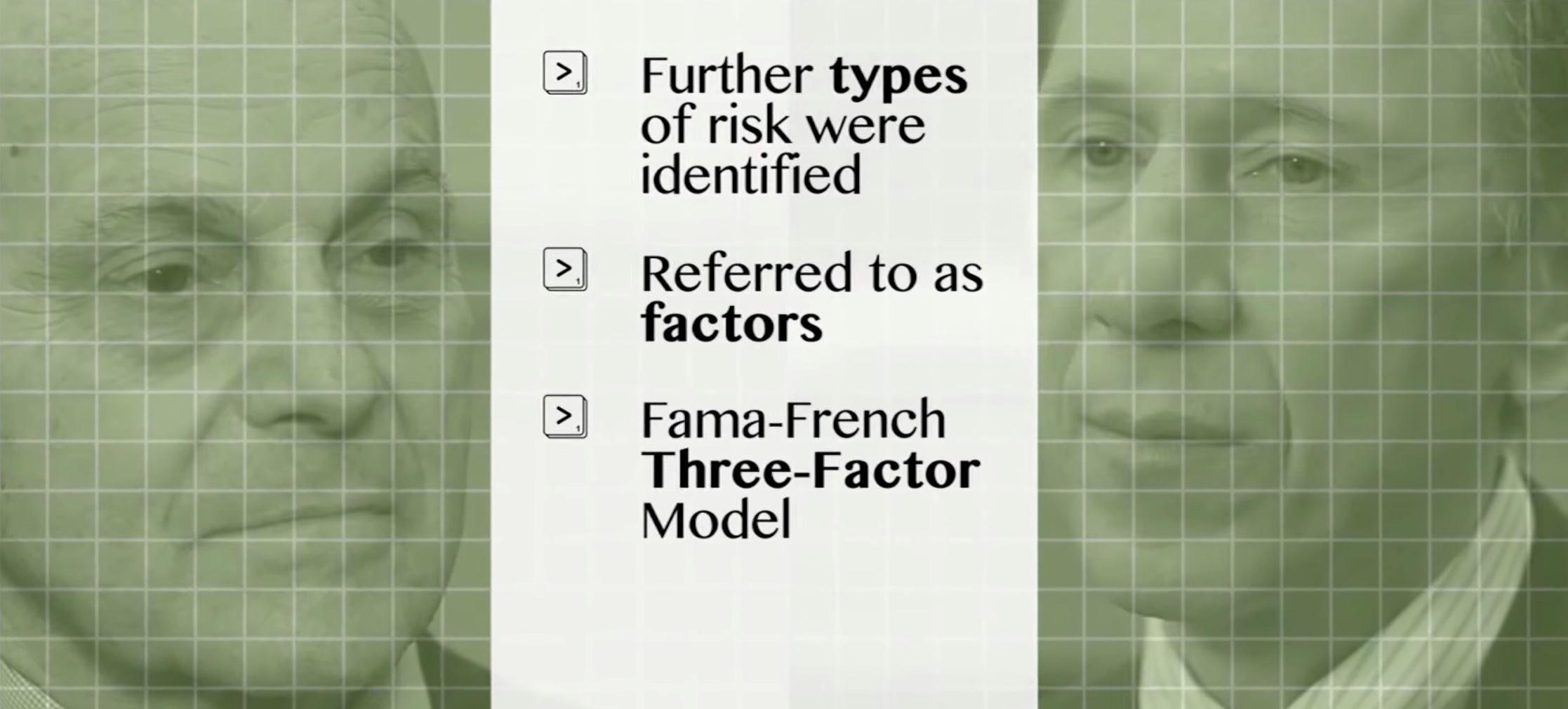
Often we hear say someone ask us the question, “Do you play the market?” The answer should be a resounding no, as the market is not a game. In fact, it’s quite scientific. A trio of Nobel Prize winning economists each have created a model that better helps us to understand the science behind the market.

This 8-and-a-half minute video features interviews with various executives from DFA and Vanguard and reviews the groundbreaking academic research on modern portfolio theory spearheaded by Harry Markowitz, William F. Sharpe and Eugene Fama. The screen shot above shows Eugene Fama on the left and DFA board member Ken French on the right. Continue Reading…

Why Investing is hard: We don’t practice enough

By Aman Raina, Sage Investors

Special to the Financial Independence Hub

Continuing my review of Richard Thaler’s book, Misbehaving: The making of behaviorial economics, Thaler made a small comment that made me take pause:

“… Psychologists tell us that in order to learn from experience, two ingredients are necessary,  frequent practice and immediate feedback…”

Investing is intimidating and hard to us because we just don't practice or engage in it enough.

Investing is intimidating and hard to us because we just don’t practice or engage in it enough.

This short sentence stopped in me my tracks as it captures so neatly and concisely my motivations for becoming an investment coach.

A lot of people are intimidated by investing. There are many elements about investing that strike fear into the hearts of people. The fear of math andall those formulas, ratios, and calculations. The fear of losing all your savings. The fear and trepidation of clicking that button on your computer screen to buy or sell a stock.

How to overcome investing fears

I found the best way to overcome the fears of investing and just about any skill or competency is to educate ourself and to frequently engage in the activity and behaviour to gain experience and confidence.

When we decide to become a nurse or a computer programmer or a financial analyst, we go to school to educate ourselves and practice the skills necessary to be proficient in that occupation. To determine how successful we are in acquiring a skill we take tests and exams that provide us with meaningful and timely feedback. We then will apply those skillsets in a job where we will repetitively practice those skills we’ve developed which ultimately make us even more experienced.

These are the usual steps when it comes to becoming proficient in a skill. We will commit the time and resources to do what’s needed often enough to learn to get it right. However when it comes to choosing a home, a mortgage or an RRSP, or stock or bond, most people don’t get much practice or opportunities to learn. And when it comes to saving for retirement, barring reincarnation, we will engage in that process or journey exactly once.

People don’t invest often enough

People have a hard time with investing because they simply just don’t do it enough. We don’t commit the time to learn and practice the skill. If we’re not engaged in the process, we will not receive meaningful feedback (which is ironic because technology gives us real-time feedback on the progress of our portfolios) and we will be less likely to improve our development. When we do engage in a program with a financial advisor, often our interaction takes place at the start and maybe if we’re lucky once a year, which to me is not enough when we are talking about something so important as your personal finances. That meaningful feedback loop that can keep us engaged is few and far between.

With the proliferation of passive investment strategies and automated portfolio management services, I fear that more people in the future will be even less engaged in the process of investing and as a result will not develop the financial literacy and self-awareness of cognitive biases that can cloud our decision making.  Passive investing is a powerful and effective strategy but it can be more powerful and fulfilling when we are more engaged in the process.

A lack of practice leads to a lack of commitment that provides very little feedback. As a result there is a greater probability that we will not develop the skillset, literacy, or self-awareness to make successful investment decisions.

Investment coaches are different from financial advisors

This strikes at the heart of what I do as an investment coach and what makes investment coaching so fundamentally different than a traditional financial advisor. My job is to get people I work with to engage in the process of investing and I do it through hands on training, constant engagement, and finally providing my client with meaningful and timely feedback through coaching conversations.

When someone works with me, they are making a time and financial commitment to develop their skillset for making investment decisions and my role is to enthusiastically engage them through coaching conversations about a real-time investment issue and formal education and practice. By taking this approach to nurture these financial behaviours I have found that this can have a more profound effect in the development of a person’s financial literacy.

So for me that small little sentence tucked away in Mr. Thaler’s book crystallized my raison d’etre. Who would have thought?

AmanRainaAman Raina, MBA is an Investment Coach and founder of Sage Investors, an independent practice specializing in investment coaching and portfolio analysis services. This blog was originally published on his web site and is reproduced  here with permission.