Hub Blogs

Hub Blogs contains fresh contributions written by Financial Independence Hub staff or contributors that have not appeared elsewhere first, or have been modified or customized for the Hub by the original blogger. In contrast, Top Blogs shows links to the best external financial blogs around the world.

5 things your advisors should be doing to protect you from identity theft

Rick Hyde pic Mar 2015
Rick Hyde

By Rick Hyde

Special to the Financial Independence Hub

Most articles about identity theft will offer practical insights and steps that you can take to protect your self. But what about all the other people that handle your personal data – the financial advisors, accountants, lawyers and health professionals, to mention a few – what are they doing to protect YOUR privacy?

Identity theft and fraud is growing

As the use of digital systems for storing personal financial and health data has grown, so has the problem of fraudulent access to that information.

Identity theft and fraud has been growing steadily in the past 10-20 years, according to reports in the US and Canada. So far in 2015, the US-based Identity Theft Resource Center reports almost 300 incidents involving data on over 100 million individuals.

You are your account numbers

Continue Reading…

What is financial freedom?

Wooden signpost with two opposite arrows over clear blue sky, Debt versus Financial Independence messages, Personal Finance conceptual imageBy Jack Crew,

Special to the Financial Independence Hub

For the majority of young adults, the most common New Year’s resolution is to earn financial freedom. Unfortunately most of them fail to achieve what they set up as a goal on New Year’s Day.

That’s because they have only a vague idea about what financial freedom is all about. For most of us, financial freedom means having enough money that we can us spend on whatever we want. While earning a lot of income and enjoying control over expenses are important financial objectives,  this by itself cannot be a true definition of financial freedom.

A precise definition is not universal, as many pundits have different takes on the subject. Here ’s what I think about ‘Financial Freedom’:

Winning Fear

Continue Reading…

Weekly wrap: Eternal Money Truths; millionaire bloggers; perils of early retirement

Young business woman is saving money for the company

On Wednesday, the Financial Post ran the first of seven articles by me that we’re calling The 7 Eternal Truths of Personal Finance: Eternal Truth #1: Live Within Your Means.

The second instalment ran today (Saturday): Eternal Truth # 2: Pay Yourself First.

Some of the background and rationale for the series ran earlier this week here at the Hub. I believe the series will run online and in the paper once or twice a week over the summer. Each episode is accompanied by a one-minute video.

Note that this is being housed under the Post’s “Young Money” category, which makes sense because the need to live within your means is especially apt for millennials and younger folk.

Meanwhile, on a related topic, the Globe & Mail Friday ran on update on a national strategy for financial literacy unveiled this week, titled Count Me In, Canada. The piece is titled To Bridge the Knowledge Gap, Financial LIeracy is a Two-Way Street.

Watch out, Economist warns

The cover story on the latest issue of The Economist, out mid Thursday, warns readers to Watch Out: The World is Not Ready for the Next Recession. But its briefing on the American economy in the same issue is more upbeat: Better Than It Looks.

Millionaire bloggers

Continue Reading…

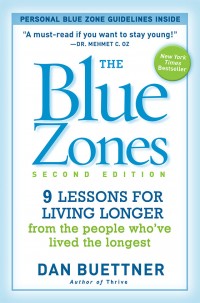
The Blue Zones: 9 Lessons for Living Longer

blue-zones-book-2-200x303
BlueZones.com

The front-cover blurb on this 2008 NYT bestseller by Dan Buettner is “A must-read if you want to stay young!” Based on that, you’d wonder why every person on the planet hasn’t bought or read The Blue Zones: 9 Lessons for Living Longer, since who doesn’t want to stay young?

The next best thing is to live to a ripe old age and in vibrant health right up until the end. Buettner travelled five “Blue Zones” around the world to study locations that have statistical proof of the extended longevity of many of its residents. They include Sardinia (Italy), Okinawa (Japan), Loma Linda (California), Nikoya (Costa Rica) and Ikaria (Greece.)

In the United States, there is only one centenarian (someone 100 years old or more) per 5,000 people. In the Sardinian “Blue Zone” they found seven centenarians in a single village of 2,500 people.

Fortunately, these Blue Zones often share common lifestyles that North Americans can emulate.  Buettner — who originally visited the Blue Zones courtesy of National Geographic magazine — concludes with a chapter he titles Your Personal Blue Zone, providing nine major ways affluent and stressed out North Americans can emulate the lessons learned by the centenarians in the Blue Zones.

Create a pro-longevity environment in your own home: your personal Blue Zone

Continue Reading…

Longevity and Your Money

A married couple planning their retirement life

Here’s my latest blog for MoneySense, titled Longevity & Your Money. Naturally, we’ll house this here in the Hub’s Longevity & Aging section.

I’ve been researching this topic since last summer, when I met Mark Venning and his blog on longevity at ChangeRangers.com. He has since contributed some blogs to the Hub.

All this has culminated in a keynote address I’ll be giving next Monday in Niagara Falls, for the National Elder Planning Issues Conference in Niagara Falls, entitled Longevity Changes Everything.

Researching the topic was a bit daunting: I counted more than 5,500 titles at Amazon.com containing the word Longevity. We’ve reviewed some of them in the past in the Reviews section of the Hub and will run more in the coming weeks, usually on Fridays.

The bottom-line conclusion I make in the blog, and which MoneySense focused on in the dek (the line below the headline) is that you might want to add ten years in your mind as to how long you live. So if you’ve been mentally figuring on 85, make it 95, and if you’re 90, make it 100, then see how that affects your financial planning projections and the date you think you’d like to retire or achieve “Findependence.” Continue Reading…