
Reviews

We review books that deal with everything from financial independence topics to politics, and anything in between. We may sometimes stray into films and music if there is a “Findependence” angle.

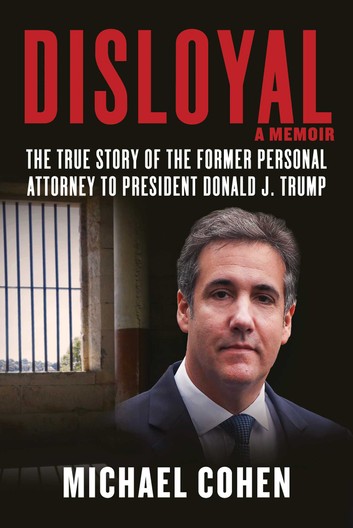
Book Review: 12 takeaways from Michael Cohen’s Trump book, Disloyal

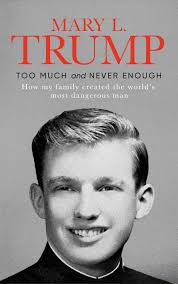
There are of course a glut of books about Donald Trump, especially now we’re fewer than two months away from the U.S. election. We have previously looked at several of these from an investment point of view, and most recently Mary Trump’s book, Too Much and Never Enough.

On the weekend I read Michael Cohen’s Disloyal, which — like Mary Trump’s book — provides the kind of insider perspective that outsider journalists and authors can’t quite match. Cohen spent a decade as Donald Trump’s personal lawyer and “fixer” and as he says in the book, “I know where the skeletons are buried, because I helped bury them.”

In its review this week, the Washington Post is a bit harsh on Cohen but I found the book to be among the most insightful I have read about Trump: certainly more enlightening than John Bolton’s snoozer, or some of the early journalistic books like Michael Wolff’s Fire & Fury.

Below are a dozen takeaways that provide either insights not before quite articulated, or which seem to bear repeating. While much of what follows may be known or hinted at it in earlier books and journalistic investigations, Cohen wraps it all up with his ten years of close observance of Trump as he evolved from real estate hustler to Reality Show “star” and now his turn as the Reality TV president.

Clearly, Cohen views Trump as a purely transactional beast who cares little for anything but his own hide and possibly his close family members. He doesn’t come out and say it explicitly but my own view of Trump is that he epitomizes the single-minded pursuit of the four goals cherished by many in this secular society: Money, Power, Sex and Fame. And give him credit for this if nothing else: he certainly has attained copious quantities of all four.

1.) Motivation to run in the first place was as a “lark and a PR stunt.”

Trump, largely at Cohen’s instigation, initially decided to run for president because “it would be cool” and as “a lark and a P.R. stunt.” Or as Cohen has famously said, the presidency would prove to be “the greatest infomercial in the history of politics.” Not exactly noble motivations and there’s not a hint of even pretending it was ever about “public service.” Even if Trump’s team thinks he deserves the Noble Prize (which his team infamously misspelled the other day, when the correct spelling of course is “Nobel,” after Alfred Nobel.)

2.) What’s with the Putin obsession?

Trump’s fascination for Russia’s Vladimir Putin is based on his perception that Putin is also the richest man in the world, and therefore hugely influential. He also serves as a model for the “dictator for life” aspiration Trump clearly harbours. And, Cohen insists that should he lose the November election, he will try to find a way not to leave.

3.) “a cheat, a liar, a fraud, a bully, a racist, a predator, a con man.”   

No surprise here on this list of character traits. From page 15 of the e-book I read on SCRIBD:

“…. I bore witness to the real man, in strip clubs, shady business meetings, and in the unguarded moments when he revealed who he really was: a cheat, a liar, a fraud, a bully, a racist, a predator, a con man.”

It’s been previously reported how Trump has repeatedly stiffed contractors but Cohen cites several particular examples, including even those that backfired: like when he tried to welch on one of those famous $130,000 porn star payoffs covered by the tabloid National Enquirer.

4.) Pathological lying and baseless smears

The dirty tricks and pathological lying will continue. Cohen nicely recaps how the birtherism lie about Barack Obama originated, which first propelled Trump to media prominence. Similarly, he recaps the shameful smears that let Trump eliminate his Republican rivals in 2015-2016, ending with the smear about Ted Cruz’s father’s alleged (and ridiculous) role in the assassination of JFK.

5.) Sexual allegations

There’s plenty of salacious material about Trump’s sexual predator inclinations, both as the owner of beauty pageants and various ogling incidents, including ones about Cohen’s own daughter on a tennis court. That same daughter declared soon after Trump’s run was announced that he “wasn’t qualified” to become president. Out of the mouths of babes …. Continue Reading…

Book Review: Mary Trump’s entertaining read on Uncle Donnie

There seems to be no end to the number of books devoted to America’s flawed president but certainly the two dominant ones this summer have been John Bolton’s The Room Where it Happened and now Mary Trump’s Too Much and Never Enough.

Bolton’s book topped the New York Times best-seller list last time I looked but I expect it will be knocked off shortly by Mary Trump’s intimate portrait of her uncle’s early days, and how his character and outlook has never really changed. Mary Trump’s book sold 950,000 copies within days of its release and should be nicely past a million by the time you read this.

I have copies of both books but confess to having given up on Bolton’s long snoozer once Mary’s much shorter and more entertaining book came out. Mary’s is just over 250 pages. Both books have been extensively reviewed since their release and of course the White House’s attempt to block publication of them and muzzle their authors only ended up backfiring and turning both books into bestsellers.

In Bolton’s case, I found the numerous reviews sufficient to get the gist of what he was saying: the book is just too pedantic and self-serving to tolerate unfiltered.

Mary’s book, on the other hand, is a compelling fast read, as you’d expect a book would be when written by someone actually in the Trump family. If indeed she believes Uncle Donnie is the world’s most dangerous man, then she’s a brave lady, as she demonstrated last Friday evening on CNN, when she ably rebutted Trump’s belated attempts on Twitter to discredit her.

I think most readers can safely disregard White House flack Kayleigh McEnany’s blanket dismissal of the book as “a pack of lies,” given that she also confessed at the same time she hadn’t read the book.

Perhaps Mary focuses too much on the early days of her father (Fred Junior) and his early death by alcoholism, largely caused by some abominable treatment by his younger brother (Donald) and their father, Fred Senior. But an understanding of this relationship is crucial to the book’s thesis, given that Mary notes near the end that “Vladimir Putin, Kim Jong-un, and Mitch McConnell, all … bear more than a passing psychological resemblance to Fred.”

I found the book more compelling the further you get into it. The last few chapters are especially insightful and pretty damning, judging by the extent to which I underlined it.  Below are a few examples:

Protected from his many failures

Author Mary Trump

The last full Chapter (14, A Civil Servant in Public Housing) starts with an idea I’ve not seen discussed elsewhere, as Mary sees parallel “through lines” from the House where the Trump family was raised to Trump Tower to the West Wing; and from Trump Management to the Trump Organization to the Oval Office. The first reveals a progression of controlled environments that took care of Donald’s material needs, while the second constituted “a series of sinecures in which the work was done by others and Donald never needed to acquire expertise in order to attain or retain power …. All of this has protected Donald from his own failures while allowing him to believe himself a success.”

Also intriguing is the interpretation that — far from Donald  taking advantage of others, which he certainly did — “there was a line of people willing to take advantage of him.” This started with the New York tabloid press in the 1980s, which “discovered that Donald couldn’t distinguish between mockery and flattery and used his shamelessness to sell papers.”

By 2004, Donald’s finances were “a mess,” Mary writes, at which time his “empire” consisted of “increasingly desperate branding opportunities such as Trump Steaks, Trump Vodka, and Trump University.” And this made him an easy target for Mark Burnett, who saved his career by convincing Trump to be the star of the reality TV show, The Apprentice, where he played the part of the successful businessman he wasn’t in reality.

She also recounts the many times his father bailed him out, including at least one of his failing casinos (It seems the House always wins, unless Donald Trump owns it). As she notes:

“Nobody has failed upward as consistently and spectacularly as the ostensible leader of the shrinking free world.”

In short, Mary concludes, her uncle “was neither self-made nor a good dealmaker … His real skills (self-aggrandizement, lying, and sleight of hand) were interpreted as strengths unique to his brand of success.”

Mary’s credentials as a psychologist also make her observations relevant, such as this shocking sentence:

“Donald today is much as he was at three years old: incapable of growing, learning, or evolving, unable to regulate his emotions, moderate his responses, or take in and synthesize information.”

The stress of distracting from his vast ignorance

While his fundamental nature hasn’t changed, he has experienced more stress since taking on the presidency. However, she explains: Continue Reading…

Retired Money: What I’m reading this summer in personal finance

Amazon

My latest MoneySense Retired Money column is a mini review of roughly a dozen personal finance or Retirement books I’ve been reading of late, or intending to finish. You can find the full column by clicking on the highlighted headline here: 12 Top Personal Finance books to read this summer.

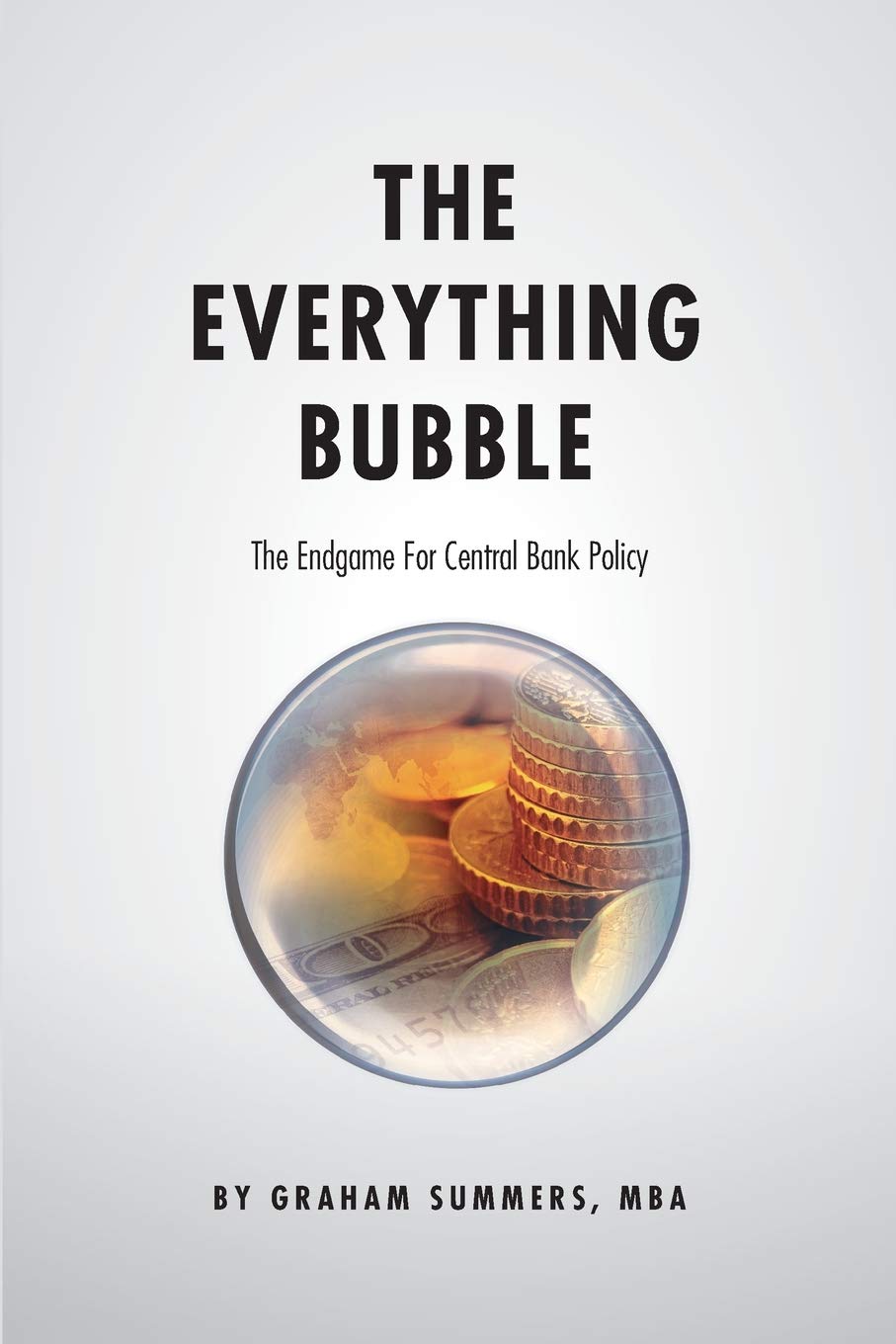
First up are a couple of macroeconomics books: Graham Summers’ The Everything Bubble: The Endgame for Central Bank Policy, first published in 2017. It describes what the author calls “serial bubbles” – not just stocks but virtually every asset class, including fixed income and real estate. The book also tackles the two sources of financial repression for retirees hoping to live on interest income: ZIRP and NIRP, which stand respectively for Zero Interest Rate Policy and Negative Interest Rate Policy.

Like it or not, the November 2020 U.S. election is likely to have an impact on investors and would-be retirees, no matter how it works out. Two years ago, my MoneySense column reviewed several other Trump books in an attempt to understand the investment implications of his presidency.

Have we reached Peak Trump?

Amazon

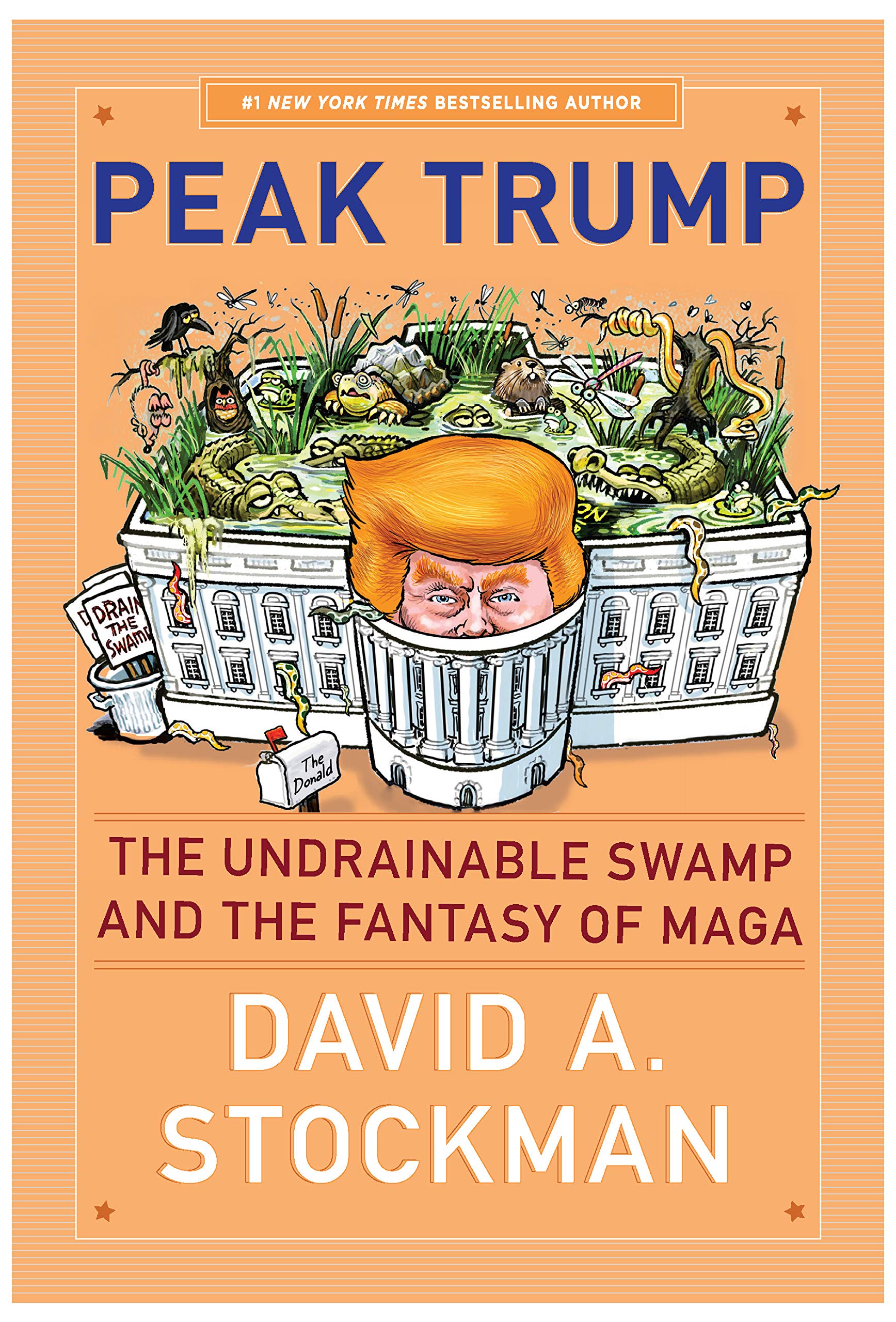
Since then, I’ve also read Peak Trump: The Undrainable Swamp and the Fantasy of MAGA, by David Stockman, published in 2019.  Peak Trump includes a chapter also titled The Everything Bubble. Stockman believes the Trump boom – aided by the Federal Reserve’s “rotten regime of Bubble Finance” — has been a mirage and is fated to fade away. Presidential incumbents usually win re-election if the economy and stock market stay strong, but that’s hardly a slam dunk after the depression-level unemployment and social unrest that has come about in the wake of Covid-19.

Dual citizen and political pundit David Frum has just released his second Trump book: Trumpocalypse: Restoring American Democracy, a followup to his earlier Trumpocracy, which was mentioned in the link above. The blizzard of online and media reviews seem to suggest Frum believes Trump has lost the plot and may be vulnerable in the upcoming election.

With all this talk of asset bubbles and negative interest rates, it seems everyone is fated to worry about money and not just near-retirees. Worry-Free Money, by financial planner Shannon Lee Simmons, was published in 2017, and will primarily interest younger investors with a long time horizon. Simmons declares “everyone is worried about money” and says social media has only aggravated the situation. But if you’re worried she will nag you about things like budgeting, fear not: she gives reasons why “you need to stop budgeting.” Rather, you have to control your spending, living within your “hard limit” and say “No” to unhappy spending.

The Joy of Being Retired

For those closer to Retirement The Joy of Being Retired, by the prolific Edmonton-based international self-publishing master Ernie J. Zelinski, is a light read, with 365 reasons (and cartoons) on why Retirement Rocks “and Work Sucks.” Continue Reading…

New book helps financial advisors sustain and build their practices

By Dwarka Lakhan

Special to the Financial Independence Hub

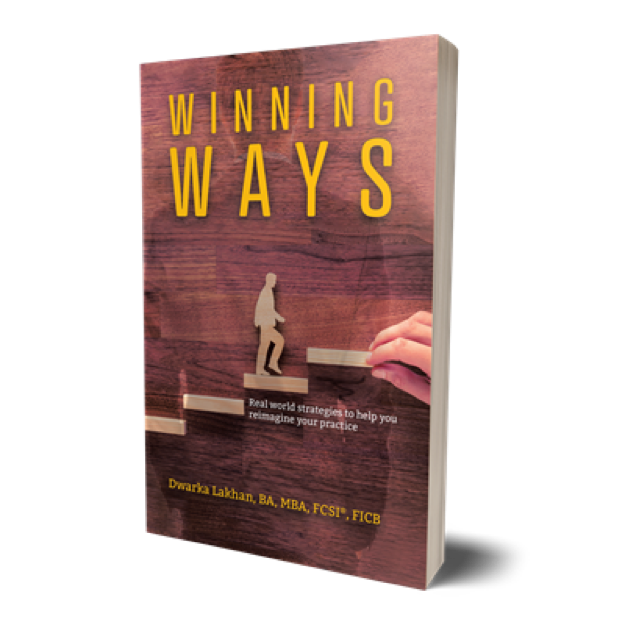
The book, Winning Ways: Real World Strategies to Help You Reimagine Your Practice, is a comprehensive resource for financial advisors seeking to build and sustain their practices.

One of its reviewers, Fidel Hinds, former Managing Director with the Royal Bank of Canada, suggests advisors “can spend a lifetime learning what (they) can find in this book.”

Unlike countless books on practice management which typically promote the views and insights of a single author whose biases are often drawn from their own knowledge and experience, Winning Ways shares the strategies and tactics of over one hundred on-the-ground practitioners who are either engaged in running their own practice or provide professional services to advisors.  These individuals live and breathe practice management as part of their daily routine and are best qualified to tell advisors “what works and what doesn’t” – simply because they have first-hand experience.

Reimagining practices

The book provides different – often conflicting – perspectives and approaches on building and running a practice. It seeks to help advisors understand what other advisors do to build their practice, with the objective that they will find nuggets of advice they can use to reimagine their own practice. Continue Reading…

An outline of the various types of life insurance policies

By Lorne Marr, CFP

Special to the Financial Independence Hub

There are a variety of life insurance policies available in Canada: the best type of plan depends on the insured’s needs and budget. The following is only a snapshot of the different types of plans.

In general, life insurance policies are classified according to two criteria:

  • By length of coverage
  • By medical exam requirements

Let’s look at each of this classification in detail.

Types of life insurance based on coverage length

Life insurance in Canada is generally grouped into two major types, if it is about coverage length: temporary insurance and permanent insurance.

Here is a breakdown of these insurance types and below you will find a detailed description of each type:

Term life insurance type

Term life insurance policies cover short-term needs. Term coverage is the simplest form of life insurance. It provides the largest benefit for the minimum amount of premium. The insured can use the benefits offered by this coverage to pay off debt or to fulfill any other need. The premiums on these policies start off low, but increase as the insured gets older. Term policies can typically last for 10 years, 20 years or 30 years, but Industrial Alliance offers a Pick-a-Term policy: the insured can pick his/her Term from ten to 40 years.

If you are interested in Term Life Insurance, click here to get a Term Life Insurance quote.

Permanent life insurance type

This type of life insurance provides insurance protection till the policy matures, as long as the insured pays the premiums on time. The four major types of permanent insurance are Whole Life, Universal Life,  Limited-Pay, and Term 100. Continue Reading…