Reviews

We review books that deal with everything from financial independence topics to politics, and anything in between. We may sometimes stray into films and music if there is a “Findependence” angle.

Weekly Wrap: Census; Estate planning; Trump’s succession plan; Mutual Funds embrace ETFs

Based on the widespread media coverage of the 2016 Canadian census this week, Canada’s baby boomers are going to be just as much of a demographic force as ever once they enter their golden years. For the first time, our seniors now outnumber our kids, the CBC reported.

Not all seniors are baby boomers, of course, but sadly the reverse will soon be true: most if not all baby boomers will be seniors. For this generation retirement (or semi-retirement) is a huge looming event, as a quick browse of this site will establish. Hey, just this week I got a package from Service Canada advising me that I will be able to draw Old Age Security (OAS) when I turn 65 next April. And I intend to take it then too, as I wrote in MoneySense last August: Why I’m taking OAS right at 65.

Boomers need to face up to their own mortality

All of which suggests it’s time for Canadian boomers to start looking more seriously at their own mortality and the admittedly dreary topic of estate planning. I covered this Thursday in my latest MoneySense Retired Money column: Retirees need to start thinking ahead.

In my Financial Post article that ran on Wednesday, I looked at estate planning from a different perspective: how the original “Wealthy Boomer” —  Donald Trump —  is tapping his family members for senior roles in his administration and possibly for his business succession planning. Click on Donald Trump is upping the ante in the Wealth Transfer game.

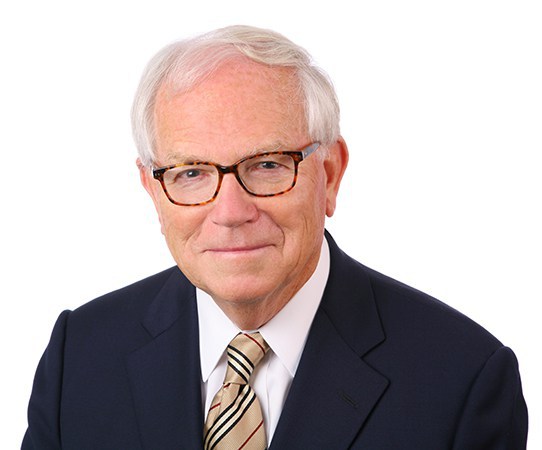
Ian Campbell

One of the sources for the FP piece was business transition and valuation expert Ian Campbell, pictured. (He himself admits to his strong resemblance to investing legend Warren Buffett!). By coincidence I reached out to Ian about the Trump piece just as he had published a blog on that very topic. It ran on the Hub Wednesday under the headline Generational Business Transaction: The Apprentice. Check the links to his site for his free newsletter.

The Truth about Working in Retirement

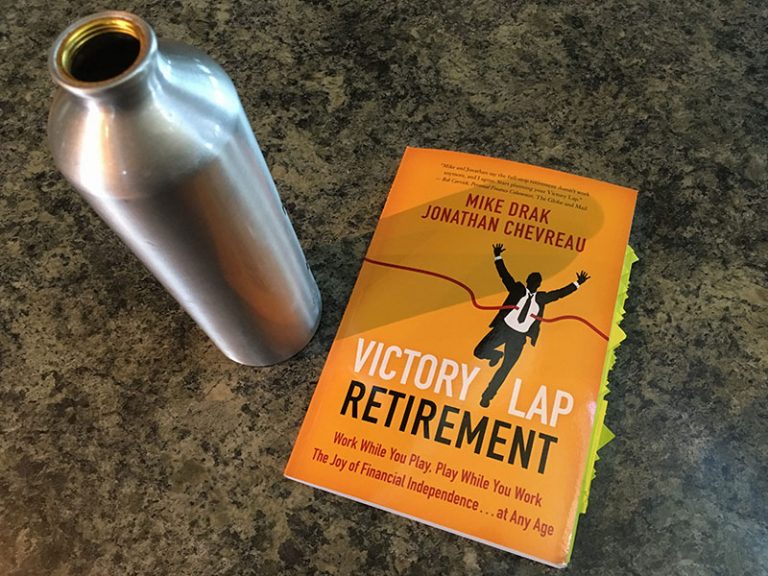
Our best-selling (G&M, Amazon among others) book, Victory Lap Retirement, continues to get some positive reviews. Earlier this week Ellen Roseman of Toronto Star fame wrote the following review on Golden Girl Finance: The Truth about Working in Retirement. As Ellen recounts, she herself has retired from her full-time newspaper gig but continues to be fairly busy in the semi-retirement described in our book.

Mutual fund companies Excel Funds, Franklin Templeton enter ETF business

Finally, some big news in the asset management industry, where it was announced that two Canadian mutual fund companies — Excel Funds Management and Franklin Templeton Investments — are entering the ETF business. The Globe & Mail’s Clare O’Hara reported this on May 2nd. Click on Franklin Templeton, Excel Funds to enter Canadian ETF market.

Continue Reading…

Retired Money: The “Glide Path” to semi- retirement

My latest MoneySense Retired Money column looks at a concept called “The Glidepath” approach to semi-retirement. Click on the highlighted text for the full version, which is headlined How to Transition Into Retirement.

The “Glide Path” is a term used by veteran and now semi-retired financial advisor Warren Baldwin. At 66, Baldwin still works part-time as a senior vice president T.E. Wealth, working out of Oakville, Ont.

When used in the context of airplanes and flight, glide path is a familiar image that Baldwin’s clients easily understand. His own “glide path” to semi-retirement began three and a half years ago. “Maybe it takes five years because it takes two years to plan and get your mind around it. For me, it was coming up three years ago, when I was 63. The timing was right.”

The “Work Optional” stage of life

Another way to describe this is the “Work Optional” stage of life, a term popularized by Emeritus Retirement Solutions’ Doug Dahmer, who is a frequent contributor to the Hub’s “Decumulation” pages. See for example, this post.

Continue Reading…

Rockstar Finance’s review of Victory Lap Retirement

By Hélène Massicotte, Rockstar Finance

Mike and Jonathan walk the talk. They both have made sound financial decisions that enabled them to leave their corporate lives (either through retirement or redirection), allowing them to shift their focus toward what they wanted to do next without having to have money be the primary driver.

How can we start stacking the deck in our favor to do the same? By:

  1. Following the “Seven Eternal Truths of Financial Independence”
  2. Focusing on one important formula
  3. Forgetting traditional notions of retirement

#1. The “Seven Eternal Truths of Financial Independence”

When it comes to managing money, most of us want to improve our odds of success. That means ensuring we behave in a way that reduces the financial obligations that work to limit our personal and professional choices. The authors suggest the following behaviors can do a great deal to help us increase our financial flexibility:

  1. Live below your means
  2. Pay yourself first
  3. Get out of debt
  4. Buy a home and pay it off as soon as possible
  5. Be an owner, not a loaner
  6. Never say no to free money from your employer
  7. Take the government up on its few offers of free money

Two of these include interesting twists on the theme beyond what is usually covered in what’s considered mainstream financial advice:

#4. Buy a home and pay it off as soon as possible. This is great advice for those among us who want to own a home, but the authors take it one step further: we should look at our home as part need and part want. Need is the bare minimum of what we need in a home: shelter, basic utilities, safety, minimum square footage, proximity to other needs, etc. Want are the extras beyond what we need: extra space, extra features, better privacy, less noise, better outdoor space, better-than-needed neighborhood, etc.

Looking at housing this way can help us consider the appropriateness of the largest physical asset class we’re likely to ever own. It’s easy to justify buying too much house, thereby turning a good purchase into a bad one, and this “need vs want” can help us keep the inflation in check.

#5. Be an owner, not a loaner. This suggests that, though bonds are lower-risk investment vehicles, they won’t offer the returns that equity can, even when these are risk-adjusted. The authors suggest a diversified portfolio that includes high-quality dividend paying stocks and stress that qualifying dividend-paying stock income also offers some tax advantages over bond-related income for investments that are held in non-tax-sheltered accounts.

#2. The Freedom Formula

Mike and Jonathan managed to increase choice in their lives by focusing on one important formula:

PASSIVE INCOME > NON-DISCRETIONARY EXPENSES = FREEDOM

Continue Reading…

The Price of Security

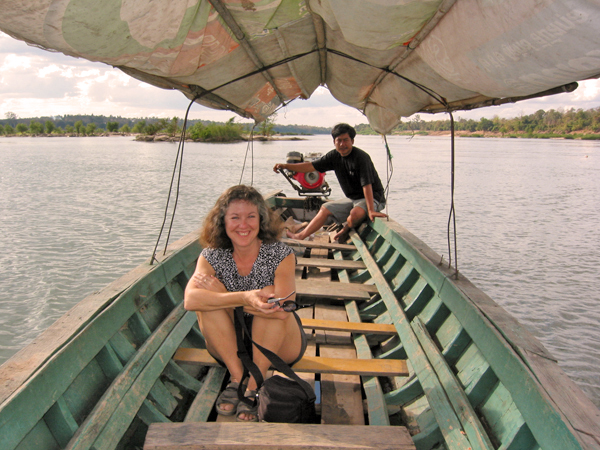
By akaisha-in-a-longboat-on-the-mekong-riverBilly and Akasha Kaderli, 

RetireEarlyLifestyle.com

Special to the Financial Independence Hub

Security is mostly a superstition. It does not exist in nature, nor do the children of men as a whole experience it. Avoiding danger is no safer in the long run than outright exposure. Life is either a daring adventure, or nothing.” —  Helen Keller

Recently I have been reading a book called Daring Greatly by Brene Brown. You may have heard of it. The theme of the book is about being vulnerable, taking risks and being willing to expose ourselves to possible failure. It’s an enlightening read.

I bring this up because what I want to share with our readers is that security has a price. Everyone speaks about how risk is dangerous and sometimes unthinkable. It seems that everyone wants unmitigated surety – the 100% guarantee.

But security never makes one courageous nor does it make a person’s heart sing.

We all want our bases covered, and none want to be starving or out in the land of the lost. But there is an energy about taking a risk with the possibility of failure that adds dimension to our lives and creates memories that we share with our children and grandchildren and we can ruminate over when we become old. Having everything laid out, fully unchallenged with no adversary to overcome makes for a dull story.

Personal examples

To make my point, I want to share with you a couple of big risks I took with my life direction over the years.

In 1971 was 19 years old and my then 20-year-old boyfriend wanted to make an extensive summer motorcycle trip across the country from the Midwest through a semi-southern route, up the coast of California to Alaska and back again via northern roads. This sounded like the most exciting thing I could imagine in my life at that time.

Continue Reading…

Review & Excerpt of Clay Gillespie’s Create the Retirement You Really Want

The Financial Post has just published my review of a new book by Vancouver-based financial advisor Clay Gillespie: Create the Retirement You Really Want: And Retire Smarter, Richer and Happier.

You can find the online review by clicking on this highlighted headline: From Dreams to Legacy: New Book Details the 5 Stages of Retirement.

And below is an excerpt from the chapter highlighted in the review. We may also run at least one other excerpt in the coming weeks. Over to you, Clay!

By Clay Gillespie

Special the Financial Independence Hub

Retirement isn’t an event; it’s a process, and it begins years before you actually retire. Working with hundreds of clients over many decades, I’ve come to realize that retirement success is best achieved in five distinct stages. Each stage reflects a different aspect of who you are and where you want to be in retirement, and it all begins with a dream.

       1.) Dreams stage

The Dreams stage of retirement typically begins about five or six years prior to actual retirement. This is the time when people have decided to retire but aren’t yet sure of the date. It’s the time where retirement goals and hopes for the future become defined and a preliminary retirement plan is developed. For couples, especially, retiring now becomes an ongoing topic of discussion, not just something brought up in passing.

2.) Reality stage

The Reality stage usually occurs between 6 and 24 months before retirement and its temporal proximity really starts to hit home. Lifestyle issues come into greater focus, along with fears that one’s retirement nest egg may be inadequate. This is a crucial time from a planning perspective. Old Age Security (OAS) and Canada Pension Plan/Quebec Pension Plan (CPP/QPP) applications need to be made, income streams need to be consolidated, taxes need to be minimized and portfolios need to be optimized for income and growth.

3. Transition stage Continue Reading…