Reviews

We review books that deal with everything from financial independence topics to politics, and anything in between. We may sometimes stray into films and music if there is a “Findependence” angle.

David Trahair’s contrarian stance: Be a loaner, not an owner

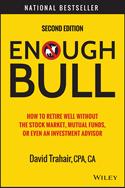
125_Enough_Bull_High_Res_Cover_FinalBy Jonathan Chevreau

Financial Independence Hub

In this summer’s series on the 7 eternal truths of personal finance, one of the articles was entitled Be an Owner, Not a Loaner, which reflects the usual financial industry advice that stocks are more likely to generate long-term investment returns than cash or bonds.

There is of course a contrary view to this eternal truth and it’s best contained in the new second edition of David Trahair’s book, Enough Bull, originally published early in 2009, right at the bottom of the financial crisis..

Trahair, a chartered accountant and author, could as easily have titled his book Be a Loaner, Not an Owner, because he’s adamant that stocks (i.e. equities), whether individual or pooled through mutual funds or ETFs, are just too risky for the average person.

The book cover includes a small image of a bull (as in a steer), so clearly the title Enough Bull is a double entendre: as in no more bullish prognostications on the stock market, as well as no more bovine excrement, whether dispensed by the animals or financial advisors.

Skeptical about the financial industry and its central belief in stocks Continue Reading…

Weekly Wrap: “Heightened uncertainties” from the Fed, hedging risk, bear books

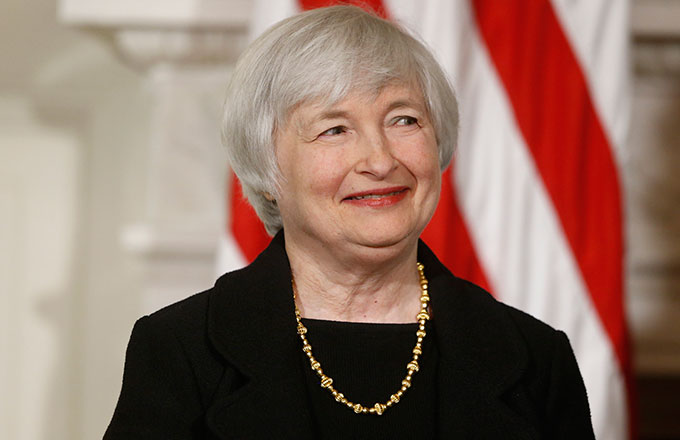
yellen
Janet Yellen

I have just returned from a two-week trip to Hong Kong and Taiwan, just in time for the Federal Reserve’s long-awaited decision to delay the first rate hike since the financial crisis.

The key phrase “Heightened uncertainties abroad,” spoke as loudly as the lack of action, as Fed chairwoman Janet Yellen noted the risks of both China and Emerging Markets in generally spilling over into the United States.

Hedging in the Retirement Risk Zone

For those of us who are in the “Retirement Risk Zone,” — including Yours Truly — the caution behind the Fed’s decision could suggest that for some it may be appropriate to dial down portfolio risks. Since late August, I have followed my personal financial adviser’s recommendation to remain invested but to hedge back one third of US and Canadian equity exposure.

Generally, at whatever age, it makes little sense to take more risk than you need to take and the Fed’s decision (or non-decision) underlines that there are still extensive risks out there, certainly in the equity markets as well as fixed income. Fred Kirby, a fee-for-service planner at Dimensional Investment Planning, says it’s time to be cautious and protect profits. As I quoted him earlier this year, he suggests that those who are averse to market timing can consider the newer “low-volatility” ETFs. For Canadian exposure, he suggests the BMO Low Volatility Canadian Equity ETF (ZLB), which holds 40 stocks deemed to have the lowest risk. For U.S. stocks he likes the BMO Low Volatility US Equity ETF (ZLU), which uses the same methodology and holds 100 companies. For international equities, Kirby likes the iShares MSCI EAFE Minimum Volatility Index ETF (XMI). (There’s also an iShares low-vol ETF for Emerging Markets).

“These ETFs automatically position the cautious investor for any additional future gains without having to make a market-timing re-entry decision,” Kirby says. “This could be just the sort of compromise that lets some investors stick with their investment plans even when they do not want to.”

Actively Managed ETFs

On the same subject (ETFs), my latest Financial Post ETF column ran earlier this week, tackling actively managed ETFs. See Why Fund Investors Should Get Active with their ETFs.

Bear books revisited

Continue Reading…

How to Choose a Retirement Location

Lake Chapala, Mexico

By Billy and Akaisha Kaderli

Special to the Financial Independence Hub

So you and your spouse have decided to retire. At some point in your retirement planning you must ask yourself where you would like to spend your Golden Years. The following questions and insights should place you on the right path for finding just the location that suits your needs.

First things first

The first question you must ask yourselves is whether you want to stay in the home in which you are currently living or would like to move elsewhere. Retirement is a big step and sometimes people feel more secure staying in familiar surroundings because it makes the transition to your new lifestyle smoother.

Others, for financial reasons, a change of pace, health reasons, or for better weather, want to relocate. In this case, the next decision you must make is whether you want to stay in your home country or move overseas.

If you want to stay in your home country you must then decide what sort of climate is most attractive to you. Do you want to experience the four seasons or have a more moderate, year-round climate? Do you like mountains or beaches? What size of city or town do you most enjoy? These questions are important because they will automatically exclude places you won’t need to research. Knowing what you prefer in climate, city size and geographical configuration carries much weight in terms of your happiness quotient.

Another thing to consider is that if you choose a town or small city, are there adequate medical facilities nearby? Larger cities tend to have a full range of medical care. Smaller towns generally have clinics and a variety of doctor’s offices, but perhaps not the equipment needed for complex medical situations.

Narrowing your search

Continue Reading…

A Simple Way To Boost Your Retirement Savings

pay yourself first, a reminder of personal finance strategy - stack of colorful sticky notes on a cork bulletin boardBy Robb Engen, Boomer & Echo

Special to the Financial Independence Hub 

One of the core tenets of financial planning is to pay yourself first.  Automating your savings is a painless way to save for retirement and, in all likelihood, you’ll barely notice that you’re living on less.

Most experts suggest putting away 10 per cent of your income for retirement, but that number might seem out of reach for many people today.  The key to developing good savings habits, however, is that you need to start somewhere.

That’s why I suggest setting aside what you can afford, be it three or five per cent of your income, and try to increase that amount every year.

Small changes lead to big improvements

Continue Reading…

Bob Cable’s case for seasonal market timing (Review of Inevitable Wealth)

inevitablewealth-266x300While stocks are viewed by most of the financial industry as the main ingredient for creating wealth, it’s well known that the price for higher expected returns is higher risk. The paradox is that in order to increase the odds of creating greater wealth, you have to be willing to lose some wealth at least in the short term.

All of which makes Robert S. Cable’s newly published book (his second) of more than theoretical interest. Inevitable Wealth bears the subtitle Two low-risk strategies that combine to create extraordinary wealth.

We have touched on this book and its belief in the long-term power of equities in a recent review I did at the Financial Post, where I compared Inevitable Wealth to David Trahair’s Enough Bull. You can also find guest blogs by both authors here at the Hub, where the pair make the cases for mostly stocks in the first case, and mostly fixed income (i.e. GICs) in the second.

I had read both books earlier in the summer, well before the extreme market volatility of late August. Ironically, both books would have helped you preserve capital, depending on how you implemented the suggestions: Continue Reading…