Once you achieve Financial Independence, you may choose to leave salaried employment but with decades of vibrant life ahead, it’s too soon to do nothing. The new stage of life between traditional employment and Full Retirement we call Victory Lap, or Victory Lap Retirement (also the title of a new book to be published in August 2016. You can pre-order now at VictoryLapRetirement.com). You may choose to start a business, go back to school or launch an Encore Act or Legacy Career. Perhaps you become a free agent, consultant, freelance writer or to change careers and re-enter the corporate world or government.
Time is money, as the saying goes. And if you’ve got extra time on your hands but not a lot of extra money, maybe you’ve thought about starting up a side gig. Whether or not you decide to turn your side job into a flourishing career of its own, it won’t really feel like a job if you’re enjoying yourself at the same time. Plus, having multiple streams of income is highly recommended as a safety net.
With the following side jobs, you can prevent yourself from getting run down and ragged by being your own boss. You can set your own schedule, accept or decline jobs as your availability dictates, and adjust your prices so that it’s all worthwhile in the end.
You can start getting clients by reaching out to friends and family and growing via word of mouth from there. In time, you might find that a web presence will help you reach even more people. It doesn’t necessarily have to be a website; a Facebook page can be just as effective if managed well. In some cases, professional certifications can also bolster your reputation.
House Sitting
House sitting is an excellent way to earn some extra cash on the side, and it’s a very relaxed gig. You’ll be responsible for making sure that nothing goes awry while the homeowners are away. Your mere presence will deter would-be burglars, but house sitting goes beyond just sitting in a house, as you may need to handle other emergencies or simply bring in the mail and take out the trash.
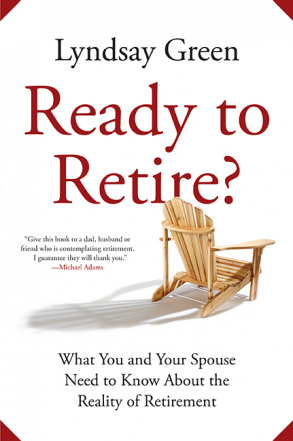
There’s no shortage of books that focus on financial readiness for retirement. But what about emotional or psychological readiness for retirement? Lyndsay Green’s just-published Ready to Retire? (Harper Collins, Toronto, 2016) puts a microscope on the less-scrutinized emotional and lifestyle issues of retirement. She interviewed 44 Canadian males and 17 of their spouses about common retirement fears (for those still working) versus the reality of retirement once it’s actually achieved.
Generally, these males either planned for retirement or – in the all-too-common case of sudden terminations – found themselves unexpectedly in the land of retirement years or even decades before they expected it.
But whether planned or not, most required a period of adjustment that can take years: not surprisingly, retirement is right up there with divorce, death and job loss in creating a traumatic new stage of life.
Mental Map depicts common emotions about Retirement
The book’s frontispiece conveys the common emotions in a graphic that I think should have been the cover. ( Continue Reading…
Valletta, the Capital City of Malta in early morning.
By Ashley Watson
Special to the Financial Independence Hub
If you are nearing pension age, chances are you are thinking about settling down in a foreign retirement destination.
Low cost of living, better climate, adequate healthcare facilities, convenient transport system, and friendly people could be your next small world. Obviously, you might have personal preferences but if you’re looking for options, here are five of the top retirement destinations for 2016:
1.) Malta
Malta is a southern European island country that’s small in size but densely populated. Spread across 122 square metres, the country has a headcount of over 450,000. The reason why it’s so densely populated is because of the luxuries it offers to its residents. Over here, you get more than 3,100 hours of sunshine every year and the average temperature is only around 19 degree Celsius. Any senior citizen would love that! Most of the local residents are fluent in English and there are multiple tourist attractions to explore.
2.) Portugal
Portugal is famous for its pleasant climate, good healthcare centers, and rich cultural heritage. Even if you are getting a minimal pension amount, you will find it incredibly easy to live here. The low cost of living is one of the major plus points about settling down in this country. In fact, you could buy three homes in Portugal for the same price that you would spend on a single home in France. What’s more, Portugal is also the third biggest expat community in Europe only next to Spain and France.
3.) Spain
Spain has the biggest expat community in Europe and the crime rate is really really low here. If your age isn’t going to stop you from exploring new places, then you will love Spain. There is lots to see and experience in this part of the world. The country is a unique mix of modern and traditional cities. Head to major cities like Barcelona and Madrid to see the developed side of Spain and visit islands such as Menorca, Ibiza, and Tenerife to immerse yourself in the nature.
Tropical sea landsape. Philippines, El Nido.
4.) Philippines
The Wall Street Journal named Philippines as one of the best places to retire in the world in 2016. The country is home to more than 7,000 tiny islands and is widely preferred by western retirees, mainly because of its low cost of living. It costs only about 300 pesos or $7 to consult a doctor and X-rays are only about $20. Plumbing and carpentry services are only about 400 pesos or $10. Dirt cheap, right? If you love to spend time outdoors, then try your hands at Golf. It’s the most popular retirement sport in the country.
Editor’s Note: Retirees considering this destination may wish to monitor the news about kidnappings in southern Philippines. See for example this recent National Post news story headlined Visit the southern Philippines at your peril.
5.) Thailand
If you are looking forward to living a completely new lifestyle from that of United States or the United Kingdom, then you must check out Thailand. The country boasts a number of renowned temples including Wat Phra Kaew (Temple of the Emerald Buddha), Wat Pho (Temple of the Reclining Buddha), and Wat Indravihan and some historic buildings such as The Grand Palace (built by King Rama). Thai cuisine is one of the most popular food in Asia and this is the best place to taste them. Foodies can look forward to relishing a wide variety of dishes here.
What’s more, cheap property prices and discounted fuel prices are other factors that have drawn over 41,000 expats over the years.
Conclusion
Of course, there are dozens of other countries to settle down and lead a happy life after 60. But, we’ve picked some of the retirement destinations that are predominantly suggested by travel blogs and globetrotters. If you have retired in any other country and having a great time, please let us know in the comments.
Ashley Watson is a globetrotter who blogs mostly on travel and tourism. She is the chief writer and social media strategist at GolfPh.
When it comes to navigating healthcare issues in a foreign country, lots of travelers or would-be Expats have a legitimate concern over the language barrier.
While there is a possibility that you could find yourself in the backwaters of Vietnam, in a lonely village in the mountains of China or Tibet, or spending the night in a hill tribe pueblo reachable only by rickety bridges, chances are you will be somewhere close to a civilized town or large city. In our decades of world travel through dozens of countries, our experience is that most medical professionals speak English or enough English to make the transaction go smoothly.
Service is Primary
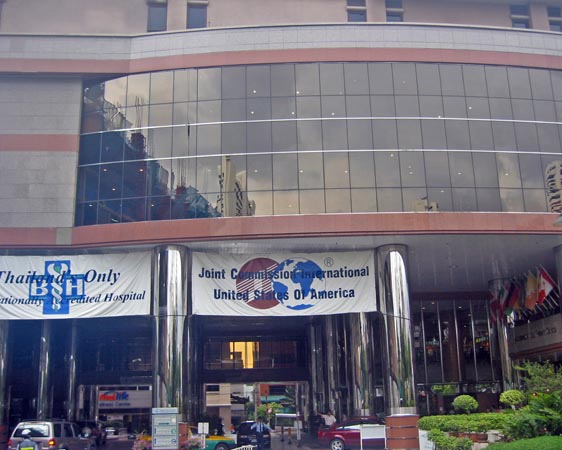
In the hospitals of Thailand, we have discussed surgeries, received executive physicals, blood tests, colonoscopies, eye exams, sonograms, x-rays and more. But we are not fluent in Thai. How were we able to communicate about such complicated topics?
Not only do these professional medical personnel speak English, but we are issued a personal translator/assistant who takes us from office to office, procedure to procedure. She translates for us if necessary, keeps our paperwork together and wheels us around in the wheelchair if required. The fee for this service? About $2USD each visit.
One of the key elements of the post-corporate Victory Lap Retirement lifestyle is self-employment. If this begins in your late 50s or early 60s, you’ll be living on multiple streams of income. Some of it may be passive, such as pension income (I draw from two modest corporate pensions, for example) or non-registered investment income, but a big component is continued earned income.
If you are no longer a salaried employee, it’s probably best to set up a sole proprietorship or even incorporate. I’ve always run a corporation alongside salaried employment and have found that once you’re fulltime in business for yourself, It’s hard to generate as much pre-tax income as a salaried corporate job does. However, there are significant compensations in time and flexibility, plus the net after-tax proceeds of self-employment are relatively more attractive than being a fully-taxed-at-source salaried employee.
One reason is the allowable deductions or “write-offs” for legitimate business expenses, which may include certain computer equipment, software and some services. Obviously you should consult with a tax professional and engage an accountant because you don’t want to trigger an audit from the Canada Revenue Agency. After all, it’s clear the new Liberal government regards self-employment with suspicion: my guideline is to “assume an audit” and act accordingly.
Time to upgrade equipment
I am writing this article on brand new equipment that replaces products that were as old as six years. My fiscal year-end is the end of May and it’s been a decent year revenue-wise, so it seemed like a good time to book some legitimate expenses. Those whose calendar year-end correspond with their fiscal year (i.e. Dec. 31st) would go through this process at the end the calendar year.
In my case, apart from the tax considerations of booking valid deductions, it really was time to upgrade the single most important business tool I use, which was an Apple MacBook Air.
After six years the machine had just about used up its storage and processing capacity and I had begun to lose significant chunks of time rebooting and closing applications. Continue Reading…


 Posted By
  By Cathy Habas
 Posted By