
Victory Lap

Once you achieve Financial Independence, you may choose to leave salaried employment but with decades of vibrant life ahead, it’s too soon to do nothing. The new stage of life between traditional employment and Full Retirement we call Victory Lap, or Victory Lap Retirement (also the title of a new book to be published in August 2016. You can pre-order now at VictoryLapRetirement.com). You may choose to start a business, go back to school or launch an Encore Act or Legacy Career. Perhaps you become a free agent, consultant, freelance writer or to change careers and re-enter the corporate world or government.

Were you nervous before you Retired?

I was recently asked that question, and it brought back a flood of memories from my “near-retirement” days.

I suspect most of us were nervous before we retired, but it’s not something we talk about.  I believe there’s value in sharing the psychological journey in those final days before retirement.  For folks nearing retirement, it’s reassuring to know they’re not alone.

Recently I had the opportunity to talk about it with a reader who is on the cusp of retirement. We had a wide-ranging discussion and the conversation became the trigger for today’s post.  I suspect many of the questions he asked are also on the minds of other readers who are approaching retirement.

This one’s for you, Mike.  Thanks for letting me share our discussion with the readers of this blog.  I trust they’ll all benefit from our discussion…


Were you nervous before you Retired?

That’s one of the questions a reader, Mike, asked me on a recent phone call.  Mike’s a month away from retirement and reached out to me a few weeks ago.  I typically decline reader requests for phone calls (unfortunately, a downside of writing a blog with a large following).  If I said yes to every request, I’d be spending far too much of my time helping folks on a one-on-one basis, time that could otherwise be spent writing and reaching thousands of people with the same effort. It’s a “scalability” thing, and I trust you understand.

However…there was something about Mike.

His initial email hit a chord with me.  Here’s what he said:


Good morning Fritz,

Have heard you on several podcasts and just finished your latest discussion with Jason Parker.  I will be retiring in January and your point about helping others hit a cord.  I would love the opportunity to speak with you about your blog.  I’m currently a financial advisor and feel there is a huge need for financial literacy for just about everyone.  As a former teacher, my passion is teaching/sharing.  Would like to understand better how you got started with your blog, what are some of the watch outs, and any other insights you could provide.

Thanks for your consideration and congratulations on living your best life!


What caught my attention?  The fact that he didn’t ask a single financial question and was focused on helping others. He had some ideas about teaching/sharing and he was considering starting a blog.  I appreciate readers applying the lessons I’m sharing in their lives and searching for Purpose in retirement.  I also had a bit more free time than I usually do, so I agreed to a phone call.

Following are some of the highlights of our discussion, in no particular order.  I trust you’ll find them of interest.


how do I retire

Questions From A Soon To Be Retiree


Should I start a Blog In Retirement?

My first reaction to any question that says “Should I start…” is to say yes.  It’s critical, especially in early retirement, to foster your creative curiosity and try anything that interests you.  Many won’t “stick,” but you’ll likely find a few that do.  Once you’ve found one or two, you’re on your way to a great retirement.

Mike has a passion for teaching and is exploring various avenues to reach others.  I strongly encourage anyone who has an interest in starting a blog to give it a try.  7 years ago, I started this blog on a whim.  I’m 100% self-taught and technically inept.  It’s easy to start a blog these days, with Bluehost and WordPress both designed for folks who have never built a website.  Starting this blog is one of the best things I’ve ever done and has become a Purpose of mine in retirement. I hope it works out as well for others who are considering it.

That said, it’s important to consider your motives.  If you’re doing it to make money, I suspect you’ll fail.  For 3 years, I wrote every week without making a dime and only started adding those annoying ads when I retired.  I get some complaints about them but believe I shouldn’t have to incur costs when there’s an option of generating some revenue for my “work.” As blogs grow, the costs increase (Mailchimp costs me $220/month based on my ~13k subscribers), and I felt it was time to at least cover my costs.  Making money has never been my motive, and it shouldn’t be yours.  Even now, after 7 years, the income from this blog basically pays my health insurance.  Nice to have, but not enough to change our life. Unless you’re in the 0.1%, you won’t get rich writing a blog. Continue Reading…

How to keep your business solvent

Image courtesy BDO Canada

By Matthew Marchand

Special to Financial Independence Hub

More Canadian businesses are failing this year.

In the second quarter of 2023, the Canadian Association of Insolvency and Restructuring Professionals (CAIRP) noted that there were 1,090 business insolvencies — an increase of 36.9% compared to the same period in last year. It was also the highest volume since 2014.

There are two main reasons why this is occurring.

First, the combination of rising interest rates and high debt levels has resulted in slower consumer demand and increased debt servicing costs for both businesses and consumers. The prime rate has risen 475 basis points since early 2022 and now sits at 7.2%.

Second, the loss of government financial aid plus the need to repay a portion of the aid received — along with tightening credit conditions — are making it more challenging to obtain new financing or to refinance existing debt.

During the height of the COVID-19 pandemic, government financial aid helped limit insolvencies during those challenging times. What we’re seeing now is a normalization after an abnormal period.

It should also be noted that many businesses were beginning to experience financial difficulties prior to the pandemic and the financial aid acted as a buoy to some degree. We’ve seen many instances of businesses being unprofitable prior to the pandemic that became profitable during the pandemic, with much or all the profits being derived from government financial aid.

Now that the financial aid is no longer available and may need to be repaid in the future (depending on the support received), businesses are feeling the challenges of this economic reality.

Ways businesses can survive

Many businesses may think a wind-down of operations is the only option, but that’s not the case. In fact, there are other options:

  • A restructuring or compromise of debt (payments to creditors accepted as a settlement of the debts)
  • Turnaround initiatives, such as lease disclaimers, labour force reductions or the sale of non-core assets

For businesses that are facing financial challenges now, they should expect interest rates will remain elevated for the foreseeable future. While the Bank of Canada left the overnight rate unchanged at 5% in September, it says it “remains concerned about the persistence of underlying inflationary pressures, and is prepared to increase the policy interest rate further if needed.”

Your organization should update its business plans and financial projections accordingly. If your business doesn’t have a detailed cash flow projection, make one.

You should also conduct a stress test on your financial projections to determine potential financial scenarios and what proactive efforts may need to be taken to avoid worst case outcomes. For example, if sales fall 10% or 15%, how will it affect the financial performance of the business? Will the business be able to meet its debt servicing obligations and other critical payments as they become due, and if so, for how long? Continue Reading…

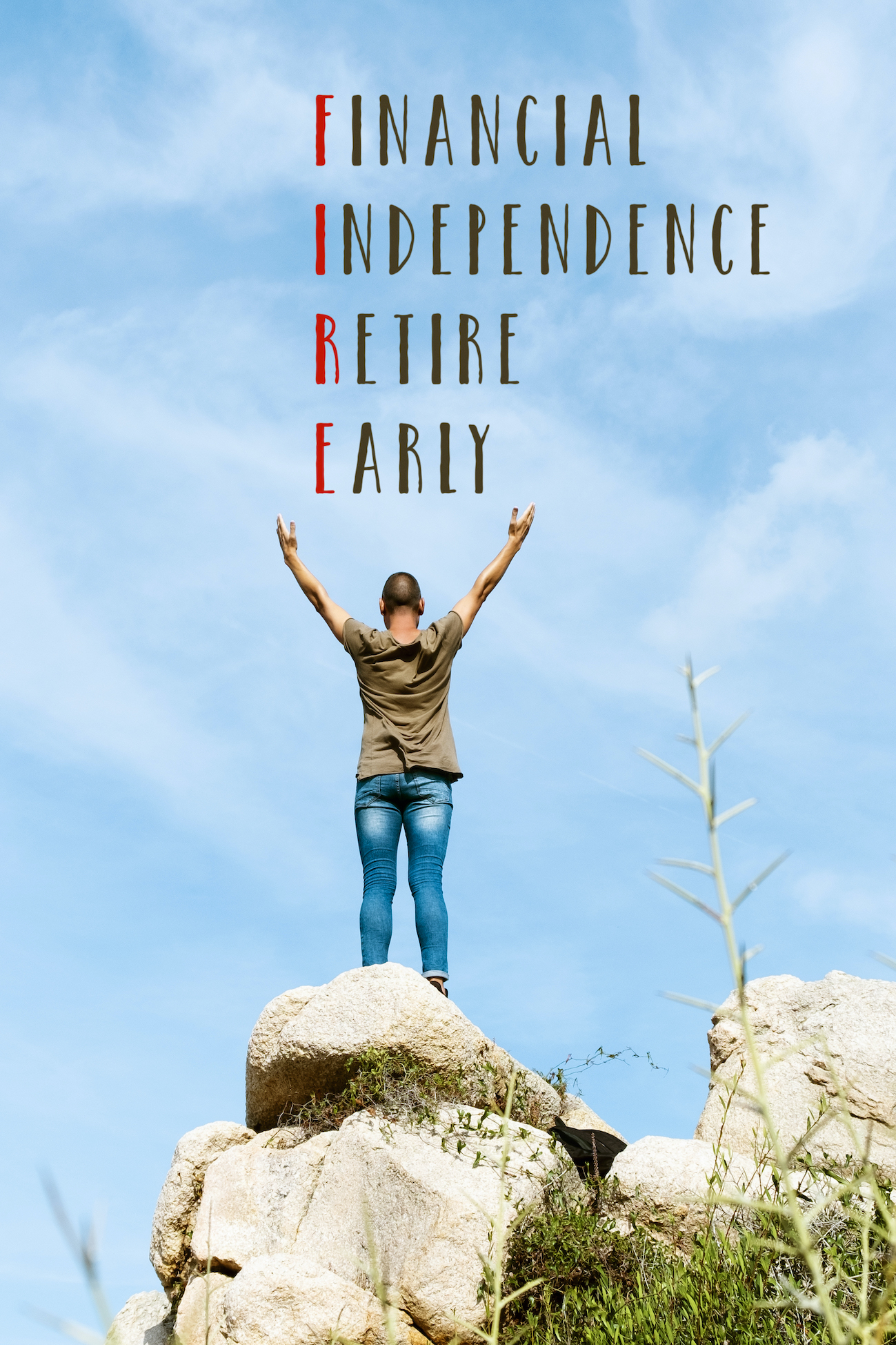
Tawcan: 10 lessons I’ve learned along the FIRE journey

By Bob Lai, Tawcan
Special to the Financial Independence Hub
Although I grew up in a household where my dad retired in his early 40s and a couple of my cousins reached financial independence and/or retired early in their 40s, I had never really put much thought or energy on financial independence retire early (FIRE) in my 20s. While I was living frugally, I wasn’t investing my money efficiently and I lacked a core investment strategy.

This changed just before I turned 30. Someone gave my wife and me a book called Secrets of the Millionaire Mind and our lives were forever changed. We aspired to make changes in our financial plans and how we manage our money. We knew FIRE was a possibility and we started investing in dividend-paying stocks with the plan to live off dividends by 2025 or earlier.

Ten years into our FIRE journey, we’ve made great progress on our goal of becoming financially independent. We are appreciative of this journey and how it has transformed our lives and made us more rounded people. We also have learned many lessons that we wouldn’t have learned if we weren’t on this journey.

I’d like to share with you the ten lessons I’ve learned so far on our FIRE journey.

1. FIRE is not the finish line, it’s a journey

Many see reaching FIRE as the finish line. For them, it means an escape from the rat race. However, I believe we can’t see FIRE as an escape route, the happy ending, a finish line, or the solution to everything. Reaching FIRE certainly doesn’t mean you will magically become happy and live happily ever after.

If you don’t work on yourself during the FIRE journey and improve yourself, you will continue to face the same challenges over and over.

Look at FIRE like a journey. It is very important to enjoy the journey and work on yourself while on this multi-year journey. So take the time to learn new skills, take self-improvement courses, gain new hobbies, make new friends, provide a helping hand in your community, etc.

2. Have a core investment strategy

In my 20s, although I was investing in the stock market, I was trading in and out of stocks frequently. I also invested heavily in high-MER mutual funds and low-interest-rate GICs. In other words, I didn’t have a core investment strategy and my money wasn’t working very hard for me.

Since starting our FIRE journey, I learned to get in line and stay in line. I learned the importance of having a core investment strategy.

For us, it means investing in both dividend-paying stocks and index ETFs. This hybrid investment strategy allows us to have a predictable dividend income every month while staying geographically and asset diversified. By getting rid of high-fee mutual funds and so-called “high interest” GICs, on top of investing in the stock market for the long term, our money is working much harder for us.

Having a core investment strategy also means that we stay focused. We aren’t constantly switching back and forth between different investing strategies and losing momentum. If we want to test out a different investment strategy, we can still do that, but we use a small percentage of our portfolio.

For example, less than 5% of our overall portfolio is invested in growth and more speculative stocks.

3. Ignore doubts and noises around you

The FIRE movement has gained popularity in recent years but it is still a niche movement. The niche nature of the movement means that many of your friends and family do not know about it and will cast doubts when they learn what you’re working on. Unintentionally, they may also try to sabotage your plans.

It is important to ignore doubts and noises around you. Believe in yourself, connect with like-minded people, find support from the FIRE community, and stay focused while on this FIRE journey.

4. Understand your whys

Many people start their FIRE journey because they hate their jobs and because they are not happy with their lives. But FIRE isn’t the magic pill, it will not make you happy all of a sudden.

It is important to dig deep, cut through the BS, and really understand why you want to become financially independent and one day retire early.

Perhaps it’s because you want to have more time to spend with your kids. Perhaps it’s because you want to have the ability to go skiing on a Tuesday morning. Perhaps it’s because you want to be able to volunteer at the local soup kitchen without having to worry about money.

Find your reasons.

5. Stop comparing

Becoming financially independent in less than five years doesn’t make you more successful and taking 20 plus years to reach financial independence doesn’t make you a failure either.

Because we are all different individuals, our FIRE journey will never be alike. Therefore, we need to stop comparing our journeys with each other. Instead, support each other and help each other along the way.

And remember, financial independence retire early does not define success in life.  Continue Reading…

Strategies for Selling your Business Quickly

Looking to get out of your business as soon as possible? Our tips will help you sell your business quickly while still getting a fair deal.

Adobe Image by Robert Kneschke

By Dan Coconate

Special to Financial Independence Hub

Are you a small business owner ready to start the next phase of your life? If you’re looking to sell your business quickly and move on, read on.

We have some helpful strategies for attracting serious buyers and closing deals below.

Get your House in Order

The first thing you should do before putting the “For Sale” sign on your business’s front lawn is to get your organization and financial records in order. One of the first things that any potential buyer will want to look at is the accounts and books of the business to gauge its financial health.

If the documents and accounts are a disorganized mess that only you can decipher, your business won’t be very appealing to a buyer. Ensure your financial documents are organized and straightforward, including critical documents like the complete list of all assets, copies of patents and licenses, and profit and loss statements.

Hire a Business Broker

As you prepare for a sale, hiring an independent business broker is one of the best strategies for selling your business quickly. A broker will take a commission from the sale, but their experience and skills are invaluable when selling a private practice or business.

They’ll connect you with more potential targets and get the word out that you’re looking to sell and vet buyers for you. They’ll also represent you in negotiations and offer valuable insight to attain the best deal as quickly as possible.

Sell to a Competitor

While it may sting the pride of some to sell their business to the competition, it’s often the fastest and easiest option for small business owners. After all, what competitor wouldn’t be interested in expanding and bringing their competition under their umbrella? Continue Reading…

Focus on Blue Chips and hold the good ones indefinitely

Uncover good companies for long-term investments and you will boost your portfolio returns over time. Learn more here and discover one of our top picks.


Long-term stock investment strategies aren’t built to make a fast dollar. They are built to prosper over time, and most importantly, teach you how to pick the right stocks.

In our view, your goal as an investor, particularly if you follow a conservative investing strategy like the one we recommend, is to make an attractive return on your investments over a period of years or decades. Failure means making bad investments that leave you with meager profits or losses. Continue reading to learn about good companies for long-term investments.

Visa Inc., symbol V on New York, is on our list of good companies for long-term investments

Visa has been a terrific performer for our subscribers since we first recommended the stock at $19 (adjusted for share splits) in the December 2010 issue of our Wall Street Stock Forecaster newsletter.

A big part of Visa’s appeal is that it gets most of its revenue from the fees it charges card issuers and merchants using its network. This unique business model means the banks — and not Visa — are responsible for evaluating customer creditworthiness and collecting payments, which helps to cut risk for investors.

The company first sold its stock to the public at $11 a share in March 2008. We held off recommending it at that time, as the best way to cut the risk of investing in initial public offerings is to wait till after the next market slump and/or recession comes along. Thanks to Visa’s unique business model, it was able to avoid big losses during the 2008-2009 financial crisis.

Even though rising interest rates and inflation could slow consumer spending, we feel Visa has many more years of growth ahead. The COVID-19 pandemic accelerated the shift to online shopping, while the easing of restrictions will spur the use of credit and debit cards to pay for airline tickets and hotel rooms.

Visa is also making shrewd acquisitions that enhance its expertise in new areas, such as buy-now-pay-later payment plans. These moves will let it stay ahead of smaller firms with potentially disruptive fintech (the combination of financial services and technology services). 

The company also continues to reward investors. In the first half of fiscal 2022, it spent $7.05 billion on share buybacks. It still has $9.8 billion remaining under its current authorization.

Visa has also increased its dividend each year since the 2008 IPO.

Visa is a buy for long-term gains.

Spotting good companies for long-term investments lets you profit from long-term growth in the economy

For decades — as long as I’ve been involved with the stock market — some brokers have claimed that they favour the “buy and hold” investing strategy in principle, except when the market was so treacherous and unpredictable that their clients had to indulge in short-term trading, options or whatever to make any money. Continue Reading…