
Victory Lap

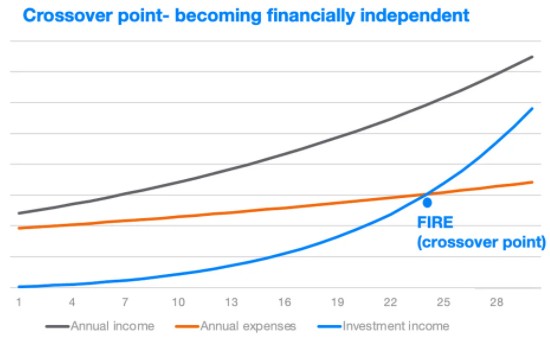
Once you achieve Financial Independence, you may choose to leave salaried employment but with decades of vibrant life ahead, it’s too soon to do nothing. The new stage of life between traditional employment and Full Retirement we call Victory Lap, or Victory Lap Retirement (also the title of a new book to be published in August 2016. You can pre-order now at VictoryLapRetirement.com). You may choose to start a business, go back to school or launch an Encore Act or Legacy Career. Perhaps you become a free agent, consultant, freelance writer or to change careers and re-enter the corporate world or government.

Beware the Retirement Risk Zone

I often recommend deferring CPP until age 70 to secure more lifetime income in retirement. It’s also possible to defer OAS to age 70 for a smaller, but still meaningful, increase in guaranteed income.

While the goal is to design a more secure retirement, there can be a psychological hurdle for retirees to overcome. That hurdle has to do with withdrawing (often significant) dollars from existing savings to fill the income gap while you wait for your government benefits to kick in.

Indeed, the idea is still to meet your desired spending needs in retirement – a key objective, especially to new retirees.

This leads to what I call the retirement risk zone: The period of time between retirement and the uptake of delayed government benefits. Sometimes there’s even a delay between retirement and the uptake of a defined benefit pension.

Retirement Risk Zone

The challenge for retirees is that even though a retirement plan that has them drawing heavily from existing RRSPs, non-registered savings, and potentially even their TFSAs, works out nicely on paper, it can be extremely difficult to start spending down their assets.

That makes sense, because one of the biggest fears that retirees face is the prospect of outliving their savings. And, even though delaying CPP and OAS helps mitigate that concern, spending down actual dollars in the bank still seems counterintuitive.

Consider an example of a recently divorced woman I’ll call Leslie, who earns a good salary of $120,000 per year and spends modestly at about $62,000 per year after taxes (including her mortgage payments). She wants to retire in nine years, at age 55.

Leslie left a 20-year career in the public sector to work for a financial services company. She chose to stay in her defined benefit pension plan, which will pay her $24,000 per year starting at age 65. The new job has a defined contribution plan to which she contributes 2.5% of her salary and her employer matches that amount.

Leslie then maxes out her personal RRSP and her TFSA. She owns her home and pays an extra $5,000 per month towards her mortgage with the goal of paying it off three years after she retires.

Because of her impressive ability to save, Leslie will be able to reach her goal of retiring at 55. But she’ll then enter the “retirement risk zone” from age 55 to 65, while she waits for her defined benefit pension to kick in, and still be in that zone from 65 to 70 while she waits to apply for her CPP and OAS benefits.

The result is a rapid reduction in her assets and net worth from age 55 to 70:

Retirement risk zone example 55-70

Leslie starts drawing immediately from her RRSP at age 56, at a rate of about 7.5% of the balance. She turns the defined contribution plan into a LIRA and then a LIF, and starts drawing the required minimum amount. Finally, she tops up her spending from the non-registered savings that she built up in her final working years.

When the non-registered savings have been exhausted at age 60, Leslie turns to her TFSA to replace that income. She’ll take that balance down from $216,000 to about $70,000 by age 70. Continue Reading…

4 ways Life Insurance can fund Retirement

Image by unsplash: James Hose jr

By Lucas Siegel

Special to the Financial Independence Hub

The infamous retirement crisis that’s been talked about for years just became real, with inflation and interest rates reaching record highs in the past few months. Consumer prices skyrocketed by 9.1% as of June 2022, the largest increase we’ve seen in 40 years. Couple that with a growing senior population living off a fixed income, many of which retired early during the pandemic, and you have yourself a massive problem.

Most senior Americans are unaware that their life insurance policy could be one of their most valuable liquid assets. Contrary to popular belief, life insurance isn’t just a way to care for loved ones after you die through the death benefit. In fact, permanent life insurance policies can also be used to access funds for retirement planning and healthcare when you need it most. Life settlements are legal throughout the US and regulated in all except six states, as well as the provinces of Quebec and Saskatchewan in Canada.

Regardless of age or financial standing, understanding the true value of your assets is essential to living out the retirement you deserve. Check out the following four ways you can use your life insurance policy to help fund retirement:

1.)   Sell your life insurance policy through a life settlement

For millions of Americans who own a life insurance policy, selling it through a life settlement can be a great way to access cash when it’s most needed. A life settlement involves selling a life insurance policy for lump-sum cash payment that is more than the cash surrender value, but less than the death benefit. Despite decades of industry innovation and growth, some 200 billion dollars[US$] in life insurance is lapsed each year that could have been sold as a life settlement.

While the life settlement process once took two to four months, AI technology has expedited the process, making it easier than ever the get a life settlement valuation. Policyholders can now use a free life settlement calculator to instantly see how much their policy is worth based on a few simple questions. Just as you track the value of your house on Zillow or your car on Autotrader, understanding the value of your life insurance policy is critical to make the best financial decisions for you and your family.

2.)   Obtain the cash value from a permanent policy

When you pay your premium on a permanent life policy, only a portion goes toward covering the cost of your life insurance. The remainder of these payments goes into an investment account where cash value can grow on a tax-deferred basis. As you age, you’ll also eventually be able to tap into the interest earnings from this investment account to help keep your policy active, thus bringing down your out of pocket premium payments. Essentially, the money in this account can be treated as emergency savings with tax advantages.

3.)   Borrow from your policy through a loan

Americans with whole life insurance that have accrued enough cash value to cover the debt can also use their policy as collateral through a whole life loan program. One major benefit is the interest rate will be much lower than what you’d see with credit card debt or an unsecured personal loan. This allows the policyholder to get a one-time, tax-free distribution that can be paid off with interest in life, or be withdrawn from your life insurance policy’s death benefit. Retirees might be able to go through their insurance carrier if whole life loans are offered, or utilize a third-party whole life loan program instead. Continue Reading…

Your home and your retirement plan

By Anita Bruinsma, CFA, Clarity Personal Finance

Special to the Financial Independence Hub

“Your home should not be your retirement.”

This is a common headline in personal finance and although the details are nuanced, the headline can give the wrong impression: that you shouldn’t rely on the equity in your home to fund your retirement.

Certainly, it shouldn’t be the only source of retirement income: homeowners also have to save using RRSPs and TFSAs. However, homeowners in high-priced housing markets will likely have excess equity in their homes that should be considered when building a retirement plan and determining how much they need to save.

The rationale for the “don’t rely on your home for retirement” advice is twofold: first, that you will always need a place to live and the value of your home will be needed to buy or rent another residence; and second, that you need money to buy food and other things, which you can’t do if all your wealth is tied up in your home.

Both these points are valid, but they don’t apply to everyone. Like all aspects of financial planning, each individual’s personal circumstances need to be considered and in fact, many people should count on their home to help fund their retirement.

You’ll always need a place to live

To address the first point — that your current home will fund your next home — consider doing an analysis that looks at the cost of renting for the years after you sell your home. For those in high-priced housing markets like Toronto, the proceeds from selling a mortgage-free home will likely more than offset the cost of renting for 30 years in retirement, including paying for long-term care. The same analysis applies to downsizing by buying a smaller place in a less-expensive market. This means there could very well be excess funds that can be used later in life and this should be accounted for when determining how much retirement savings you need. Continue Reading…

An update on Findependence Day

Regular readers of this site [FindependenceHub.com] probably know that it sprang from another site that was created in 2008 to help sell copies of the original Canadian edition of my financial novel, Findependence Day. I am writing this blog somewhat sheepishly as it turns out that that site is no longer available under the original URL. That URL was the title of the book followed by .com but this post is to warn anyone that the new site currently residing on that domain has nothing to do with me or the Hub. Sadly, we no longer own that URL.

I won’t even provide a link here because I can’t vouch for what may occur there: earlier this week we took down the link to it from the Hub, as it took casual browsers to a different site that appears to originate from India. I realize some readers may out of curiosity be tempted to click on the link but if they do would urge them to heed any warnings that may generate; it may or may not be a legitimate site, and therefore could compromise the computer or device of anyone who visits the site and clicks on any portion of it.

Second US edition via Best Buy Books (updated in 2021)

How to buy the original book and subsequent US edition

That said, there are still ways to purchase the original book and subsequent revised U.S. editions. You can find used copies of the original Canadian edition as well as the latest US edition at Abe Books. They also sell copies of some of my other books, including The Wealthy Boomer and the co-authored Victory Lap Retirement.

We do not sell the two US editions directly but they are available directly from either Trafford.com [published in 2013] or Best Books Media [updated and published in 2021.] Hard-cover, paperbacks and e-book versions of the U.S. Trafford version are available at Trafford or via Amazon Canada.  In addition, Chapters Indigo offers hardcover or paperback versions as well as a Kobo ebook version. 

I introduced the newest US edition on July 1st, 2021 here on the Hub. See why by clicking on An interview with myself. The Best Books Media edition is also available in hardcover, paperback and ebook formats at Barnes & Noble.

The hardcover version is also available at The Book Depositary. Here is the publisher blurb from that site:

Findependence Day presents personal finance in a “can’t put down” story format easily digested by young adults entering the workforce and the world of money. Because money problems often cause marital breakups, it focuses on the financial journey of a young couple who experience the usual ups and downs of job loss, buying homes, raising children, investing and pensions, starting businesses, coping with stock market volatility, and more.

The secrets of financial independence are critical wherever you are in the financial life cycle:

– Newlyweds embarking on family formation will discover the importance of financial planning.

– Debt-plagued graduates will be motivated to embrace “guerrilla frugality.”

First U.S. edition from Trafford, 2013

How to get the original Canadian edition directly from me

While used copies of the 2008 edition can be had for as little as $4 or $5 on some of the sites flagged above, shipping charges will put the final tab well above $10.  But you can still buy brand new copies of the original edition directly from me for $16, postage included, and I’d be glad to sign them and write a short message.

We hope to build a landing page from the Hub in due course that will let interested readers buy the original book through PayPal or credit cards, as was the case on the now-disappeared site.

In the meantime, copies of the 2008 Canadian edition can be purchased directly from me by emailing me at jonchevreau8@gmail.com or mailing a cheque for $16 payable to J. Chevreau Enterprises Inc., 22 Thirty Sixth St., Etobicoke, Ont., M8W 3K9. The $16 price includes GST.

Make sure you include your own mailing address so we can send it via Canada Post. That email can also be used for e-transfers. We absorb the GST. Cartons of 36 copies are also still available for $105 plus postage (roughly $30): some financial advisors find this to be a cost-effective giveaway for clients and prospects.


Should your Small Business partner with a Social Media Influencer?

Image Source: Pixabay

By Beau Peters

Special to the Financial Independence Hub

Justifying working with social media influencers in a big business is much easier. They have the resources, reach, and reputation to make the process seamless. But should your Small Business partner with a social media influencer?

Let’s examine three pros and cons of working with a social media influencer as a small business. Then, we’ll guide you in deciding if this type of partnership is worth pursuing.

Pros and Cons of working with a Social Media Influencer

Working with a social media influencer can positively impact your business’s bottom line, but first, you must weigh the pros and cons of this kind of partnership equally. Let’s start with three substantial disadvantages:

1.) Working with an influencer is hard to justify with a small budget

Small businesses have to be diligent about their finances. The last thing you want to do is spend unnecessary money on a marketing strategy you don’t need. When you have a small marketing budget, it can be hard to justify working with an influencer.

You must consider whether you can actually afford to bring on an influencer and that you’re committed to measuring the return on investment to ensure it’s worth it.

2.) It’s risky

Any marketing strategy is risky, but working with an influencer can be particularly risky because you can’t control people. Even if an influencer checks off all the boxes on your “ultimate influencer” list, they may not do what you thought they would do for your brand.

From taking your product and running to not producing the agreed-to content to being completely ghosted, many things can go wrong when working with a social media influencer.

If you aren’t comfortable with the risks, this may not be for you.

3.) It takes a lot of time and effort to find the right influencers

One of the most complex parts of working with influencers is finding the right ones to partner with. Working with the wrong influencers can damage your reputation. If they do something against your brand’s values, your audience won’t be pleased you’re associated with them.

Finding the right influencers to work with takes a lot of time and effort. But you must put in that time and effort to ensure you’re partnering with people with shared values, morals, and ethics.

Even with these cons, the advantages of working with a social media influencer can be significant for a small business. Here are three of them:

1.) Capitalize on the trust influencers have with their audience

Hyper-personalized customer experiences are becoming more important for marketing strategies to be effective. However, the challenge is building enough trust and a deep enough relationship with your target audience to provide that experience.

The great thing about successful influencers is that they know their audience. They built massive trust with them through content they can resonate with. You can capitalize on influencers’ trust with their audience when you choose the right ones to work with. Continue Reading…