Debt & Frugality

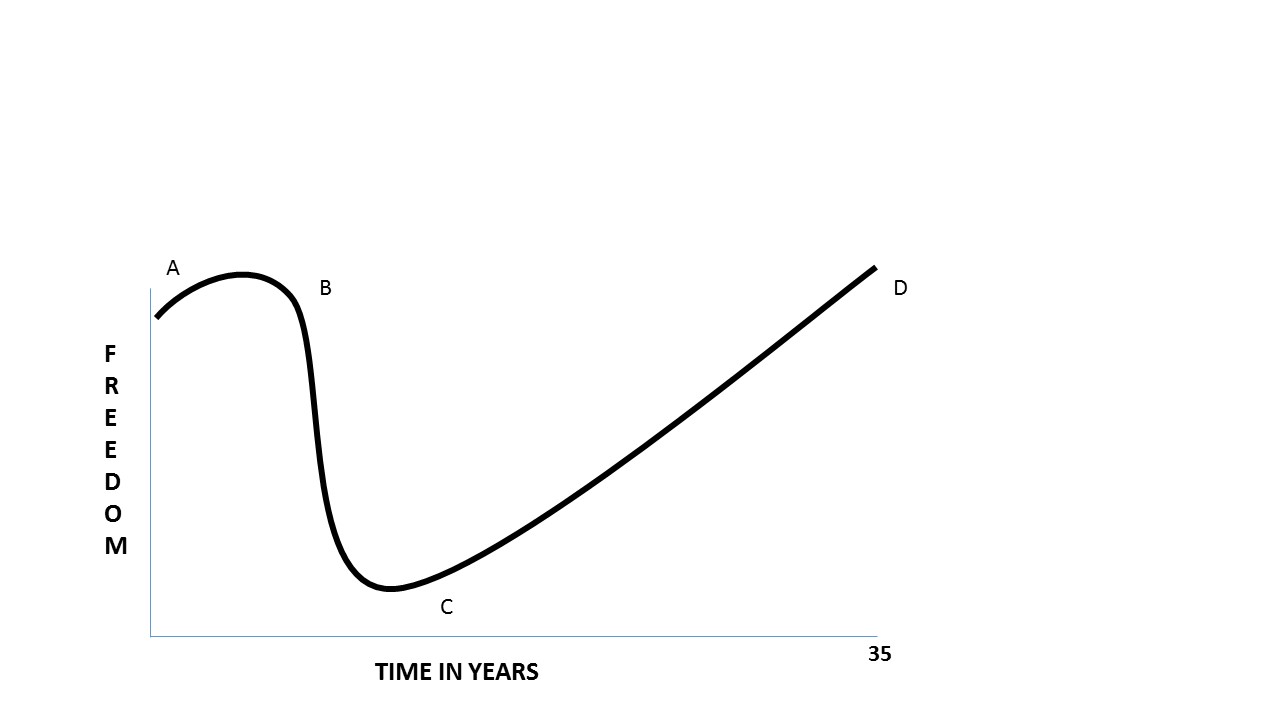
As Didi says in the novel (Findependence Day), “There’s no point climbing the Tower of Wealth when you’re still mired in the basement of debt.” If you owe credit-card debt still charging an usurous 20% per annum, forget about building wealth: focus on eliminating that debt. And once done, focus on paying off your mortgage. As Theo says in the novel, “The foundation of financial independence is a paid-for house.”

Banks repaid Millions to overcharged investors, which got me thinking

Colorful vector infographic financial flowchart for money transfer and transactions from hand to hand as it circulates through the economy and banks

CIBC agreed to repay $73 million to more than 80,000 customers who were overcharged for their investments since 2002. The majority of those affected were in fee-based accounts and were found to have paid double fees on some investments that had embedded commissions. Meanwhile, some 24,000 CIBC clients were not told they qualified for lower-cost mutual funds because of the size of their investments, and were instead sold similar funds with higher management expense ratios.

Incredible, yet not surprising when you consider this is the same bank that makes its senior clients apply for free banking rather than granting it automatically when clients turns 60.

It should be noted that CIBC self-reported the fee problems to the Ontario Securities Commission when it uncovered the issues during an internal review. The OSC has settled similar voluntary cases with three Bank of Nova Scotia divisions, three subsidiaries of TD Bank, and with mutual fund giant CI Funds, which repaid $156 million to 360,000 clients who bought mutual funds over a five-year period.

How many other ways will Canadian investors get fleeced by an industry that cares more about protecting its compensation model than it does about looking out for the best interest of its clients?

When will the Canadian Securities Administrators (securities regulators) finally get around to banning trailer fees – the embedded commissions that puts advisors in a clear conflict of interest and which a mountain of evidence suggest influences fund recommendations?

Since we’re talking about overcharging investors, here’s a thought:

The banks are suddenly feeling so ethical and generous by volunteering to repay fees that were overcharged. So let’s have some fun (or maybe cry a little) and apply that to the more than $1.32 trillion (!) that Canadians have invested in mutual funds.

We already know that Canadians pay some of the highest mutual fund fees in the world – the Investment Funds Institute of Canada estimates the average total cost of ownership of mutual funds for clients is 2.2%.

We also know, thanks to Professor Douglas Cumming’s research on mutual fund fees, that the average trailer fee on a fund is 0.3%.

Let’s say Canadians demand that the average mutual fund fees be reduced to 1.5%. That’s lower than many other countries, but still higher than fees in Australia and the U.S. (according to Morningstar).

To get there we’d have to ban trailer fees (saving 0.3%) and maybe by doing so we’d miraculously find that dealers no longer have the incentive to sell higher fee funds and so the average comes down to 1.5%.

How much will Canadian investors save if this hypothetical scenario came to pass?

  • $1.32 trillion x 2.2% MER = $29,040,000,000 ($29.04 billion) in fees paid by Canadian mutual fund investors.
  • $1.32 trillion x 1.5% MER = $19,800,000,000 ($19.8 billion) in fees paid after lowering the average MER by 0.7%.

That’s a savings of nearly $10 billion. Now the IFIC says that 4.9 million Canadian households invest in mutual funds, so if we divide the amount saved by the number of households then each household should receive a nice $1,885 rebate.

Final thoughts

Mutual fund assets continue to grow because for the Canadians who want to save and invest, the easiest way for them to do so is by visiting a bank advisor or mutual fund salesperson. But those advisors have a conflict of interest, selling their firm’s funds that may be suitable but not in the best interest of their client because of high product fees and incentives that reward the seller.

Lower cost products such as ETFs exist, but investors have to do their research and go it alone (or use a robo-advisor service) to realize the savings. That’s why, despite widespread attention over the last 5-10 years, the total Canadian listed ETF assets is only $107 billion, or just one-tenth of the mutual fund market.

So while investors patiently wait for securities regulators to ban trailer fees, I think Canadians should demand to be repaid the $10 billion that they’re being overcharged each year from mutual fund fees.

 RobbEngenIn addition to running the Boomer & Echo website, Robb Engen is a fee-only financial planner. This article originally ran on his site on October 30th and is republished here with his permission.

Are you taking Rate Comparison seriously enough?

young man showing ignorance on a white backgroundBy Sean Cooper

Special to the Financial Independence Hub

For many Canadians, shopping is a national pastime. Some of our favourite activities include planning a vacation and picking up new furniture – unfortunately, shopping for a mortgage and auto insurance doesn’t seem to be one of them, finds a recent Ipsos survey commissioned by LowestRates.ca.

For most of us, buying a home is the single biggest financial decision of our lifetime. It shouldn’t come as a surprise then that 67% of Canadian mortgage holders consider taking a mortgage a “very important” financial decision. Yet, what comes as a shocker is how little time we’re spending shopping for mortgages. We’re spending an average of 7.75 hours planning a $2,000 vacation, yet we’re only spending 5.75 hours (2 hours less) finding a $300,000 to $500,000 mortgage. I discuss these surprising findings and more in my upcoming book, Burn Your Mortgage.

The survey findings aren’t any different for auto insurance. While 52% of us believe auto insurance is a “very important” financial decision, we’re spending more time picking furniture and choosing a paint colour than auto insurance. Based on these findings, it would seem many of us don’t have our financial priorities straight.

 Take the time to shop for Mortgage and Auto Insurance

Continue Reading…

3 questions if you often carry a balance on your credit card

Attractive girls with bags and credit cards on a white backgroundBy Alyssa Furtado, RateHub.ca

Special to the Financial Independence Hub

When comparing credit cards, it’s easy to get seduced by reward programs offering cash back, travel points, or other benefits. If you pay off your entire credit card balance every month, then these types of cards are a great option. But if you don’t usually pay your balance off in full or you have an upcoming expense that’ll take you a while to pay off, using a rewards card might not be the smartest move.

1.) What’s the best type of credit card?

If you usually carry a balance on your card, you might want to consider getting a low-interest credit card.

As the name suggests, low-interest credit cards are specifically designed to offer competitive low interest rates on purchases, balance transfers, and cash advances. Not only will you pay less in interest, you will also be able to pay off your debt faster since your interest costs will be lower.

This is why a low-interest rate is one of the key features many people look for in a credit card.

2.) What’s the best low-interest card?

There are a number of fixed low-interest credit cards so it’s worth comparing them, but one of the best cards available is the BMO Preferred Rate MasterCard.

Continue Reading…

Robb Engen’s 4 biggest Investing Mistakes

Learn from your mistakes - motivational words on a slate blackboard against red barn woodI was 19 years old when I first started investing. I diligently set aside money every paycheque, starting with $50 every two weeks and eventually increasing that to $200 per month, to save for retirement inside my RRSP. Sounds like I was off to a great start, right? Wrong!


Even though my intentions were in the right place, my first attempt at investing was a complete disaster. Here’s why: I didn’t have a plan

It’s good practice to save a portion of your income for the future, even at a young age. The problem for me was that I was still in school and didn’t have a plan – I had no clue what I was saving for.

I had read The Wealthy Barber and The Millionaire Next Door and so I knew the earlier I started putting away money for retirement, the longer I’d have compound interest working on my side, and the bigger my nest egg would be.

Unfortunately, I was saving for retirement at the expense of any other short-term goals, like paying off my student loans, buying a used car, or saving for a down payment on a house.

I didn’t have any short-term savings

Speaking of RRSPs, what was a 19-year-old kid doing opening up an RRSP when he’s only making $15,000 per year?

There were no real tax advantages for me to save within an RRSP when I was in such a low tax bracket. I’m sure I blew my tax refunds anyway, so what was the point?

Granted, the tax free savings account hadn’t been introduced yet, but I would have been better off using a high interest savings account for my savings rather than putting money in my RRSP.

I didn’t have a clue about fees and tracking performance

Like a typical young investor I used mutual funds to build my investment portfolio. I was encouraged by a bank advisor to select global equity mutual funds because, as I was told, they would deliver the highest returns over the long term.

What the bank advisor didn’t tell me was that the management expense ratio (MER) on some of those mutual funds can be 2.5 per cent or more, and high fees will have a negative impact on your investment returns over the long run.

Bank advisors also don’t tell you which benchmark these funds are supposed to track (and attempt to beat) so when you get your statements in the mail it’s impossible to determine how well your investments are doing compared to the rest of the market.

I drained my RRSP early

I didn’t have a good handle on my finances in my 20s and often resorted to using credit cards to get by. Without a proper budget in place, and no short-term savings to fall back on in case of emergency, I had no choice but to raid my RRSPs to pay off my credit-card debt and get my finances back on track.

Taking money out of my RRSP early meant paying taxes up front. Withdrawals up to $5,000 are subject to 10 per cent withholding tax, while taking between $5,000 and $15,000 will cost you 20 per cent, and withdrawals over $15,000 will cost you 30 per cent.

Your financial institution withholds tax on the money you take out and pays it directly to the government. So when I took out $10,000 from my RRSP, the bank withheld $2,000 and I was left with $8,000. In addition to the withholding tax, I also had to report the full $10,000 withdrawal as taxable income that year.

While I can’t argue with my reasons for selling, my dumb decisions beforehand cost me a lot of money and left me starting over from scratch.

Final thoughts

We all make investing mistakes – some bigger than others. If I had to do things over again today I would have done the following:

  1. Create a budget – A budget is the foundation for responsible money management. Had I used a budget and tracked my expenses properly from an early age I would have lived within my means and kept my spending under control.
  2. Open a tax free savings account – Yes, the TFSA wasn’t around back then but for today’s youth it makes much more sense to save inside your TFSA instead of your RRSP like I did. You can put up to $5,500 per year inside your TFSA and withdraw the money tax free. You contribute with after-tax dollars, so you won’t get a tax refund, but you’ll likely be in a low tax bracket anyway, so contributing to an RRSP won’t give you much of a refund either.
  3. Make a financial plan – We all have financial goals and even at a young age I should have identified some short-and-long term priorities to save toward. I’d take a three-pronged approach where I’d use a high interest savings account to fund my short term goals, my TFSA to fund mid-to-long term goals, and eventually open an RRSP to save for retirement. No doubt I’d be much further ahead today if I took this approach earlier in life.
  4. Use index funds or ETFs – Now that I understand how destructive fees can be to your portfolio, I’d look into building up my investments using low cost index funds or ETFs. The advantage to using index funds is that you can make regular contributions at no cost while achieving the same returns as the market, minus a small management. Some brokers also offer free commissions when you purchase ETFs.

Did you make similar mistakes when you first started investing? How did you overcome them?

 RobbEngenIn addition to running the Boomer & Echo website, Robb Engen is a fee-only financial planner. This article originally ran on his site on August 7th and is republished here with his permission.


Retirement Planning for Small Business

Portrait of retired manual worker sittiing in his small workshop in front of laptop and making online order. Small business.By Cher Zevala 

Special to the Financial Independence Hub

Small business owners typically spend their days juggling a huge variety of tasks, whether they have a team around to help them or not. From managing accounts and serving customers to handling marketing and sales and developing new products or services, there are many priorities which compete for attention. As a result, it can be tough for entrepreneurs to find the time and the energy to think about their future, particularly when it comes to retirement savings.

However, that doesn’t mean that it should keep being put off until later. If you own your own business, it’s important that you don’t end up at retirement age without enough savings to see you through. If you need to take care of your future, read on for some steps you can follow today to tackle retirement planning.

Know Your Goals

When it comes to retirement for small business owners, one of the first things entrepreneurs should think about is their long-term goals. Whether you want to retire in ultimate style one day or just want a basic amount of cashflow to see out your days with a simple life, it’s  important to be  clear on what your exact goals are for the future.

Apart from working out how much money you will need to retire in the manner you wish, you should also have goals about when you want to retire, and how you want to go about doing so. For example, would you prefer to sell your business, hand it down to a family member, friend, or colleague, or simply close it up when you’re ready to retire? Or perhaps you would prefer to sell just your share of the business to a business partner? Your goals for the future will determine how you prepare for your retirement, so you need to know them well in advance.

Make a Plan

Continue Reading…

Powered by the Financial Independence Hub.
© 2013-2026 All Rights Reserved.
Financial Independence Hub Logo

Sign up for our Daily Digest E-Mail!

Get daily updates from the FindependenceHub.com straight to your inbox.