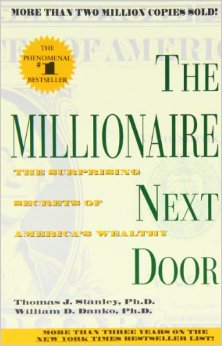
 Two decades ago, Thomas Stanley and William Danko set out to interview wealthy people for their best-selling book The Millionaire Next Door. They started out in the affluent neighbourhoods on streets dotted with extravagant homes with luxury vehicles parked out front and in-ground swimming pools in the backyards.
They were shocked to find out that the people living in these homes were not wealthy at all. Many of these upscale homes had huge mortgages. The luxury cars were leased and, while the occupants had high salaries, they had very little net worth. They only seemed wealthy.
Instead, they found millionaires in modest homes in reasonably priced neighbourhoods, working and living next door to people who have a fraction of their wealth. They were living well below their means and not calling attention to themselves. They didn’t have the big-spending lifestyle most of us associate with rich people.
To be clear, for this purpose a wealthy, or high net worth, individual is described as someone who has at least $1 million in investable assets that is not inherited. These assets do not include their home or cottage.
Also not included are the ultra-high-net-worth, super wealthy individuals with a bankroll of more than $100 million who actually represent only a small minority of Canadians.
The road to riches
What can the average Canadian learn from the habits of the wealthy? Danko and Stanley found these factors common to wealthy people:
1.) They live well below their means
When I first read this book years ago I thought – what a bunch of cheapskates with their Timex watches, $50 suits, and 10-year-old Ford trucks! If I had that kind of money, I’d at least upgrade a little. I’ve known a few people who had a large amount of assets and spent hardly anything, ultimately leaving their wealth to relatives, and often distant ones at that.
I understand now that the millionaires mentioned do tend to be frugal, but they enjoy luxuries that are meaningful to them, and only once they are well on the road to security and financial freedom.
2.) They chose the right occupation
Many are small business owners or entrepreneurs, but you don’t have to own a business to get into this circle. Often they are hard-working, well-educated, middle-to-high income earners.
I’m not suggesting you choose a career primarily for the high salary. But, it’s obvious that if a person is educated and trained in some sort of profession, they will do much better than say, a cashier or shipper-receiver.
3.) They have a good marriage
Dual incomes enable couples to get ahead financially much more quickly. However, even more important are spouses who have similar values and goals and are willing to resolve any differences and work together in building their wealth.
There is no quicker way to lose half the assets of a household than to go through a divorce.
4.) They are skillful in targeting opportunities
People shouldn’t worry about the doom and gloom reporting on the news and things they can’t control. Instead, have a long-term view of investing and don’t let emotions sway your decisions. Have cash available to buy when markets are down and to take advantage of any bargain opportunities.
Start saving and investing in your early years to take advantage of compounding and reinvested dividends.
Pay less for purchases by shopping for bargains and learn to negotiate. Avoid high-interest credit-card debt. Use smart tax reduction strategies.
Allocate your time, energy, and money efficiently, in ways conducive to building your wealth.
5.) Their adult children are economically self-sufficient
Children are taught money management at an early age and encouraged to enrol in secondary education. As adults, they don’t ask their parents for money or bail-outs or help with the bills.
Final thoughts
Danko claims that it’s really about buckling down and living on less:
“How in the world can you be an investor and let compounding work for you if you are not a saver? And how can you be a saver if you are in debt? Many people who are strapped with debt are looking for a magic bullet, but continue the free-spending ways they have become accustomed to. Live on 80% of what you make, and save and invest 20%. Let the time value of money work for you.”
Calculate how much money you will earn over your working life. Most people will earn well over a million dollars in their lifetime, but very few will become millionaires.
Accumulating wealth takes discipline and hard work.
We all want a sense of long-term security and peace of mind as well as the comfortable lifestyle that wealth provides.
Saving diligently, being frugal, setting aside a portion of your income for the future and investing wisely are the strategies to becoming the millionaire next door.
Do you think you live next door to a millionaire? Or, is it you?


 Posted By
  By Alyssa Furtado, RateHub.ca
 Posted By



 Posted By