
Debt & Frugality

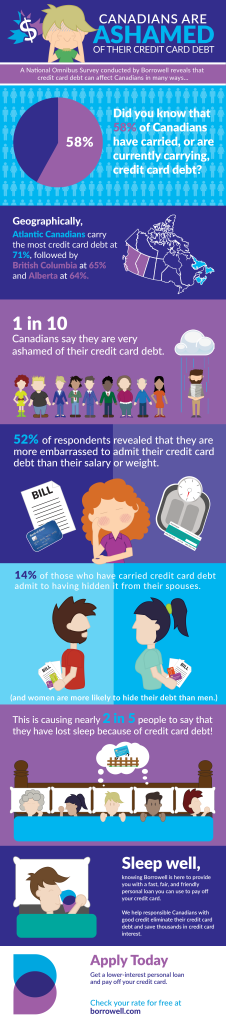
As Didi says in the novel (Findependence Day), “There’s no point climbing the Tower of Wealth when you’re still mired in the basement of debt.” If you owe credit-card debt still charging an usurous 20% per annum, forget about building wealth: focus on eliminating that debt. And once done, focus on paying off your mortgage. As Theo says in the novel, “The foundation of financial independence is a paid-for house.”

“Of Course . . . But Maybe” — How to cultivate sober second thoughts on various financial decisions

By Robb Engen, Boomer & Echo

Special to the Financial Independence Hub

Comedian Louis C.K. closed his 2013 comedy special Oh My God with a hilarious (albeit crude) bit called, “Of course . . . but maybe.” I thought it would be fun to apply the same thinking to personal finance and some of the situations we run into every day.

On sense of entitlement

Of course you deserve a vacation. You worked hard all year, and sure, while you didn’t make much progress paying off your credit-card debt, and your New Year’s resolution to reign-in the impulse shopping was busted by February, a week spent soaking up the tropical sun will re-charge your batteries and give you a fresh start on your financial goals.

But maybe you shouldn’t add to your debt-misery by putting that all-inclusive resort vacation on your credit card. Maybe burying your head in the sand won’t make your financial problems go away. Maybe you should hold off on the tropical vacation for a year or two while you get a handle on your finances. Maybe then you can truly say, “I deserve this.

On education and doing what you love

Of course you should go to University and study whatever you want. Of course you should find your passion, however long it takes. You can be whatever you want. You can do whatever you want. Post-secondary education is an investment in your future.

Related: When doing what you love doesn’t pay the bills

But maybe spending $100,000 and eight-years of your life on that double-major in history and fine arts, only to spend the next few years working as a Starbucks barista, wasn’t the wisest use of your time and money.

On investing in mutual funds

Of course mutual funds offer an easy way for investors to put their hard-earned savings into a diversified basket of stocks and bonds. You can start investing with as little as $25 per month and build up your portfolio without any transaction costs.

But maybe you didn’t notice the annual management expense ratio eating into your returns. Maybe, as Vanguard founder Jack Bogle estimates, the 2.5 per cent a year in fees over a typical investor’s lifetime means that an astounding 80% of compounding returns ends up in the hands of the manager, not the investor. And maybe your financial advisor is really a salesperson in disguise, recommending funds that may not be in your best interest.

On insurance needs

Of course you should buy insurance to protect your loved ones in case something terrible should happen to you. Of course you want to provide for your dependents in case you die or become disabled.

Related: 5 myths about insurance

But maybe asking your insurance broker if you need insurance is like asking your barber if you need a haircut. Maybe if you are single and have no dependents you might not need life insurance. Maybe a simple term life insurance policy that pays off your debts and provides 5-10 years of income for your spouse and children is all the insurance you need. And maybe mortgage life insurance and balance protection insurance really just protect the bank at your expense.

On budgeting and tracking expenses

Of course you don’t need a budget. You have a great handle on your finances. You pay yourself first. You’re debt-free. You live within your means.

But maybe if you spent three months tracking your spending you’d discover several hundred dollars a month worth of unaccounted for expenses in categories such as dining out, gifts, and “miscellaneous.”

On home ownership

Of course you should aspire to own your own home one day. After all, you’re just throwing your money away on rent every month. Why not build up some equity of your own? And with house prices continuing to rise, of course it’s better to get into the market now before you’re priced out forever.

But maybe home ownership isn’t the panacea it’s made out to be. Maybe new expenses, such as property taxes, home maintenance, and lawn care cost more than you thought. A big-fat mortgage means you can’t afford to save for retirement, or even the odd dinner out. It turns out that maybe renting was a lot cheaper and gave you the freedom to pursue and achieve your other financial goals. (See also The Real Cost of Buying Your Home.)

RobbEngenIn addition to running the Boomer & Echo website, Robb Engen is a fee-only financial planner. This article originally ran on his site on August 16th and is republished here with his permission. See also Boomer & Echo’s 5th Anniversary contest, with prizes galore (including a copy of Findependence Day). 

Planet Boomer: The Beginning

1429562861
Jim Herrier and Ellen Ma, PlanetBoomer.com

By Jim Herrier

Special to the Financial Independence Hub

When my wife Ellen and I announced to our friends and family that we were moving to Asia the consensus was we would be back in less than two years.

That was ten years ago.

Our first move to Singapore was simply fantastic. A beautiful and sophisticated city on the doorstep of every dream destination you can imagine. Within weeks we were in Bali (the weekend retreat of Singapore ) and we’ve now been 17 times. Beijing was next, then Hanoi, then Phuket and Bangkok in Thailand. We never stopped travelling in Asia and have never run out of amazing places to go.

After two years we left for a business opportunity in Shanghai. The drama and pace of living among 23 million people in what is surely one of the most dramatic cities in the world was exciting but getting out of it was a necessity. We kept travelling, throughout China and farther afield: Sri Lanka, India and all over Australia.

While in China we made friends with two respected Australian journalists: Steve and Colleen Wyatt. As reporters for the Australian Financial Review they went to places we had only heard of, covering stories ranging from worker unrest in Mongolia to riots by Uyghur peasants in Urumqi. Dinner with them was never dull.

After three years, business — this time our own — took us back to Singapore and our travels continued unabated. More India, Laos, Cambodia and the delightful towns and villages of Hoi An, Danang, Ho Chi Minh, Luang Prabang, Chiang Mai, and Phnom Penh. Our Australian friends were posted back to Sydney and then to their hillside home in Byron Bay. On a Skype call Steve revealed they were writing a new book. No surprise, they had written a number of business books; usually exposes of big business and government fiascos. But this one was different.

A new book on Retirement

Continue Reading…

Weekly Wrap: ORPP gets flak, investors watch weights, the worst form of debt

2_hc1oqU
Ontario premier Kathleen Wynne (Twitter.com)

First an apology that there was no weekly wrap last weekend because of a long weekend I took up in cottage country. Summer is fast fading!

This week the big macroeconomic story was China’s devaluation and the consequent negative impact on global markets. Probably the least confusing and most insightful analysis of this story was in The Economist, titled The Devaluation of the Yuan: The Battle of Midpoint.

On the retirement front in this country, the controversial story was the Ontario Government’s unveiling of the details of the much-loathed ORPP, or Ontario Retirement Pension Plan. This appears to becoming an election issue as the animosity between Stephen Harper and Ontario premier Kathleen Wynne heats up. We did weigh in with a recap on the Hub, which you can find here.

Note the references to two studies that came out hours before the official ORPP announcement, providing a little grist for the mill for both fans and foes of the plan. My own take on this will be in an upcoming Motley Fool blog but the main critiques of the ORPP — and there were many — are summarized below.

10 reasons ORPP should be T-ORPP-EDOED

Continue Reading…

The power of asking: why you should negotiate everything

workers in the office

by Robb Engen, Boomer & Echo

Special to the Financial Independence Hub

Most of us are creatures of habit – we crave routine. We bank at the same place where we first opened an account. We renew our mortgage and insurance policies automatically without shopping around for better rates. Then when we see a promotional offer from a rival cable or internet provider, we complain how loyal customers get screwed.

When it comes to our finances, complacency is king. Yet many of us will drive across town just to save a few cents per litre on gas, or we’ll go to three or four different supermarkets to save a few bucks on groceries.

Sure, there’s nothing wrong with saving money on gas or groceries. But why are we willing to trade an hour or more of our time to save a few bucks when we can’t be bothered to spend 15 minutes to shop around and negotiate in the more critical areas of our finances?

Negotiating a deal can be intimidating. When the seller has more or better information than the buyer, it creates an imbalance of power. The more you know about the products and services you buy, the better the deal you’ll get.

Research the promotional offers and discounts currently available. Luckily, in this day and age, all that information is online and at your fingertips.

The best advice I can give is to shop around, or to simply ask for a better deal. Here are some other tips to help you negotiate:

1.) Check your bill often

Continue Reading…

Investment Fees Are Costing You Way More Than You Think … Here’s Why

vitatv_big_left-150x150
Vita Nelson

 By Vita Nelson, Editor and Publisher of Moneypaper’s Guide to Direct Investment Plans

Special to the Financial Independence Hub

You may not give much thought to the investment fees you pay. That’s because they seem so small. Right?

According to an October, 2014 survey by investment management firm Rebalance IRA, many Americans incorrectly believe they pay no fees in their retirement accounts. Among baby boomers between ages 50 and 68, all with full-time jobs, “forty-six per cent believed they paid nothing, and 19 per cent were under the impression that their fees totaled less than 0.5 per cent.” (In fact, research reveals that actual expenses average 1.5 per cent of their assets per year every year.)

Chances are that fees are costing you much more than you realize! Why?

Because the fee itself isn’t the real culprit. The real killer is the opportunity cost of not investing the money you’re spending on fees. That’s why John Bogle, founder of Vanguard, calls investment fees the “tyranny of compounding costs” in a recent Forbes interview.

The real cost of investment fees is the value of the shares you never bought, and how much those shares would have increased your wealth over the long term. That is, you’ve lost the compounding effect of owning those shares: the dividends that would have been paid to you on the shares and the compounding effect on those dividends. Continue Reading…