As Didi says in the novel (Findependence Day), “There’s no point climbing the Tower of Wealth when you’re still mired in the basement of debt.” If you owe credit-card debt still charging an usurous 20% per annum, forget about building wealth: focus on eliminating that debt. And once done, focus on paying off your mortgage. As Theo says in the novel, “The foundation of financial independence is a paid-for house.”
I recently delivered my debut “Ice Breakers” talk at the local (Port Credit) chapter of Toastmasters, an organization I highly recommend for anyone who wants to polish their public speaking and leadership skills.
I began by pulling out a $5 bill and dropping it at my feet. I asked how many audience members would pick one up if they saw a stray fin on the sidewalk. Most would, but also admitted they probably wouldn’t bother to stoop to pick up a penny or a nickel. I also remarked that when you pull a green $20 bill out of your wallet and consider what it can purchase, your attitude to that bill’s value is probably about what it was to a purple $10 bill some two decades earlier. Inflation, it seems, is forever with us.
If this is inflation, bring it on!
But if you ever wanted a concrete demonstration of the value of a lowly blue $5 bill, then go the website fiverr.com. That’s FIVERR, a “fiver” with an extra R. Continue Reading…
In many ways, Elizabeth Warren’s 2005 bestseller All Your Worth was ahead of its time. Warren, a relentless consumer advocate, eschews mindless frugality and focuses instead on finding the right balance so you always have enough to pay your bills, have some fun, and save for the future.
The author suggests a simple formula for spending your after-tax dollars on needs, wants, and savings:
Allocate 50 per cent to needs: These must-haves include housing, transportation, groceries, insurance, and clothes that you really need.
Spend 30 per cent on wants: Wants include cable television, clothing beyond the basics, restaurant meals, concert tickets, hobbies, etc.
Set aside 20 per cent for savings: This includes both short- and-long term savings, as well as debt repayment.
Warren encourages saving AND having fun rather than scrimping and pinching pennies on the things that make you happy. That means saving money on big-ticket items like housing and transportation – effectively reducing the amount you spend on needs to free up money to save for the future and spend on wants.
“If you can’t afford to have fun, you can’t afford your life.”
When I applied this formula to my own spending I found the following breakdown:
Needs took up 53.5 per cent of our monthly budget, including the mortgage payment, property taxes, car payment, insurance (life, home, car), groceries, gas, utilities, cell phone, hair cuts, prescriptions, and clothing.
Wants made up just 18 per cent of our monthly spending, including cable and internet, restaurants, alcohol, children’s activities, hired cleaners (bi-weekly), credit card annual fees, subscriptions and memberships, gifts, summer vacation, and discretionary spending.
Our car will be paid off late next year, which will free up $10,000 per year and reduce our “needs” allocation from 53.5 per cent down to about 44 per cent. Ideally, I’d prefer to shuffle that money over to savings and build up our TFSAs; however, I’ll keep the idea of balance in mind and consider adding a few thousand dollars into our “wants” allocation.
Final thoughts
A balanced financial plan will ultimately lead to a happier and more fulfilling life.
Too many of us are living close to the edge financially because they’ve over-extended themselves on house and car payments and can’t afford to live.
Launched last week, the Hub’s Weekly Wrap aims to be a weekend read with brief commentary and links to some of the more interesting items touching on Financial Independence that appeared in North American cyberspace in the past week or two.
We aim to split these roughly half from American blogs and online media and half from Canadian. (That roughly corresponds to current traffic levels at the Hub.)
We’ll begin with this piece from Next Avenue: Unemployed, 55 and Faking Normal. This blog about the common fear of becoming a bag lady (financially speaking) was widely tweeted, including by a few women I suspect were in similar circumstances. No doubt about it, a combination of divorce and job loss can add up to a tough go, especially if you’re still not old enough to qualify for Social Security or the Canadian triad of CPP/OAS/GIS.
Fast-casual dining
Moving on to the more fortunate comes this piece from the Washington Post, mentioned on the Motley Fool’s Market Foolery podcast on Tuesday. The Chipotle effect: Why America is obsessed with fast casual food is an analysis of the trend to “Fast Casual” dining and the stocks of the major players capitalizing on this change (Chipotle and Panera to name two.) This is a threat to the old-time fast food joints like McDonald’s: ironically, McDonald’s incubated Chipotle in its early days.
One of the strongest arguments made by investment industry groups against banning embedded commissions – or the trailer fees paid to advisors when you purchase mutual funds – is that investors don’t want to pay up-front for financial advice.
Advocis, which represents financial advisors across Canada, as well as the Mutual Fund Dealers Association, believe things are fine just the way they are, claiming, “investors prefer to pay for financial advice through fees that are part of their mutual funds.”
These arguments are used to convince regulators that a ban on trailer fees would only hurt investors, with potentially “devastating consequences” for those who are just starting out and don’t have the means to pay directly for advice.
I’ve tried to debunk this argument in a recent post, stating that it’s up to the investment industry to adapt and deliver new service (and cost) models to meet the needs of consumers.
But a recent study by Morningstar India shed further light on the gap between investor expectations and what advisors perceived to be investors’ expectations.
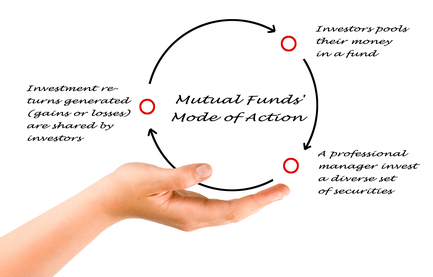
Hub Extra for Newcomers: Primer on how mutual funds work
A third of investors don’t seek professional advice
The study found that over one-third of investors do not seek out professional advice when it comes to their finances, instead relying on their own knowledge or help from family, friends or colleagues.
Here’s my latest MoneySense blog, which is a followup to Robb Engen’s article here at the Hub about his conversion from stock-picking to 100% “pure” indexing.
After Robb revealed his “conversion” and I appealed for other readers with similar stories, readers started to come out of the woodwork. In one of the cases, the “confession” appeared first at MoneySense and now The Hub.
In addition to the two readers profiled in the MoneySense blog, I’ve already started to receive more emails from other “pure” readers. Please let me know by emailing me at jonathan@findependence.com. Hopefully, we’ll discover that there are a lot more than the half dozen I’m so far aware of.
I’ve republished the original version of the blog below and included photographs of the two readers that were not included in the MoneySense version:
Pure indexers step forward
Boomer & Echo’s Robb Engen
Early in January, popular blogger and fee-only financial planner Robb Engen announced on Twitter and his Boomer & Echo site that he had finally bitten the bullet – he’d liquidated his portfolio of individual dividend-paying stocks in order to become a 100% “pure” indexer. Continue Reading…


 Posted By
  I recently delivered my debut “Ice Breakers” talk at the local (Port Credit) chapter of Toastmasters, an organization I highly recommend for anyone who wants to polish their public speaking and leadership skills.
 But if you ever wanted a concrete demonstration of the value of a lowly blue $5 bill, then go the website fiverr.com. That’s FIVERR, a “fiver” with an extra R. Continue Reading…