Debt & Frugality

As Didi says in the novel (Findependence Day), “There’s no point climbing the Tower of Wealth when you’re still mired in the basement of debt.” If you owe credit-card debt still charging an usurous 20% per annum, forget about building wealth: focus on eliminating that debt. And once done, focus on paying off your mortgage. As Theo says in the novel, “The foundation of financial independence is a paid-for house.”

Retired Money: What can retirees do about GIC reinvestment sticker shock?

My latest MoneySense Retired Money column looks at the vexing problem retirees and near-retirees face when their GICs have matured in recent months. Click on the highlighted text for the full column: Recovering from GIC sticker shock.

If before you were getting 2 to 3% on 2, 3, 4 or 5-year GICs, you may be shocked to discover you’ll be lucky to get 1% and only then by declining to take the first suggested GIC your brokerage has on offer. Going out 5 years may only gain you 0.5% or so, depending on provider.

Nor will matters improve any time soon. The Federal Reserve, Bank of Canada and other central banks have suggested interest rates will stay “lower for longer.” The Fed in particular has indicated rates are unlikely to rise for at least three years.

The piece passes on the views of financial advisors Adrian Mastracci and Matthew Ardrey on what to do about it. It amounts to grinning and bearing it and settling for lower guaranteed returns, or biting the bullet and taking a bit more risk with equities or alternative investments.

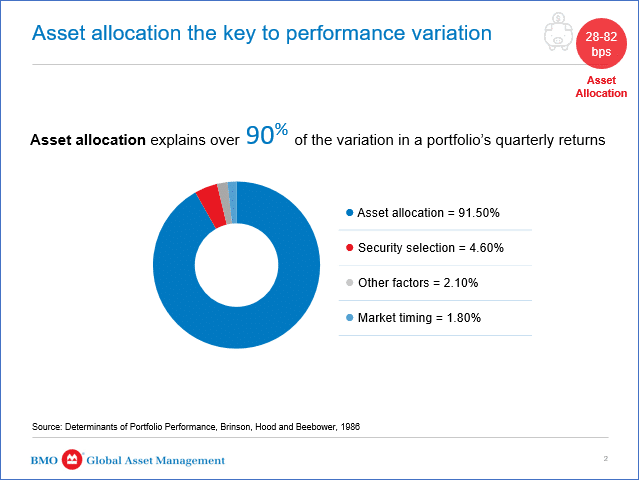
But what if you insist on what our family has done historically: leaving half your fixed-income allocation in GICs? Personally, I aim for roughly a 50/50 asset allocation and for the fixed-income portion historically have split it between laddered GICs and bond ETFs, or asset allocation ETFs with a healthy dose of bonds.

Odds are if you use the major discount brokerages of the big banks, you may need to leave them to find more generous GICs available from independent places like Oaken Financial, which has a 1-year registered GIC paying 1.4% and a 5-year GIC currently paying 2% through Home Trust and Home Equity Bank.

Personally, I have reinvested some GIC cash in 2- or 3-year maturities, on the hope rates start to rise three years from now. While 1% or so is pathetic at least it’s a positive number (ignoring inflation): with so many mentions of negative interest rates in Europe and sometimes floated by central bankers in North America, any positive return at is not to be sneezed at.

Conservative Asset Allocation ETFs are one possible alternative

Among the gambits I’ve tried is to raise risk slightly by moving some of this cash to ETFs like Vanguard’s Conservative Income ETF Portfolio [VCIP/TSX], which is 80% fixed income but provides a modest 20% equity kicker. Those who don’t wish to mess with their pre-existing asset allocation might consider the Vanguard Global Bond ETF [VGAB], roughly split between US and global bonds, all hedged back into the Canadian dollar. Continue Reading…

Top 10 tips on becoming Financially Independent (or “Findependent”)

Financial independence is something for which everyone strives. But most of us never get to a stage of financial independence by choice and we reach this stage when we are very old and can no longer work anymore. And although it is not easy to achieve financial independence (aka “Findependence,”) it can be done if you know how to manage your money effectively.

1.) Develop a budget

The first thing that you need to do when you are trying to save money is to develop a budget. To develop a budget, you need to start by figuring out how much money you need to live on each month and then giving yourself an appropriate amount of money to use over the course of the month.

2.) Get a financial planner

If you have had trouble managing your finances in the past, you should consult a financial planner so that you can get the most out of your money. He or she can help you to plan out what you need to spend, so you will be able to figure out how much money you need to save in order to get where you want to be financially.

3.) Create financial goals

Setting financial goals ensures success, because it helps you to get a sense of what you want to achieve and where you want to go on your financial journey. Giving yourself short term and long term goals is usually the most effective way to achieve financial goals, because it allows you to plan and amend your plans as you go.

4.) Pay off your debts

If you have a lot of debt looming over your head, you should make sure that you pay it off before you start actively trying to save. Start by paying off your smaller debts that have the highest interest rate first, so that you won’t have to pay so much later on when the debt has increased.

5.) Get rid of student loans

When most people think of paying off their debts, they forget about paying off their student loans because they are a different kind of debt to your standard credit card debt or loan repayment. There are a few different options when it comes to repaying your student loan, from paying a fixed amount each week, to contributing a percentage of your average income every pay-day. Continue Reading…

A good resolution for 2021: Choose Financial Independence

Amazon.com

By Michael J. Wiener

Special to the Financial Independence Hub

Many of us dream of financial independence.  Chris Mamula, Brad Barrett, and Jonathan Mendonsa offer many practical ideas for achieving financial independence (FI) and enjoying the journey along the way in their book Choose FI: Your Blueprint to Financial Independence.  They avoid many of the problems we see in the FIRE (Financial Independence Retire Early) book category.

The authors avoid the biggest problem with most FIRE books.  It’s annoying to tell the story of a high-income earner deciding to live like a student his whole life and retire in his 30s, and then say “you can too!”  Although I point out the bad parts of books, I can forgive a lot if my mind is opened to a good idea.  For this reason, I’ve enjoyed FIRE books even if they have some bad parts.  This book manages to avoid the worst parts of other FIRE books.

The authors don’t bother much with retirement.  FI gives us choices so we can “scrap the idea of retirement completely and focus on building lives we don’t want to retire from.”  The life you build can involve paid work, leisure, or any other pursuit you want.

Rather than focus on just one story, the authors draw from the experience of many people who have sought FI.  A common theme is the importance of enjoying the journey.  If you see your pursuit of FI as suffering for several years until you hit your magic number, you’re not doing it the right way.

FI’s benefits start even before you reach the target

You benefit from pursuing FI even before you reach your target.  “If you have a mortgage, a couple car payments, a family to feed, and nothing in the bank, what choice do you have when your boss asks you to do something stupid?”  I was able to push back somewhat with my boss in the late part of my career, and this got me more money and autonomy.

If reaching FI seems like an unattainable goal, it may help to break it down into milestones.  The authors suggest “getting to zero” for those in debt, “fully funded emergency fund,” “hitting six figures” in your portfolio, “half FI,” “getting close,” “FI,” and “FI with cushion.”  This last stage is defined as having a portfolio equal to 33 times your annual spending needs.  This is a sensible target for a young person with a long remaining life who doesn’t really know how spending needs will change with age. Continue Reading…

A smart guide on how to invest in 2021

By Alex Barrow

Special to the Financial Independence Hub

2020 was a difficult year in markets and the economy. There remains a high level of uncertainty heading into the new year. Below we’re going to walk you through some time-tested practical steps on how to prepare for the coming year, in order to make sure you’re financially set for whatever may unfold. 

1.) Assess your personal balance sheet

When planning your finances for the new year it is critically important to know and understand the strength of your current financial position. You can do this by running through the exercises below. 

• Understand your financial obligations relative to your income: 

Are you carrying high levels of debt relative to income? What is the composition of this debt: is it mostly in high-interest credit cards or a low fixed-rate mortgage? The 36% Rule states that your debt to income (DTI) should never surpass 36%. When your DTI rises above 36%, your personal balance sheet is fragile and you become more exposed to financial risk. In these difficult times of uncertainty, it’s important to keep your DTI low so as to maintain financial flexibility. 

• Upcoming big-ticket expenses: 

Do you plan to make any big purchases or financial outlays in the coming year? Perhaps you’re planning to buy a home and purchase a new car or pay the tuition for your child to attend their first year of college … These are big expenses that can stress the strongest of personal balance sheets if one doesn’t plan properly. That’s why it’s important to note these at the start of the year so you can start preparing for the expense. 

  • Nonessential spending: 

Frequent dinners out and vacations at the beach are fun but if they come at the cost of putting a strain on your financial security, they can cause more stress than they’re worth. A good exercise for planning for the coming year is to look back at your expenses from the year before and see where you’re maybe spending a little more money than you’d like. Those $6 lattes every morning add up! 

2.) Set your personal financial goals 

To cite the oft-quoted baseball sage, Yogi Berra “If you don’t know where you’re going, you’ll end up someplace else.” Financial planning and goal setting are critically important to protecting your resources and securing the future you want. From a practical standpoint, this means doing a number of key things at the start of each year. 

  • Set a target retirement savings amount: 

Retirement might be a ways off for you, or not. Regardless, it’s never too early or too late to start planning for it. The rule of thumb is that you should aim to stash 10%-15% of your pretax income into a retirement savings account each year. The earlier you can start doing this the better because that puts the power of compounding in your favor.  

  • Invest, invest, invest: 

The best way to grow your wealth over time is to start investing early and often. This means putting a percentage of your income into low-cost stock and bond indices, on a consistent and regular basis.  

  • Take control of your debts: 

Turning back to keeping your DTI below the key 36%, debt is a financial burden that has to be dealt with before it grows out of hand. This takes time and planning. Just like how the power of compounding works in your favor in investing, it works against you when you carry large amounts of debt if you’re just paying the minimum. Continue Reading…

Study: Coronavirus Pandemic creating Tax Problems that could get worse in 2021

By Mike Brown, LendEDU

Special to the Financial Independence Hub

Americans struggling to repay their 2019 taxes in the midst of a recession has been just another issue to deal with during the coronavirus pandemic.

Recognizing this, the Internal Revenue Service (IRS) actually extended the filing and payment deadline for 2019 tax obligations from April 15, 2020, to July 15, 2020.

The extension may have temporarily stopped the bleeding, yet there’s a looming tax debt crisis that has the potential to boil over in 2021 when 2020 taxes are due.

That’s because millions of Americans took to relying on unemployment benefits, retirement funds, or stock sales to stay afloat amidst the pandemic recession.

All of those things could lead to a heavier tax obligation in 2021, and with many people still out of work and struggling to get by, the country could be looking at staggering tax debt numbers next year.

The U.S. tax gap (total outstanding tax debt) currently hovers around $400 billion, but that figure could approach crisis levels after next year’s tax season.

To capture the struggles from the 2020 tax season and also the fears regarding the 2021 tax season, LendEDU surveyed 1,000 adult Americans to better understand what the average taxpayer has been dealing with during these unprecedented times.

Observations & Analysis

All data is based on an online survey of 1,000 adult Americans commissioned by LendEDU and conducted by research firm Pollfish. The survey was conducted on December 1, 2020. For some questions, the answer percentages may not add up to 100% exactly due to rounding.

17% of Americans laid off because of Pandemic unable to pay all 2019 Taxes

As mentioned above, the IRS extended the deadline to pay 2019 taxes by three months given the financial hardships experienced by many as a result of the coronavirus pandemic and recession.

However, paying all taxes owed by the July 15th deadline was still impossible for many Americans, especially those who have lost jobs due to the pandemic.


Amongst respondents who have lost their jobs during the coronavirus pandemic, 17% were not able to pay their 2019 taxes on time and in full.

Many still haven’t filed Tax Returns

Even if you are unable to fully pay all tax obligations by the filing deadline during any given year, you should always file your tax returns on time.

When dealing with the IRS, a failure-to-file penalty is much worse (5% of unpaid taxes for each month your tax return is late, up to 25%) then a failure-to-pay penalty (.5% of unpaid taxes for each month you don’t pay, up to 25%).

Yet still, data from our survey found many Americans that couldn’t pay all their taxes on time also didn’t file on time.


32% of taxpayers who couldn’t pay all 2019 taxes on time didn’t file their taxes by July 15th either. Even worse, 72% of these taxpayers who missed the July 15th filing deadline still have yet to file their tax returns for 2019, which could lead to serious financial and legal troubles.

Amongst respondents who at least have filed their 2019 tax returns despite not being able to fully pay all taxes by July 15th, here’s how many have been able to finally repay all 2019 taxes owed…


With 53% of applicable taxpayers still having tax debt from 2019, we wanted to see how much they have left…


For American taxpayers that still have some amount of tax debt from the 2019 tax year, the average amount remaining is $3,662.

If you are someone that is currently repaying tax debt, you may want to learn more about tax relief as a possible way to settle or reduce your tax bill.

The data from our survey makes it clear that repaying 2019 taxes has been unusually tough, and mass unemployment brought on by the coronavirus pandemic has been a big reason for the struggles.

But the coronavirus pandemic’s impact on the tax system won’t end in 2020 and likely will be more damaging in 2021 as taxes from this unprecedented year will be owed.

Over half worried about next year’s Tax Debt

The 2021 tax season is shaping up to be a brutal one as the full financial ramifications of the coronavirus pandemic and recession develop. Continue Reading…