Debt & Frugality

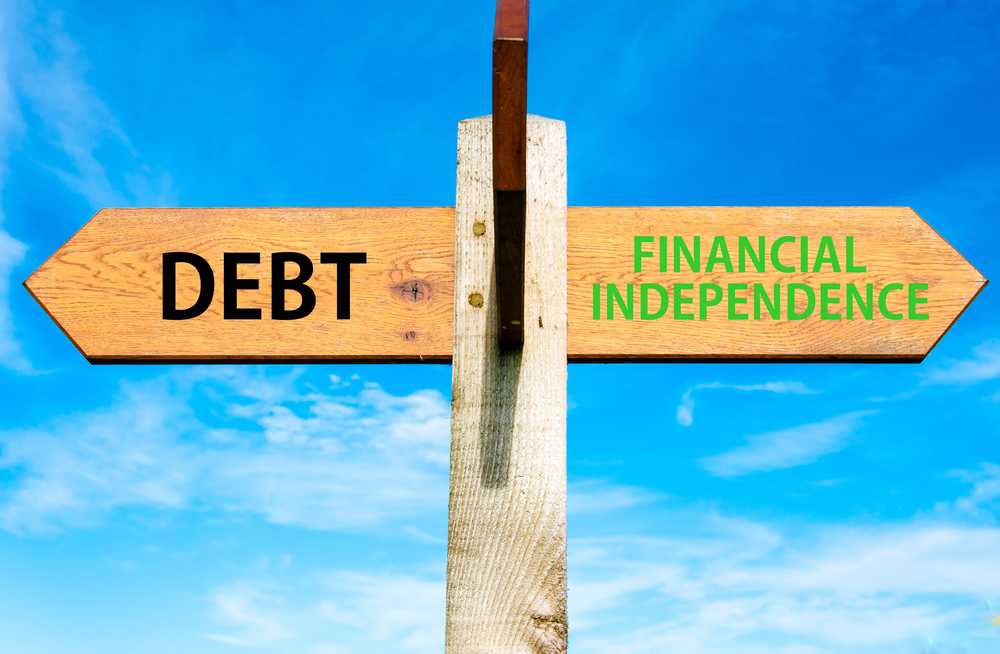
As Didi says in the novel (Findependence Day), “There’s no point climbing the Tower of Wealth when you’re still mired in the basement of debt.” If you owe credit-card debt still charging an usurous 20% per annum, forget about building wealth: focus on eliminating that debt. And once done, focus on paying off your mortgage. As Theo says in the novel, “The foundation of financial independence is a paid-for house.”

Less Coffee demand in the world, while Office Workers stay home

Kyle Glen Unsplash

By Emma Williams

Special to the Financial Independence Hub

Are you currently working from home? If so, have you noticed changes in your daily coffee consumption after your usual work schedule was placed on hold?

COVID-19 has changed many aspects of working individuals’ daily lives, including their coffee routines. Players in the coffee industry have been in survival mode as their creativity is needed more than ever to stay successful in today’s business landscape. Unfortunately, for those in the office coffee service industry, the pandemic is taking a significant toll, making it increasingly important to understand changes in consumer behavior.

The office coffee service industry is experiencing a 40 per cent revenue loss, which is the greatest setback in the industry’s history. The Freedonia Group, a market research organization, does not expect a recovery in the coffee service industry any time soon with the recent ongoing changes.

One example of a critical change is when the Centers for Disease Control and Prevention urged employers to close off shared spaces and invest in single-serve items for their workers as opposed to communal items, such as coffee pots.

Closing offices and pushing workers to instead be productive from home furthers the shift in coffee consumption in the face of COVID-19. More than 90 per cent of people who are working remotely end up drinking homemade brewed coffee. Instead of drinking coffee at the office, consumers are now ordering coffee subscriptions and purchasing online more than ever. By selecting different blends and customizing their coffee subscriptions, they are attempting to achieve the “away from home” quality of the coffee.

U.S. office workers’ coffee usage during the lockdown

These direct-to-consumer sales completed through coffee subscription, mail-order sales, and delivery is the best way for companies to tap into new areas of growth in the office coffee service industry. Regular instant coffee will no longer satisfy coffee drinkers as they work from home. Compared to the February to March period, subscription sales were up by 109 per cent during the March to April period. Also, in comparison to March 2019, packaged coffee sales in the U.S. in March 2020 were up by 70 per cent. With a focus on at-home consumption, the negative impact will not be as detrimental because of the limited elasticity of coffee demand.

Emre Gencer Unsplash

During the pandemic, subscriptions have become increasingly popular. Many companies are seeing five times more daily subscription sign-ups now versus pre-COVID-19. They are also noticing increases in subscribers who log back on to repurchase bags of coffee that they enjoyed. Subscription growth is on the rise and continues to deliver above-market growth. These increases can be explained by the convenience subscriptions bring to coffee drinkers. By investing in options that can be delivered directly to consumers’ homes, busy workers can continue their coffee drinking routine.

The quality and convenience of direct-to-consumer sales are not the only reasons subscriptions are appealing during the lockdown: safety precautions play a major role too. Going out in public spaces during a pandemic feels risky and uncomfortable for many people. When people do go out, they prefer to spend as little time out as possible. Continue Reading…

Preparing for Retirement: Understanding new spending patterns

BoomerandEcho.com

Last time we talked about boosting retirement savings during your final working years. In an ideal world you’ll have the double-effect of being in your peak earning years while your largest financial obligations are in the rear-view mirror.

In the real world, however, many Canadians are faced with an uncertain retirement because they lack adequate savings, don’t have a company pension plan, they’re still carrying a mortgage, line of credit, or even (gasp!) credit card debt, or they’re still providing financial support to their adult children.

Preparing for Retirement

Much like preparing for a new addition to the family, or for one spouse to stay home with the children full-time, preparing for retirement is about understanding new spending patterns.

If your final working years aren’t spent in savings overdrive mode, perhaps there’s time to test out your retirement budget in the year or two before you retire. You might as well try living on 40 – 60% of your income while you’re still working to see if it’s realistic.

If it’s not, there’s still time to adjust course by altering your income expectations, working longer (and saving more), or revisiting your investment strategy. Speaking of which …

Investing in Retirement

One of the biggest worries for retirees is outliving their money. That’s why it’s crucial to have a proper investment strategy in retirement. Investors don’t simply sell their stocks and move to bonds, GICs and cash once they retire. Canadians are living longer and our portfolios need to be built to last.

One strategy to consider is the bucket approach. The idea is that while retirees need cash flow, they also need a diversified portfolio of stocks and fixed income. Your first bucket is for immediate needs and should contain one or two years’ worth of living expenses in easy-to-access cash. Bucket two is for medium-term needs and is filled with bonds or GICs. Bucket three is meant for long-term needs and so it’s typically filled with stocks, ETFs, or index funds.

Also read: A better way to generate retirement income

Understanding CPP and OAS benefits

Whether you think you’ll rely on government benefits or not, it’s important to understand how CPP and OAS benefits work and how they might impact your retirement income plan.

The maximum monthly payment amount for CPP in 2020 is $1,175.83 [if taken at 65], but the average monthly amount for new beneficiaries is actually $696.56. You can take CPP as early as 60, but the amount is reduced by 0.6% for every month you receive it before 65.

Alternatively you can delay taking CPP until as late as age 70. In this case your pension amount will increase by 0.7% for each month you delay receiving it up to age 70. Continue Reading…

More time is a goal worth chasing

By Mark Seed, MyOwnAdvisor

Special to the Financial Independence Hub

“Happy Weekend!” this blog or friends or others will exclaim!

On that note, most of us (myself included) are always so happy to see the weekend arrive, or a given weekday dawn, depending upon your schedule or shift of course to enjoy some well-deserved time off from work.

Yet as I inch closer to fulfilling my semi-retirement dreams (our latest financial independence update you can find right here) I often wonder if every day is going to feel like a Saturday in the years to come.

I mean, part of me hopes so, when I think of time. Finding a much broader, balanced approach to work and fun …

Here are some of the perspectives I’ve been thinking recently when it comes to work, play, time, and to the point of this blog, what does money have to do with it.

If you really enjoy your job, does it feel like work?

While there never seems to be enough time for anything these days outside of work (blame your lost downtime on your social media time for starters!), I’ve often wondered about folks who really, really love their job – does it feel like work to them anymore?

Here are some signs of that:

  • New tasks or assignments don’t annoy you or bother you, in fact, you might get your energy from them.
  • You enjoy seeing the results of your craft frequently.
  • You enjoy working with those around you or people you deliver products and services for.
  • You are continually inspired by work.

I’m sure there are more …

There are definitely elements of the above that apply to my current role with my employer but as I get closer to realizing my financial independence, I must say I’m very much looking forward to the day whereby my most of my time (therefore not money whatsoever) is the ultimate management goal.

While time is money can be true in many corporate circumstances, the inverse is true after you realize financial independence – money has purchased some discretionary, finite time for you to use as you please. Financial independence makes work either far more fun or just simply optional.

Money does buy happiness to a point

Despite rising incomes, standards of living increasing around the world over time, people are also feeling increasingly pressed for time, anxious and stressed about well-being. With this rising income, happiness only increases to a point – surveys from various studies have shown that money only buys so much happiness.

Depending on the study you want to draw from, psychologists have found that modest life satisfaction comes from earning anywhere between $60,000 to $75,000 USD per year. Some families with children of course may need (and want) more, let alone individuals as well.

Time Spent and Money Spent

Now, certainly, if you make more money than this income per year could you be happier? I suppose that is quite possible and very likely for many of us. But my point is based on many studies, considerable orders of money beyond this income-level will not buy the equivalent amount of increased happiness. The relationships you have and the stable family environment you might enjoy, probably do. Your health is your ultimate form of wealth. That well-being will give you tremendous happiness too. In fact, with your health, it has been written and studied that volunteering, just as one example of giving, has been shown to minimize stress, reduce incidence of depression, and reduce long-term cognitive impairment – helping us live longer and more notably, a happier life.

So, while making good money is all well and good; while having a high net worth can absolutely signal to you and others “you’ve made it” happiness unlike money has a tipping point. Money is only part of what might make you truly happy.

A good reminder that any art of comparison to others can be the thief of joy.

Time is the ultimate currency

When it comes to investing, we’ve all heard that it’s time in the market that becomes your best friend (not trying to time the market itself).

That’s because the earlier you start investing, the more time your money has to work for you. Continue Reading…

Understanding the Chargeback Process to ward off Credit-card Fraud

By Gary Bordeaux

Special to the Financial Independence Hub

Proper accounting and cash flow management is critical for both big and small business owners. This seems obvious enough, but when we move from accounts receivable into the world of refunds and chargebacks, the water can begin to get muddy, and it can be more difficult to keep track of where you stand. The first action to take towards fixing and preventing the problems this can cause is to understand what chargebacks are, and what to expect when you are presented with one.

The two types of Chargebacks

If you’re a new entrepreneur, you may be asking “what is a chargeback?” A chargeback is a form of fraud dispute that comes in two basic methods. First, a chargeback can be a transaction that is reversed due to activity that may be fraudulent designed to protect a consumer a business or both. In the second type of chargeback, the credit card company demands a vendor replace or make good a loss incurred by the consumer due to a fraudulent charge.

It’s important to mention early that a refund is very different from a chargeback. A refund is instigated by one or both parties, and usually involves the re-exchange of an item for its purchasing price or value. Chargebacks are inherently fraud mitigation processes that may have additional fees that must be paid by the party deemed at fault, usually the retailer.

Who is involved and what is the process?

The key players in the chargeback process begin with the customer, who usually is the one to dispute a charge. They file a complaint with their credit card’s issuing bank, which may be their local branch or a national finance company that has provided them with their card. The issuing bank takes the concern up with their issuing bank processor, which will verify the account balances of the customer and then approve or reject transactions that have come through any of the four major card networks (MasterCard, Visa, Discover, or American Express).

The card networks are responsible for settlement. Their next step is working with an acquiring bank (or acquirer) that accepts funds for the retailer from the buyer. They are responsible for the settling of additional fees like processing, interchange, or network fees. Their merchant account processor does just what their name implies: process payments for the merchant. These go into the merchant commercial bank account, which is simply the retailers’ account; the destination for funds. But this is where funds can be pulled for chargebacks and given back to the customer.

Reason Codes

When dealing with Chargebacks, it’s important for a business to be familiar with reason codes. Reason codes are the shorthand for the card networks, and signify why a charge has been disputed, resulting in a chargeback. Continue Reading…

New data shows location has a big impact on car insurance

By Andrew Webb

Special to the Financial Independence Hub

We all know that location plays some kind of role in car insurance, and it’s a controversial topic in Ontario. There have been discussions about banning territorial ratings for a while now.

However, it’s been difficult to get a bead on exactly how much location affects those rates. Thanks to a study of 2,800 car insurance policies we now have some facts and figures to work with.

This study reports the average annual cost of auto policies for major towns and cities, so it’s not a substitute for a proper, personalized quote. With that said, the numbers are telling. Location does have a strong correlation to the average rate that Ontarians pay, and that number can vary by more than $2,000 between the most and least expensive cities.

Quantifying average car insurance rates by city

Wasaga Beach comes in with the lowest rate in the study at $1,958, while North York features the highest average rate at $4,261 per year.

That’s a difference of more than $2,000 per year depending on where you live in Ontario. You could pay for a week-long trip to Europe with that money, airfare included.

Here are the numbers, ranked from most to least expensive city:


It’s also worth noting that all of these average prices are higher than the official average price of auto insurance in Ontario as reported by the Insurance Bureau of Canada.

Why do cities have different rates?

Insurance underwriting takes many factors into account, but we forget many of them. For instance, we can see that many of the most expensive cities are in the Greater Toronto Area. Continue Reading…