Debt & Frugality

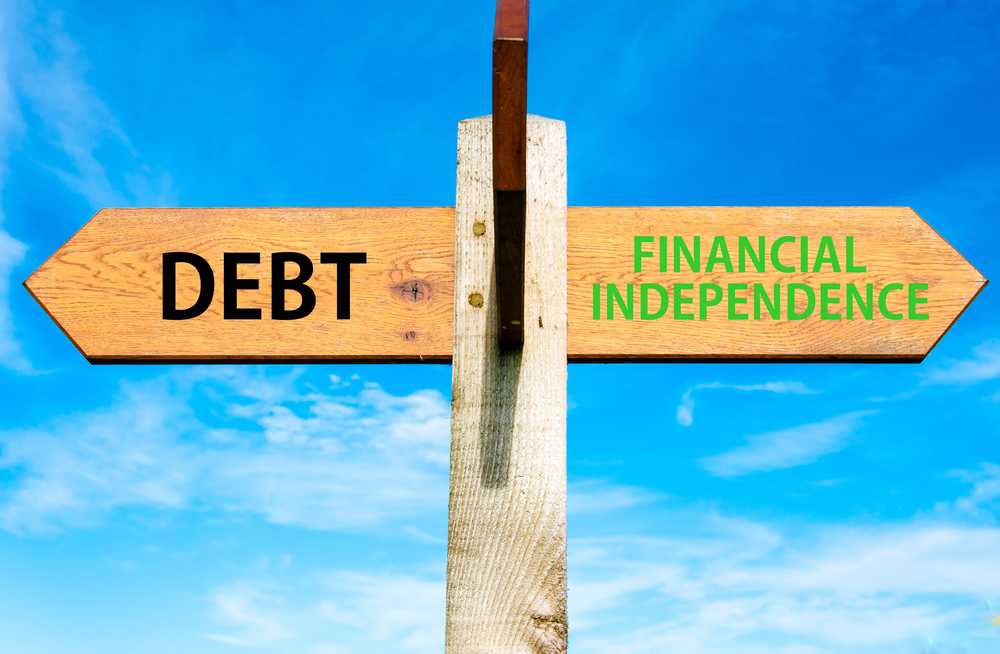
As Didi says in the novel (Findependence Day), “There’s no point climbing the Tower of Wealth when you’re still mired in the basement of debt.” If you owe credit-card debt still charging an usurous 20% per annum, forget about building wealth: focus on eliminating that debt. And once done, focus on paying off your mortgage. As Theo says in the novel, “The foundation of financial independence is a paid-for house.”

How to put your vehicle on a Budget

By Gary Bordeaux

Special to the Financial Independence Hub

Everyone who owns a car or truck knows that there are regular maintenance and not so regular repair costs. For some vehicle owners, it seems their car is always breaking down. But what if you could cut the overhead on your vehicle significantly? The good news is you can! In the following paragraphs, we’ll discuss ways in which you can dramatically reduce the money it costs you to operate your vehicle.

Maintain, Maintain, Maintain

The first thing you want to do is to read your owner’s manual. If you don’t have one, then look online for one, or check with your dealer. The reason this is so important is that the manufacturer will tell you exactly how and at what intervals to perform or have services performed on your vehicle. Changing the oil at regular intervals is just part of it. Are you using the right kind of oil for your vehicle? It is wrong to assume that the more expensive oils are right for your vehicle. Read what the manufacturer recommends and adhere to their standards.

This doesn’t just go for oil, but for all the fluids and tires too. Not all tires require the same amount of air pressure. Use the kind recommended for your vehicle, and keep them inflated to the recommended psi.

Use only OEM parts

When you need to replace a part on your vehicle, insist on only OEM parts. Original Equipment Manufacturer parts are guaranteed to fit, and they will likely last longer, saving you from replacing the same part over and over. Make sure only certified technicians work on your vehicle, so you can rely on stellar work and new parts. While it is actually fun for some to go to a parts cemetery and find your own parts at a substantial savings, you won’t have the peace of mind you will have when you stick to the manufacturer’s recommendations.

Be mindful of the way you drive

Do you really need to beat the next guy to the red light? Often, that’s what happens when a car weaves in and out of traffic. Nothing is gained, and when you drive that way, you risk getting pulled over or injuring or killing innocent people or yourself. Expressing road rage is another way that some people carelessly treat their cars and their fellow citizens on the road. Just driving the speed limit and driving defensively will help protect you and your car. Many insurance companies offer cheap car insurance for safe drivers and those discounts and savings alone could be worth a lot.

Don’t ignore squeals and other sounds

You wouldn’t believe the difference in cost between a simple brake pad replacement and an entire brake job, with new calipers and rotors. Continue Reading…

How to save on auto insurance during COVID-19

By Matt Hands, RateHub.ca

Special to the Financial Independence Hub

You might only review your car insurance once a year, but in times of financial hardship, exploring all opportunities to cut back is a smart idea. Whether your car is sitting parked, or you’re only driving for essentials like groceries and medicine, you should know two things.

First, the industry is adapting to the current climate in COVID-19 by offering some payment deferrals and flexible payment options. Second, there are things you can do, be it in a pandemic or not, to save money.

Auto insurance industry response to driving less

The industry’s initial response, almost unanimous in nature, was to offer payment deferral options allowing individuals to delay their monthly premium payments for a defined period of time: ideally once your income returns to expected levels. In addition to this, some providers are waiving non-sufficient funds charges (NSF fees), but be mindful that your bank could still charge you the fee, so it’s best to check with them.

In a more surprising move, many insurers have relaxed their rules about using your vehicle in the shared economy:  e.g. uber, lyft, etc. Depending on your provider, you may also be able to get a coverage extension at no additional charge allowing you to drive your car for commercial reasons to make ends meet. Typically, you’d need a special coverage addition or endorsement on your policy to drive and make money from services like Uber Eats.

More recently, the provincial government announced they will allow the Ontario auto insurance industry to provide premium rebates in the otherwise regulated environment. Now, we’re seeing some more tangible reductions being offered to Ontario drivers. The various relief options can be unique to each provider, so make sure you contact your insurer to find out what potential discounts and flexible payment options are available to you.

Automatic discounts

A number of insurers are applying automatic discounts, which don’t require the policy holder to do anything. Allstate, Pembridge, Pafco, and Travelers are issuing a one-time payment equal to about 25% of your monthly premium. Gore Mutual decided to give a payment worth 20% of 3 months of premium payments. iA insurance is offering the same 20% premium discount, but over 2 months, and used as a credit on your account. L’unique, SSQ, and LaCapitale are both offering a 20% rebate applied as a credit for one month. Unica is offering a 15% break on premiums for April, May, and June.

Passive discounts

Other insurers are taking a more passive approach, which requires the policy holder to initiate the conversation about discounts. Aviva, Economical, Sonnet, and Family will reduce your car insurance premium by 75% if you aren’t driving anymore, or 15% if you’re driving less. They still don’t want you driving for commercial purposes, though. CAA is offering a 10% base rate reduction, Unica is doing the same by 15%. Desjardins and The Personal are calculating their discounts by looking at 3 months of premiums and reduced driving to figure out your unique discount.

Actions you can take to save on car insurance

Deferral should be a last resort, as you will still have to pay the premiums owing eventually on top of future payments. But don’t fret, there are some other ways to save on car insurance.

Reducing the kilometres on your policy

You may not remember, but when you first get car insurance quotes, you’re asked how many kilometres you drive in a year and your daily commute to work. Continue Reading…

How to fail at Early Retirement

OPEN to your opportunities

By Billy and Akaisha Kaderli, RetireEarlyLifestyle.com

Special to the Financial Independence Hub

First, let me say Billy and I don’t really use the word “fail.”

We believe every situation offers learning opportunities and calling that experience a failure just doesn’t jibe with who we are. In our lives, we want to move forward with the knowledge and wisdom we’ve gained : not benchmark it emotionally by calling it a failure.

We read Financial Samurai’s Sam Dogen’s  piece on how he claims to have failed at early retirement.

We have great respect for anyone who puts their personal life out there to the public as a source of education and benefit for others, and Sam has done that.

Sam retired at age 34 with 3 million dollars (US$): six times more than we had, 30 years ago. Now, at age 42, he claims that he “failed” at early retirement (even with $250k passive annual income: 5 times what the average retiree has, for the following reasons:

They had a child (with all the costs involved including education at kindergarten level at $2k month)

He underestimated how low interest rates would go (he’s invested in bonds, real estate and dividend-producing stocks)

Rising health insurance premiums for his healthy family (which continue to rise in order to subsidize those who are less healthy)

The bliss of early retirement didn’t last as long as he thought it would, or in other words, he now wants to do more than play tennis and sleep in. (This statement is bewildering to us.)

Options, Choices, Opportunities

We at Retire Early Lifestyle have always focused on providing our readers with options. There is no one-size-fits-all for anything, so why try to fit into a limited description of your retirement?

We don’t believe Sam has “failed” at early retirement; we think he is locked into his own personal version of “limited thinking.”

Eliminate your Stinkin’ Thinkin’

For the continuing education of our readers, let’s look at his reasons one at a time. Continue Reading…

Vanguard reduces fees on three passive Canadian Bond ETFs

With interest rates falling ever closer to zero, the mantra that costs matter in investment funds is truer than ever.

So it’s good news that on Tuesday Vanguard Canada cut fees on three passively managed Canadian bond ETFs, the sixth fee reduction in its Canadian operation in the last seven years. With the latest fee cuts, Vanguard says its average Management Expense Ratios on its ETFs are 57% lower than the industry average.

As the graphic to the left shows, the management fee will now be 0.15% on the Vanguard Canadian Long-Term Bond Index ETF (VLB/TSX), the Vanguard Canadian Government Bond Index ETF (VGV) and the Vanguard Canadian Corporate Bond Index ETF (VCB). Previously the fee on VLB was 0.17%, VGV’s was 0.25% and VCB’s was 0.23%.

Vanguard Canadian Long-Term Bond Index ETF seeks to track the Bloomberg Barclays Global Aggregate Canadian 10+ Year Float Adjusted Bond Index, investing primarily in public, investment-grade fixed income securities issued in Canada. Vanguard Canadian Government Bond Index ETF seeks to track seeks to track the Bloomberg Barclays Global Aggregate Canadian Government Float Adjusted Bond Index, and invests primarily in public, investment-grade government fixed income securities issued in Canada. Vanguard Canadian Corporate Bond Index ETF  seeks to track the Bloomberg Barclays Global Aggregate Canadian Credit Float Adjusted Bond Index  and invests primarily in public, investment-grade non-government fixed income securities issued in Canada.

Kathy Bock, Managing Director and Head of Vanguard Investments Canada Inc.

“For us, low costs are not a pricing strategy. We are built to pass on the benefits of our size and scale to investors in helping them achieve investment success,” said Kathy Bock, Managing Director and Head of Vanguard Investments Canada Inc. in a press release, “This is even more important in the current market climate, where low returns mean that costs erode an even larger share of returns than they would normally.”

The extreme volatility of the last few months has challenged both individual investors and financial advisors and in such an environment “high-quality bond ETFs can play a key role as a stabilizing force in a portfolio,” said Scott Johnston, Vanguard Canada’s Head of Product, “We are pleased to support investors with these fee reductions to help them keep more of their returns.”

Low fees and the “Vanguard Effect” in Canada

Including fee reductions from 2013 to 2015, and in 2018 and 2019, Vanguard estimates the cumulative reductions have saved Canadians more than $10 million.

As competitors adjust fees down in response, industry investment fees have come down significantly over the last several years, typically after Vanguard enters a particular geographic market. This “Vanguard Effect” phenomenon has occurred in the United States, the United Kingdom and Australia as well as Canada.

For more information on Vanguard’s broad pricing impact on the ETF market, see this infographic.


Want to save money on Energy Bills? Go Solar

By Gary Bordeaux

Special to the Financial Independence Hub

Most people are well aware that solar power is better for the environment, but did you know it can have a positive impact on your wallet, too? Start saving today by converting your home to solar.

Affordability

Year after year the cost of installing a solar panel system has been decreasing dramatically. In the last decade alone costs have dropped nearly 70 per cent, putting solar energy well within the financial reach of most homeowners. More options for ownership have also become available, and you can now finance or lease a system. That means you can see immediate savings on your energy bill with lower upfront costs. Contact the most trusted Colorado solar provider to learn how you can affordably convert to solar today.

Reduced utility bills

It’s almost a given that when you rely on a traditional energy source your bill will increase each year. What if instead of paying more and more you could watch that payment decrease instead? With a well-designed solar installation, your utility bills will shrink: potentially even down to zero if your system generates all of the energy your home requires.

No dynamic pricing

What is dynamic pricing? It’s when a service provider raises rates at peak times, and it’s becoming the norm in the energy industry. Instead of one flat rate for energy usage throughout the day, utility companies increase pricing when the demand is highest. Most home energy consumption occurs from 4 p.m. to 9 p.m. on weekdays, so utility companies raise the cost of electricity during that time period. It’s meant to discourage use during high-demand hours, but what it really does is drive up the total you see on your bill.

When you’re off the grid, you aren’t subject to paying more during peak periods. You’ve generated your own abundant supply of solar energy that is 100 per cent free to use, regardless of when you choose to use it.

Usage rebates

Savings are provided to solar owners through a process called net metering, which makes it possible for you to profit from the energy made by your panels. Continue Reading…