Debt & Frugality

As Didi says in the novel (Findependence Day), “There’s no point climbing the Tower of Wealth when you’re still mired in the basement of debt.” If you owe credit-card debt still charging an usurous 20% per annum, forget about building wealth: focus on eliminating that debt. And once done, focus on paying off your mortgage. As Theo says in the novel, “The foundation of financial independence is a paid-for house.”

Motley Fool: Getting out of Debt as the first step to achieving Findependence

Those who are regulars to this site will know that Getting out of Debt is the first step towards achieving Findependence, or Financial Independence.

My latest Motley Fool Canada blog has just been published on this topic, which you can read in full by clicking on the highlighted headline: Getting out of Debt to achieve Financial Independence.

As one of the characters in my financial novel, Findependence Day, says to the protagonists: “You can’t climb the tower of Wealth while you’re still mired in the basement of debt.”

As the article reprises, most of us start our financial life cycle with zero or even negative net worth, depending on how much student debt, credit-card debt or later mortgage debt one has accumulated. So if a young person has graduated from college or university and is able to get out of the hole early in their working life, that should be regarded as a huge initial step towards achieving Financial Independence, or Findependence (my contraction).

Keep up the frugal behaviour that got you out of debt

So how do you get out of debt as quickly as possible? The book coins another phrase, guerrilla frugality, which simply means super frugality, whether brown bagging your lunches, taking public transit or any number of other money-saving activities that ensure that you are living within and well below your means. Continue Reading…

Why I haven’t paid off my mortgage … yet

Followers of this blog know that I tend to focus on saving and investing rather than trying to pay off my mortgage faster. Indeed, our household assets are projected to exceed $1 million this year but we’ve still got a $200,000 mortgage to contend with.

So why don’t I make it a priority to pay off my mortgage? It’s not strictly about dollars and cents. Here are three reasons:

1.) Higher Priorities

Setting priorities is part of any good financial plan, and those priorities change as you move through different stages of life.

For many years we put all our effort into paying off student loan and consumer debt. Then we became laser-focused on saving for a large house down-payment. Priorities shifted again towards maxing out my unused RRSP contribution room. And now, finally, we’re catching up on years of unused TFSA contribution room.

My wife and I are on the same page with our financial priorities. Right now, we’re focused on these four areas:

  • TFSA – contribute $1,000/month
  • RRSP – max out our available contribution room
  • RESP – max out contributions for our two kids
  • Travel – Visit Scotland/Ireland this summer. Vancouver in October. Maui in February.

Paying off the mortgage slides in at priority number five, which leads to the second reason.

2.) Finite Resources

In a perfect world we would all max out our RRSPs, TFSAs, RESPs, and start investing in a taxable account: all while doubling up on our mortgage payments and still having money left over for dining, travel, and sending the kids to hockey school.

Reality check. We don’t have infinite resources, so we need to make choices and trade-offs.

I mentioned above that we neglected our TFSAs for many years. That’s because we decided to get a new car and pay it off over four years. Our TFSA contributions turned into monthly car payments.

Now that the car is paid off, we can go back to funding our TFSAs and hopefully catch up on all that unused room before we need a new car again.

Speaking of cars, ours are now 12 and six years old. This “sacrifice” – if you can call not getting a new car every 4-5 years a sacrifice – allows us to increase our savings rate and fund more of our financial priorities each year.

Unfortunately, there isn’t another $800/month money leak in our budget to close that will allow us to fund a fifth financial priority (extra mortgage payments). Not yet, anyway.

And remember, it’s not simply about earning more money. I’m already combatting stagnant wage growth and creating my own raise by freelancing, selling used items online, and earning credit card rewards. That extra income allows us to do everything we’re doing now, plus keep pace with inflation and feed a growing family.

3.) Mortgage debt and asset allocation

We tend to think of mortgages and investments in isolation, but if an investor has any debt at all – including a mortgage – then he or she is effectively borrowing to invest.

You could say that I have a leveraged investment loan of $200,000. Another way to think about the mortgage is that I am short fixed income. Continue Reading…

5 pro tips staying on budget when using Credit Cards abroad

By Maria Weyman, creditcardGenius

Special to the Financial Independence Hub

When organizing a trip, it makes sense to plan ahead for some extra spending to make the most of the experience.

Even the most frugal penny pinchers will want some extra cash to throw around while on vacation for maximum relaxation and culture absorption.

But, if you’re using your trusty credit card to earn some rewards on those purchases along the way, there may be something you’ve overlooked – foreign transaction fees – the peskiest of all credit-card fees coming in hot to totally ruin your budget.

How foreign exchange fees work

Foreign transaction fees will show up on your credit-card statement when you make a purchase with your Canadian credit card in a currency that isn’t Canadian dollars, either when travelling abroad or shopping online. You’re charged this fee in order to convert your funds to the required currency.

There are often 2 parts to this fee:

  • what gets charged by the credit card issuer (Visa, Mastercard, American Express), and
  • what gets charged by the issuing bank (BMO, TD, etc.)

So, not only are you losing out on the currency exchange (depending on the currency), but you’re also charged an additional fee on top of that.

The average cost of foreign exchange fees

In Canada, most foreign exchange fees are 2.5% of your total purchase, but can range from 2% all the way up to 3.5% : yikes.

Let’s crunch some numbers with some examples.

Say you’re road tripping to the U.S. and use your Canadian credit card to buy a $5 USD latte from Starbucks.

At the time of writing, 1 USD is equal to 1.34 CAD.

( $5 * 1.34 ) * 2.5%

$6.70 * 2.5% = $0.17

Ok, not unreasonable. But, the more you spend, the more it adds up…

Say you travel to Ireland and use your credit card to pay for hotel stays, dining, shopping, and sight-seeing for a week, totalling $5,000 in purchases.

At the time of writing, 1 Euro is equal to 1.51 CAD.

( $5,000 * 1.51 ) * 2.5%

$7,550 * 2.5% = $188.75

$188.75 is not as easily overlooked as $0.17 more for a coffee …

And though it may not seem like much, $200 is still a significant amount of money to figuratively throw in the trash bin if you’re travelling on a budget.

How to save money and avoid FX fees

With that being said, is there any way to escape the dreaded 2.5%?

Here are our top tips on saving money next time you’re adventuring overseas or shopping in a foreign currency: Continue Reading…

Retirement #2 priority but four in ten Americans don’t see it happening

Retirement is a close second to home ownership, according to a LendEDU survey of American saving priorities

While having enough money saved for Retirement is narrowly behind buying a home, more than a third of Americans don’t expect they’ll ever be able to retire, according to a survey released Tuesday from LendEDU.com.

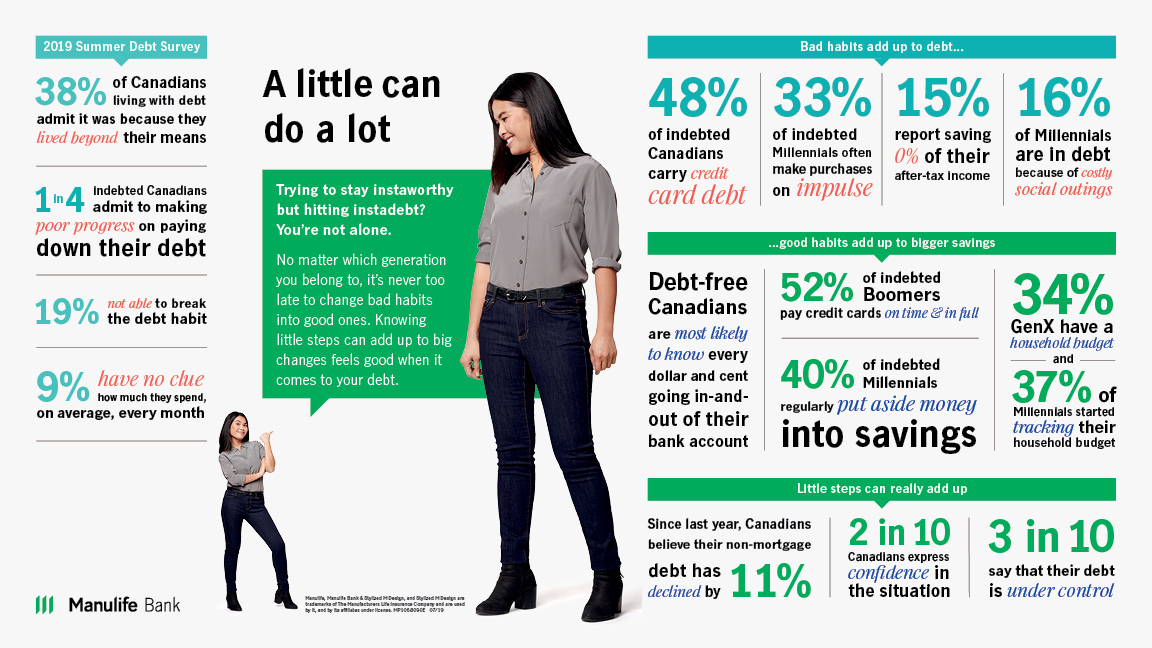
Retirement saving was cited by 19% of 1,000 respondents, versus 20% prioritizing “buying my own house or apartment.” Paying off credit-card debt was cited by 14% and building an emergency fund by 10%.

While there was only a minor lack of confidence about paying off credit cards and building an emergency fund, 17% don’t believe they’ll ever become homeowners and but almost four in ten Americas (39%) don’t believe they’ll ever be able retire.

Of those doubting their ability to retire, 52% were over age 54, 30% were between 45 and 54, and 15% were 35 to 44.

As for emergency savings, 33% said a major bill resulting from an injury would destroy their savings and therefore their long-term financial goals; another 14% cited some form of debt that could quickly get out of hand. However, 28% felt “relatively secure” and did not believe their financial goals could be derailed.

Secondary priorities

After home ownership and retirement, the most cited financial priorities were some form of getting out of debt: 14% cited paying off credit-card debt, 7% paying off student-loan debt, and 4% cited paying off other forms of debt apart from credit cards or student loans. 6% answered “Building my credit score,” 5% wanted enough saved to move out of their parents’ homes and rent a home or apartment, 4% said “Buying a car,” and 3% wanted to start a business.

1% wanted to invest in real estate, another 1% wanted to buy a second home and yet another 1% wanted to buy a second or third car. 3% want to “create a retirement account” and 2% want to “invest in the market outside my retirement account.”

Money a bigger priority than Love?

Of the 37% who were not currently in a long-term relationship, 72% were more focused on their financial targets, versus a minority 23% who prioritized finding a romantic partner. (The rest preferred not to say). The survey sees this as a “glass half full” finding: “It is good that Americans are quite serious when it comes to realizing their personal finance goals. But, on the glass empty side, sometimes one’s finances can’t buy happiness, or in this case love, and it is always important to understand what is truly important in life.” Continue Reading…

The hard truth about the FIRE movement [Financial Independence, Retire Early]

By Maria Weyman, creditcardGenius

Special to the Financial Independence Hub

Retirement, whether near or far, is a pretty big milestone in a person’s life.

We start saving for it as early as possible and put as much towards it as we can in order to be better prepared.

Whether we want to spend it travelling, immersing ourselves in our favourite hobbies, or spending some quality time with loved ones, most of us look forward to our retirement but don’t see it happening in the near future.

The average age of retirement in Canada is 64 years old, but the popularized FIRE movement – which stands for “Financial Independence, Retire Early” – is the lifestyle concept that proposes an alternative scenario.

By living as frugally as possible and saving every bit possible while maximizing income and revenue, FIRE-devotees plan on retiring much earlier than the Canadian average.

Although we all want to retire early, and being financially independent enough to retire at a young age is possible, it might not be attainable for everyone.

We can all dream, but it’s important to look at the concept without those rose-colored, heart-shaped glasses we all get when thinking about early retirement. Realistically, the FIRE movement can be quite extreme.

Reasonable income

Living from paycheque to paycheque is still the sad reality for many Canadians, some not even being able to set aside money for normal retirement. Living as frugally as possible is just a means of survival rather than a means to a bigger end.

Stagnant wages and the ever-increasing cost of living has made it harder than ever to be financially stable, let alone financially independent, especially for lower or middle-income brackets.

Not to mention getting higher-income jobs in the first place requires many years of education and consequently entails large amounts of student loans, which in itself can take decades to pay off.

Investment risks

Even if you have an income that allows some wiggle room, saving alone probably isn’t enough. To be successful in the FIRE movement requires some savvy investing.

And since we’re taking away the option of long-term, stable, compounded interest savings, the timeframe is much shorter.

But with higher rewards usually come higher risks.

It’s up to you to decide if the risk is worth the potential payout.

Retirement timeframe

Another glitch in the FIRE movement lifestyle is retirement timeframe: how long you’ll actually be retired for.

Savings breakdown

Let’s crunch some numbers just to get a general idea. The most complicated part of this calculation is compounding interest. Thankfully, we can summarize the effects of compound interest using a multiplier.

Let’s say you’re 23 years old and you plan on retiring early at 40 years old. The average life expectancy in Canada is 82 years old, meaning your retirement fund will have to be sufficient enough to carry on for over 42 years.

Compound interest allows our savings to “go further” than they otherwise would. If we are looking at a compound interest of 3.5% (moderate yield rate) we can calculate how much further savings would go for a period of 42 years:

Savings Multiplier = (1 + Annual Interest Rate)^42 = 1.035^42
Savings Multiplier = 4.241

Where the “^” indicates an exponential power (that is 2^3 =  2x2x2). This means that over a period of 42 years, your savings will essentially be multiplied by a factor of 4.2, which shows you how powerful a force compounding interest really is.

While it’s nice that our savings can grow exponentially with compound interest, taking money out of our savings results in losses that grow with compound interest. As such, if we take money out of our savings at the beginning of that 42 year period, that money is also multiplied by a factor of 4.241. Taking the money out one month after would have a slightly lower multiplier and so on. By summing the total effect of each monthly withdrawal we can also obtain a monthly expense multiplier. The first step is to find the monthly interest rate. This can be obtained as follows:

Monthly Interest Rate = (1+Annual Interest Rate)^(1/12) – 1 = (1+0.035)^(1/12) – 1
Monthly Interest Rate = 0.28708987%

Note that calculating a power x^(1/12) is a 12th root and will require a scientific calculator. After obtaining the monthly interest rate, you need to do a recursive sum representing the multipliers for all monthly withdrawals: Continue Reading…