Debt & Frugality

As Didi says in the novel (Findependence Day), “There’s no point climbing the Tower of Wealth when you’re still mired in the basement of debt.” If you owe credit-card debt still charging an usurous 20% per annum, forget about building wealth: focus on eliminating that debt. And once done, focus on paying off your mortgage. As Theo says in the novel, “The foundation of financial independence is a paid-for house.”

Questrade pushes envelope on lower fees with Questwealth Portfolios

Questrade’s TV commercials put pressure on fees, as do its new Questwealth Portfolios

As my latest MoneySense Retired Money column explained when it was published early Saturday morning, Questrade Inc., the leading independent Canadian online brokerage, is laying down the gauntlet on fees. You can find the full story by clicking on the highlighted headline here: Questrade’s new robo advisor service showcases rockbottom fees.

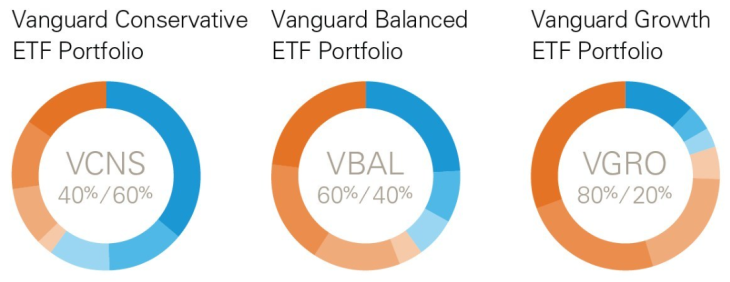
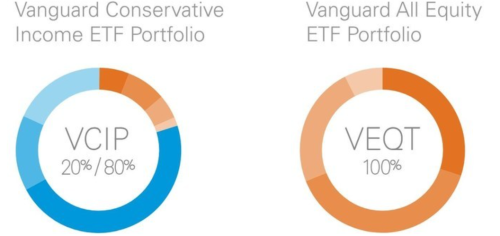
For consumers, it’s good news that the new iteration of Questrade’s Portfolio IQ robo adviser service — rebranded Questwealth Portfolios — pushes fees down to around the level of the new Vanguard Asset Allocation ETFs.

That’s somewhere between 0.20% and 0.25%, which is roughly half of what most other robo services charge, and about a tenth of what most retail mutual funds charge.

Questrade Wealth Management was one of three early entrants to the Canadian robo advisor space in 2014 (along with NestWealth.com and Wealthsimple). Until now, its robo service was called Portfolio IQ (PIQ henceforth) but the latter has been rebranded, relaunched and indeed replaced as of Saturday under the new trademarked name Questwealth Portfolios. Questwealth replaces PIQ accounts, according to a press release issued on Nov. 3.

The management fee is 0.25% for Questwealth Portfolios between $1,000 and $99,999, dropping to a very competitive 0.20% for $100,000 or more. These fees are significantly lower than for PIQ, which charged 0.7% under $100,000, 0.6% between $100,000 and $249,000, 0.5% up to $500,000, 0.4% up to $1 million and 0.35% for accounts of a million dollars or more. The average asset-weighted PIQ fee was 0.62%, versus 0.23% for Questwealth Portfolios, lower by a whopping 63%.

For consumers it’s good news that Questrade is slashing its own fees and putting more pressure on the rest of the industry, which is evident from its edgy TV commercials. (With the launch it is releasing a new batch of these often-humorous ads. The screen shot at the top of this blog is from the earlier ads.

How Questwealth Portfolios compare to other Robo services

As I note in the MoneySense column it’s not hard to show how ETFs and robe-based portfolios of ETFs can undercut the notoriously high MERs of Canada’s mutual funds, so the real contest is how the Questwealth Portfolios stack up against the rest of the robo advisors (or indeed, against DIY ETF portfolios held at discount brokers like Questrade itself or any of its (mostly) bank-owned online brokerage arms. Continue Reading…

Could you become car-free?

Billy and Akaisha on a Jak-a-Ran in Thailand

By Akaisha Kaderli, RetireEarlyLifestyle.com

Special to the Financial Independence Hub

It wasn’t a decision we took lightly.

In fact, Billy and I discussed the idea of becoming car-free for several years. There were good reasons to do it: no more maintenance and repair costs; no more fees for insurance, license plate renewal, or registration; no more fuel expense; and no more worry about storing the vehicle here in the States when we are traveling overseas for months or years at a time.

But there were also some obvious downsides. We wouldn’t have the freedom to come and go at a whim. And because we live in the American Southwest, where temperatures reach triple digits in the summer, we wondered how we’d manage to get around during the sun season.

Silly idea or feasible plan?

Most people we know couldn’t fathom the idea of giving up their vehicle and saw this new lifestyle choice as a hardship. Americans love their automobiles, and owning one is packaged as part of the American Dream. A look at the automobile and truck commercials today describe how we will be sexier, more popular, physically stronger, and obviously smarter if we purchase their brand of car.

As we’ve described on our Retire Early Lifestyle website, Billy and I live in an active adult community where we are within walking distance to stores, restaurants, and several different entertainment options. Most of what we need is near to us, and we appreciate the slower pace of life with all the rewards it brings. Many of our neighbors use a small scooter, golf cart, or bicycle to get around within a reasonable range. When we need to go somewhere farther, we trade services or pay cash to a neighbor or friend for their time. This is much cheaper than a taxi, more sociable, and we aren’t bogged down with worries about maintaining a vehicle. Both sides appreciate the trade, and our lives are enriched.

After almost two decades of world travel, we realized that the only place where we need to drive is in the States. Elsewhere, we take public transportation or hire a private driver. For the amount of time we live in the States, and for the amount of money that owning our own transport required, we finalized our decision to sell our vehicle.

The year was 2009.

What about you? 

Retirement takes many expressions and even if you could never see yourself as becoming completely free of car ownership, maybe you have toyed with the idea of keeping only one vehicle instead of two.

The following sites may help you with this transition: Continue Reading…

The (Renewed) Case for GICs

**This is a sponsored post written by me [Robb Engen] on behalf of EQ Bank. However, as always, all opinions are my own.

A guaranteed investment certificate (GIC) is unlikely to spark an exciting dinner party conversation but when stock markets are reeling, like they were earlier this year, investors often seek safe havens to wait out the storm. Cash is king for those who don’t have the stomach to watch their portfolio plunge in value, and GICs at least offer the promise of a modest return.

Back in February 2009, when the global financial crisis had just about reached rock-bottom, 30-year-old me was scrambling to meet the RRSP deadline and bought a five-year GIC. It was a costly mistake in hindsight. The Toronto Stock Exchange surged ahead for the next five years, earning annual returns of 9.52 per cent, while my five-year GIC earned an average annual return of 2.75 per cent.

Instead of turning my $7,000 contribution into nearly $10,000, I only had $7,800 to show for my decision. At the time, though, I thought the GIC was a smart move because I had to make a quick decision on what to do with my contribution, and the stock market still looked downright nasty.

Why invest in GICs?

The truth is there’s nothing wrong with stashing your savings inside the comfort of a GIC. Here are four times when it makes good sense to put your money in GICs:

1.) When your entire portfolio is sitting in cash, waiting for “the right time” to get into the market

If you’re the type of investor who can’t ignore the doom-and-gloom economic headlines, and who’s convinced that a market meltdown is always imminent, maybe the stock market isn’t right for you.

Having your retirement savings constantly sitting in cash and earning nothing is like sitting on the fence and being paralyzed to move for fear of making the wrong decision at the wrong time.

A GIC ladder, which might involve purchasing equal amounts of one, two, three, four, and five-year terms, will maximize your risk-free returns and still give you the option of dipping your toes in the market each year when one of the terms comes due.

2.) When your investing strategy boils down to chasing last year’s winning stocks or mutual funds

If you’re the type of investor who’s constantly looking for the latest fad, you might be falling victim to the behaviour gap – the difference between investment returns and investor returns.

Consider that, according to DALBAR, from 1986 to 2016 the S&P 500 Index averaged 10.16   a year, but the average equity fund investor earned just 3.98   a year.

When you think about our poor investor behaviour, coupled with sky-high mutual fund fees (at least, here in Canada), those investors who just can’t help themselves might be better off parking their savings in the best five-year GIC and earning a guaranteed return. Continue Reading…

Which Robo Advisor differs from the other?

I recently penned the blog What and who are the Canadian Robo Advisors? That blog outlined how, true to the moniker, a robo advisor is an online financial advisor without the human.

Well, let’s say that at times there is no human present. In actuality the robo advisors are all quite human and they all have a unique personality. Think Star Wars and the loveable tin cans known as R2-D2 and C-3PO. They are very different in voice and personality.

Above left is R2 …

And to the right is my robo mascot …

The answer to the question posed in the headline is that all of the robo advisors are different, at times very different from one another. That’s why it’s important to know and understand these differences so that you might be able to find the robo that’s right for you. Getting in the ‘right robo’ might make a difference of thousands to tens of thousands of dollars or more over an investment lifetime.

The ‘robots’ don’t think in a pure sense. In most cases, this is not artificial intelligence at work. The process involves investment concepts and approach(es) and then mountains of computer programming applied so that the robo platforms can follow the direction of the human financial gurus who set the course for each robo advisor.

The Chief Investment Officers and their teams can and do also make adjustments on the fly. Some may react to market conditions. That may seem ironic given that the robo advisors will mostly embrace and use mostly passive Exchange Traded Funds, but they will then get a little more active with regards to asset allocation and types of funds used based on changing market conditions. All said, that will be one of the factors that I track moving forward as we compare the performance of the Canadian robos.

Robos can be passive or active

Some robos are more passive, some robos are very active.

One of the robo advisors, responsive, is considered AI-based as the platform will automatically change the asset allocation (mix of stocks and bonds) based on many market and economic indicators. Continue Reading…

What and Who are the Canadian Robo Advisors?

But just because you might need an advisor does not mean you have to pay some of the highest investment fees in the world. And yes the fees are important. We know that the fees typically and greatly impact the returns. From Justwealth the chart at the top is a comparison of the potential portfolio returns impact over longer periods, based on an initial $100,000 investment.

We can see that the effect of high fees paid can become exaggerated over time. Remember you pay investment fees every year, throughout the year, and as your portfolio grows over time you pay more in fees as the fees are based on your portfolio value. That’s a nasty kind of negative compounding.

So just what is a robo advisor?

Yup, just as per the image, a robo advisor is an investment advisor that’s well, not human. But don’t be scared. If you want to talk to a human the companies that offer robo advisory services can also put you in touch with real flesh and blood advisor types.

So if a robo advisor is not human, just what is “it”? A robo advisor is simply an online platform that asks you questions to help you get into the right investment portfolio. A robo advisor will ask the same type of questions as would a human advisor. Based on your answers the robo advisor will put you in the appropriate portfolio.

So what type of questions will the robo advisor ask you?

The robo advisor platform may try and gauge your investment knowledge. There may be questions on your net worth and salary and employment status, basic personal details. Each robo advisor offering has its own nuances and I will dig deeper into that in future articles. But most importantly a robo advisor wants to know …

  1. Your time horizon for the monies that you are about to invest.
  2. Your tolerance for risk (the amount or percentage that the portfolio could decline).
  3. Your objectives for the investment, whether you’re looking for more growth, a more balanced approach or a very conservative approach that might include a lot of bonds and fixed income.

And once again, each robo advisor will have its own methods (robo personality?) for asking those questions and discovering your investment personality and needs. If you want to ‘play around’ with a basic robo question and answer process have a look at Tangerine Investments’ Portfolio Selector Tool. Continue Reading…