Debt & Frugality

As Didi says in the novel (Findependence Day), “There’s no point climbing the Tower of Wealth when you’re still mired in the basement of debt.” If you owe credit-card debt still charging an usurous 20% per annum, forget about building wealth: focus on eliminating that debt. And once done, focus on paying off your mortgage. As Theo says in the novel, “The foundation of financial independence is a paid-for house.”

Back-to-school tax refresher

By Lisa Gittens, Tax Expert at H&R Block

Special to the Financial Independence Hub

With August winding down and Labour Day around the corner, students across the country will be making their way to colleges and universities. As they say goodbye to their curfews and hello to independence, they’re forced to take on new responsibilities like doing their own laundry and managing their finances.

While this won’t be new for all millennials – a recent survey by H&R Block Canada found that 63% of respondents 18-24 were already filing taxes without help from their parents – everyone can benefit from a study session on personal finance and tax tips.

Take advantage of budgeting apps

Don’t put down your phones! Millennials should take advantage of mobile apps when it comes to managing their money. Apps like Mint and YNAB (You Need a Budget) can be valuable assets when budgeting. Most banks offer free apps to help their customers manage their finances.

Maximize your tax return

It’s never too early to start thinking about taxes. In 2016, the average refund for a student at H&R Block Canada was more than $1,100. That’s 21 music festival day passes, 346 thrift shop t-shirts, or 49 bottles of Canadian craft gin … depending how you look at it. There are simple things students and recent graduates can do in order to maximize their tax returns: Continue Reading…

If an enhanced CPP takes you off GIS rolls, count your blessings!

Let’s HOPE this advisor’s financial plan means this senior couple won’t qualify for the GIS!

Here’s my latest MoneySense column, which looks at the headline-grabbing “news” that an  Enhanced Canada Pension Plan (CPP) would mean roughly 243,000 low-income seniors might not be eligible for the Guaranteed Income Supplement (GIS) once the full-bore enhanced CPP system is in place in the year 2060.

Click on the highlighted headline for the full piece: Retirees should be happy not to qualify for GIS.

None of the five financial experts whose input appears in the piece disagreed with this article’s premise: that far from being a bad thing to make so much from CPP (or any other source of retirement income) that you exceed GIS minimum income thresholds, it’s actually a good thing. Yes, you have to work at a job to earn CPP benefits, whether “enhanced” or not, and yes, this entails payroll contributions taken off the top. That’s no different than anyone with a good employer pension or who saves in RRSPs or any other vehicles.

That’s what saving is all about: providing for future needs by taking a little out of current income. It’s all about living within your means, being responsible for your own future and all the other themes that the Financial Independence Hub espouses every day.

The Hub and MoneySense recently looked in-depth at OAS and the GIS, which you can find here.  And earlier today we looked at Survivor benefits for CPP, OAS, GIS and other sources of retirement income.

One of the sources for the GIS article was TriDelta Financial’s wealth advisor, Matthew Ardrey. Time and space limitations meant we could include only a snippet of Matthew’s analysis in the MoneySense column itself but he has given us permission to run his whole opinion below:

TriDelta Financial’s Matthew Ardrey

The government plans to enhance CPP through two measures. One, increasing the contribution amount from 25% to 33% and two by increasing the income limit on which contributions are made to $82,700. Combined these two measures will take the maximum pension of $13,370 today to about $20,000 in the future.

There will be some measures to offset these contributions for the employee including an enhanced Working Income Tax Benefit (WTIB) to help offset the cost for lower income workers and making the enhanced contributions a tax deduction instead of a tax credit. Though that helps out today it does nothing for the low-income earner in retirement.
Continue Reading…

Sharing mortgages with unequal incomes

By Alyssa Furtado, RateHub.ca  

Special to the Financial Independence Hub

When you decide to buy a home with another person, there’s a good chance there will be a difference in your incomes. Whether the difference is big or small, it raises questions about how expenses will be split up. Two people with unequal incomes getting a mortgage together is a very common occurrence: couples make up a vast majority of homebuyers. But you can also buy a home with a friend or family member.

If you’re planning on sharing a mortgage with someone else, here’s what you need to know to make it work.

How will the home be owned?

If you’re purchasing a home together, you need to discuss how the ownership will be structured. If you’re a married or common-law couple, you’ll probably opt for what lawyers call joint tenancy. Both parties share a 100% stake in the property and both are fully responsible for everything related to the home, including the mortgage, taxes, and maintenance. If one partner dies, the other becomes the sole owner of the home.

If you’re buying with a friend or family member, you might opt for what lawyers call tenancy in common. With this structure, each person owns a separate share in the property and is responsible for their share. If you’re planning on being tenants in common, and one of you earns a higher income, you’ll need to discuss how that affects each partner’s ownership stake in the home and who will be responsible for what payments.

Who pays for what, and why?

When making decisions about how to share expenses, couples in joint tenancy usually take on equal responsibility. Since both partners are 100% owners of the home, finances are joined and mortgage payments are made using a joint account. Household income is the only thing that matters in this situation. Couples have to work together to make decisions about their budget to ensure the mortgage, property tax, and maintenance costs are all paid.

For tenants in common, you can choose to split up ownership and expenses a few different ways:

Continue Reading…

Avoid the Credit Card minimum payment trap

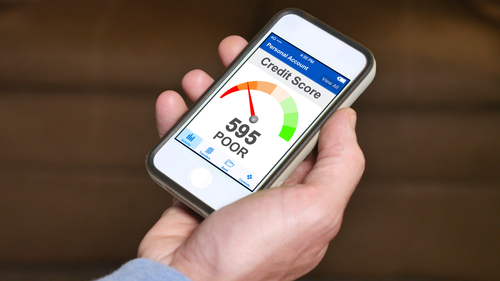
Somewhere on your credit card statement there is a note saying if you only make the minimum monthly payment each month, it will take you a certain number of years and months to pay off the balance – BUT ONLY IF YOU NEVER ADD ANY MORE CHARGES TO THAT CARD AGAIN!

Your credit card agreement will specify the minimum payment that is due every month. This amount is generally a certain percentage of the balance owed. This percentage can often be based on factors such as your credit score and the limit on your card.

Basing it on a percentage instead of a fixed amount (like a consumer loan, for example) works in the credit-card company’s favour because the minimum monthly payment reduces as your balance reduces. It will take decades to get out of debt and cost you hundreds, if not thousands, of dollars in interest.

At one time, minimum payments were 5% of your balance, but they have gradually reduced to an average of 2%. My personal Capital One MasterCard requires only 1.45%.

According to a recent TransUnion survey of Canadian credit-card holders, 44% of respondents pay their credit card balance in full each month, and 9% just pay the minimum. Interestingly, it varies by province, with consumers from Ontario (27%) and British Columbia (20%) most likely to pay the minimum.

Avoid this financial trap

Jacob moved into his first apartment. His first stop was the local furniture store to buy some living room furniture. He put $5,000 on his new credit card (18.9% interest). The first minimum payment was $200 (4%). If he maintains this payment, it will take him 11 years and 5 months to pay the entire balance and, by the time he has made his final payment he will have paid $8,109 for his furniture. That’s a lot of money for something that will drop in value year by year, assuming he will still own it in 11 years. Continue Reading…

Low future returns? The coming bull market in advice

A bull market in advice? This novel idea is the basis of my latest Motley Fool blog, which came out of the 2017 Vanguard Investment Symposium held this Tuesday.

Hopefully, the title is self-explanatory. Click on the highlighted text to access the whole blog: Lower future returns from balanced portfolios means a bull market in advice.

Click through to get Vanguard’s forecasts for future returns. Suffice it to say that they don’t believe the next five years will be as good as the last five years have been for balanced investors.

All of which means good financial advice will be at a premium.  Naturally, Vanguard believes that the lower expected future investment returns are, the more important it is to reduce costs and taxes, which of course its low-cost index funds and ETFs facilitate. But it also believes advisors can help investors by addressing the so-called  “behaviour gap.” It’s been well documented that poor investing behaviour (buying high, selling low) are destructive to returns, which is why a good financial advisor can more than recoup his/her fees.

Advisors can add 3% value per a year

Many fee-based advisors use the kind of investment funds Vanguard provides and Vanguard believes good advice can “add value” of roughly 3% per year to clients’ investment returns.

Behavioural coaching is the single biggest value-add: 150 basis points (1.5%). “Staying the course is difficult,” but “a balanced diversified investor has fared relatively well,” said one Vanguard presenter quoted in the Motley Fool piece, Fran Kinniry.

Behavioural coaching is followed closely by 131 beeps for cost-effective product implementation (using low expense ratios). This alone can add 1 to 2 percentage points of value, Vanguard says, attributing the finding to “numerous studies.” Rebalancing accounts for another 47 beeps, and Asset Location between 0 and 42 beeps (as opposed to Asset Allocation, which it says adds “more than 0 beeps.”)

A proper spending strategy (identifying the order of withdrawals in the decumulation stage) accounts for another 0 to 41 beeps. All told, the potential value added comes to “about 3%,” Kinniry says.

Vanguard says a “strong move to fee-based” compensation is accelerating. In 2015, 65% of advisors’ compensation came from asset-based fees, while wealthier investors are “most willing to pay AUM-based fees.” Gradually this will ‘flow down” to less well-heeled clients, “as smaller balances can now be well-served” in a fee-based model because of scale and technology.

Using Cerulli data from 2015, Vanguard estimates the median asset-weighted advisory fee is 1.39% for the mass market ($100,000 assets), 1.28% for the middle market ($300,000), 1.09% for the mass-affluent market ($750,000), 0.92% for the affluent market ($1.5 million to $5 million) and 0.70% for the High Net Worth market ($10 million or more).

On average across all clients, the median fee is 1.07%.