Most of your investing life you and your adviser (if you have one) are focused on wealth accumulation. But, we tend to forget, eventually the whole idea of this long process of delayed gratification is to actually spend this money! That’s decumulation as opposed to wealth accumulation. This stage may also involve downsizing from larger homes to smaller ones or condos, moving to the country or otherwise simplifying your life and jettisoning possessions that may tie you down.
There is a Mother’s Day gift I wish I had the power to give to all the women I love and even to women I’ve never met. I would give them the gift of a title and all the qualifications and knowledge to go with it – “mistress of financial affairs”. Now I must admit the English language gives the term “master” a much more powerful and commanding sound of authority than “mistress” but I want my gift infused with feminine, not masculine power.
What did you learn about money from your Mother? I’m so grateful to my Mom, a fiscally prudent depression era Scot. She lived to her late 90s and raised four daughters to take an active interest in managing their own financial lives. Mom was always a believer a woman should have money to call her own and she regularly squirreled away a few dollars from the household allowance provided by my Father. Yes, he was a man of his times.
The White Knight
In my years as a financial advisor I saw women too often abdicate responsibility for their financial life. They told themselves creative stories such as “I just don’t have a mind for that stuff and my husband, boyfriend, or father just does a better job”. Some singletons believed there was a white knight out there, just around the corner, who would arrive to change or improve their financial situation. Many were understandably exhausted with all the other work and household responsibilities they carried or they felt that if they managed the day to day bill paying they could leave the big-picture financial decisions to their partner. Please don’t do it – off-load laundry or cooking or toilet bowls – never money management. A “right relationship” with money is too important – and it’s never to late to acquire it
Pick a label
We women hold many titles or labels throughout our lifetime – this month, of course, the first to come to mind is mother but we may also be a daughter, sister, wife, friend, teacher, student, employee – the list goes on and on. Continue Reading…
Tax-free investing can help you save money over both the long and short term if you invest using these tips.
Tax-free investing and using tax shelters are strategies employed by many successful investors.
Tax shelters are legal investment vehicles that let investors pay less tax. While some are risky and should be avoided, like flow-through limited partnerships, others, like RRSPs and TFSAs, are great ways for Canadian investors to cut their tax bills.
Here are the best ways to defer or lower the amount of tax you have to pay on your investments.
Tax-free investing with Registered Retirement Savings Plans (RRSPs)
RRSPs are a great way for investors to cut their tax bills and make more money from their retirement investing. RRSPs are a form of tax-deferred savings plan. RRSP contributions are tax deductible, and the investments grow tax-free.
You can put money in RRSP tax shelters each year (up to a limit based on your income) and deduct it from your taxable income. You only pay income tax on your investment, and the income it earns, when you make withdrawals from your RRSP.
In a way, investment gains in RRSP tax shelters give you a double profit. Instead of paying up to 50% of your investment gains in taxes right after you make them, you keep 100% of them working for you until you take money out. That will likely be years later in retirement, when most Canadians enter a lower tax bracket.
If you want to pay less tax on investment income while you’re still working, investing in an RRSP is the way to go.
Tax-free investing with tax-free savings accounts (TFSAs)
A tax-free savings account lets you earn investment income — including interest, dividends and capital gains — tax free. But unlike registered retirement savings plans (RRSPs), contributions to tax free savings accounts are not tax deductible. However, withdrawals from a TFSA are not taxed.
TFSAs can generally hold the same investments as an RRSP. This includes cash, ETFs, mutual funds, publicly traded stocks, GICs and bonds.
Here are three tips you can use to make sure you’re getting the most profit—and tax benefits—from your TFSA:
1.)Keep higher-risk investments out of your TFSA: Holding higher-risk stocks in your TFSA is a poor investment strategy. That’s because high-risk stocks come with a greater risk of loss. If you lose money in a TFSA, you lose both the money and the tax-deduction value of the loss.
2.)Let your current income help you decide between your tax free savings account and RRSPs:RRSPs may be the better choice in years of high income, since RRSP contributions are deductible from your taxable income. In years of low or no income—such as when you’re in school, beginning your career or between jobs—TFSAs may be the better choice.
3.)Consider holding exchange-traded funds in your TFSA: It’s difficult to build a diversified portfolio within your TFSA. Instead, look to exchange-traded funds for TFSA investing.
Tax-free investing strategies can include saving on dividend taxes
Others simply dismiss the notion outright even if they are curious. How do we live on less than $30,000 per year while traveling through Thailand, Vietnam, Mexico, Central America and other exotic locations? We don’t give up luxury, nor do we deprive ourselves.
So what is our secret?
Our approach is very simple: We have chosen not to dedicate our time and money to support a complicated infrastructure.
For almost three decades we have wandered the globe living in countless countries. We have purchased new computers and digital gadgets, refreshed our wardrobes many times over, received extensive medical care, and we have biked, hiked, scuba’d, taxi’d, bused, sailed and flown endless miles.
How is this possible?
Downsize the house, car, and Uncle Sam
Our housing expenses include our annual lifestyle fees, maintenance, repairs, and utilities for our home in the States, as well as hotel rooms or apartments we may rent while on the road. To ameliorate this cost, sometimes we house sit. We have been car free for years now, but our transportation costs include airline tickets, visas, passport renewals, taxis, Uber, boats, trains, and tuk-tuks.
If you look at your own expenses, you will see that housing and transportation take a good chunk of your income. Becoming mindful of what goes in to support these two areas of your life will be eye-opening. Take a close and honest evaluation of this state of affairs for yourself. Understand precisely where your money goes and why.
Another area that takes fiscal attention is taxes. Income taxes are something you can control by restructuring your portfolio. Interest from corporate bonds and short-term capital gains are taxed at income rates that are higher than qualified dividends and long-term capital gains [in the U.S.]. This restructuring is something to think about and can save you a significant amount of money yearly.
In most cases, housing, transportation, taxes and food/entertainment are the top areas of cash outlay in a person’s economic life. Modifying any or all of them — which is exactly what we did — will have a significant impact on your annual expenses.
Lunching in Guanajuato, Mexico
High living, low costs
All that being said, we have a great deal of fun living on less than $30,000 per year. Spending wisely, we get the most bang for our buck. For instance, living in a resort location in the States, we have access to a swimming pool, tennis courts, and a workout room without having to lay out cash for their purchase or maintenance. We eat high-quality meats, fish, fruits, and vegetables because we shop at farmer’s markets and watch for the rotating grocery sales to purchase when prices are attractive.
When we visit foreign countries, we live like the locals, eating fresh foods from the open markets, and we rent apartments, house sit or rent hotel rooms by the month. In this way we have maid service, gardeners, Wifi, and no utility expenses.
Walking instead of driving whenever possible, we also choose low-cost entertainment options such as tennis, hiking, biking, swimming, going to museums and art shows, and enjoying local festivals and celebrations. Volunteering for projects wherever we live, this provides us with new learning experiences and a sense of fulfillment. We share time with friends either cooking for them ourselves or going out to lunch instead of opting for higher-priced dinners. And when it’s time to hit the road, we take full advantage of current airline deals and travel packages.
Reaping the benefits of simplicity we place more emphasis on creating a life of meaning rather than a life of “‘stuff.”
Sunset at Naples Beach
What about you?
So you think you can’t make it on $30,000 yearly? How about $60,000 or $100,000 or more? All this means is that your net worth will need to be high enough to maintain these levels of spending.
No matter where you are in this continuum, you can profit from doing any of the following:
Simplify your personal infrastructure
Know where your money is going, and decide whether it’s worth it to you. Do you want to keep up the pace of your current spending? Make your funding priorities reflect your values.
Plan your retirement tax strategy now
Know there is a balance in the exchange of time and money
Do you want more money, or do you want more time? Your choice here will affect your future. Be clear about what you want.
Remember, the best things in life are free
Friendships and connection to society are based more on your attention and time, rather than on your money. Watching the sun set with a loved one — sharing life experiences together — creates memories that will far outlast anything you can purchase.
Billy and Akaisha Kaderli are recognized retirement experts and internationally published authors on topics of finance, medical tourism and world travel. With the wealth of information they share on their award winning website RetireEarlyLifestyle.com,they have been helping people achieve their own retirement dreams since 1991. They wrote the popular books, The Adventurer’s Guide to Early Retirement and Your Retirement Dream IS Possible available on their website bookstoreor on Amazon.com.
My latest MoneySense Retired Money column, just published, looks at how the 17th century “tontine” scheme may help solve 21st century angst about outliving your money in Retirement. Click on this headline to retrieve the whole article: Why Ottawa needs to push for tontine-type annuities.
We have described Moshe’s pioneering work in annuities and tontines before: the York University finance professor and prolific author has published entire books on tontines and annuities. As he outlines in Pensionize Your Nest Egg, Milevsky has always emphasized the distinction between what he calls “real” pensions (guaranteed-for-life Defined Benefit pensions) and capital-appreciation vehicles like RRSPs or Defined Contribution plans, which have to be “pensionized” (or “annuitized”)before they can be considered to be “real” pensions.
Milevsky and three fellow Canadian co-authors have just published a paper partially funded by the pension section of the U.S. Society of Actuaries,entitled Annuities versus Tontines in the 21stCentury: A Canadian Case Study. (The other authors are Thomas Salisbury, Gabriela Gonzales and Hanna Jankowski). In it they make the case for the reintroduction of retirement investment income tontines (RITs) into the modern financial supermarket.
For those who haven’t seen the film The Wrong Box, tontines are mortality-linked investments that superficially resemble life annuities but were quite popular in Europe in the 17thand 18thcentury and later America. But they fell into disrepute by the early 20thcentury, in part because of the kind of sordid image they received, often popularized by novels and films like The Wrong Box. The “longest-living” winner takes the pot, which is why creative artists have often used this as a plot device involving skulduggery.
In essence, tontines pool capital and distribute all the capital and investment gains to those who live the longest: those unlucky enough to die early forfeit the capital (i.e. their heirs forfeit it), while those who live the longest benefit with super returns.
While a tontine revival could make sense around the world – the pension and longevity trends are almost universal – they make particular sense in Canada. The authors state they “believe that Canada has a dearth of products for hedging personal risk, compared to the U.S. market.” They know of no Canadian insurance company that offers a true deferred income annuity (DIA or ALDA), not do they offer a variable income annuity or equity-indexed annuities with living benefits: all available in the US. The closest we have are segregated funds, and they really aren’t that great as far as guaranteeing lifetime income, Milevsky told me. Continue Reading…
Prospective retirees want a simple formula for making their retirement plan. There are hundreds of calculators that will crank out numbers showing how many years until you can retire, how much you need to save, and how long your money will last. It’s a good place to start, but don’t stake your entire future on the results.
You spend decades preparing for a comfortable retirement, planning to spend time playing golf or travelling the world. But, if a financial disaster strikes, those dreams may not translate into reality. Unexpected financial crises that disrupt savings are far more common than anticipated.
If your retirement plan only works as long as nothing goes seriously wrong, you are not properly prepared for retirement. It’s important to plan ahead. Knowing how you will handle certain crises can go a long way toward minimizing the financial fallout.
What kind of surprises can derail a retirement plan?
They can include:
Lost income.
Providing financial support to an adult family member.
Paying significant health care costs for yourself or a family member.
Unanticipated major home repairs, especially after a natural disaster.
Changes in tax rates and legislation.
Let’s look at three situations that can derail your financial plan.
1.) Unpredicted early retirement
How would your retirement plan be impacted if you lost your job due to company downsizing? Do you have the marketability to find comparable employment elsewhere in a reasonable amount of time? Would you receive the same salary, or be forced to accept a lesser amount?
Lost income might be due to forced retirement for health reasons.
Not only would there be loss of income, you might have to dip into your savings earlier than expected. There could be expensive medical costs not covered by your provincial health plan.
2.) Providing financial support to family members
People over the age of 50 have the opportunity to beef up their retirement accounts with additional contributions. What if your child is forced to return home and/or require financial support due to a job loss, divorce, or health crisis? There may not be room in the budget to make those catch-up contributions.
As life expectancies increase, aging parents may require some expensive medical support or long-term care.
A lot of people currently care for two generations of family members.
3.) Investing challenges
Key investment objectives for retires are income and preservation of capital. Liquidity is important. Growth as well.


 Posted By
  By Heather Compton
 Posted By




 Posted By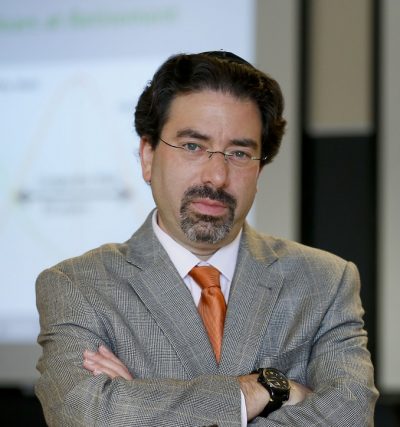

 Posted By