Most of your investing life you and your adviser (if you have one) are focused on wealth accumulation. But, we tend to forget, eventually the whole idea of this long process of delayed gratification is to actually spend this money! That’s decumulation as opposed to wealth accumulation. This stage may also involve downsizing from larger homes to smaller ones or condos, moving to the country or otherwise simplifying your life and jettisoning possessions that may tie you down.
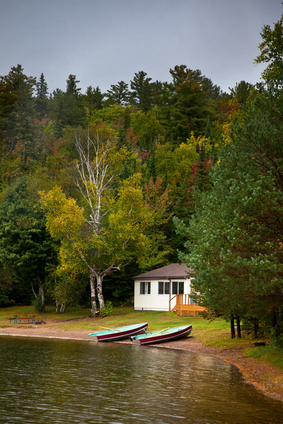
The summer is quickly approaching and for many Canadians that means one thing: cottage season.
While many parents envision leaving the family cottage as part of their inheritance one day, with the value of cottages often appreciating since purchase, there’s also the risk of bestowing the legacy of a large tax bill.
To help make sure you’re leaving an inheritance of cottage relaxation and not taxation, here are three strategies you can discuss with your financial advisor when planning your cottage legacy. These strategies are available to you while you are alive, and there are various other strategies that can be implemented on your death in your will.
• Co-own with your Kids
Adding your children to the deed and making them co-owners of your cottage could help defer capital gains tax and save money. For example, if your cottage value has increased over time, it would trigger a capital gain on the portion of the cottage that your children now own and you would pay the tax on that now. Down the road, your kids would only pay tax on the capital gains owing on the remaining portion of the cottage you own when you die. There is, however, a risk with this approach. Continue Reading…
The third instalment of my new bimonthly Retired Money column at MoneySense.ca has just been published online and focuses on the important topic of pension splitting, or pension income splitting.
As the piece observes, pension splitting can be manna from heaven for retired or even semi-retired couples where one is collecting a generous Defined Benefit or other employer pension and the other is not.
Nor is it as complicated a process as it may seem at first blush: you don’t have to actually divide such a pension and send some to each spouse: it all happens at tax-time when for tax purposes you choose what percentage of the pension each spouse should receive. Naturally there are multiple things to consider, such as other income sources, relative tax brackets and so on.
But the bottom line is that in many cases, it should result in thousands of extra after-tax dollars a year in the pockets of the couple as a unit. And that’s how couples should behave, isn’t it?
For more information about pension income splitting, a good place to start is the Canada Revenue Agency’s web site, and in particular this explanation. Note too that it includes a short video.
Valletta, the Capital City of Malta in early morning.
By Ashley Watson
Special to the Financial Independence Hub
If you are nearing pension age, chances are you are thinking about settling down in a foreign retirement destination.
Low cost of living, better climate, adequate healthcare facilities, convenient transport system, and friendly people could be your next small world. Obviously, you might have personal preferences but if you’re looking for options, here are five of the top retirement destinations for 2016:
1.) Malta
Malta is a southern European island country that’s small in size but densely populated. Spread across 122 square metres, the country has a headcount of over 450,000. The reason why it’s so densely populated is because of the luxuries it offers to its residents. Over here, you get more than 3,100 hours of sunshine every year and the average temperature is only around 19 degree Celsius. Any senior citizen would love that! Most of the local residents are fluent in English and there are multiple tourist attractions to explore.
2.) Portugal
Portugal is famous for its pleasant climate, good healthcare centers, and rich cultural heritage. Even if you are getting a minimal pension amount, you will find it incredibly easy to live here. The low cost of living is one of the major plus points about settling down in this country. In fact, you could buy three homes in Portugal for the same price that you would spend on a single home in France. What’s more, Portugal is also the third biggest expat community in Europe only next to Spain and France.
3.) Spain
Spain has the biggest expat community in Europe and the crime rate is really really low here. If your age isn’t going to stop you from exploring new places, then you will love Spain. There is lots to see and experience in this part of the world. The country is a unique mix of modern and traditional cities. Head to major cities like Barcelona and Madrid to see the developed side of Spain and visit islands such as Menorca, Ibiza, and Tenerife to immerse yourself in the nature.
Tropical sea landsape. Philippines, El Nido.
4.) Philippines
The Wall Street Journal named Philippines as one of the best places to retire in the world in 2016. The country is home to more than 7,000 tiny islands and is widely preferred by western retirees, mainly because of its low cost of living. It costs only about 300 pesos or $7 to consult a doctor and X-rays are only about $20. Plumbing and carpentry services are only about 400 pesos or $10. Dirt cheap, right? If you love to spend time outdoors, then try your hands at Golf. It’s the most popular retirement sport in the country.
Editor’s Note: Retirees considering this destination may wish to monitor the news about kidnappings in southern Philippines. See for example this recent National Post news story headlined Visit the southern Philippines at your peril.
5.) Thailand
If you are looking forward to living a completely new lifestyle from that of United States or the United Kingdom, then you must check out Thailand. The country boasts a number of renowned temples including Wat Phra Kaew (Temple of the Emerald Buddha), Wat Pho (Temple of the Reclining Buddha), and Wat Indravihan and some historic buildings such as The Grand Palace (built by King Rama). Thai cuisine is one of the most popular food in Asia and this is the best place to taste them. Foodies can look forward to relishing a wide variety of dishes here.
What’s more, cheap property prices and discounted fuel prices are other factors that have drawn over 41,000 expats over the years.
Conclusion
Of course, there are dozens of other countries to settle down and lead a happy life after 60. But, we’ve picked some of the retirement destinations that are predominantly suggested by travel blogs and globetrotters. If you have retired in any other country and having a great time, please let us know in the comments.
Ashley Watson is a globetrotter who blogs mostly on travel and tourism. She is the chief writer and social media strategist at GolfPh.
Investors know that not all parts of personal finances are created equal. Some areas definitely have more impact on the money strategies.
Questions always arise as to which ones to best consider closely. I’ve identified a half dozen key money moves for practically everyone.
A smart step for individuals and families is to prioritize my six core financial matters. Place them at the front of the line and attend to them in detail.
Try not to start the discussions within the comforts of your home. Instead, plan a few walks with your spouse and, perhaps, Fido.
It’s a great way to enjoy the outdoors and have a relaxed chat about the finances.
Make it a fun outing by indulging in that favourite treat.
My suggestions touch on the core of investing, estate planning and retirement.
Your mission is to ensure that each area delivers.
Explore whether a few tweaks would fortify your foundations.
You want each area to fit like a glove into your total game plan.
I summarize six core areas that benefit from your focus: Continue Reading…
Yes, the concept may seem at first blush a bit contradictory but strange things can happen when you’re in the netherworld between full-time employment and full-stop retirement.
A period of semi-retirement (or what we call Victory Lap Retirement in an upcoming book I’ve written with Mike Drak) brings with it various opportunities to pay a little more tax than necessary while you’re “basking” in a relatively low tax bracket, in order to pay a lot less tax once those large RRSPs grow into even larger RRIFs and their forced annual (and taxable) withdrawals once you reach age 71.
Emeritus Financial Strategy’s Doug Dahmer
One of the sources for the piece is Emeritus Financial Strategies’ Doug Dahmer, a Hub contributor who has penned many blogs on this theme, most of them housed in the Decumulate & Downsize section. Doug is pictured to the right.


 Posted By
  By Tarsem Basraon, TD Wealth
  Posted By