Decumulate & Downsize

Most of your investing life you and your adviser (if you have one) are focused on wealth accumulation. But, we tend to forget, eventually the whole idea of this long process of delayed gratification is to actually spend this money! That’s decumulation as opposed to wealth accumulation. This stage may also involve downsizing from larger homes to smaller ones or condos, moving to the country or otherwise simplifying your life and jettisoning possessions that may tie you down.

High inflation in 2022 changes calculus on delaying CPP till 70

Actuary Fred Vettese had a couple of interesting (and controversial!) articles in the Globe & Mail recently that may give some near-retirees  who were planning to defer CPP benefits until age 70 some pause.

The gist of them is that because of inflation, those nearing age 70 in 2022 might want to take benefits sooner than later: despite the almost-universal recommendation of financial pundits that the optimum time to start receiving CPP (or even OAS) benefits is at age 70. From what I glean from Vettese’s analysis, those who are 69 this year should give this serious consideration, and possibly those who are currently 68 (or even 67!)  might also think about it.

You can find the first piece (under paywall, Sept 27) by clicking the highlighted headline:  Thanks to a Rare Event, Deferring CPP until age 70 may no longer always be the best option.

The second, quite similar, article ran October 6th:  Deferring CPP till 70 is still best for most people. But here’s another quirk for 2022, when inflation is higher than wage growth.

Certainly, Vettese’s opinion carries weight. He is former chief actuary of Morneau Shepell (LifeWorks) and author of several regarded books on retirement, including Retirement Income for Life.

My own financial advisor [who doesn’t wish to be publicized] commented to his clients about these articles,  noting that they:

“aroused interest among some of you on when to begin receiving the Canada Pension Plan (CPP) given an unusual wrinkle that has occurred over the past couple of years where it may be more beneficial  to not defer it to 70 in order to maximize the dollar benefit.  It is particularly relevant for those who are within a year or two of approaching  70 years old and have so far postponed receiving CPP … My take on the piece is that if you are not receiving CPP and you are closer to 70 years old than 65, then the odds move more favourable to taking it before reaching 70. That is particularly true if there are health concerns that affect longevity.”

I must confess that I found Vettese’s thought process hard to follow all the way, but I respect his opinion and that of my advisor enough that it altered our own CPP strategy.  People who had originally planned to take CPP  at age 70 early in 2023 may be better off jumping the gun by a few months, opting to commence CPP benefits late in 2022. This is because of a unique “quirk” in the Canada Pension Plan that is occurring in 2022, whereby “price inflation is higher than wage inflation.”

Personally, I took it at age 66 (3 years ago) but we had planned to defer my wife Ruth’s CPP commencement till 70, still about 18 months away. Vettese himself turns 70 in late April [as do I] and in an email he clarified that because of the inflation quirk, he’s taking his own CPP in December: 5 months early.  But as his example of Janice below demonstrates, even those a year or two younger may benefit by doing the same.

A lot is at stake with such a decision, however, so I would check with your financial advisor and Service Canada first, or engage a consultant like Doug Runchie of DR Pensions Consulting, to make sure your personal situation lines up with the examples described in the article.

2022 is the exception that proves the rule

Actuary and author Fred Vettese

Vettese starts the first article by recapping that CPP benefits are normally 42% higher if you postpone receipt from age 65 to age 70. However, he adds:

“Almost no one knows – and this includes many actuaries and financial planners – that the actual adjustment is not really 42 per cent; it will be more or less, depending on how wage inflation compares with price inflation in the five years leading up to age 70. It turns out this arcane fact is crucial. The usual reward for waiting until 70 to collect CPP is that the pension amount ultimately payable is typically much greater than if you had started your pension sooner, such as at age 65. In 2022, that won’t be the case. As we will see later on, someone who is age 69 in 2022 and who was waiting until 70 to start his CPP, is much better off starting it this year instead.”

Those most directly affected are people over 65 who have not yet started to collect their CPP pension. Here’s how he concludes the first article:

“In a way, 2022 is the exception that proves the rule. It is the result of COVID, a once-a-century event, creating a one-year spike in price inflation without a corresponding one-year spike in wage inflation. This analysis, by the way, has no bearing on when to start collecting the OAS pension.

This should send an SOS to financial planners and accountants, as well as retirees who take a DIY approach. Deferring CPP will usually continue to make sense but not necessarily in times of economic upheaval.”

In an email to Fred, he sent me this: “I wouldn’t spend too much time on the Wade example (first article). Situation is rare. More common is the Janice example (second article). It applies just as I state in the article.”

Example of those turning 68 early in 2023

For the Janice scenario, Vettese describes someone currently age 67 who had planned to start taking CPP benefits in April 2023, a month after she turns 68: Continue Reading…

Living off the Dividends?


By Dale Roberts, cutthecrapinvesting

Special to the Financial Independence Hub

It is the most popular rallying cry for self-directed investors in Canada and the U.S. – I plan to “live off of the dividends.” Or in retirement – “I am living off of the dividends.” The notion leaves money on the table in the accumulation stage and living off of the dividends leaves a lot of money on the table in retirement. Don’t get me wrong, I love the big juicy (and growing) dividend as a part of our retirement plan. But as an exclusive strategy, the income approach simply comes up short.

It’s not a popular Tweet, but I have suggested that no investor with a viable and sensible financial plan would live off the dividends. Add this to the points made in the opening paragraph; it might not be tax-efficient. Also, the dividend would have no idea of what is a financial plan and what is the most optimal order of account type spending. Check in with the our friends at Cashflows&Portfolios and they can show you a very efficient order of asset harvesting.

On Seeking Alpha, I recently offered this post:

Living off dividends in retirement; don’t sell yourself short.

Thanks to Mark at My Own Advisor for including that post in the well-read Weekend Reads.

Financial Planner: It may be a bad idea

From financial planner Jason Heath, in the Financial Post.

Why living off your dividends in retirement may be a mistake.

Retirement planning is a personal decision, but you might be making a big mistake if you go out of your way to ensure you can live off your dividends, since you will be leaving a great deal of money when you die. In the process, you may have worked too hard at the expense of family time or spent too little at the expense of treating yourself.

In that Seeking Alpha post, I used BlackRock as the poster child for a lower-yielding dividend growth stock. The yield is lower but the dividend growth is impressive. That can often be a sign of underlying earnings growth and financial health.

2022 update: BlackRock is falling with the market (and then some); the yield is now above 3%.

Making homemade dividends

In that Seeking Alpha post, I demonstrated the benefit of selling a few shares to boost the total retirement take from BlackRock. The retiree gets an impressive income boost, and only had to sell 2.8% of the initial share count. The risk is managed.

Starting with a hypothetical $1 million portfolio, $50,000 in annual income represents an initial 5% spend rate. That is, we are spending 5% of the total portfolio value. Without share sales the retiree would have been spending at an initial 3.3%.

Share Sales (in the table) represents the income available thanks to the selling of shares: creating that homemade dividend.

The retiree who has the ability to press that sell button to create income enjoyed much higher income. In fact, the retiree would have been able to sell significantly more shares (compared to the example above) to create even more additional income.

Plus the dividend growth is so strong, it quickly eliminated the need to sell shares.

BlackRock Dividend Growth – Seeking Alpha

In fact, the BlackRock dividend quickly surpasses the income level of the Canadian bank index. It can be a win, win, win. Even for the dividend-loving Canadian accumulator, BlackRock is superior on the dividend flow.

But of course, the aware retiree will keep selling shares and making hay when the sun shines. They might cut back any share sales in a market correction: also known as a variable withdrawal strategy.

It’s a simple truth. Don’t let the income drive the bus. It doesn’t know where you need to go. This is not advice, but consider growth and total return and share harvesting.

Don’t sell yourself short.

In the Seeking Alpha post, I also offered:

The optimal mix of income and growth for retirement Continue Reading…

Get Income at the Short End

Franklin Templeton/iStock

By Brian Calder,

Franklin Bissett Investment Management

(Sponsor Content)

Nowhere to run to, nowhere to hide: that could be the description of the 2022 investor year. It has been a difficult 2022, and many investors are looking to enhance their cash positions while preserving capital, given market volatility and rising interest rates. In this environment of high inflation, higher rates, and slow economic growth, an ultra-short duration bond strategy could be timely.

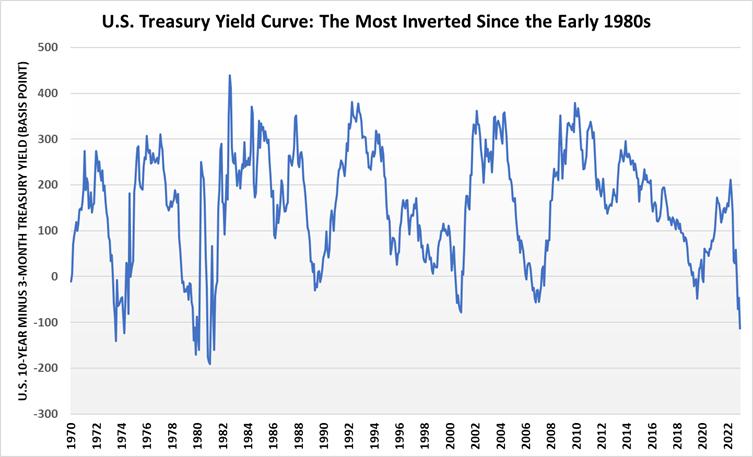
The major equity and bond markets have been hit hard this year by geopolitical shocks, fallout from the COVID-19 pandemic, and sluggish growth. Rapid and aggressive moves by major central banks to increase interest rates resulted in a flat or inverted bond yield curve and contributed to elevated market volatility. An inverted yield curve means that interest rates on short-term bonds are higher than those of long-term bonds. For instance, on October 6, 2022, the yield on the three-month Government of Canada bond was around 3.68%, while the yield on the 10-year Government of Canada bond was 3.34%.

An inverted yield curve is often seen as a pessimistic market signal about the prospects for the wider economy in the near term. Bond markets have priced in even more interest rate hikes from central banks like the Bank of Canada and the U.S. Federal Reserve.

So, rather than thinking about being ‘ahead of the curve,’ it may be time for investors to be at the front of the curve.

These challenging market conditions are ideal for an ultra-short-duration bond strategy. Duration is a number that’s used to measure how sensitive a bond’s price is to changes in interest rates:  how much the price is likely to change as rates change. The longer the duration, the greater the sensitivity to shifts in interest rates for a bond. Understanding the use of duration can help an investor determine the position of bonds in a portfolio.

Time for short-term thinking

At the front end of the federal government bond yield curve, opportunities are available for investors because the curve remains flat in the middle and at the back end. A yield comparison of the Canadian market as of August 31, 2022, showed that an ultra-short duration strategy outperformed three-month Treasury bills and was competitive with one-year to three-year government bonds. Because short-term yields are less sensitive to rate hikes, they can be more protected and stable, plus they are not as exposed to potential drawdowns like those seen in strategies with longer-term exposures.

Also, an ultra-short duration strategy can be less volatile than longer bonds (see chart).


Continue Reading…

Retirement, Meet Target Date Funds: The opportunities, and how they work

By Brian See, Evermore

Special to the Financial Independence Hub

Target date funds are a fantastic investment tool, particularly for Canadians who are saving for retirement. Despite their benefits, though, they have not been made widely available to the masses yet.

If we look at our U.S. neighbor, target date funds are already taking off. In fact, target date funds hit a record US$3.27 trillion in assets in 2021, up from $52 billion in 2020. The market value speaks for itself: target date funds are here to stay, and they’re growing in popularity.

When it comes to retirement, there are many Canadians who don’t save long-term because it seems out of reach. In fact, about 1 in 3 Canadians have never saved a dime for retirement even though the majority of Canadians have expressed concern about not having enough money in retirement. To boot, record-high inflation is leading Canadians to fear a retirement crisis, and 72% of Canadians believe saving for retirement is ‘prohibitively expensive.’

We have seen target date funds play out well in the U.S. If Canada is able to further adopt this form of investing to the market, we can close this retirement investing accessibility gap.

In order to understand the opportunities that target date funds provide for investing for retirement, it’s important to break down how they work.

How Target Date Funds work

At their core, target date funds are a one-stop-shop for long-term saving and investing. Target date funds use a systematic or rules-based asset allocation where the mix of stocks and bonds changes over time as you approach the target date. The funds are a mix of stocks and bonds that increase and decrease their risk levels according to the person’s age. This “glide path” model increases risk as you’re younger, and decreases risk as you get closer to retirement because, simply put, you’ll need that money to draw upon in retirement! Target date funds are also easy to choose. You simply pick the year you want to retire and select the target date fund with that year.

Of course, with any investment strategy, there are risks. The inherent risk here is that you are investing in the market. Stocks and bonds go up and down: they ebb and flow but in the long term, markets have increased in value. A key feature of target date funds is that they are diversified across asset classes, geographies and sectors, and that diversification helps whether there is a downturn in the market or not. Target date funds weather the storm. Continue Reading…

Keep calm and dividend on

By Mark Seed, myownadvisor

Special to the Financial Independence Hub

The markets are down, inflation remains hot, and interest rates are moving higher.

Are you worried?

I’m really not that worried.

I’ve been preparing for higher interest rates for years, well before the pandemic.

Case in point: this post is literally from five years ago. 

Where am I going???

Well, readers of this site will know I’m a big fan of companies that reward shareholders with dividends.

And why not love dividends?

Although I use a few indexed products in my investment portfolio, for extra diversification just in case, getting paid on a consistent, growing basis from Canadian and U.S. stocks: that’s a beautiful thing. I got another raise this week that I’ll link to below!

Digging deeper, I’m not that worried about the markets or inflation right now. There is a reason why dividends matter to me. Why do dividends really matter?

Beyond the Canadian dividend tax credit, beyond consistent payments and ever growing income I’ve experienced to date, dividends help me stick to my plan.

There is no financial advisor in my plan, nor fees paid to any advisor in my plan.

There is no day trading, there are no wasted fees or losses for trading.

There is no wild market speculation, I’m not trying to time anything.

I focus on my savings rate for investing and I invest more money when I have it. It’s that simple. 

Recall that dividends paid is real money paid from real company profits. Buying and holding an established company that has paid dividends for decades is a good sign (at least from a historical perspective) that this company had enough cashflow to reward shareholders and stay in business.

Companies that don’t pay dividends tend to use their money for other means, grow their business; make acquisitions or buy back shares, pay down risky debt, therefore driving the stock price higher over time.

These are not poor management decisions by any means: far from it. There are lots of ways shareholder value is created and to be honest, acquisitions, share buybacks and other company reinvestments could be better company decisions in the long-run!!

When it comes to the capital gains versus dividend income debate, there really isn’t a debate to be had, since every dollar you earn in capital gains from a stock is worth just as much as your dividend dollar paid. I love the graphic shown at the top of this blog.

Continue Reading…