Decumulate & Downsize

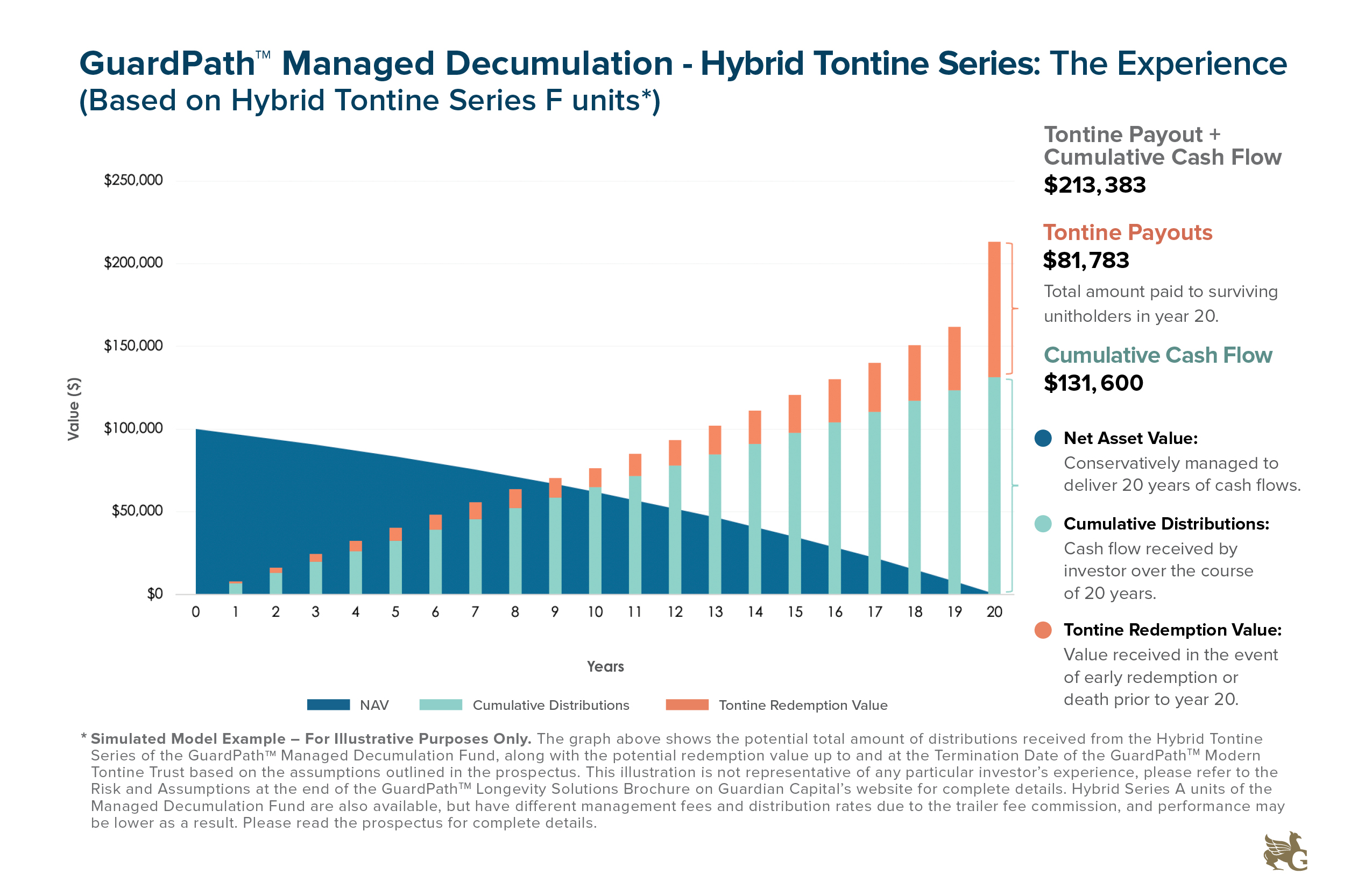
Most of your investing life you and your adviser (if you have one) are focused on wealth accumulation. But, we tend to forget, eventually the whole idea of this long process of delayed gratification is to actually spend this money! That’s decumulation as opposed to wealth accumulation. This stage may also involve downsizing from larger homes to smaller ones or condos, moving to the country or otherwise simplifying your life and jettisoning possessions that may tie you down.

Get started on your investing journey

RBC/Getty Images

By Michael Walker,

Vice-President & Head, Mutual Funds Distribution & RBC Financial Planning, RBC

 (Sponsor Content)

Whether you’re investing to build up a nest egg for retirement, to buy your first home or for a special vacation, finding the right investing solutions can play a big role in helping you achieve your financial goals.

If you’re just starting on your investing journey, however, I know that taking that first step can feel overwhelming.

To help get you started, I’ve responded below to four of the most common questions I hear about investing:

  • Do I have enough money to get started?

You don’t need to have a lot of money to start investing. It’s important to start early, however, as even small amounts of money can grow into big investments with the power of compounding.

As a simple way to think of this, compounding enables your investment to generate earnings and then those earnings are reinvested. In other words, compounding helps you grow earnings on your earnings.

The basic idea is to start investing with an amount you’re comfortable with and increase that amount over time. Once you’ve decided how much you can invest, consider setting up an auto-deposit that automatically moves that money from your chequing account into your investment account on a regular basis. This could be weekly, bi-weekly, monthly: whatever works for you and your finances. Then, as your available funds increase, you can increase the amount you deposit.

In this way, you’re benefiting from paying yourself first and the money you’re depositing will be in your investment account before you can even miss it.  

  • How do I decide which investing options are right for me?

Finding the right investing solutions starts with understanding your investing style. Here are some questions you can ask yourself, to help determine that style:

  • Why do I want to invest? How does this fit into my overall financial goals?
  • Do I want to make my own investing decisions and do I have the time to manage my own investments?
  • Am I comfortable with virtual investing, knowing there are professionals managing my investments in the background?
  • Do I want advice and support from an advisor, and if so, how much?
  • Do I want to combine doing some investing on my own with working with an advisor?  

Once you understand your investing style it will be much easier to determine the investing options that suit you best. Continue Reading…

New Harvest Monthly Income ETF aims to beat inflation by combining 5 different “Best Ideas”

Canadian retirees and would-be retirees who feel starved of high monthly income and are pressed by surging inflation may find relief in a unique new “Best Ideas” fund-of-funds Income ETF that began trading on Feb. 16th.

Harvest Portfolios Group Inc. announced on Wednesday the completion of the initial offering of Class A Units of the Harvest Diversified Monthly Income ETF, which is now trading under the ticker symbol HDIF [TSX.]

In a press release, Harvest president and CEO Michael Kovacs said the new ETF targets a high initial annual yield of 8.5% by accessing “five proven Harvest Equity Income ETFs efficiently in one single ETF.”  In a backgrounder  on its website, Harvest noted the inflation-busting 8.5% compares to a 4.5% Canadian inflation rate that ended 2021, and to the TSX’s 2.6% annual yield and S&P500’s 1.5%.

As outlined in a prospectus filed Feb. 4th with all provincial securities regulatory authorities in all Canadian provinces and territories, the innovative new ETF brings together five different Harvest “Best Ideas” in generating income, and is designed to provide Canadian investors access to a core diversified monthly income solution.

The portfolio is comprised of more than 90 large global companies diversified across these 5 equally weighted sectors: Healthcare, Technology, Global Brands, Utilities, and US Banks. The five underlying ETFs are illustrated below: There is no additional management fee apart from the MERs of the underlying Harvest ETFs. Because it’s a new fund and because of the leverage component, there is not yet an estimate of what the final MER might be. But it should be  in the ballpark of some blend of the MERs of the underlying funds: Referring to the tickers below, here are the Management Fees and MERs of the component Harvest ETFs, as of June 30, 2021:

HHL 0.85%/0.99%

HTA 0.85%/0.99%

HBF 0.75%/0.96%

HUBL 0.75%/0.99%

HUTL 0.50%/0.79%


The net result is a collection of global stocks that are allocated in the following sectors (a comparable geographical breakout is not yet available):


In addition to high monthly cash distributions the fund provides the opportunity for capital appreciation by investing, on a levered basis, in a portfolio of ETFs that engage in covered call strategies.  Harvest says the maximum aggregate exposure of the ETF to cash borrowing will not generally exceed approximately 33% of the ETF’s net asset value.

For additional information, visit www.harvestportfolios.com

Your Retirement Readiness checklist

A good portion of my financial planning clients are in what I’d call the retirement readiness zone, meaning they are 1-5 years away from retirement. They want a check-up on their financial situation and answers to big burning questions like, when can I retire, how much money can I spend, how long will my money last, and how to withdraw from my savings and investments to create the retirement income I need.

Here is a checklist of things to consider when you find yourself in the retirement readiness zone:

How much do I spend?

I get that many people are turned off by budgeting and tracking expenses, but it’s important to understand what it costs to live your life.

Instead of relying on rules of thumb, like you’ll spend 70% of your final salary in retirement, I find that most of my clients want to maintain their current standard of living, if not enhance it with additional spending on travel and hobbies.

Determine your true after-tax spending, including items like property taxes and home & auto insurance that will be with you for life. Add in your desired annual spending on travel and hobbies, and build in a buffer for small unplanned expenses such as replacing an appliance or doing modest home improvements or repairs.

This spending amount is what will drive the decisions around how much to withdraw from your investments, when to take CPP & OAS, and how long your money will last at that spending rate.

Plan your one-time expenses

Besides your regular after-tax spending, you should also factor one-time expenses into your plan. In my experience, the majority of these expenses will include vehicle replacement, travel beyond the ordinary (ex. bucket list trip to Europe), home renovations, and monetary gifts to adult children or grandchildren.

It’s not practical to assume your spending will stay static every single year. Build these one-time expenses into your plan over the next 10-20 years so you have a better and more realistic understanding of what you can afford and how to access these funds.

What you’ll find is that instead of static spending of, say, $65,000 per year, you’ll have several years of spending $75,000 to $85,000 (or more) to cover these one-time costs.

Estate planning

Make sure to update your will and estate planning documents, including the beneficiaries on your insurance and investment accounts.

Consider giving with a warm hand (otherwise known as give while you live) to your children or favourite charity. What I mean is rather than leaving hundreds of thousands, or even millions, in your estate at 90 years old, consider making smaller gifts to your beneficiaries throughout your lifetime.

Some examples include a gift towards a downpayment, help funding the grandkids’ RESPs, and footing the bill for a family vacation with adult kids and grandkids.

In case I die file

It’s common for one spouse to take the lead on financial matters for the household. But this can be problematic if something happens to the chief financial officer of the house – if they predecease their spouse or become cognitively impaired and can no longer manage the finances or investments. Continue Reading…

Canadians more optimistic about money than their love lives this Valentines


Despite Valentines Day being right around the corner, Canadians appear to be more optimistic about their financial futures than their love lives, according to a survey released Wednesday. Here is the press release.

TD’s second annual Love and Money survey gauged the financial behaviours of more than 1,700 Canadians who were married, in a relationship, or divorced in 2021.

It found that 60% of respondents claimed it’s harder to find true love than financial success, up from 51% in 2020’s report.

  • For those in committed relationships, 51% said they’re experiencing barriers to meeting their financial goals and are delaying milestones like planning a wedding.
  • 74%  of divorced Canadians feel their financial status is the same or better than when married: 54% said it is easier to manage their finances post-divorce.

The survey also explored millennials’ unique approach to love and money, including their intolerance for financial ‘red flags’ that would cause them to leave their partner:

  • They never offered to pay for anything (86%)
  • They were secretive about their finances (81%)
  • They didn’t seek professional financial advice (77%)

 As for life post-divorce, 52% said they learned a new financial skill like tracking their spending (28%), making bill payments (24%) and saving for retirement (23%). 57% said they are spending less after divorce while 45% consider themselves financially better off. 54% said it’s easier to manage their finances post-divorce.

TD says the survey also reveals the downside of not talking about finances in relationships. Divorced couples were less likely to have regularly discussed money during their marriage, with only 29% of divorced respondents saying they talked about money weekly with their former partner, compared to 50% of married couples who say they have the talk weekly.

Millennials, Love and Money

Millennials are more likely than other demographic cohorts to keep their money separate from their partners, with 49% of respondents saying they have no common accounts or shared credit cards. Millennials are also less tolerant of ‘red flag’ financial behaviours: they say they would leave their partner if they never offered to pay for anything (86%); if they were secretive about their finances (81%); or if they didn’t seek professional financial advice (77%).

Financial challenges of committed couples

The survey also shines a light on the financial challenges of committed couples. It found 28%  are keeping a financial secret from their partner, up from 8% from the 2020 report. Of those keeping a secret, 64% don’t plan to ever tell their partner. The survey also shows that a secret purchase is the most kept (42%), followed by a secret bank account (29%). Continue Reading…

RIP FIRE

By Bob Lai, Tawcan

Special to the Financial Independence Hub

When I created this blog over seven years ago, the sole purpose was to chronicle our journey for financial independence and joyful life. I wanted to share my knowledge with like-minded people. I could have just focused on writing articles about money and personal finance.

But I didn’t.

Right from the start, I put a strong emphasis on the joyful life aspect, because I realized that having all the money in the world does not automatically make one happy. Happiness needs to come from within and finding this internal happiness is a daily practice. I realized, that writing about money gets old quickly; I wanted to write about more than just the money.

Being the sole income earner of the family (for now), early retirement was never really a goal I had in mind. My focus has always been on financial independence. I want to reach financial independence so Mrs. T and I can have more options in life and have the freedom to work because we want to, rather than working because we have to.

Perhaps the reason that early retirement isn’t on my radar is because I enjoy what I do at work. Having been with the same company for 15 years, over a third of my life, I feel fortunate that I am still working at the same company where I started my engineering career.

To me, early retirement has always been just one of the nice things that we would have in life one day. It does not mean I must retire early in my 30s or 40s to make myself happy. Or that I must hit a specific FI number or hit a specific FI date.

Perhaps I am unique compared to most people, as I grew up in a family where multiple family members either retired in their early 40s or became financially independent but continued to work. Money has never been a taboo subject in my family, which has had a very positive impact on my life.

Another unique thing about our family is that we technically are financially independent, but we choose to prolong our financial independence journey. We wanted more flexibility, so we set the goal to create a dividend portfolio that had enough dividend income to cover our annual expenses. We set a goal of becoming “financially independent” by 2025 or earlier, but we aren’t too worried about whether we hit the goal by 2025 or not.

One of the distinctive benefits of having a dad who retired early and a stay-at-home mom is that my parents were always there when I needed them. Unlike many of my school friends, both my dad and mom could attend many of my school functions, like sports games, band concerts, and field trips.

Now I am a dad of two young kids, I am even more appreciative of what my parents could do for me and my brother when we were growing up. Always available and present at my kids’ important life and school events is something I want to achieve. I am practicing it right now as best as I can with a full-time job.

Growing up, we went on extended road trips because both my parents were free during school summer break. When I was in high school, every summer we would go on road trips that usually lasted over a month.

One year, we flew to Toronto and drove around Eastern Canada and the Eastern United States. Another year we drove from Vancouver to Alaska and back. Another time we drove from Vancouver to New Orleans and back. Then once to Prince Edward Island to drive around the Maritimes and Maine. Throughout high school, we also drove to Banff and Alberta multiple times.

My extensive travels growing up is the exact reason why I want travelling to be part of my family’s life in the future. I want Baby T1.0 and Baby T2.0 to learn invaluable lessons that can only be learned from travelling and seeing the world with their own eyes. There are so many things that you simply cannot learn from reading books or sitting in a classroom. You must see them and experience them yourself.

We have been very fortunate to have travelled quite a bit with both kids already. We went to Denmark multiple times, we visited Japan and Taiwan, and various parts of Canada and the US.

We plan to travel around the world for a year and live abroad for an extended period of time in the near future. We can live off dividends via geo-arbitrage already but building up our portfolio will provide even more possibilities.

FIRE the end

Although I am involved in the FIRE community, shamefully I didn’t know the acronym until a few years after I started this blog. For a while, I was confused whenever people used this acronym.

For a while, FIRE was the only acronym, then folks started coming up with different acronyms to categorize FIRE. There’s lean FIRE, fat FIRE, barista FIRE, and the list goes on.

FIRE has been getting more and more mainstream coverage lately. Almost every other day I would come across articles on so-on retired at age 38, or someone who retired at age 27 to travel around the world, or someone who retired after saving extremely aggressively for 5 years, or someone who retired by saving up one million dollars in less 5 years.

To me, FIRE is flawed in these articles.

They don’t provide the general public with what FIRE really means.

Almost all of these articles only focus on the early retirement aspect and provide a false image of relaxed and luxurious life in retirement – travelling around the world, leaving the 9-5 rat race, saying FU to the employers, and sipping piña colada on the beach. Early retirement is all fun and games. There are no drawbacks and no negatives to early retirement.

But it is a lie, because no matter where you go, you will always bring yourself. So if you are not in a happy place while pursuing FIRE, you sure won’t be happy once you reach it.

Many of these articles also fail to acknowledge that many of these early retirees are not really “retired” in the traditional sense. In fact, many of these early retirees are still earning money through side hustles or even part-time jobs.

These articles are click baits. They are there to get the average Joes and Janes to click on them, read, and feel more miserable about their lives.

Because most of them cannot fathom the idea of financial independence or early retirement. A small minority even gets so fed up with the idea of early retirement, they become trolls and leave very negative comments on these articles.

The fundamental problem with FIRE

The root of the problem is that too many people hate their jobs.

They despise what they do at work, they don’t like their bosses, they don’t like their co-workers. Through media, these people have been told that owning expensive things will make them happy. Purchasing things will solve all of their problems.

So, they mindlessly spend money on things they don’t need, only to find out that they need to somehow make more money to sustain their expensive-never-ending-purchasing-spree. They work simply because they need the money to pay for the new things that would supposedly make them happier in life.

Therefore, they continue to clock in and clock out every day despite hating their jobs. Due to how they feel about their jobs, they are constantly looking forward to the weekend or their next vacation, because that’s when they can be completely free from their jobs. And so, the Monday blues sets in whenever they are back to work from weekends or their vacations.

To them, FIRE is an escape. The happy ending. The escape route. The finish line.

They tell themselves that they will only be happy once they are retired. Before they get there, they will never be happy. They constantly remind themselves how miserable their life is and how wonderful their life will be once they are free from their 9-5 job. So, they constantly look forward to that retirement day so they can give their employers the middle finger and tell their coworkers to get lost.

This video is a perfect example of this endless vicious cycle of going nowhere and believing that buying things will lead to happiness.

Connecting life problems to not having money, financial independence, or retire early is simply incorrect and fallacious.

Reaching financial independence and retire early does not automatically mean that you have crossed the finish line and that automatically makes you happy. If you are in a bad relationship with your partner or spouse, do you really think everything will be rosy when you have more money? Most divorces are caused by money issues!

If there are marital problems, FIRE certainly won’t solve them. Over the last few years, we have seen some prominent figures in the FIRE community ending their marriages… Continue Reading…