Family Formation & Housing

For young couples starting families, buying their first home and/or other real estate. Covers mortgages, credit cards, interest rates, children’s education savings plans, joint accounts for couples and the like.

Priced out of the housing market? 5 creative financial ideas to get In

By Sean Cooper

Special to the Financial Independence Hub

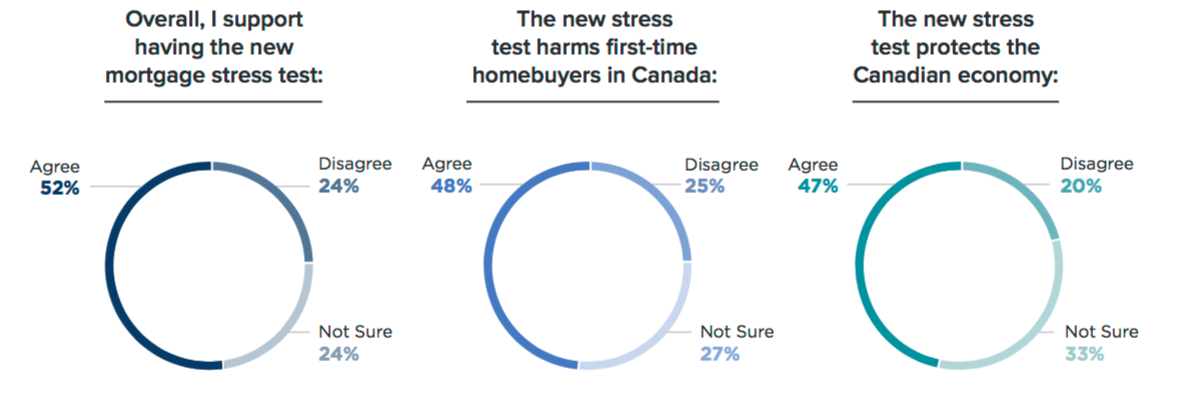
Are you finding it a challenge to buy real estate in the big Canadian cities? If you’re looking to purchase a home in Calgary, Toronto or Vancouver, even buying with the minimum five per cent down can be tough. (The new mortgage stress test sure doesn’t help.)

Despite rising home prices, millennials haven’t given up on buying homes. In fact, they’re still finding ways to get into the real estate market. Survey after survey shows that younger folks still see homeownership as a good long-term investment.

So how do you actually afford to buy real estate in the more expensive markets? Let’s look at five creative ways to still get into pricier real estate markets:

1.) Tapping the Bank of Mom and Dad

The “Bank of Mom and Dad” may be a term you’re already familiar with. Property virgins are increasingly turning to their parents for financial help with a down payment. Parents often gift their adult children some or all of their down payment. Often, this benefits both parties. The adult children can live closer to their parents in a good neighbourhood and see each other more often. The parents may be able to provide childcare, while the adult children can look after their parents in their old age.

2.) Buying with Family and Friends

Are you finding it tough to qualify for a mortgage if you’re single? You don’t have to necessarily buy a property with a spouse. A new trend is to buy with family and friends. If you know a family member or friend that you trust, why not combine your finances and buy a home together? Two incomes and down payments: sure makes it a lot easier to afford a home in a nice neighbourhood. (However, if you buy with family or friends, be sure to have a written agreement in place so that when someone wants to sell, your expectations are in line.)

3.) Buying in a Satellite City and Renting in the Big City

Can’t afford to buy in the big city, but still want to own a piece of the real estate pie? Why not buy in a satellite city and rent in the big city? This is becoming a lot more common in Toronto and Vancouver, where the cost of homeownership is the highest in the country. When you buy in a more affordable satellite city, you can start build up equity to eventually move into the big city. Continue Reading…

What is a Mortgage Vacation?

By Sean Cooper

Special to the Financial Independence Hub

Do you enjoy going on vacation? Who doesn’t? So, the term “mortgage vacation” has to be something similar, right? When you hear mortgage vacation, you’re probably picturing yourself laying on a warm, sandy beach, drinking an umbrella drink. Well I hate to break it to you, but although you got the vacation part right, you forgot the most important part: the mortgage part.

A mortgage vacation is a feature that lets you skip paying mortgage payments for up to a few months, but with a catch. You have to prepay the amount in advance. In an era where savings rates are near record lows and household debt is near a record high, mortgage vacations have become a popular feature with mortgage lenders. Who needs to save for a rainy day when you have a mortgage vacation?

A mortgage vacation can help you out when you run into financial difficulty or when you want to use your cash flow towards something else. But as the saying goes, there’s no such thing as a free lunch. By planning ahead of time, you can avoid taking a mortgage vacation and still be on your way to burning your mortgage.

What is a Mortgage Vacation?

If you’re like most homeowners, you’re introduced to mortgage vacations in this way. You get a letter in the mail from your lender letting you know that you’ve been approved for a mortgage vacation. Yippee! The banks market mortgage vacations like they’re a privilege for their best clients, but as I mentioned earlier, there’s a catch. Hidden in the fine print is what happens when you skip your mortgage payment. Continue Reading…

Millennial financial plans include emergency funds but not insurance  

By Alyssa Furtado, Ratehub.ca

Special to the Financial Independence Hub

Millennials face financial insecurity through precarious work, soft wage growth, and student debt, but they do seem to be planning ahead for financial emergencies; they’re just not turning to insurance as a safety net, according to a new survey.

A poll of 1,000 Canadians by Ratehub.ca found millennials are saving an average of 35% of their pre-tax income, with 36% of respondents stating their emergency fund is a priority. By comparison, 33% of Generation Xers and 27% of Baby Boomers said an emergency fund is one of their key savings goals.

However, Canadian millennials aren’t as likely to turn to insurance as a source of emergency relief as their generational counterparts. Just 22% of millennial renters have tenant insurance (also known as contents or renter insurance), the survey found, compared to 31% of Generation Xers and 44% of Baby Boomers. Renters aren’t legally required to have tenant insurance, but many landlords will ask for proof of coverage before the lease is signed.

Tenant insurance not only helps renters protect the value of their possessions, but it can also cover the costs of repairing damage to their rental unit and the building. For example, if a renter’s toaster catches fire and causes damage to their unit and neighbouring units, tenant insurance could help cover the cost of the damages.

Millennials less likely to have health or dental coverage

Due to the fact that many millennials work part-time, are self-employed, or have contract positions, they’re also the least likely of the three generations to have extended health or dental insurance: 23% of those surveyed said they have this coverage, compared to 28% of Generation Xers and 32% of Baby Boomers. Continue Reading…

Lending to Spouse at Prescribed 1% rate ‘Best Before’ April 1

“Never spend your money before you have it.”
—Thomas Jefferson

I can’t emphasize enough that time is truly of the essence if you benefit from implementing this simple family lending practice. Interest rates are expected to inch up again and will alter the value of this tactic. Hence, I revisit the benefits of one of the few remaining family income splitting strategies.

It is commonly known as the “prescribed rate” loan. The procedure needs these components:

  • One spouse is in a lower tax bracket than the other, or earns little income.
  • The higher tax bracket spouse has cash to lend to the other spouse.

“The benefit of the prescribed loan strategy is a bigger family nest egg.”

Examine your family benefits from this income splitting opportunity. All loan arrangements and documentation must be in place by March 31, 2018 to derive maximum benefit. The key is to charge interest at least at the prescribed rate on cash loaned to a spouse/partner. That prescribed rate is now set at 1% for loan arrangements made by March 31, 2018.

The lower income spouse aims to accumulate a larger nest egg while the family pays less tax. The good news is that loans don’t have to be repaid for a long time, say 10 to 20 years or more.

My sample case highlights the income splitting strategy (figures annualized):

  • The higher tax bracket spouse lends $200,000 to the other at the 1% prescribed rate.
  • The recipient spouse invests the cash, say at 4% ($8,000) and reports the investment income.
  • The recipient must pay 1% annual interest ($2,000) to the lender spouse.
  • The lender spouse is taxed on the 1% interest, while the recipient deducts it.
  • The recipient is taxed on the net income generated ($8,000-$2,000).
  • This results in annual income of $6,000 shifted to the lower income spouse.
  • A promissory note is evidence for the loan.
  • A separate investment account is preferred for the recipient.
  • These loans are best made for investment reasons, such as buying dividend stocks.
  • A new 1% loan can also deal with an existing higher rate prescribed loan.
  • Multiple prescribed loans can be made at 1% while the rate does not change.
  • Business owners can investigate the viability of prescribed loans to shareholders.

Prescribed Rate Loan – Sampler

Here is a simplified method to think of such loans:

Cash Borrowed at 1% rate:  $200,000
Assumed Investment Income (4%): $8,000
Less: Prescribed Loan Interest (1%): $2,000
Taxable Income for Borrower Spouse: $6,000
Taxable Interest for Lender Spouse: $2,000

The benefit of the prescribed loan strategy is a bigger family nest egg. Your mission is to shift investment income into the hands of the lowest taxed spouse.

Need for speed

Today’s prescribed rate, which is set quarterly, is as low as it can be. However, it is most likely to rise at the next setting later this month. The prevailing expectation is a jump to 2% from the current 1% rate on April 01, 2018. Such an increase reduces the net value of the loan arrangement. Further, we may not enjoy a 1% rate for a long time, perhaps never again. Continue Reading…

Longevity, marital breakdown are 2 big reasons women need to take charge of their finances

By Kathleen Peace, CFA, CFP

Special to the Financial Independence Hub 

A recent poll by IPC Private Wealth among 400 affluent Canadians with at least $500,000 in investable assets revealed that 74% of men say they are the lead financial and investment decision-makers in their household. Among women, only 46% say they are the lead decision-makers.

Ladies, listen up! You are probably going to live longer than your male partner. On top of this, there is a 50% possibility that you will divorce your partner (with financial conflict being one of the reasons why). In either case, you will experience a large inflow or outflow of both investment assets and income. This eventuality means that being 100% cognizant of your family’s current financial situation is a must. Waiting to figure this out until after a spouse’s passing or marriage breakdown is at best reckless, and at worst, an enormous imposition on what will already be an emotionally taxing situation.

Let’s get on top of this. A Masters degree in Finance is not required. Gather information and open up a regular dialogue with your spouse. Both will go a long way to getting on top of your family’s pecuniary situation. Here’s how to get started.

Communicate, Communicate, Communicate

Enlist your partner’s help in becoming more aware of your financial situation. Given that money issues are among the top friction-areas for couples, keeping an open dialogue about how money is run in your family will benefit your marriage both fiscally and emotionally. Opening up this discussion is not always easy.

For many families, money is a taboo subject; in fact, many feel that the most difficult topic to discuss with loved ones is their personal financial situation (apparently they would rather discuss death, politics or religion!) An incredibly helpful resource for starting the money conversation with your partner: Breaking Money Silence: How to Shatter Money Taboos, Talk More Openly about Finances and Live a Richer Life, by Kathleen B. Kingsbury.

Know your Advisor

If you don’t know your family’s financial planner/advisor, change this! Continue Reading…