General

I interview RetireEarlyLifestyle’s Billy and Akaisha Kaderli

Billy & Akaisha in Mesa, Arizona; courtesy Kiplinger

Earlier this spring, I was interviewed by Billy and Akaisha Kaderli, the globe-trotting early retirees who run the RetireEarlyLifestyle.com website and authors of several books on Early Retirement. 

You can find that interview on both our web sites: here’s the version from the Hub: RetireEarlyLifestyle.com interview on Financial Independence & the “Findependent” lifestyle.

And here is the same interview at RetireEarlyLifestyle.com.

Turnabout is fair play so today, I play interviewer and Billy and Akaisha are on the hot seat to answer.  


Jon Chevreau: What do you think of the term FIRE [Financial Independence/Retire Early)? You made it there in your early 30s but can Millennials, Gen X and GenZ expect to replicate your success, given the high cost of housing and everything else?

Billy & Akaisha: FIRE is a great marketing acronym filled with energy and intrigue. There was no such term when we left the working world in 1991, 33 years ago. There really wasn’t even the mental concept of being “financially independent” except for perhaps well-paid athletes, actors and trust fund babies.

We called ourselves Early Retirees, but we never retired from life, just from the conventional idea of working until age 65 or when Social Security kicks in. We had other plans for ourselves like travel, volunteer work, creative projects and continuous learning. We’ve always been productive and we like that feeling of pursuing our passions.

As for whether or not Millennials, Gen X and Gen Z can expect to become financially independent, we would say yes.

It’s a matter of discipline, focus, being aware of one’s financial choices, and most definitely finding a partner who is on the same financial page.

We have explained many times in our books and on our website that the four categories of highest spending in any household are Housing, Transportation, Taxes and Food/Dining/Entertainment. Pare down your personal infrastructure or modify your cash outlay in those categories and you will find money to invest towards your future life of freedom.

So yes, we say it can still be done.

JC: How many countries have you now visited around the world and how long do you tend to stay in any one location? Related question: do you maintain a home base in the United States and how long (and which seasons?) do you stay there each year?

Billy & Akaisha Karderli in Sorrento, Italy, with Mount Vesuvius in background

Billy & Akaisha: For some reason we have never cared to count the number of countries we have visited or lived in. We travel for ourselves, not to tick off boxes or to compete with other travelers.

We have visited all throughout Europe, lived in many Asian and Pacific Rim countries, visited and lived in Canada, most of the United States, all throughout Mexico, Central America and Northern South America, and have sailed throughout the Caribbean Islands.

In the early decades of our vagabonding, we’d be gone years at a time. We made trips back to the U.S. yearly to see family for a few months at a time, but then we’d get our backpacks and world maps out again and hit the road.

We utilized Geo-arbitrage long before there was a name for that hack and found it to be one of the best financial moves we have ever made.

We do still own a manufactured home in a resort in Arizona. But while on this topic, we’d like to say that living in an Active Adult Resort Community in the U.S. has been one of the most affordable and socially satisfying options for housing we have implemented.

That being said, we have many Readers and Friends who prefer to house sit all over the world and that is their gold standard of housing choice to keep costs down.

These are two examples of modifying the category of Housing to positively affect your budget.

JC:  I believe you took Social Security early. How much do you think average would-be retirees will be depending on that source of income?

Billy & Akaisha: In our case we planned our retirement as if we would not receive Social Security. We structured our portfolio to produce our needed income on its own. Now that we receive it, between dividends and SS we do not need to touch our portfolio, thus letting it grow. Continue Reading…

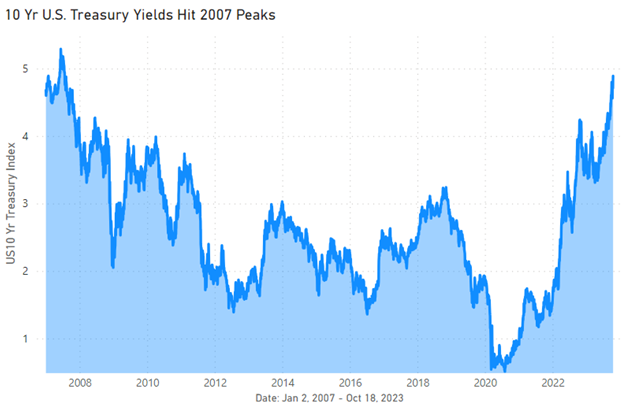
Now that interest rates are higher, is it time for near-Retirees to consider partial Annuitization?


My latest MoneySense Retired Money column looks at our own family’s experience in starting to annuitize. Click the highlighted text for the full column: Should retirees in their early 70s partly annuitize?

Apart from the fact interest rates are now closer to 5% than zero, my wife and I are approaching the time when our RRSPs must be collapsed, converted to RRIFs, or fully or partly annuitized. That of course is required by the end of the year you turn 71.

One financial blogger and financial planner was ahead of the curve on rates and annuities. A year ago, on his Boomer & Echo blog, Robb Engen made the case for annuities just as interest rates were starting to rise. See Using annuities to create your own personal pension in Retirement. “Annuities fell out of favour (if they ever were in favour) when interest rates plummeted over the past 10-15 years,” he wrote, “But with interest rates on the rise, annuities are certainly worth another look.”

Engen’s case for annuities revolves around how they minimize longevity risk: the fear many retirees have that they’ll outlive their money. “An annuity provides a predictable income stream for life – much like how a defined benefit pension, CPP, and OAS pays benefits for as long as you live. Nothing protects you from longevity risk quite like having a guaranteed income that’s paid for life.”

 Those who lack an employer-sponsored Defined Benefit pension plan and therefore have hefty RRSPs are particular candidates for annuitization. Yes, it’s true that most Canadians will have some inflation-indexed annuities in the form of the Canada Pension Plan (CPP) and Old Age Security (OAS) but some may feel comfortable transferring a bit of stock-market and interest-rate risk from their own shoulders to that of the insurance companies that offer annuities.

With respect to the interest rate rises of the past year and what it means for annuities, “I agree that the timing is ripe for those approaching retirement,” says Rona Birenbaum, founder of Toronto-based Caring for Clients, a financial planning firm that includes annuities in its recommendations.

 Birenbaum – who is working to help our own family take a partial plunge to annuitization – suggested looking first to non-registered money that could be earmarked for an annuity, as it’s very tax efficient. Alterntively, “using RRSP assets makes sense providing the lack of liquidity doesn’t constrain future needs.”

Moshe Milevsky a fan of “slow partial” annuitization

Famed finance expert Moshe Milevsky, who has authored several books on retirement and annuities – notably Pensionize Your Nest Egg, coauthored with Alexandra Macqueen — told me in an email that “I will say that I have grown to become a fan of ‘slow partial’ as opposed to ‘rapid full’ annuitization, which helps smooth out the interest rate risk and is even more valuable from a behavioral psychological perspective.” Continue Reading…

How to Invest your way to Findependence


By Devin Partida

Special to Financial Independence Hub

Today’s economic and job-growth landscape might have you turning to investing as a prominent option.

It takes patience and effort, but anyone can save up enough through intelligent investments.

How do you begin the Investment Process?

As of 2023, the average American makes around US$57,000 annually, which is lower for minority groups. Even if you’re careful with your spending, becoming financially independent with that salary can take a long time.

The average person from the United States only has about $5,000 in savings. Before beginning the process, you must consider how much money you can invest. The ultimate goal is financial independence [aka “Findependence” on this site], but getting there can take a while. Only put in what you’re willing to lose because things might not pan out as expected.

The formula for Findependence takes your yearly spending and divides it by your safe withdrawal rate to calculate your goal savings figure. Then, it subtracts the amount you’ve already saved and divides that amount by how much you can save each year. It’s only an estimation, but it can help you know how much your investments need to make.

What Investments should you Consider?

There are plenty of investment types. The stable ones often have lower returns and you usually need to take some risk to see a high reward quickly.

1.) Real Estate Investment Trust

A real estate investment trust (REIT) receives money from investors to purchase and manage property. Most generate revenue through rental income and pay dividends in return for the initial payment you made. It’s similar to owning by yourself, but you pool funds for the purchase and let someone else take care of the tenants. There are also other REIT types, so you have more options than rental properties.

2.) Stocks

The stock market usually requires more attention to detail because you must keep up with it. Anything from an upcoming brand deal to an overseas political event can affect this investment type. You should frequently check the stocks you hold and the businesses they belong to so you can quickly respond to changes.

The Canadian stock market differs from the United States version. Firstly, you need a brokerage account. Most brokerages charge about $5 to $10 per trade, with average commission fees of $6.95. It might seem minor, but paying to invest or shift your stocks around puts you at a loss before you begin. The flat rate cut you must pay can also make investing smaller amounts challenging because it takes a higher percentage the less you put in. Continue Reading…

Why technology + income can suit an uncertain market

Markets are hesitant, but large-cap tech has been resilient. Learn why large-cap technology with an income strategy can help investors now.


By James Learmonth, Senior Portfolio Manager, Harvest ETFs

(Sponsor Content)

After recovering from some of their 2022 shocks early this year, markets have been trepidatious through most of 2023. That recovery and volatility story, on paper, looks broad based. Between January and mid-May, the S&P 500 is up around 8-9%. The S&P 500 Information Technology index, however, is up over 25% in the same rough time period. That outperformance skews even higher when we isolate some of the largest names in the technology sector.

So while overall market performance this year has been steady, turning choppier since the US banking crisis began in March, large-cap tech leaders are doing what they tend to do: lead.

In a macro environment of market uncertainty, high inflation and tech outperformance, one strategy can give investors exposure to large-cap technology companies, while providing income and ballast against volatility.

Why Large-cap Tech has been a leader

To understand how a tech income strategy can help investors, it’s worthwhile to unpack what has made technology a leading sector so far in 2023.

Q1 earnings season for tech shed some light on the sector’s outperformance. Part of that performance is due to a more broadly positive market sentiment in 2023, compared to 2022, in addition to some recovery following the sector’s struggles last year. Notable, however, is the positive reception large-cap companies have received for their artificial intelligence (AI) strategies.

AI has been the hot new topic this year, and large-cap tech companies have been quick to capitalize on the rapid pace of innovation in this space. Whether they are innovating their own AI tech, or applying AI to new areas these companies are creating serious value for shareholders with this technology.

It’s worth emphasizing the dominance of large-caps in this moment, companies like Meta, Apple, and Microsoft. In recent history, major tech leaps have been associated with ‘disruption’ of traditional larger players. So far in the rise of AI we’ve seen the largest companies leading, demonstrating their value as innovators and appliers of innovation.              

Why Volatility is persisting in the broader market

Despite all the positivity in large-cap technology, broad markets have been choppy this year. Most of their recovery took place in the first months of 2023, and since the onset of a US banking crisis in March market performance has been choppy up and down, aggregating out flat.

Macro forces are largely to blame. The banking crisis highlighted the ongoing impacts of rapid rate hikes by central bankers starting last year. Even as that hiking period seems to be ending, the consequences of those raised rates will be felt over the next several months. More recently, fears about the US debt ceiling have troubled markets while geopolitics continues to impact sentiment. Continue Reading…

The Greatest Paradox

Image Outcome/Public domain CC0 photo

By Noah Solomon

Special to Financial Independence Hub

In his role as head of research at Merrill Lynch, Bob Farrell established a reputation as one of the leading market analysts on Wall Street. In his famous “10 Market Rules to Remember,” Farrell summarized his insights on market tendencies.

One of Farrell’s rules states, “When all the experts and forecasts agree — something else is going to happen,” which embodies the essence of contrarianism.

In this month’s missive, I explore the roots and causal factors underlying Farrell’s warning, drawing on historical examples. I also illustrate the potential benefits and pitfalls of going against the crowd. Additionally, I demonstrate that market sentiment is currently approaching levels that have historically preceded broad market declines. Lastly, I suggest that there are specific areas where investors should consider trimming exposure, realizing gains, and paying the taxman.

There is no shortage of historical examples of “sure things” ending badly. In the late 1990s, following two decades of above-average returns, both institutional investors and consultants broadly embraced the dangerous consensus that future stock market returns would be about 11%. Dissenters and naysayers were few and far between.

The basis for these forecasts was the extrapolation of recent results. Stocks had been delivering average annualized returns of 11%, therefore it was assumed they would do so going forward – simple. Few investors contemplated the possibility that the past 15 years were anomalous from a longer-term perspective. More importantly, there was little concern that an extended period of above-average returns might have been borrowed from future returns by pushing up valuations to unsustainable levels.

The sad ending to this ebullience was the first three-year decline in equities since 1930. For the seven years ending March 31, 2007, following the market’s peak in early 2000, the annualized return of the S&P 500 was 0.9%. Importantly, these subpar returns encompassed a bitter and painful peak-trough loss of about 50%.

A similar occurrence of widespread adulation ending badly occurred only a half-decade later in 2005, when everyone “knew” residential real estate was a “surefire” way to amass wealth. Zealots justified unsustainable values with oft-cited mantras such as “They’re not making any more land,” “You can live in it,” etc. This blind optimism pushed real estate prices to unsustainable levels which all but guaranteed the subsequent collapse and some painful experiences for the “it can only go up” crowd.

Sorry, Beatles – All You Need is NOT Love

More often than not, what is obvious to the masses is wrong. There are valid explanations, both financial and behavioral, that cause the things which everyone believes to be true to turn out to be untrue.

In July 1967, the Beatles released their famous single All You Need Is Love. With all due respect to John, Paul, George, and Ringo, nothing could be further from the truth in the world of investing. Specifically, the more popular a particular investment becomes, the less its profit potential, if for no other reason than if everyone likes something, such adulation is likely to be reflected in its price.

In what is referred to as the bandwagon effect, investors often become enthusiastic about a particular investment or asset class after it has already produced strong returns. Believing that past outperformance is a sign of strong future returns, the herd then hops en masse on the proverbial bandwagon. This widespread fervor then causes prices to overshoot any rational approximation of value, thereby setting the stage for inevitable disappointment.

In the world of investing, “everyone knows” should come with a “buyer beware” warning. Investments that are heralded as sure things are bound to be fairly priced at best and often become dangerously overvalued. Great opportunities lead to great prices, which by definition means their greatness has been paid for in full, stripping them of their greatness. Conversely, it’s only when people disagree that opportunities to achieve above-average returns exist.

Risk: Reality vs. Perception

Managing risk is at least as important as (and inextricable from) achieving decent returns. Not only do irrational sentiment and expectations result in poor returns, but also give rise to elevated risk. Risk evolves in the same paradoxical manner as returns. As an asset follows the journey from normal to over-owned and overpriced, not only does its potential return deteriorate, but its risk increases.

When everybody becomes convinced that something will produce spectacular returns, then by extension they also believe that it involves little or no risk. This perception often leads investors to bid it up to the point where it becomes excessively risky. In contrast, when broadly negative opinion drives all the optimism out of an asset’s price, its risk profile becomes relatively small. Put another way, investment risk tends to reside most where it is least perceived, and vice versa.

In the world of investments, Bob Farrell trumps the Fab Four. Good investments are generally associated with skepticism, indifference, and even neglect, which sets the stage for high returns with lower risk. Inversely, widespread acceptance and adulation sow the seeds of high-risk and poor returns.

No Good Deed shall go Unpunished

As is the case with many aspects of markets, both timing and patience play an important role in contrarian investing.

Investment trends regularly go to extremes. It is this very tendency that results in calamities and opportunities. Unfortunately, life for managers is not as simple as buying cheap assets and selling their overvalued counterparts. As John Maynard Keynes stated, “The market can remain irrational longer than you can remain solvent.”

Not only can overvalued assets remain stubbornly so for extended periods of time but can become even more overvalued before they ultimately come back down to earth. By the same token, undervalued assets can remain cheap and become even cheaper before any payoff materializes. Sentiment can be a self-fulfilling prophecy for an indeterminable amount of time before reversing, turning previously favored investments into assets non grata, and the subjects of yesterday’s scorn into tomorrow’s darlings. Continue Reading…