General

3 books I just read that Retirees DIYing their pensions need to read

Amazon.ca

My latest MoneySense Retired Money column looks at a must-read new book on Retirement as well as two related books on DIY stock-investing. You can read the full column by clicking on the highlighted headline: Who you gonna trust: Barry Ritholtz or Jim Cramer?

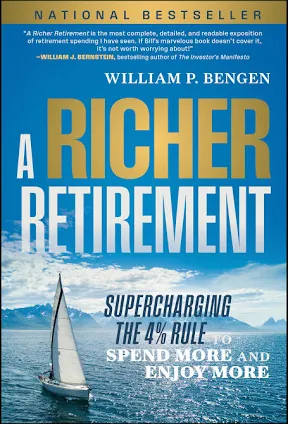
The must read and main focus of the MoneySense column is William Bengen’s A Richer Retirement: Supercharging the 4% Rule to Spend More and Enjoy More. If that sounds familiar it should: Bengen’s original book on the 4% Rule is considered the bible of retirement, with his famous “SAFEMAX” guideline of 4% a year being an annual amount of withdrawals that should be “safe” for retirees to continue for a full 30 years, even after inflation. The original book,  titled Conserving Client Portfolios During Retirement, was first published in 2006.

Never mind that even Bengen considers 4.7% be a more universal SAFEMAX. The original book was aimed at financial advisors and professionals while the new one ostensibly is aimed at retail investors and retirees. I say ostensibly because I was a little disappointed with it and found the plethora of complicated charts and tables a bit much for lay investors. Still, there’s a lot of common sense there: Inflation is big long-term threat to retirees as are bear markets. Withdrawing too much from portfolios can be disastrous if you are unfortunate enough to retire just as a bear market hits and/or inflation starts to bite.

On the other hand, sticking with the old 4% rule or even the smaller amounts of 3% or even 2% advocated by some cautious souls, could result in you withdrawing less than you really need to enjoy retirement, although the tax department and any heirs might commend your caution and frugality.

How to make money in any market
Amazon.ca

While it’s rare for me to buy new hardcover books because I receive so many “free” review copies of financial books, I actually did buy A Richer Retirement as soon as it was available on Amazon. Plus, unusually, I also bought two other brand new books on the related topic of investing and stock-picking.

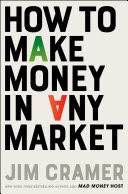
One was Jim Cramer’s How to make money in any market, by the sometimes revered but often maligned host of  CNBC shows Mad Money and Squawk on the Street. It’s fashionable for some financial journalists who believe in efficient markets and indexing to diss Cramer but I am not in that crowd. In fact, Cramer recommends that newcomers to investing put the first US$10,000 into an S&P500 index fund or ETF.

However, for seasoned investors and even retirees, Cramer suggests putting half a portfolio in index funds and the other half in individual stocks. Where we part company is his recommendation that the bucket of stocks be restricted to just five names, which would mean 10% in each. For my money, that’s way too concentrated and risky, even though he often brags about how he is often accosted by Nvidia Millionaires who tell him they bought that stock as soon as he announced on air that he had renamed his dog Nvidia.

How NOT to invest
Amazon.ca

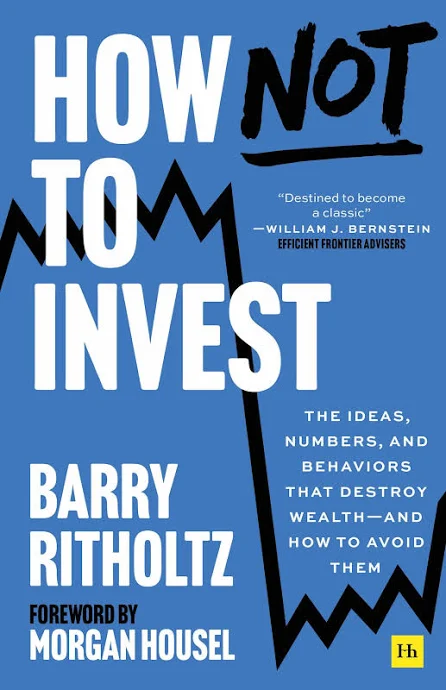
Finally, regulars to this site may already have read Michael Wiener’s review of Barry Ritholtz’s How NOT to invest, which appeared here in this blog a few weeks after appearing on his Michael James on Money blog.

To be sure, those who are fond of disparaging Jim Cramer might quip that should have been the title of his own book, seeing as there are actually ETFs out there that try to profit by shorting Cramer’s picks. As of this writing, my copy has arrived but I have not yet finished reading it, as it’s a bit longer than the other two.

But based on the book blurbs and Michael’s review, I have no doubt it will be worth reading, whether for younger investors or seasoned ones and/or retirees.

Finally, while I only just received my review copy, I note that David Chilton is publishing a new edition of his classic financial novel, The Wealthy Barber, which any young person just starting to invest should acquire.  I look forward to revisiting it.



Adding DayMAX™ ETFs to Enhance Income and Diversification (HDIV/HYLD)

The Hamilton Enhanced Canadian Covered Call ETF (HDIV) and the Hamilton Enhanced U.S. Covered Call ETF (HYLD) portfolios have recently been modified slightly to introduce new positions in the DayMAX™ ETFs.

Over the years, portfolio changes within HDIV and HYLD have been made to meet their objective of providing attractive monthly income, while also considering improved diversification and other expected benefits for unitholders. In January 2024, HDIV and HYLD reached an important milestone with the full internalization of their holdings. This change removed all third-party ETFs, brought the top-level management fee of HDIV and HYLD down to 0% (subject to the fees of the underlying portfolio ETFs), and supported increases to monthly distributions.

Following the recent launch of the DayMAX™ ETFs, Canada’s first ETFs using zero-day-to-expiry (0DTE) options, a decision was made to introduce them to HDIV and HYLD, to help deliver higher yields and broader diversification.

DayMAX™ ETFs at a Glance

DayMAX™ ETFs are Canada’s first suite of ETFs to apply daily option strategies. By combining 0DTE options with modest 25% leverage, they aim to deliver higher and more frequent tax-efficient income. The lineup includes:

For a full overview, see DayMAX™ ETFs: Seize the Day.

Key Changes to HDIV and HYLD

The portfolio changes involved modestly reducing HDIV and HYLD’s exposure to select YIELD MAXIMIZER™ ETFs and adding positions in DayMAX™ ETFs, specifically CDAY, SDAY, and QDAY.

Both fund families are designed to generate high tax-efficient income, but they differ in how it is achieved. YIELD MAXIMIZER™ ETFs use longer-duration covered calls, while DayMAX™ ETFs employ Zero-Day-to-Expiration (0DTE) options, contracts that expire the same day they are written. This structure allows DayMAX™ ETFs to write options approximately 250 times per year, compared to 12 with traditional monthly contracts, creating more frequent opportunities to generate option premium income. By combining the longer-duration covered calls of YIELD MAXIMIZER™ ETFs with the daily options strategies of DayMAX™ ETFs, HDIV and HYLD are now diversified across time horizons and income streams, monetizing both monthly and daily volatility.

For the full list of updated holdings, please visit the fund pages: HDIV holdings and HYLD holdings.

Expected Benefits of Adding DayMAX™ ETFs to HDIV and HYLD

  1. Higher Yields: The introduction of DayMAX™ positions increases the internal portfolio yield of both HDIV and HYLD, supporting their primary objective of providing attractive monthly income.
  2. Increased Diversification: By adding DayMAX™ ETFs, HDIV and HYLD expand their holdings to broader exposure, increasing portfolio breadth.
  3. Improved Alignment to their Respective Markets: The sector weights of HDIV and HYLD are now closer to those of the Canadian and U.S. markets, respectively, as approximated by the sector weights of the S&P/TSX 60 and S&P 500. Continue Reading…

The Politics of Portfolio Management

Image courtesy Pexels/Karola G.

By John De Goey, CFP, CIM

Special to Financial Independence Hub

The interplay between politics and economics has never been starker. We have an American President who is doing more to stick his nose into the affairs of those that are supposed to be at arms length than any of his predecessors ever dreamed.

Despite this, people who offer commentary on both the economy and capital markets (they are separate things) act as though what’s going on on Capitol Hill is so unremarkable that they conspicuously fail to work any acknowledgement of the dysfunction into their commentary.

Last week, I sat in on a webinar hosted by Jeff Schulze, CFA, who is managing director, head of economic and market strategy for Clearbridge Investments. In his presentation, Schulze noted that the S&P 500 is currently trading at 23 times forward earnings and that only the late 1990s saw a higher number. He added that there has been recent downward pressure on the federal funds rate and opined that the ‘one big beautiful bill’ will offer further fiscal stimulus down the road.

In a dashboard of 12 indicator variables, only one was flashing red (recession). Four were yellow (neutral) and seven were green (expansion).  He went on to opine that corporate profits don’t look recessionary. He concluded that a near-term recession is unlikely. I’m not disputing his economic evidence:  I’m simply noticing that there was not a word about political implications or developments. That silence strikes me as conspicuously odd.

There are many smart people who look closely at all manner of economic indicators who also look the other way regarding politics. As if they are not related. Why is that? They don’t talk about what’s going on Capitol Hill at all. The topic is taboo. It’s “polarizing.” Some even allege it’s beyond the purview of their mandate. I disagree.

EMH vs Active Management

The efficient market hypothesis (EMH) posits that capital markets do an excellent job of digesting all available information (from all fields of endeavour) quickly and accurately. By synthesizing information into a consistent worldview, EMH implies that no one can reliably ‘beat the market’ through security selection or timing strategies.

The economic forecast offered by Clearbridge seemed predicated on the assumption that what’s going on in Washington is normal, but it also seemed predicated on market inefficiency since Schulze made multiple references to the need for active management. If the market is efficient, then it is already reliably taking the dysfunction in Washington into account. If, on the other hand, it is inefficient, then the vagaries of an unpredictable President stand out as being meaningful and should be noted. So if the conduct of the President is a meaningful consideration, why wasn’t it mentioned by a guy who implicitly rejects EMH? Continue Reading…

The common mistakes made by Retirees

By Dale Roberts, CutTheCrap Investing, Retirement Club

Special to Financial Independence Hub

We all make mistakes. There is no such thing as the perfect portfolio. In the accumulation stage we usually have time to recover from mistakes and hopefully we’ll learn from those mistakes. Learning from mistakes will usually move us towards a more passive global core index-based portfolio. In retirement, we don’t always get a second chance. It is crucial to be aware and avoid any retirement pot holes. Kyle at the Canadian Financial Summit asked me to discuss and outline some of the key and common retirement mistakes. Of course, they are too many to mention in a 45-minute interview. Below, I will outline more of the common mistakes in retirement.

Here’s an AI outline of the Canadian Financial Summit.

The Canadian Financial Summit is an annual, free, virtual conference for Canadians to learn about personal finance and investing from Canadian experts. It covers topics like retirement planning, tax optimization, and investment strategies, with content tailored specifically for a Canadian audience to address Canadian-specific financial products and regulations. The goal is to provide practical advice to help attendees save money, invest better, and improve their financial literacy.

Canadian Financial Summit Speakers

The Summit begins on October 22 with headliners such as David Chilton (new Wealthy Barber book out in November), Rob Carrick, Jason Heath, Preet Banerjee and more. Here’s the list of speakers and topics.

My segment will air on October 24th. You can register through this Canadian Financial Summit link.

Once again, I am covering common retirement mistakes. Here’s the range of topics I had prepared for my discussion with Kyle. We touched on a few of these.

We have to start in the accumulation stage

Many retirement mistakes are born in the accumulation stage, and in the retirement risk zone.

Too much risk

Most investors take on too much risk. They are not investing within their risk tolerance level. That said, it has not been a problem since 2009: we have not been tested. But retirees and near retirees were certainly burned by the financial crisis and the dot com crash. For too many, their retirement was greatly impaired.

And of course, we can add in not taking on enough risk, for those who are risk averse. We need to take on the risk necessary to achieve our financial goals. All said, we always need to invest within our risk tolerance level.

The accumulation stage is dead simple

Go for growth while investing within your risk tolerance level. More money is “more better.”  More money will create more retirement income.

Paying ridiculously high fees

Fire your wealth-destroying high-fee mutual funds and the advisor they rode in on. Ditto for the retirement stage. You can do the research necessary, or look to an advice-only planner who specializes in retirement planning.

Don’t count the dividends

Don’t PADI – Potential Annual Dividend Income.

That’s like watching the oil gauge as you try to make the car go faster.

The dividends do not contribute to wealth creation. Dividends are a removal of value; that’s it. The share price drops by the value of the dividend. If you move the dividends back to your stock or ETF holding to buy more shares you are simply owning more shares at lower prices.

As Yogi Berra would ask: do you want your medium pizza cut into 8 slices or 6 slices?

You still have a medium pizza, no matter how you slice it.

Dividends are a tax drag in taxable accounts. You are paying tax on money you don’t need. You are paying tax on money that creates no value. It’s phantom wealth creation, but with real taxes.

Avoid covered calls and other specialty income

They underperform by design. That fact should be outlined in the prospectus.

Canadian home bias

This can be related to a fascination with Canadian dividends or Canadian Blue Chip stocks in general. For sure, building a portfolio of Canadian Blue Chips is known to greatly outperform the TSX Composite. But we need greater diversification to reduce risk.

A Canadian with severe home bias is putting all of their chips on a few sectors, one country and one currency. It’s not smart.

We should consider a global portfolio, at the very least a Canadian and U.S. portfolio.

Stock portfolios that are too concentrated

It’s common to see portfolios with just a few stocks. We need 15 to 20 stocks to mimic an index. You’re likely best to hold 20 or more.

We create severe company risk with a concentrated portfolio.

Clear your debt

Carrying debt into retirement is a common “mistake.”  A recent report suggested that 29% of Canadian retirees will carry a mortgage.

Consider the tax burden that it takes to create the income to pay the mortgage. Every extra dollar is at the top marginal rate. It’s a mortgage payment plus tax on top. A $3,000 monthly mortgage payment might cost you $4,000 or more when you consider taxes. It could also contribute to OAS claw back.

Consider the car payment as well. Try to enter retirement with a paid-off vehicle.

Not using spousal RRSP accounts

Use RRSP spousal accounts for tax advantaged income splitting in retirement.

This allows us to ‘split income’ before the age of 65. At age 65 we can then split income from your RRIF.

Ditto for setting up joint taxable accounts. Pay attention to attribution rules for taxable accounts.

The Retirement Risk Zone

Not preparing the portfolio (de-risking) for retirement before retirement is a common mistake. We enter the retirement risk zone several years before retirement. That was our topic last year for the Financial Summit.

Mistakes in Retirement

Not running a retirement cash flow calculator

This is a must for every retiree. A retirement calculator will help you discover the most optimal (and tax efficient) order of account harvesting. That is when, and how much, to remove from your RRSP / RRIF, Taxable accounts, and TFSAs, working in concert with pensions, other amounts plus, CPP and OAS. It can help us create tax efficiency and manage OAS claw backs.

Most Canadians will benefit from the RRSP / RRIF meltdown strategy. It involves delaying CPP and OAS for the massive increases in pension-like, inflation-adjusted income.

Check out Retirement Club for Canadians

From age 65 to 70, CPP increases by 42%, OAS increases by 36%.

To delay CPP and OAS we often use the RRSP / RRIF accounts (and at times a slice of TFSA or Taxable) to bridge the gap during those years. That is, we spend more heavily from the RRSP / RRIF while we wait for increased CPP and perhaps OAS.

It’s different for everyone, the retirement cash flow calculators will help you uncover the right approach for you. Only the software knows.

There are many retirement calculator options that are free use, or available at a very low fee. We are reviewing many of them at Retirement Club.

Examples: MayRetire, Milestones, Adviice, Perc-Pro from Frederick Vettese, optiml.ca, PWL Capital also offers a retirement calculator.

Not spending, not enjoying their money

We might embrace a U-shaped spending plan. We spend more in the early years: the go-go years. It might dip in the slow-go years, and then increase again in the later no-go years as health care cost, living in place, or retirement home plus assisted living costs increase greatly.

We might call that a ‘you-shaped’ spending plan. Continue Reading…

Is it Work or Is it Passion?

Billy and Akaisha Kaderli, RetireEarlyLifestyle.com

By Billy and Akaisha Kaderli

RetireEarlyLifestyle.com

Special to Financial Independence Hub

While taking a break from the sun and surf, relaxing in my hotel room in a tiny beach town on Mexico’s rugged Pacific Coast, my cell phone rang.

‘Howdy, Beautiful!’ my friend of four decades shouted from snow country, thousands of miles away. “Been watchin’ your website for years and I read all your stories. Love ‘em. But I thought you were retired!“

How many times over the decades since we left the conventional work force have we heard that challenge? Our responses have ranged from surprised silence to justification of our volunteer work, to just laughing out loud.

We run a popular website, photograph our travels and share our lifestyle adventures with people like you. Some think that by doing this, we have somehow become unfit to call ourselves “retired.”

Today I would like to pose this question to you: “Once you leave the mainstream labor-for-paycheck world and become financially independent, aren’t you free to choose what you do with your time? When is something considered work, and when are you pursuing a passion?“

Receiving Monetary Compensation

Most people with whom we have this conversation have one particular definition of retirement: You are not retired if you are receiving money for work performed.

Well I guess that rules out all of the Wal*Mart Greeters… but seriously, we’d like to counter this simplistic point of view.

If you are a landlord with several rentals that bring in monthly retirement income, can you ever be considered retired? Do you not have to oversee the properties, be responsible for making repairs, pay for maintenance and upkeep and search for qualified tenants? At the very least you must concern yourself with your manager.

What if you are like a friend of ours who discovered he had a latent talent for making sculptures, and now sells his bronze statues all over the eastern seaboard at Toney art shows? He receives funds from his commissioned work, but he couldn’t be happier following his passion. What does he care if someone doesn’t think he is retired?

Other friends whom we know well sold their accounting firm and moved to a working ranch – a dream come true for them. Instead of pushing paper and tax forms, they now raise horses, scoop poop, grow grapes to make award-winning wine, and cultivate boutique vegetables which they sell at local farmers markets. Is that work? No question about it. However, they are undoubtedly following a passion and their lives are enriched because of it.

A friend of ours is a domestic goddess with unmistakable artistic flare, and her husband is an adventurous handyman. They purchase old Victorian homes, renovate them room-by-room and then sell them at profit. Sure they receive income from their labors, but this income isn’t what sustains their portfolio. And why not utilize your talents and implement your dreams at this time of life that should be yours?

If you have left your Monday-through-Friday job but own a diverse portfolio which you must manage, or if you are trading stocks or receiving dividends, does this monetary compensation for your lifestyle disqualify you out of the official definition of being retired? What if you find the world of finance riveting? Are you supposed to stay away because someone somewhere will think you are disingenuous or not “really” retired?

If you are working you are not retired

Some people believe that if you do any sort of activity that would be considered in any fashion to be work, or if it takes any effort whatsoever, you have become unsuitable to wear the “I’m retired” label.

Yet we know all sorts of single retired women who raise dogs to sell, train rescue dogs for animal shelters or have a modest dog-walking “business” that they run in their neighborhoods. How many older retired men have we met over the years and in numerous communities who will fix your plumbing for a pittance or trade, solve an electrical problem or put down some flooring in your home? What if you want to write music, direct a play or act in one? All of this takes effort, focus and work.

What if you wanted to build a boat, restore old classic cars and sell them, or play in a jazz band for the clubs in your town? Are you back to the working grind – or engaging your passion?

Volunteering or mentoring

One may or may not receive compensation for donating time and expertise. Teaching English as a second language could get you out of the house and add dimension to your day, or it could defray the cost of airline tickets to a foreign country. If you allow this skill to enhance your travel budget have you transgressed against The Rules of Retirement?

I taught Thai massage in Mexico for free and created a note card business for the local women in my neighborhood. Billy coached a women’s basketball team to the finals, imported an electronic scoreboard for the city gym and built tennis courts in this same Mexican town. Was this work? Definitely. We both put in more hours than we want to know, but the return was making friends and having personal satisfaction for helping others. Continue Reading…