


General

Will investing in your child’s business endanger your retirement?

By Dave Faulkner, CLU, CFP

Special to the Financial Independence Hub

Your son or daughter just asked you for a short-term loan to help them start a business. If everything goes well, they will pay you back with interest in a few years. But what if they never pay you back? How much will it impact your ability to enjoy your retirement?

RediNest is a personal financial planning application that you can use to get answers to your retirement planning questions.

How RediNest can help

John and Joan plan to retire in 10 years. Although they do not have a pension plan, they have $300,000 in RRSP and $100,000 in TFSA investments. With no mortgage, they are able to contribute the maximum each year to both RRSP and TFSA.

Using RediNest they calculated their Retirement Potential™ at $73,900 of after-tax retirement income, slightly more than the Canadian average* of $69,000.

Their son has asked them to invest $100,000 in his business. He has prepared a business plan, and expects to repay the full amount over five years. John and Joan want to fully understand the risks before loaning their son the money, so they modified their RediNest plan and reduced their TFSA balance to zero.

Assuming a worst case scenario where they never get their money back, John and Joan re-calculated their Retirement Potential to be $67,800, a reduction of over $6,000 / year for life! A significant amount when you consider it is after-tax and fully indexed for inflation. If they never get their money back, John and Joan want to understand the options available to them to restore their Retirement Potential, as they do not want to have less disposable income in retirement.

Using RediNest, John and Joan discovered they would have to increase their monthly savings by over $900/month for the next 10 years: something they feel they cannot do.

Deferring retirement by a year
Continue Reading…

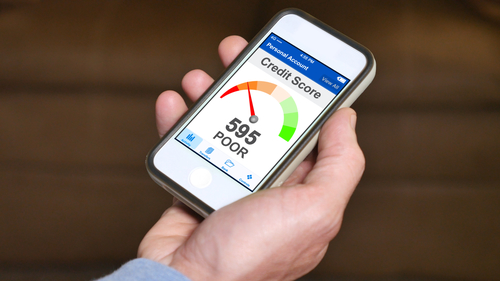
6 types of loans for people with poor Credit

By Emily Roberts

(Sponsored Content)

Even if you’re used to getting rejected because of your bad credit, there’s no need to panic. There are plenty of lenders offering solutions for people such as yourself. You just need to make sure you know all of your options and understand what each offers. The following are the main types of bad credit loans you should be considering when a traditional loan is simply not an option.

1.) Guarantor Loans

Guarantor loans are unsecured loans that can help you borrow as little as £100 [£1 = US$1.33] and as much as £15,000 even with a poor credit history. They are among the most popular types of loans because they’re cheaper and more flexible than other forms of borrowing with a bad credit.

As a matter of fact, the credit history and score of the guarantor will be more important, making them one of the best for people with poor credit or with blemishes on their report. They’re also ideal for people with no credit history. Furthermore, guarantor loans can also help borrowers improve their credit rating after successfully repaying them.

2.) Personal Loans

The great thing about personal loans is that you can borrow large sums over one to five years, all this without providing any collateral or security. Less than perfect credit scores are accepted by many lenders and you don’t need a guarantor either. Opal Loans, for example, offers unsecured loans to people with bad credit provided they have a salary of at least £800 per month.

3.) Secured Loans

Secured loans allow borrowers to borrow even larger sums than regular unsecured loans, and the sum can be repaid up to 25 years in some cases. Poor credit plans are available, which makes them a viable option for those with a not-so-perfect credit score. However, you do need to own a home and have a mortgage in order to be eligible for secured loans because they are secured on the value of the property.

4. Logbook Loans

Continue Reading…

How mortgage rule changes impact affordability

By Alyssa Furtado

Special to the Financial Independence Hub

The mortgage market in Canada is heavily regulated. Both the federal government and the Canada Mortgage and Housing Corporation (CMHC) control almost every aspect of residential mortgage lending.

The government decides what criteria people must meet when getting a mortgage in Canada. Rules apply to almost every aspect of the mortgage, ranging from the maximum amortization to the minimum down payment required when buying a home.

In the last few years, the government has taken action in response to rapidly rising house prices in an effort to keep people from taking on mortgages they can’t afford. A number of changes have been made to mortgage rules since 2012. Dry descriptions of the changes make it difficult to understand their true effect.

Instead, let’s take a look at some examples of how some recent mortgage rule changes affect their ability to borrow.

Sarah and Rachel

Even though Sarah and Rachel are choosing a three-year fixed mortgage with a rate of 2.39% for their condo purchase, new “stress testing” rules introduced in October 2016 mean they have to qualify at a substantially higher mortgage rate than they’ll actually get. The qualifying rate is set by the Bank of Canada (BoC), and is currently 4.84%. When checking a mortgage payment calculator, they find that even though their monthly payment will be $2,352 at their chosen rate, they’ll need to prove they can afford payments of $3,043.

A new rule pertaining to minimum down payments that came into effect in February 2016 will apply to Sarah and Rachel as well. The minimum down payment on a home sold for over $500,000 was raised to 5% of the first $500,000, and 10% of any amount thereafter. For their $540,000 purchase, Sarah and Rachel have to save a little longer: the minimum down payment went up to $29,000 from $27,000. They’ll also need to pay for CMHC insurance since their down payment is less than 20%. Continue Reading…

Retired Money: Is your pension covered by a Pension Guarantee Fund?

My latest MoneySense Retired Money column just went up and covers the subject of  a Pension Guarantee Fund for employer-sponsored Defined Benefit pension plans. The United States and United Kingdom both have versions of these but as the piece points out, the only Canadian province to have one is Ontario.

Click on the highlighted headline to access the full article: What to know about the Pension Benefits Guarantee Fund.

Earlier this year, the Ontario Government announced that its Ontario Pension Benefits Guarantee Fund (PBGF for short) was boosting the amount of guaranteed pension (should a plan go bust) from the previous $1,000 a month to $1,500 a month. But as I point out, depending on how a plan is funded, because of partial payouts in the case of plan insolvency, this actually means pensioners are protected for somewhat more than $1,500 a month.

So, according to my sources, in the case of a pension fund that’s 50% funded on windup because of a bankrupt plan sponsor, someone with a $3,000 monthly pension would receive $1,500 from the funded part of the $3,000 pension, plus $750 from the PBGF, which tops up the unfunded part of the first half of the pension.

Established in 1980, Ontario’s PBGF covers more than 1,500 DB plans and 1.1 million members in the province. Participation is mandatory for most DB plans registered in Ontario. As the article notes, the amount of protection is somewhat less than in the US and UK: the US one covers a whopping $5,000 a month. Even so, $1,500 a month sure beats the non-existent guarantees of the other nine Canadian provinces.

What if your pension is not covered by a PBGF?

One source in the article suggests that those in pension plans carefully scrutinize the solvency of their employers’ plans. And if you’re in a DB plan and don’t have any PBGF, you might consider taking the commuted value and rolling it into an RRSP or equivalent vehicle, where you’d have more control over the fate of your retirement funds.

Continue Reading…

My RRIF playbook: what you need to know in 2017

“Retirement at sixty-five is ridiculous. When I was sixty-five I still had pimples.” — George Burns (1896–1996) Comedian, actor, singer and writer

There are three retirement accounts everyone ought to understand. They are the RRSP, the TFSA and the RRIF (Registered Retirement Income Fund).  I submit that the early part of each year is preferred to review the RRSP and TFSA. That leaves the RRIF to be dealt with well before year-end.

Start paying special attention to planning the RRIF, even if you don’t yet need one.

Be very mindful of the RRIF. Recognise its purpose and how it complements the other two accounts. Review it periodically to ensure it stays on track.

The RRIF is firmly entrenched as a prominent retirement planning vehicle, serving as an essential foundation of retirement nest eggs. For example, starting a RRIF at 71 implies long planning, often to age 90 or more: especially if there is a younger spouse or common-law partner.

Three conversion choices for RRSPs

RRIFs typically result from the aftermath of mandatory RRSP conversions. Three conversion choices include cashing the RRSP, purchasing a variety of annuities and using the RRIF account. The RRIF is most popular because it provides considerable flexibility. Avoid cashing RRSPs.

Continue Reading…