
General

Mortgage Brokers vs. Banks: Which is better?

By Alyssa Furtado, RateHub.ca

Special to the Financial Independence Hub

Shopping for a mortgage can be a challenging task. Much like when you buy a car, it can be hard to get clear information. Mortgage rate comparison websites like RateHub.ca can help you learn about your options in general terms. But when it actually comes time to apply, a mortgage agent can give you objective advice and get you the best mortgage rate.

Canadians have two main options when looking for a mortgage: banks and mortgage brokers. When you talk to a mortgage advisor at a bank, you have the ability to negotiate directly with someone at that financial institution. When you work with a mortgage broker, he or she will work with a number of different lenders and negotiate on your behalf.

These are two different approaches to the same thing. But which option is better?

Each has benefits and drawbacks

To answer this question, we need to dive in to the benefits and drawbacks of each. Let’s start at the bank.

When looking for a mortgage, you can expect the mortgage advisor to be quick and responsive. You’ll have the option of convenient face-to-face meetings, and many banks even have mobile salespeople who will come to your home to discuss your mortgage needs. Continue Reading…

The pitfalls of naming your children co-executors

I was named executor on both my father- and mother-in-law’s wills. I had copies of the wills and other documentation I might need. So, imagine my surprise when I just recently found out that I am a co-executor on my own parents’ wills. These wills were prepared in 1992 and I was thinking: “When were you planning on springing this information on me?”

My brother and I are joint executors. You can name more than one person to serve as executor and a lot of people appoint their adult children as co-executors. The primary reasons are they want to treat their children fairly, and they don’t want to hurt any of their children’s feelings. By making sure they are all included in the administration process it can help share the burden.

Related: So you’ve been asked to be an executor

These are perfectly valid reasons. It can be a good idea: or a terrible idea.

Drawbacks of naming co-executors 

It is understandable that parents wouldn’t want to appear to play favourites in naming their executor. Continue Reading…

As “new” China economy stabilizes, markets poised for upside surprise

By Dwarka Lakhan (Sponsored Content)

There is growing optimism that the Chinese markets will surprise on the upside as government reforms begin to take hold.

Since the beginning of the year, the country’s macro-economy has stabilized, fuelled by strengthening industrial output, an expanding service sector, rising retail sales, steady growth in electricity generation, power consumption and rail volume, and robust domestic demand.

Valuations are currently quite attractive, following a significant correction in China’s onshore markets from their 2015 highs. Non-financial blue chip companies are presently trading at an average of 15-20 times price/earnings ratio, below their historical highs.

Upside surprise waiting, Barclays says

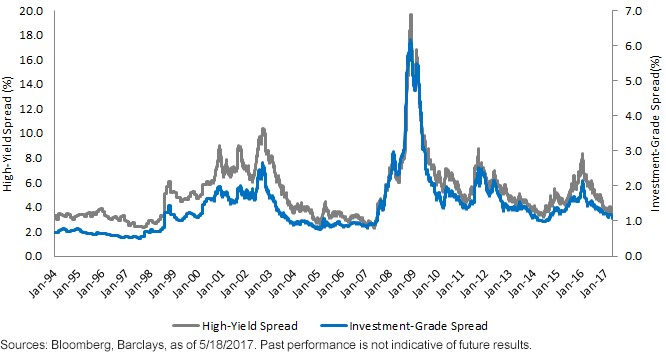
Recognizing the potential for investors to make gains in China, Barclays Capital recently noted that there is an upside surprise waiting in the wings for China investors. “We think the latest data from China point to continued robust growth,” says Jian Chang of Barclays in Hong Kong.

The resurgence of optimism over China stems from the “new” China economy picking up steam on the back of reform-oriented government policies that are represented by the deliberate shift in focus from export-led to domestic-generated growth.

Continue Reading…

6 ways to attract Millennial homebuyers

By Emma Bailey

Special to the Financial Independence Hub

Millennials may eschew many traditional values, but members of this demographic remain committed to one primary tenet of the “American Dream” — homeownership.

While a large number of young people have put the brakes on buying a new home because of student-loan debt, mortgage restrictions and a sluggish job market, the largest bunch since the baby-boomer generation is beginning to enter the real estate market en force. The sheer size of this group and the fact they were born and came of age in an era of rapid technological innovation puts them in a position to transform both the real estate market and what is desirable in a home.

To keep pace, real estate agents and home sellers alike are having to alter the way they market and present homes in order to attract millennial homebuyers. Does your property have what it takes for millennials to take notice?

Walkability and Amenities

The millennial generation places a higher value on “experiences” than they do on material goods. In this demographic, a home is typically perceived as a base for the rest of one’s life, rather than the center of it. Instead of a classic house in the suburbs with a white picket fence, millennials are more likely to prefer property in an urban setting within walking distance of local attractions. There is also a larger interest in non-traditional and mixed-use properties, such as warehouses that have been converted into lofts.

Convenience

In an effort to save money and reduce their ecological impact, many millennials are forgoing cars in favor of alternative transportation. As a result, millennial buyers tend to prefer home shopping in locations that have easy access to public transportation and a minimal commute to work. If your property is close to a metro system or even a local bike-share hub, you can expect younger individuals to reach out with interest.

Connectivity

Continue Reading…

3 common mistakes by first-time homebuyers & how to avoid them

By Sean Cooper

Special to the Financial Independence Hub

You’ve probably heard it plenty of times: buying a home is the single biggest financial transaction of your lifetime. But purchasing a home can also be a great long-term investment — when it’s done right.

Buying a home for the first time can either set you on the right financial path or be a drain on your finances. It completely depends on how you go about it, and is why time is well spent reading great resources, such as the LowestRates.ca first-time homebuyer’s guide.

I wrote about the most common mistakes first-time homebuyers make in my new book, Burn Your Mortgage. Here are some highlights:

1.) Buying “Too Much” House

The simplest way to eventually be mortgage-free is to not take on a massive mortgage. The lower your mortgage, the less time it takes to pay off.

Getting pre-approved for a mortgage tells you how much home you can afford. But just because the bank says you can spend up to $800,000 on a home doesn’t mean you should. The word “can” is key here, and is what many homebuyers overlook. You don’t want to spend so much on a home that it’s a drag on your finances. Otherwise you could find yourself “house rich, cash poor,” with little money to save, let alone have fun with. Instead of your castle, your home could feel like a prison, with your mortgage a life sentence. By buying a home you can comfortably afford you maintain the financial wiggle room to deal with a financial emergency, such as losing your job or suffering severe damage to your home.

2.) Forgetting to Budget for Closing Costs

Closing costs are referred to as the transactional cost of real estate and are often overlooked by homebuyers. They’re anything but a drop in the bucket though, typically adding up to between 1.5% and 4% of a home’s purchase price. Common closing costs include home inspection, real estate lawyer fees, land transfer tax and appraisal fees.

Continue Reading…

Powered by the Financial Independence Hub.
© 2013-2026 All Rights Reserved.
Financial Independence Hub Logo

Sign up for our Daily Digest E-Mail!

Get daily updates from the FindependenceHub.com straight to your inbox.