General

The 2017 MoneySense ETF All-Stars

The fifth edition of the MoneySense ETF All-stars is available online here. This annual feature used to appear in the print edition of the magazine and was originally written by Dan Bortolotti, who is now a full time investment advisor with PWL Capital Inc., and well known for his Canadian Couch Potato blog.

In recent years, I’ve written it, with the assistance of an expert panel of ETF experts you can find in the link. They include Dan himself and his partner Justin Bender at PWL, Tyler Mordy at Forstrong Global Asset Management, Mark Yamada at PUR Data, Yves Rebetez, editor of ETF Insight), and Alan Fusty of Index Wealth Management. (The same members as last year).

As you’ll see, because the goal of the panel is to identify low-cost, well diversified ETFs that can be bought and held over the long run, we try not to make changes just for the sake of change. As a result, 12 of the 14 picks from 2016 are back in 2017, with two substitutions deemed necessary in the US equity and fixed income categories.

Changes in US equity and fixed-income categories

In the case of the US equity category, the panel stood pat with two Vanguard S&P 500 ETFs (hedged and unhedged) but replaced a third Vanguard ETF in this category, VUN, with a new offering, XUU, launched in 2015: the iShares Core S&P US Total Market Index ETF.

The other big change was in fixed-income. Four of our five fixed-income picks are back, with one major tweak: the removal of VAB, Vanguard Canadian Aggregate Bond Index ETF, and its replacement by ZAG, the BMO Aggregate Bond Index ETF.

For the most part, the panel was unanimous in making these two particular tweaks although of course there was a fair amount of debate throughout the process, which you can read about in the full article online.


Why Robb Engen’s 4-minute RRSP portfolio is tough to beat

I spent a total of four minutes working on my RRSP portfolio last year.

It wasn’t benign neglect:  my two-ETF all-equity portfolio really is that simple! I made four trades, which took about a minute each after determining how much money to invest, in which of the two ETFs to allocate the investment, and how many shares that would buy (plus a few seconds to enter my trading password).

The buying process is easy since I don’t have any bonds in my portfolio. I simply add money to the fund that brings my portfolio closest to its original allocation – 25 per cent VCN and 75 per cent VXC.

I don’t expect my four-minute portfolio to change much this year. I still plan on making four trades this year in my RRSP, and now that I’m contributing regularly to my TFSA again I’ll make an additional four trades in that account. Add 12 monthly contributions to my RESP and that brings my total time spent on investing to just 20 minutes a year.

Continue Reading…

Life Planning Basics: The Importance of an Emergency Fund

Photo Credit: Pexels.com

by Jackie Waters

Special to the Financial Independence Hub

When setting up your financial life plan, it’s important to understand the absolute necessity of an emergency fund. Before you can start saving for what you want in your future, you have to save some for all the stuff you don’t want or expect to happen.

The main purpose of an emergency fund is to protect against life’s many contingencies. This includes, but is in no way limited to; job loss, medical co-pays, car troubles, home repairs, child expenses, and unexpected travel needs. Without an emergency fund, you’re forced to turn to other means to pay for things you simply can’t ignore. Many turn to credit cards, which increases personal debt and leaves people in insurmountable holes. It’s nearly impossible to invest in your future when you’re sitting under a pile of debt.

How much should be in your emergency fund?

Continue Reading…

5 mistakes to avoid when buying your first Home

By Alyssa Furtado, RateHub.ca

Special to the Financial Independence Hub

You’re about to make one of the biggest decisions of your life by purchasing a home. And it will likely be your biggest and most complicated financial commitment. So you should make a plan that captures everything you need to do to avoid costly mistakes.

Here’s a list of five mistakes you shouldn’t make when purchasing your first home.

1.) Failing to get pre-approved for a mortgage

It’s vital you know how much you can spend before you start looking for your first home. To figure out how large of a mortgage you can afford, use a mortgage affordability calculator. This will help estimate how much you will be pre-qualified for by a lender, who will conduct a credit check and review your finances. You can arrange for your pre-approved mortgage rate to be held for a period of about 90 to 120 days while you search for the right property.

2.) Not researching mortgage rates

Your first instinct will be to approach your current bank to obtain a mortgage, but you should do some research first to find the best mortgage rates. Continue Reading…

R.I.P. Traditional Retirement

By Brandon Hill

Special to the Financial Independence Hub

Does the notion of grinding it out day in and day out for the next 40 years to experience the freedom of retirement scare you? Wouldn’t you rather strive to enjoy the journey along the way?

The good news is that the traditional concept of retirement is slowly dying.

With the elimination of most employer pension plans and the fact that humans are living longer than ever, we are forced to come up with a different take on how our parents/grandparents view retirement.

Today I’ll show you two different concepts that rethink our traditional retirement model and are gaining popularity amongst the next generation of workers.

Findependence

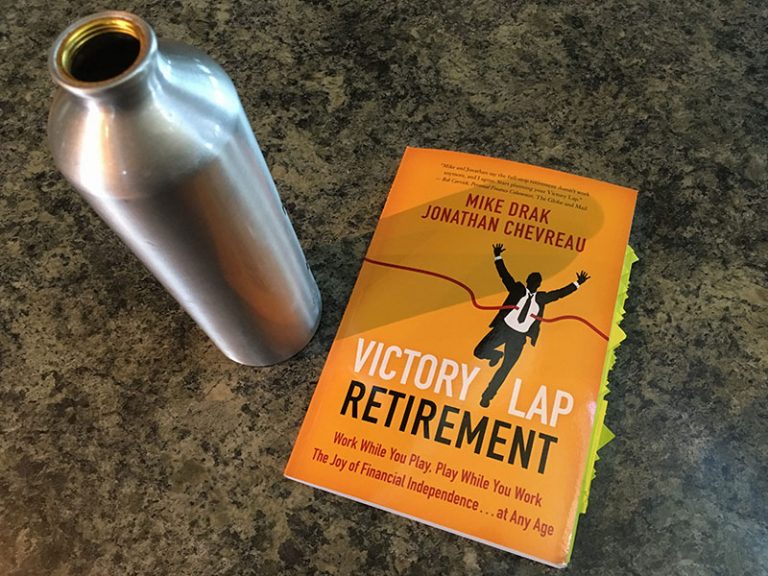
What’s Findependence? It’s a term coined by Jon Chevreau: author, former editor-in-chief of MoneySense Magazine and founder of the Findependence Hub, an online platform and community for curated content focusing on achieving Financial Independence. “Findependence” is simply a contraction of the phrase “Financial Independence.”

Financial Independence is the point at which you work because you want to, not because you have to. It’s the tipping point where you have the right level of savings and investments working for you to provide the income you need to live your ideal life.

Think about that. It sounds very similar to our definition of retirement and at the same time totally reframes the perception of what retirement should entail. Rather than focusing on when you can stop work forever, you now shift your mindset to creating enough passive income through investing so that you can pursue anything you want.

Continue Reading…