Inflation

Inflation

Franklin Templeton likes prospects for US and global stocks in 2026

Franklin Templeton’s Investment Outlook for 2026 and beyond was largely positive, judging by the three speakers who presented to advisors and the media at Toronto’s Ritz Carleton Hotel on Tuesday (Nov. 25). In fact, UK-based Global Investment Strategist Michael Browne declared the year now closing, 2025, to be “the Year that the Bear cried Wolf.”

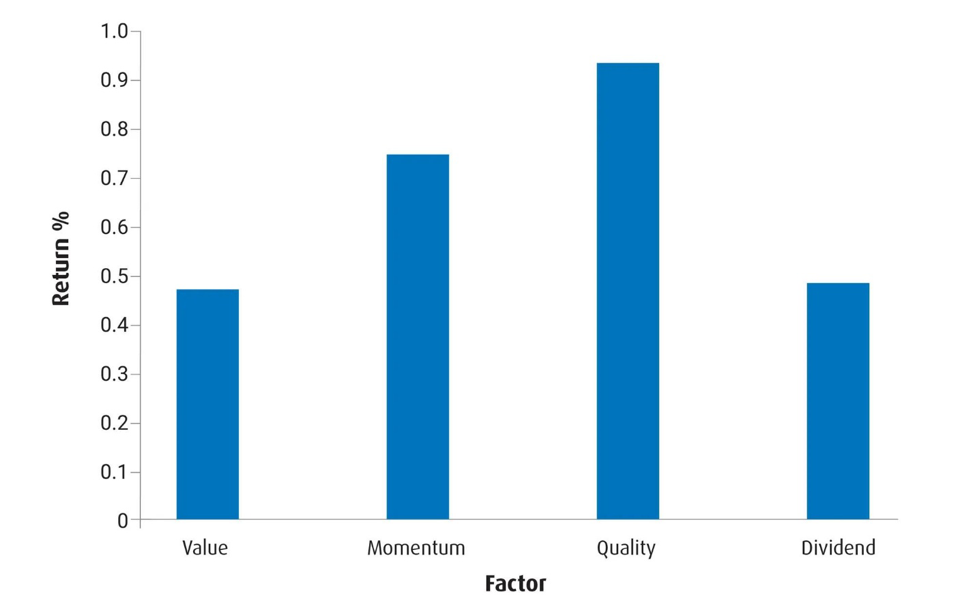
Browne, who is with the Franklin Templeton Institute, released the following preliminary results of Franklin Templeton’s Global Investment Management Survey 2026, shown below:

Browne expects three Fed rate cuts next year and foresees U.S. equities as measured by the S&P500 to end as high as 7400 by the end of 2026.

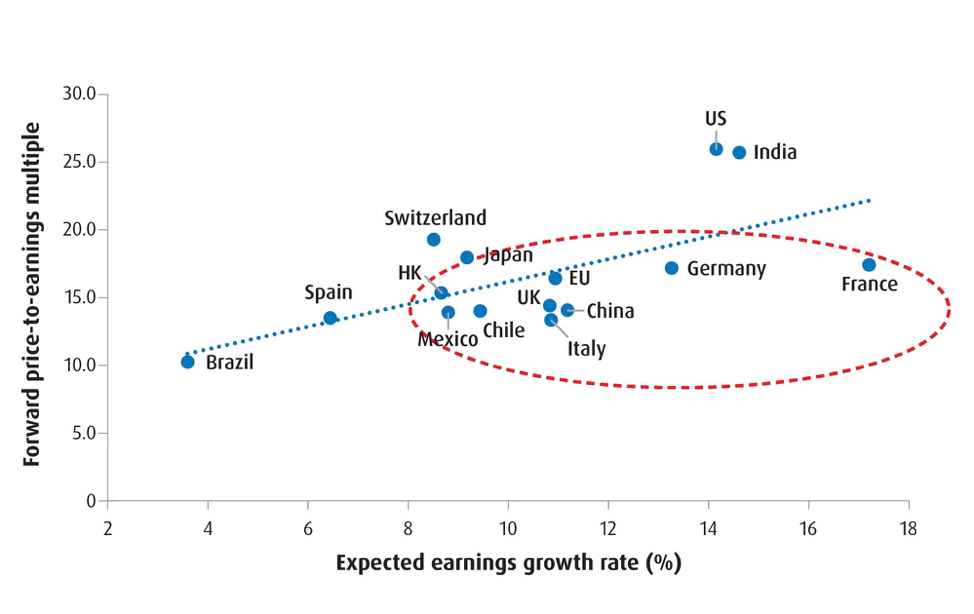
Like other Templeton executives, Browne expects to see rises in stocks outside the United States. This year, the story has been about growth in the U.S. market and Value in the rest of the world, he said. But even though there are no “Magnificent 7” stocks in Europe or the Emerging Markets — the Mag 7 and their innovation mindset seem unique to the U.S. — he expects a widening and broadening of global markets, with “opportunities in all asset classes.” He expects earnings growth of 5 to 10%, somewhat below the 13.5% Factset consensus.

Corporate margins keep rising, housing markets are weak, and the High-Yield Default Rate is near historically low levels, Browne said, with slides illustrating each point: “Stress indicators do not
point to a severe default cycle in the near term.”

However, Tariff revenue for the U.S. is “unfortunately” high, he said.

Even so, as the chart below demonstrates, real GDP (Gross Domestic Product) is forecast to rise over 2026 and inflation is expected to be flat to down next year.


Meanwhile, there is more than US$7 trillion in cash still sitting on the sidelines and capex growth for the big hyperscalers is expected to remain strong, Browne said. They will spend US$3 trillion by the end of the decade and may generate significant returns for the four hyperscalers investing from Cash: Meta, Microsoft, Amazon and Google.

How to spot a Bubble … and a Crash

Browne provided past examples of historic bubbles, ranging from Dutch Tulipmania of 1637 to the American railway mania of the early 1850s, which crashed in 1873, and severe stock market declines in 1907, 1929, 1987, 2001 and 2008.

Bubbles usually end after 7 developments: Debt, Rate rises, a “First Failure,” Confidence fails Reverse Velocity, Margin Calls, Forced or Panic Selling and finally Fraud.

Comparing the 2020s to the 1990s, one of Browne’s slides said “The dot-com bubble burst in 2000: more than five years after the release of Netscape.”

Historically, Global Equities have delivered double-digit gains following Rate cuts and have supported P/E expansions, Browne said. All markets except China are more correlated to the U.S. than in the past. In Emerging Markets, Browne likes India and China: “When the Fed cuts, Emerging Markets fly.”

The last scheduled speaker was Jeff Schulze, CFA, Managing Director and Head of Economic and Market Strategy for ClearBridge Investments, who reassured attendees they don’t need to fear the All-Time Highs the U.S. has been experiencing throughout much of 2025:

Schulze says that with possible Tariff Refunds, “we think the economy next year will outperform consensus expectations … We’re buyers of Dips.” While valuations are “full” right now, with the Fed cutting we don’t see multiples going down  … for the first time in a long time, diversification will be more additive as we see a broadening out.” The previous laggards will become leaders, including small- and mid- caps and the S&P493 (all but the Mag 7).

One slide on the Tariffs said this: “The Supreme Court may decide that the administration’s IEEPA tariffs need to be refunded, which would be a windfall to corporate America next year. Secretary of the Treasury Scott Bessent has noted that approximately half of the incremental tariff revenue, which is on pace to near $200 billion by year-end, has come from IEEPA tariffs.”

Continue Reading…

Retired Money: Experts opine on various tweaks to Bengen’s famous 4% Rule

William Bengen, creator of the famed “4% Rule.”

My latest MoneySense Retired Money column is titled The 4% rule, revisited: A more flexible approach to retirement income. Click on the hyperlink for full column.

It goes into more detail on William Bengen’s updated book about the 4% Rule, which was one of three recently published financial books we reviewed in the last Retired Money column.

For that column I had originally planned to focus exclusively on that book, A Richer Retirement, Supercharging the 4% Rule to Spend More and Enjoy More. However, I decided to review two other books at the same time; meanwhile I ended up on a related project on my own site, which involved asking more than a dozen financial advisors on both sides of the border what they think of the 4% Rule and the tweaks Bengen covers in his follow-up book. You can see all responses in this blog that appeared earlier this month on Findependence Hub, but at over 5,000 words  it was a tad long for the space normally assigned to the Retired Money column.

 For the MoneySense version, I focused on the most insightful comments and added a few thoughts of my own. The survey was conducted via Linked In and Featured.com, which has long supplied good content for my site.

Broader diversification spawns a 4.7% Rule

Trusts and estates expert Andrew Izrailo, Senior Corporate and Fiduciary Manager for Astra Trust, says Bengen’s original idea was to provide a sustainable income stream for at least 30 years without depleting your savings. In his new book, Bengen “revisits this concept using updated data and broader asset allocations,” summarizes Izrailo, “He now argues the safe withdrawal rate could rise to around 4.7%, supported by stronger market performance and portfolio diversification beyond the original stock-bond mix.”

For American investors, Izrailo still begins with 4% as a baseline because “it remains simple and conservative. Then I evaluate three major factors before adjusting: market volatility, portfolio performance, and expected longevity.” For Canadian retirees, “I tend to start lower, around 3.5%, due to differences in taxation, mandatory RRIF withdrawal rules, and the impact of currency and inflation differences compared to U.S. portfolios.”

Toronto-based wealth advisor Matthew Ardrey, of TriDelta Financial was not part of the original Featured roundup but agreed with the general view that while a helpful starting point, the 4 Rule is only a guideline. “When I meet with a client, I don’t rely on the 4% rule at all,” said Ardrey, who has worked with clients for more than 25 years “I’ve learned that rules of thumb — like the 4% rule — pale in comparison to the clarity and confidence that come from a well-crafted” and personalized financial plan.  Such a plan should reflect each person’s unique circumstances, priorities, and goals, allowing them to build the right decumulation strategy for their situation.

No one size fits all

Almost all the experts caution against taking a one-size-fits-all approach to the 4% Rule or its variants. Over 20 years with her own clients financial advisor and educator Winnie Sun, Executive Producer of ModernMom, starts with 4% as the baseline, then adjusts it based on actual client spending patterns and market conditions … The biggest mistake I see isn’t about the percentage itself: it’s that people forget about tax efficiency in withdrawal sequencing.”

Oakville, Ont.-based insurance broker James Inwood says the 4% rule is “a decent guideline, but it’s not some magic number you can set and forget. I’ve watched people get into trouble because they didn’t account for medical bills, which are a real wild card here in Canada. I always tell people to build in a cash buffer and check in on that withdrawal rate every couple of years instead of just locking it in permanently.” Continue Reading…

5 Key Wealth Management Factors that Influence Investment Decisions — Every Investor Should Know

Understand the factors that affect investment decisions so you maximize your portfolio returns

TSInetwork.ca

It’s generally a waste of time to obsess about a short-term downward movement in the economy, stock market or both. These downward movements can occur for a wide variety of reasons, at any time: even outside the kind of significant downturn caused by COVID-19 or, more recently, higher inflation and the Russian invasion of Ukraine.

Still, for every “real” short-term downturn, you can spot a dozen fake-outs: situations where the market or economy looked like it was going into a tailspin but pulled out of the drop and began rising at the last minute.

On the other hand, it does pay to obsess about factors that affect investment decisions like portfolio diversification, investment quality, and the extent to which your portfolio suits your personal goals and temperament.

1. What is the appropriate asset allocation for my portfolio?

A diversified investment portfolio should be spread across multiple asset classes for risk management and potential growth. The main components typically include:

Stocks provide growth potential and can help protect against inflation over the long term. They tend to be more volatile but historically offer higher returns.

Bonds offer steady income and help reduce overall portfolio risk. They generally provide more stability than stocks but lower potential returns.

Cash equivalents, like money market funds or GICs, offer safety and liquidity but usually provide the lowest returns.

The specific percentage allocated to each depends on your personal circumstances, but maintaining this basic diversification helps balance risk and return potential.

Remember that regular rebalancing helps maintain your target allocation as market values change over time.

Spread your money out across most if not all of the five main economic sectors (Finance, Utilities, Manufacturing, Resources, and the Consumer sector). The proportions should depend on your objectives and the risk you can accept. The Finance and Utilities sectors generally involve below-average risk. Manufacturing and Resources tend to be riskier, and the Consumer sector is in the middle.

As well, balance aggressive and conservative investments in your portfolio, in line with your investment objective  and the market outlook. Above all, avoid the urge to become more aggressive as prices rise and more conservative as prices fall.

Discover more about properly diversifying your portfolio.

2. How do I find quality investments?

Quality investments can be identified by examining key financial metrics such as consistent revenue growth, stable profit margins, low debt levels, strong cash flows, and competitive advantages within their industry.

The best blue-chip stocks offer strong investment quality. When the market suffers a significant downturn like that prompted by the emergence of the coronavirus pandemic, these stocks generally keep paying their dividends, and they are among the first to recover when conditions improve.

In keeping with the Successful Investor philosophy, we feel stocks that have been paying dividends for five years or more are some of the safest investments you can have. Dividends are a sign of quality and a company’s financial health. Canadian banks and utilities are among the income-paying stocks that we consider to be safer investments.

Learn more about developing a long-term strategy focused on stocks with high investment quality.

3. Why is it important to have a disciplined savings plan?

A disciplined savings plan creates financial stability by building wealth consistently, protecting against emergencies, and helping achieve long-term goals through the power of compound growth.

If there is one piece of personal wealth management advice you should immediately implement, it’s to have a disciplined plan for saving during your working years. This, above all things, can set you up for optimal investment gains. We talk more about this in 9 Secrets of Successful Wealth Management, which is free for you to download. Continue Reading…

Rethinking your Allocation to Alternative Assets for 2026

Image by Pexels: DS stories

By Devin Partida

Special to Financial Independence Hub

Alternative assets are investments that go beyond traditional stocks, bonds and cash. These include real estate, private equity and commodities. Unlike conventional investments that move with the broader market, these assets often behave differently, which gives your portfolio extra stability and opportunity.

Diversifying beyond the usual mix has become essential as market volatility and inflation make returns less predictable. Adding alternatives can smooth out performance swings, protect your purchasing power and access growth opportunities that public markets can’t always offer. It’s a wise way to strengthen your portfolio and prepare for whatever the market brings next.

What are Alternative Investments?

Alternative investments come in many forms, offering different ways to diversify your portfolio. Real estate provides steady income and long-term appreciation. At the same time, private equity and hedge funds aim for higher returns through active management and exclusive opportunities. Commodities like gold and oil can hedge against inflation, and infrastructure projects offer a stable cash flow tied to essential services. Even collectibles such as art, wine or rare coins can hold value beyond market trends.

These assets often move independently of public markets, which helps balance your portfolio during volatile periods. While they require high initial minimums and upfront investment fees, their transaction costs are often lower than those of traditional assets. Still, they come with unique challenges, such as limited liquidity, complex valuations and higher entry barriers that demand careful planning and due diligence.

Benefits of adding Alternatives to a Portfolio

Alternative assets offer new ways to manage risk, protect against inflation and uncover growth opportunities in areas often overlooked by public markets. When used thoughtfully, they can make your portfolio more resilient and better equipped to handle economic ups and downs. Here are some key benefits to consider:

  • Steady income streams: Real estate and infrastructure can generate reliable cash flow through rent, dividends and yield.
  • Inflation protection: Real estate and commodities tend to retain or grow in value when inflation rises. For example, gold prices are up more than 40% in 2025, proving how commodities can be a powerful hedge during uncertain times.
  • Higher long-term return potential: Private equity and venture capital can outperform public markets over time, rewarding patient investors.
  • Enhanced portfolio resilience: Combining alternatives with traditional assets can reduce volatility and create a more balanced, adaptable investment strategy.

Risks and Complexities to watch out for

Many of these investments require long holding periods, meaning your money could be locked in for years. Private equity and hedge funds often charge high management and performance fees that can affect your gains. Some alternatives don’t have transparent market prices, so tracking their real value isn’t always easy.

Commodities and emerging market assets can also swing sharply in value, reacting to global events and economic changes. Understanding these risks early allows you to make informed decisions, choose investments that match your comfort level and build a strategy that balances opportunity with smart risk management.

Determining the Right Allocation

When deciding how much to invest in alternative assets, it is important to align your allocation with your risk tolerance, time horizon and financial goals. Conservative investors might dedicate a modest amount of their portfolio to other options. At the same time, those with a higher risk appetite could go beyond that. Interestingly, 37% of Americans have expressed interest in using artificial intelligence tools to help manage their money. Continue Reading…

Is the “4%” Rule still relevant for Retirement Planning? What the experts say

Late in October, my monthly MoneySense Retired Money column reviewed three recently published financial books, starting with financial planner William Bengen’s new A Richer Retirement: Supercharging the 4% Rule to Spend More and Enjoy More.

Below we canvassed more than a dozen retirement experts and financial planners in both Canada and the United States about their experiences with the Rule, both the original book as well as the new one.

These experts were gathered by Featured.com, which has been supplying Findependence Hub with quality content for several years now. It has changed its procedure so that editors like myself can request input on particular topics we think will interest our readership. The sources are all on LinkedIn, as you can see by clicking on their profiles below.

Here’s what we asked, followed by their answers, which have been re-ordered by me.

“What do you think of the 4% Rule: CFP Bill Bengen’s guideline about a safe annual Retirement withdrawal amount that factors in inflation? Have you read or do you plan to read Bengen’s just-published followup book: A Richer Retirement : Supercharging the 4% Rule to Spend More and Enjoy More? Do you agree or do you have your own tweaks to the 4% Rule? Looking for both Canadian and American input.”

Here is what these thought leaders had to say.

Adaptive Withdrawals protect Retirement through Market Cycles

The 4% Rule, created by CFP Bill Bengen in the 1990s, remains one of the most referenced retirement withdrawal guidelines. It suggests withdrawing 4% of your portfolio in the first year of retirement and adjusting that amount for inflation each year. The idea was to provide a sustainable income stream for at least 30 years without depleting your savings. Bengen’s newly published book, A Richer Retirement: Supercharging the 4% Rule to Spend More and Enjoy More, revisits this concept using updated data and broader asset allocations. He now argues the safe withdrawal rate could rise to around 4.7%, supported by stronger market performance and portfolio diversification beyond the original stock-bond mix. 

I see the 4% Rule as a reliable starting point, but not a fixed rule. It offers structure for retirees who need clarity on how much to withdraw each year, but real-world conditions require flexibility. For U.S. investors, I still begin with 4% as a baseline because it remains simple and conservative. Then I evaluate three major factors before adjusting: market volatility, portfolio performance, and expected longevity. For Canadian retirees, I tend to start lower, around 3.5%, due to differences in taxation, mandatory RRIF withdrawal rules, and the impact of currency and inflation differences compared to U.S. portfolios. 

My main adjustment to the rule is to make withdrawals adaptive rather than static. If the portfolio declines by more than 20% early in retirement, I recommend reducing withdrawals by 5% to protect capital. If inflation stays above 4% for more than two years while fixed income returns remain weak, I hold withdrawals steady instead of increasing them. Conversely, if long-term returns outperform expectations, withdrawals can rise modestly. These adjustments keep the retirement plan sustainable through changing market cycles. 

The lesson is to view the 4% Rule as a guideline, not a guarantee. Its true value lies in the discipline it introduces. A flexible version of the rule — tailored to taxes, inflation, and market behaviour — helps retirees spend with confidence while protecting their financial future. — Andrew Izrailo, Senior Corporate and Fiduciary Manager,  Astra Trust

Real Estate Investors Outperform Traditional 4% Rule

I’ve always thought the 4% rule is a decent starting point, but it’s really built around stocks and bonds. In my world of real estate, combining rental income with property value growth usually blows past that number. Instead of a fixed withdrawal, you can sell a property or pull out equity when the market’s high. That flexibility often makes your money last a lot longer in retirement. — Carl Fanaro, President,  NOLA Buys Houses 

Balance Freedom and Security in Retirement Journey

Retirement, much like embarking on a long and meaningful journey, is not just about reaching a destination but about learning how to move through each stage of life with purpose and enjoyment.

After reading Bill Bengen’s A Richer Retirement, I found his updated perspective on the 4% Rule both inspiring and practical. He transforms what was once seen as a strict withdrawal formula into a flexible approach that prioritizes experience, adaptability, and peace of mind.

Bengen’s message is that retirement should not revolve around fear or limitation. Instead, it should be about living fully within realistic financial boundaries. By adjusting withdrawals according to personal goals, market performance, and the natural flow of retirement years, retirees can enjoy their savings as a source of freedom rather than anxiety.

The concept feels much like travel: in some seasons, you venture farther, explore more, and spend a bit extra; in others, you slow down, rest, and savor simplicity. This approach is particularly meaningful for those who dream of traveling during retirement. The early, active years can be dedicated to exploring places like Morocco, when energy and curiosity are at their peak. Later on, spending can naturally shift toward quieter experiences closer to home.

Both Canadians and Americans can apply this mindset using tools such as TFSAs, RRSPs, Roth IRAs, or Social Security planning to balance flexibility and security.

In the end, Bengen’s vision reframes retirement as a phase of freedom, not restriction. It invites people to plan wisely but live fully, creating space for exploration, connection, and purpose much like a well-planned journey that leaves room for discovery along the way. — Nassira Sennoune, Marketing Coordinator, Sun trails

Tax-Efficient Withdrawals add 1-2% to Retirement

The 4% rule is a solid starting point, but after 20+ years advising clients, I can tell you it’s not one-size-fits-all. I’ve seen too many retirees lock themselves into unnecessary restrictions because they treat it like gospel rather than a guideline. 

Here’s what I actually do with clients: we start with 4% as the baseline, then adjust based on their actual spending patterns and market conditions. I had a couple last year who were terrified to spend more than their calculated 4%, even though their portfolio had grown 30% and they were skipping vacations they’d dreamed about for decades. We bumped them to 5.5% for two years because the math worked and life is short: they finally took that trip to Italy. 

The biggest mistake I see isn’t about the percentage itself: it’s that people forget about tax efficiency in withdrawal sequencing. I always look at which accounts to pull from first (taxable vs. tax-deferred vs. Roth) because that can add 1-2% to your effective withdrawal rate without touching principal. One client saved $47,000 over five years just by restructuring their withdrawal order. 

I haven’t read Bengen’s new book yet, but it’s on my list. My practical tweak: build a 2-3 year cash cushion in your portfolio so you’re never forced to sell stocks in a down market. That flexibility alone has kept my clients sleeping well through every correction since 2008. — Winnie Sun, Executive Producer,, ModernMom

Canadian Medical Costs require Flexible Withdrawal Rates

Look, the 4% rule is a decent guideline, but it’s not some magic number you can set and forget. I’ve watched people get into trouble because they didn’t account for medical bills, which are a real wild card here in Canada. I always tell people to build in a cash buffer and check in on that withdrawal rate every couple of years instead of just locking it in permanently. — James Inwood, Insurance Broker, James Inwood

Cash Reserves shield Retirees from Market Volatility

I assist clients with retirement and estate planning.  Bill Bengen’s original 4% rule was first published in 1994 and took into account a balanced investment portfolio modeled back to 1926.  At that time, he projected a 4% withdrawal rate, adjusted annually for inflation, would ensure the portfolio was sustainable for a 30-year retirement.  I recommend my retired clients review their portfolio allocation, investment returns, monitor for annual inflation and expenditures and then make adjustments for the next year’s withdrawals.  

 I plan to read Mr. Bengen’s new book published in August.  Mr. Bengen  is now recommending a broader asset diversification to add in small percentages of international equities and small-cap stocks in addition to his historic investment portfolio of 50% U.S. large-cap stocks and 50% intermediate bonds.  He claims with this broader diversification the safe withdrawal rate could now be up to 4.7% under best case scenario, 4.15% worst case.  I agree with Bengen that broader asset diversification can make sense for retirees who are investment knowledgeable and are monitoring annually the data I’ve noted above.

I recommend to my clients that any rule of thumb such as Bengen is simply a data point.  Retirees need to take into account their own risk profile as well as their investment understanding before making any significant adjustments to their rate of asset withdrawal.   Retirees now have longer life spans and are battling a heightened inflation rate.  I recommend my clients have a flexible withdrawal range of 3.5% to 4.5%, monitor assets annually, and continually adjust their annual withdrawal rate as necessary for volatile markets.   

I also recommend that my clients have a cash account established of at least two years’ withdrawals to avoid having to sell assets in a prolonged negative market environment. — Lisa Cummings, Attorney and Executive Vice President at Cummings & Cummings Law,  Cummings & Cummings

Tax Planning Matters more than Withdrawal Percentages

I’ve spent 40 years managing my own law firm and CPA practice, plus 20 years as a registered investment advisor, so I’ve seen hundreds of retirement plans play out in real life. The 4% rule is a decent starting point, but I stopped treating it as gospel about 15 years into my advisory career.

Here’s what I actually saw with my small business owner clients: their retirement income rarely came from just traditional portfolios. Most had business sale proceeds, real estate holdings, and irregular cash flows that made the 4% rule almost irrelevant. One client sold his manufacturing business at 62 for $2.3 million (US) but kept the building and leased it back: his retirement “withdrawal rate” was completely different because he had guaranteed rental income covering 60% of his expenses. 

The bigger issue I noticed was tax planning around withdrawals. I’d have clients rigidly following 4% from their IRAs while sitting on Roth conversions they should’ve done years earlier, or taking Social Security at the wrong time. The sequence of what you withdraw from matters more than the percentage: I’ve seen people save $50K+ in taxes over retirement just by pulling from taxable accounts first while doing strategic Roth conversions. 

My tweak: forget the percentage and work backward from your actual monthly expenses, then layer in guaranteed income sources (Social Security, pensions, annuities) before touching portfolio money. Most of my retired clients ended up withdrawing 2-3% because they structured things right on the front end. — David Fritch, Attorney,  Fritch Law Office Continue Reading…