U.S. CPI vs. U.S. CPI ex-Food & Energy Year-over-Year Change from 1/31/2010 to 1/31/2018
By Kevin Flanagan, WisdomTree Investments
Special to the Financial Independence Hub
There is no doubt that inflation fear has reared its ugly head early in 2018, impacting the money and bond markets in rather noteworthy fashion. Some key headline-grabbing measures, such as wages and the Consumer Price Index (CPI), have come in above consensus forecasts to start the year, fueling a case of high anxiety for the fixed income arena. Naturally, the million (or should it be billion?) dollar question is: Are these heightened inflation fears warranted?
As we entered the new year, consensus forecasts for inflation were that readings at both the overall and core (ex-food and energy) levels would essentially remain unchanged. Interestingly, economists’ projections have been revised upward of late and now post slightly elevated readings. Indeed, the CPI is now expected to come in at a year-over-year rate of +2.3%, or 0.2 percentage points (pp) higher than the prior projection. The alternate measure, the personal consumption expenditures (PCE) price index, has been changed to a +1.9% increase (also up 0.2 pp), with the core PCE gauge being lifted 0.1 pp to +1.8%. The bottom line is that these revised estimates now all look for some modest increase from 2017 levels.
What about the Federal Reserve (Fed)? For now, all investors have to go by is the policy makers’ December projections. The March FOMC meeting, scheduled for March 21st, will be the Fed’s next chance to make any potential adjustments to their prior forecasts.. The preferred measure is the PCE price index, and the policy makers provide projections for both the overall and core PCE gauges. The Fed’s central tendency estimate is similar to the revised market consensus, with a range of +1.7% to +1.9% for each index. It should be noted that both the economists’ and the Fed’s current PCE projections still fall below the +2.0% target laid out by the policy makers.
Let’s take another look
So, let’s take another look at the aforementioned wages and CPI numbers. Continue Reading…
The biggest concern for many investors is the fear of losing their money. The stock markets have shown some volatility the last few weeks, and the recent screaming headlines in the financial media do nothing but encourage panic.
Some people think the latest bull market has overvalued stocks and a major market meltdown is imminent. They are sitting on their cash and waiting for the right entry point.
According to a BlackRock survey, 70% of adults aged 25 to 36 are also clinging to cash assets. Apparently, these Millennials don’t have much trust in the stock market and are afraid of another large market crash. This puts them at risk of not having enough saved to enjoy a comfortable retirement.
It’s true. Investing in equities does carry risks. Market corrections (drop of about 10%) are common. Bear markets (drop of 20% or more) will likely occur during an investor’s lifetime.
Even a reasonably diversified portfolio of stocks lost about half of its value during the 2008-2009 market crash. However, avoiding equities completely isn’t the best strategy. The stock market can be good to investors who have the discipline.
What can you do to get over your stock market fears?
1.) Educate yourself
Combat your fears with knowledge. Learn the basics: how the markets work so you can prepare yourself for future market conditions. The more you know, the less afraid you become, but avoid information overload.
Stop reading the gloom and doom reports in the financial media. Your financial education should not come from the news media. They need something to report and tend to sensationalize short-term market events to grab our attention. Just because something appears in print doesn’t guarantee that the information is correct. Look for reliable sources.
Investing magazines and books can provide useful information.
Knowledge is freely available on the Internet. Basic investing information is available at sites like Get Smarter About Money and Canadian Securities Administrators. Some social media sites, forums and financial blogs are worthwhile if written by knowledgeable authors.
Lack of confidence and second guessing yourself can paralyze your decision making. If you’re afraid of picking the wrong investments, turn to a professional for help. You could also try one of the many well-publicized model portfolios that have yielded good returns.
2.) Take a long-term investing approach
The biggest fear of investing is losing a lot of money in a short period of time.
Investing is a long-term process and is most likely your only way to reach your long-term financial goals.
Don’t keep monitoring your portfolio. This is psychologically hard, but don’t let short-term losses bother you too much. No one likes losing money, but it will be temporary. You’re not going to need this money to survive tomorrow, or next month, will you?
Acknowledge short-term market risks, but trust in long-term historical gains and commit to long-term investments. Continue Reading…
Do you want to avoid a financial crisis before it happens? Everyone does, but few are willing to take the essential steps. You might have heard rumors of a significant economic crisis just looming around the corner. Whether it happens at a personal or national level, it feels good to know that you have done something to avoid it or at least soften its impact in your life.
In this post, let us take a look at some of the most effective ways to avoid a financial crisis before it happens:
1.) Save before you spend
Benjamin Franklin said “a penny saved is a penny earned.” Nothing can be truer than that! Every time you spend on something, you take out cash from your pocket. It decreases your wealth. Spending on unnecessary things may mean that you could have used precious resources for other things.
Now, it doesn’t mean that enjoying the fruits of your labor and buying things that you love are bad things. The point is that sometimes you just have to make small sacrifices today to enjoy great rewards in the future. And that’s precisely what saving can do for you.
The best way to avoid a financial crisis is as simple as saving a penny a day. You can then gradually increase your savings each month. It may sound small at first, but great things start from little things. The key here is consistency. Just keep on saving, and you will soon see how it can help you become financially secure.
2.) Make a Budget
It’s helpful to be reminded of this adage, “If you failed to plan, you planned to fail.” Budgeting is a form of planning for the future. Some people mistakenly thought that they could go on with their lives without a budget. Almost always, without fail, those who don’t have a budget are the same people who are in a financial strait.
Making a budget does not have to be complicated. It only takes a few minutes. Decide where your money goes and ensure that you track every penny from your wallet. If you made a personal loan online, then make it a point to pay off debt first as much as possible before spending on things that are just optional. Continue Reading…
The following is Part 2 of a sponsored Q&A with the founders of the firm behind Canada’s new Prosperium cybercurrency. Doug Coyle, pictured on the left, is the Chief Executive Officer of Toronto-based Prosperium Inc. Tony Humble is President and Chief Organizational Officer. You can find the introductory blog in this series by clicking on Blockchain Revolution, Global Prosperity and Prosperium. Also, a new white paper has just been published.
The pre-Sale rollout plan for Prosperium tokens
Jon Chevreau: Let’s resume with a recap how you’re rolling out Prosperium units and how pricing steps up over time.
Doug Coyle: Our currency Prosperium does have a period at the beginning, which we call our Presale period, when accredited investors can buy the coin at a value that is rising over time. The current value that we’re offering our token at is $2 per token for the presale token. That will be stepped up to $2, $4, $6, $8, $10, $15, $20, then by increments of $10 until finally it gets to $100 per presale token.
That price is based upon the network value; as we accomplish various milestones and increase the value and utility of the Prosperium platform and token the market price increases steadily; but once you reach $100 it then converts at 100 to 1 so one Prosperium token becomes 100 Prosperium “dollars” at a 1 to 1 ratio. It becomes stable at that point. That means that 1 Prosperium dollar is equal to one Canadian dollar. From then on it’s stabilized by smart contracts so it becomes very easy for someone to look at their Smartphone, see their balance is 1000 Prosperium dollars and they know what they what can buy with one thousand Prosperium dollars since it’s equal to C$1,000.
Jon: And outside Canada?
Doug: Each country will have its own Prosperium token that matches the local fiat currency. So in England, one Prosperium pound will equal one UK pound; same with the peso or the US dollar etc. We are set to be a stable-value token in all countries that accept us: wherver the regulators accept our platform so people are able to trade in a currency and know the price of anything in Prosperium dollars or tokens.
This is very different than Bitcoin because right now Bitcoin is worth around $4,000. So on any given day how do know how much the price of a cup of coffee is in Bitcoin? You don’t, not without doing a bit of a calculation or having your phone do it for you. So it’s a big advantage having a stable-value currency for everyday use that you can trust won’t fluctuate and be volatile while they hold it and that they know the price of things in that currency.
Fiat currencies vs cybercurrencies
Hub CFO Jon Chevreau
Jon: You used the term fiat currency just now. Can you comment on traditional “money” and so-called fiat currencies like the dollar, Euro etc.? There’s nothing magical about the value of a dollar except that it’s dictated by governments, right? At least since it’s no longer backed by gold.
Doug: You’re right: part of understanding how to design a currency for Prosperium is understanding the mechanism that all currencies play in an economy; an economy is just a community of people trading their work with each other: goods and services. The economy, the GNP or GDP, is just the sum of all those transactions in that community; so what is money? Money is just a trusted accounting system; and the important word there is trusted. If you’re in an economy or country that has its currency backed by gold or silver or some commodity, you’re using that commodity to create that trust factor; you’re trusting that gold will be relatively stable over time.
If you live in a country like Canada or the United States, or most of the world now, it’s not backed by a commodity like gold or silver but by the promise of the sovereign: of the government. You are relying on the fact that the government will say yes, we’re going to back that dollar and manage it and keep it at a relatively stable value. You can question how much you can trust any sovereign to handle money but that’s the theory. So you have those two systems of creating trust; backed by a commodity or backed by the promise of a sovereign.
Jon: Do you use the term fiat?
Doug: Yes, we use the term fiat. Fiat just means by demand or by order. I as the king demand, or order, that this piece of paper here is worth one Canadian dollar.
What is backing Prosperium?
Jon: At least when it was backed by gold, it was finite, like Bitcoin. But now it’s potentially infinite? Look at Zimbabwe and what happens with inflation when it’s backed by nothing? Or Venezuela.
Doug: Yes, which raises a very interesting question. What is backing Prosperium? In our case, it’s a very concrete thing that backs it. New currency can be created; you have to remember that all currency is created. Continue Reading…
Prosperium Inc. CEO Doug Coyle (L); President and COO Tony Humble (R)
The following is a sponsored Q&A with the founders of the firm behind Canada’s new Prosperium cyryptocurrency.
Tony Humble is President and Chief Organizational Officer of Toronto-based Prosperium Inc. and Doug Coyle is Chief Executive Officer (both pictured on the left).
Also, a new white paper has just been published. The overall Prosperous business model is described on its home page. And for a layperson’s perspective, see Tony’s blog.
The Q&A will continue tomorrow.
Jon Chevreau: In the first blog, we mentioned Ethereum and Prospereum as two examples of cryptocurrencies spawned in Canada. Clearly, the name Ethereum inspired your name and it was a clever stroke to get the word Prosper in there too. Can you confirm this genesis of the name?
Tony Humble
Tony Humble: Well, the name Prosperium was a natural, but we tried a few others first, like Prosperus, as in “prosper us all” and “prosperous” and ProsperX. But the elemental affinity with Ethereum was irresistible: like atomic bonds. Ethereum is named for both a celestial region and an “element” in the periodic table. On earth, it is both a currency and a platform for smart blockchain contracts: revolutionary and brilliant.
Jon: Can you elaborate on what the name means in practice, relative to Ethereum? Is it the same business model?
Tony: Like Bitcoin, the total number of coins issued by Etherium will be fixed, aiming for continuous growth in value. In comparison, Prosperium is also named as an element, is a crypto-currency, and is a platform: for growth in real prosperity. In contrast, however, once Prosperium has reached a target value it will be fixed in price and supported at that value, but the number of coins issued will continue to grow. It will be minted for measurable value, created by regional accelerators to generate jobs and production, and its use for transactional purposes will be tracked on the Prosperium blockchain. It will be 100% open and auditable by governments, and will maintain a large reserve to support the price in the marketplace.
Jon: A prospectus for Canada’s first Bitcoin ETF was recently filed. I’m not sure if that shows your timing is impeccable or whether you’re late to the party?
Doug Coyle: I do see that there are more and more ETF funds being launched in Canada and around the world for Bitcoin.
Jon: Starting with the Winklevoss twins of Facebook fame?
Doug: Yes, they tried to get a Bitcoin ETF going and ran into some barriers but they prepared the ground a great deal. I feel it’s adding infrastructure so I’m in favor of multiple ETFs for Bitcoin or any other crypto currency being established.
Jon: Is Prosperium going that route?
Doug: Not directly. In some ways we do provide the ability for clients who hold Prosperium tokens to trade those tokens and eventually the currency itself will be freely trading; so we have a very sophisticated way of doing a — call it an ETF — but we hold a reserve account that is core to how we stabilize the Prosperium coin. Buyers can find a ready market there at all times; they don’t have to count on any broker to find a match on buying and selling; it’s all done automatically in the software.
Why Prosperium isn’t going the ICO route
Jon: You chose not to go the ICO (Initial Coin Offering) route although it sounds like you were thinking about it. Why not, or are you doing the same thing under a different name? Continue Reading…


 Posted By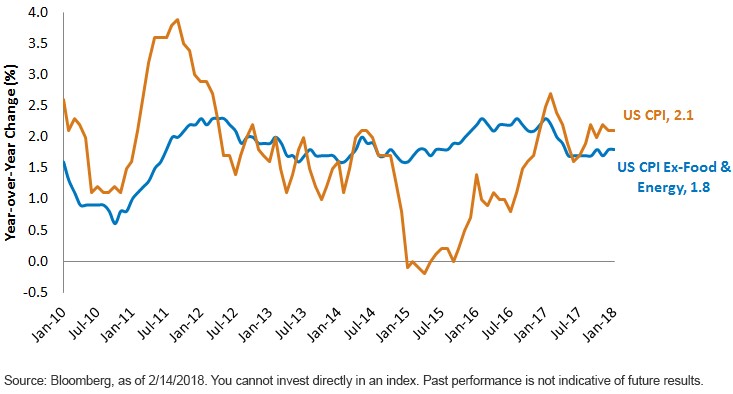
 Posted By

 Posted By