Building Wealth

For the first 30 or so years of working, saving and investing, you’ll be first in the mode of getting out of the hole (paying down debt), and then building your net worth (that’s wealth accumulation.). But don’t forget, wealth accumulation isn’t the ultimate goal. Decumulation is! (a separate category here at the Hub).

App-based banking: the ‘new normal’ for Canadians

By Vineet Malhotra

Special to the Financial Independence Hub

It has often been said that necessity is the mother of all invention, and if there’s anything the world has faced over the past few years, it was a lot of necessity. Whether it was how we exercised or worked from home, the pandemic forced the world to reimagine old habits and reconsider our ways of doing, well, everything.

Banking was not exempt from this re-evaluation, as evidenced by a recent survey by the Canadian Banking Association (CBA) which found that 65% of Canadians used app-based banking in the past year, up from 56% in 2018, and 44% in 2016. These numbers represent a massive shift in less than five years.

With limited banking options throughout the pandemic, consumers further embraced online and app-based bank platforms: not only did they experience the benefits, but they were also forced to redefine what services they thought were possible through an app. It was delivering the unexpected and hearing our clients say, ‘I didn’t know I could do that online!’ that helped push and motivate our team at Simplii Financial to offer more.

Through the pandemic, consumers saw firsthand just how much banking technology has evolved and experienced how easy it was to do things online like sending money abroad with Simplii’s Global Money Transfer or applying for a mortgage. They quickly came to realize that online banking was not just for simple money transfers, or deposits, but rather for more sophisticated financial transactions as well, all right at their fingertips.

Why the surge in app-based banking specifically?

The two main reasons for the rise in app-based banking come down to convenience and time.  The desire and the need for convenience have taken over our lives: more than ever we expect we can do things from wherever we are, whenever we want.  Whether it’s depositing a cheque, transferring money, or making bill payments, many Canadians now understand that an app makes all those tasks easier and faster. Even more complex services are starting to move into the digital space – like mortgage applications which can now be completed digitally, or by phone.

Who is driving the surge of app-based banking?

App-based banking now comes second only to digital banking in use and we expect it to grow. According to the CBA, the surge is largely due to Gen Z and Millennials. Nearly half of Gen Z (46 percent) and well over one-in-three Millennials (37 percent) are using app-based banking as their primary banking method. Continue Reading…

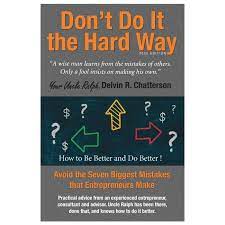
How to avoid the 7 Biggest Mistakes that Entrepreneurs Make

Why picking stocks is so hard: Lessons from a stock market analyst

By Anita Bruinsma, CFA

Special to the Financial Independence Hub

Picking stocks is really hard.

If you’re a DIY [Do It Yourself] investor, buying individuals stocks is risky. Even if you own 15 or 20 stocks, which will give you some measure of diversification, you have to choose the good ones. Which stocks do you choose from the 1,500 available on the Toronto Stock Exchange and the 2,400 on the New York Stock Exchange?

There are so many factors that influence how a stock performs and the average investor doesn’t have the time, skills, or inclination to consider all of them, or even most of them.

Casual stock pickers appear to focus on the current trend or outlook for the company’s product. For example, electric cars (Tesla), at-home workouts (Peloton), and e-commerce (Amazon).

It might feel “easy” to pick a stock based on this trend factor. You can see that electric cars are getting more attention and are part of the solution to the climate crisis. When Beyond Meat was gaining new restaurant customers like McDonald’s with its Beyond Burger, excitement and optimism was high. Seems like an easy decision: go with a company that has momentum.

The temptation to buy stocks on this premise is understandable. You can make a lot of money over a very short period of time. Easy riding. But often these stories die out and reality sets in. It could be that the cost of making the product is too high, demand for the product slows, or the company over-extends itself and runs into cash-flow problems. When optimism meets reality, stocks plunge.

After becoming a public company, Beyond Meat rose 400%. It subsequently crashed from US$234 a share to about $25 today. It’s down 83% over the past year alone. Similarly, Peloton rose by 550% during the pandemic due to the frenzy around at-home workouts, but has fallen 90% since its peak at sits at about $11 a share. Reality set in.

Professional stock analysts and money managers with long-term perspectives look beyond this surface-level excitement. It’s important that demand is there, but there are a myriad of other factors to go deeper on.

In my 15 years picking stocks for a large Canadian bank, I learned an incredible amount about equity research. Here are just a few of the things that professional analysts consider:

Demand: The demand for the company’s product is one of the first things to look at since revenue is the lifeblood of any business. Whether the product is women’s clothing, running shoes, fast food, oil, electricity, or credit cards, you need to have a view on what future demand will be. Although you can develop a theory, nobody actually knows what will happen, making this seemingly simple metric unknowable.

Profit margins: How does the company’s profit margin compare to peers in a similar business? Are margins expanding or contracting? What are the main drivers of profit margin and are there risks to those drivers? For example, how would a 10% rise in fuel prices impact the margins of Air Canada? How do currency fluctuations change the profits of importers like Dollarama?

Balance sheet: There is a lot of crucial information to be gleaned from a balance sheet such as inventory levels, cash in the bank, and how much is invested in hard assets like factories. Most importantly, the balance sheet shows you how much debt a company has and how it has changed over time. High levels of debt have taken down many companies.

Track record: Investing in a company with a track record reduces your risk significantly. Looking at revenue growth over a period of 5 or 10 years will tell you how sustainable the company’s product sales are. Analyzing the change in profit margins tells you whether the company has a scalable business and whether the management team is properly managing its costs. Newer companies lack this information and looking at only two or three years’ worth of data does not give you enough information.

Qualitative information: Companies that trade on the stock market are required to publish certain documents like the Annual Report and Annual Information Form. These documents have a ton of information about how the company operates, the risks it faces, and how it reports its earnings. These documents can reveal risks that you might not be comfortable with. For example, you might learn its main manufacturing facility is in an unstable country, or that it gets one of its main inputs from just one supplier.

Taking all of these factors into consideration (and allowing for a plethora of wildcard factors), an analyst will come to a conclusion about the quality of the company. If they like the outlook, it goes on the “maybe” list. But that’s not the end of it: the analyst then needs to decide how much the stock is worth. This is the realm of valuation, and valuation is a combination of math, art, and clairvoyance.

And finally, there’s all the stuff we don’t know. Despite regulatory requirements to disclose all “material information,” there are a lot of things going on within a company that we will never hear about. When talking with investors and the public, the management team’s objective is to pump up its story to get more people to invest – always apply this lense when you hear a CEO or CFO talking.

Let me share my experience with two companies that demonstrates the importance of doing proper research before buying. This is a story of two companies that made their sales numbers look great using fraudulent tactics: Valeant Pharmaceuticals and Luckin Coffee. In one case, I did extensive research and analysis and decided I didn’t believe the numbers, and in the other, I didn’t do the required work and chose to believe the story. Continue Reading…


Stop checking your portfolio

We’re halfway through 2022 and the year has not been kind to investors, to say the least. Global stock markets are suffering their worst prolonged losses in recent memory. The S&P 500 is down about 18.5%, international stocks are down about 17%, and emerging market stocks are down about 15%. Domestic stocks have fared better, but the broad Canadian market is still down about 4% this year.

Meanwhile, bonds have not been a safe haven as rising interest rates pushed bond prices down. A broad Canadian bond index is down almost 13% this year, while short-term bonds are also down about 5.5%.

What’s an investor to do?

For starters, stop checking your portfolio so often. Investors who focus too much on short-term performance tend to react too negatively to recent losses, at the expense of long-term benefits. This phenomenon is known as myopic loss aversion:

“A large-scale field experiment has shown that individuals who receive information about investment performance too frequently tend to underinvest in riskier assets, losing out on the potential for better long-term gains (Larson et al., 2016).”

Loss aversion is a cognitive bias – the idea that a loss is psychologically more painful than the pleasure of an equivalent gain.

Think of the your portfolio returns over the past three years (2019-2021). It felt good to see your investments increase by double-digits. Here are the returns for Vanguard’s Balanced ETF (VBAL) during that time:

  • 2019 – 14.91%
  • 2020 – 10.24%
  • 2021 – 10.27%

Fast forward to 2022 and VBAL is down 10% on the year. Loss aversion tells us the pain of these losses is felt twice as powerfully as the pleasure of the previous years’ gains.

Myopic loss aversion fails to consider the bigger picture

With myopic loss aversion, we focus too narrowly on specific investments without taking into account the bigger picture. You’ve experienced this if you’ve ever checked your portfolio a short time after a recent purchase and cursed your luck if the investment is down.

Professor John List was a recent guest on the Rational Reminder podcast and he co-authored a paper on myopic loss aversion. The paper found that, “professional traders who receive infrequent price information invest 33% more in risky assets, yielding profits that are 53% higher, compared to traders who receive frequent price information.”

When asked how often investors should check their portfolio, List said, “as rarely as possible”:

“I would say once every three, six months is fine. But the reason why I don’t want you to look at your portfolio is, because when you do and you see losses, even though they’re paper losses. You say, “My gosh, that hurts.” And you’re more likely to move your portfolio out of risky assets and into less risky assets. And as we all know, just look at the data. The data over long periods of time, that’s the equity premium puzzle, is that you get much higher returns, if you’re willing to bear some of that risk. Now, if you look at your account a lot and you have myopic loss of version, you’ll be much less likely to bear that risk. So, you’ll move out and you’ll be in inferior investments.”

This applies to both novice and experience investors. I coach clients regularly on the benefits of sticking to their investment strategy and ignoring short-term market fluctuations. But it’s hard when the daily news headlines are screaming in your face about how bad the market is doing and why it’s only going to get worse.

My worst moment was during the March 2020 crash. I had just quit my job three months before, and my investments were down 34% in a short period of time. It was a rough time when even I was questioning what to do. It didn’t help that I had no RRSP or TFSA contribution room – so I couldn’t even “buy the dip” to make myself feel better.

Related: Exactly How I Invest My Own Money

What did I do? I stopped checking my portfolio. I had no reason to log-in anyway, since I wasn’t making regular contributions. I reminded myself that my investments were long-term in nature, and that markets go up most of the time. Periodic declines are the price of admission for risky assets like stocks. Continue Reading…

What you need to know before investing in All-in-One (Asset Allocation) ETFs

By Michael J. Wiener

Special to the Financial Independence Hub 


I get a lot of questions from family and friends about investing.  In most cases, these people see the investment world as dark and scary; no matter what advice they get, they’re likely to ask “Is it safe?”  They are looking for an easy and safe way to invest their money.  These people are often easy targets for high-cost, zero-advice financial companies with their own sales force (called advisors), such as the big banks and certain large companies with offices in many strip malls.  An advisor just has to tell these potential clients that everything will be alright and they’ll be relieved to hand their money over.

A subset of inexperienced investors could properly handle investing in an all-in-one Exchange-Traded Fund (ETF) if they learned a few basic things.  This article is my attempt to put these things together in one place.

Index Investing

Most people have heard of one or more of the Dow, S&P 500, or the TSX.  These are called indexes.  They are a measure of the price level of a set of stocks.  So, when we hear that the Dow or TSX was up 100 points today, that means that the average price level of the stocks that make up the index was up.

It’s possible to invest in funds that hold all the stocks in an index.  In fact, there are funds that hold almost all the stocks in the whole world.  There are other funds that hold all the bonds in an index.  There are even funds that hold all the stocks and all the bonds.  These are called all-in-one funds.

Most people know they know little about picking stocks.  They hear others confidently talking about Shopify, Google, and Apple, but it all sounds mysterious and scary.  I can dispel the mystery part.  Nobody knows what will happen to individual stocks.  Bold claims about the future of a stock are about as reliable as books about future lottery numbers.  However, the scary part is real.  If you own just one stock or a few stocks, you can lose a lot of money.

When you own all the stocks and all the bonds, it’s called index investing.  This approach to investing has a number of advantages.

Investment Analysis

Investors who pick their own stocks need to pore over business information constantly to pick their stocks and then stay on top of information to see whether they ought to sell them.  When you own all the stocks and all the bonds, there’s nothing to analyze or track on a frequent basis.

Risk

Owning individual stocks is risky.  Any one stock can go to zero.  Owning all stocks has its risks as well, but this risk is reduced.  The collective stocks of the whole world go up and down, occasionally down by a lot, but they have always recovered.  We can’t predict when they’ll drop, so timing the market isn’t possible to do reliably.  It’s best to invest money you won’t need for several years and not worry about the market’s ups and downs.

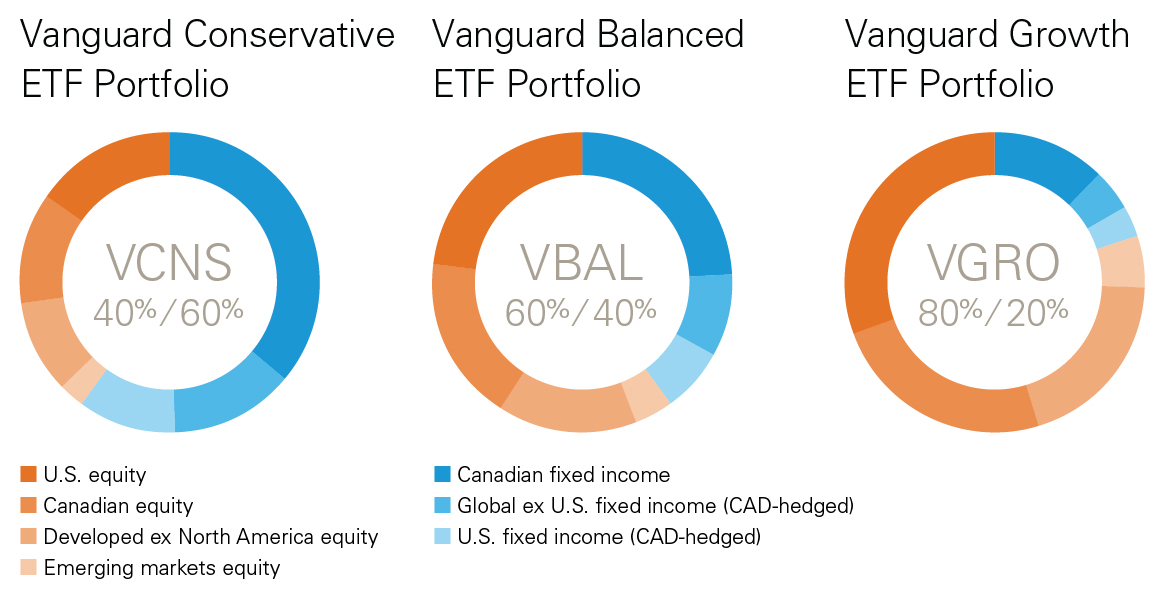
To control risk further, you can invest in funds that include both stocks and bonds.  Bonds give lower returns, but they’re less risky than stocks.  Taking Vanguard Canada’s Exchange-Traded Funds (ETFs) as an example, you can choose from a full range of mixes between stocks and bonds:
ETF Symbol     Stock/Bond %
      VEQT           100/0
      VGRO           80/20
      VBAL           60/40
      VCNS           40/60
      VCIP           20/80

Cost

Sadly, many unsophisticated investors who work with financial advisors don’t understand that they pay substantial fees.  These investors typically own mutual funds, and the advisor and fund company help themselves to investor money within these funds.  There is no such thing as an advisor who isn’t paid from investor funds. Continue Reading…