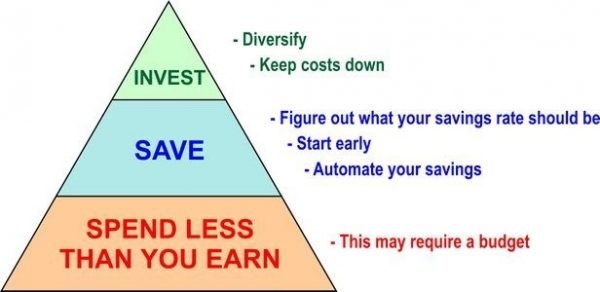
Building Wealth

For the first 30 or so years of working, saving and investing, you’ll be first in the mode of getting out of the hole (paying down debt), and then building your net worth (that’s wealth accumulation.). But don’t forget, wealth accumulation isn’t the ultimate goal. Decumulation is! (a separate category here at the Hub).

Why Polymarket could become the World’s biggest Betting Exchange

Special to Financial Independence Hub

Have you heard of Polymarket yet?

In short, Polymarket is a betting exchange, although they prefer to call it a prediction market. But let’s be honest … it’s gambling. The difference is in the structure.

In traditional sports betting, you gamble against the house. The sportsbook sets the odds, takes your bet, pays out winners:  and keeps a hefty share of the profits.

Polymarket flips that model. Instead of betting against the house, users bet against each other, while Polymarket simply takes a small 2% fee from the winner.

The platform launched in 2019 — just six years ago — founded by college dropout Shayne Coplan, who has already become one of the youngest self-made billionaires at just 27.

Only in America can someone go from bathroom coder to billionaire in under a decade. Bill Gates, Mark Zuckerberg, Larry Ellison, Michael Dell, Steve Jobs — and now Shayne Coplan — all proof that dropping out of college can pay off massively.

Polymarket first exploded during the 2020 and 2024 U.S. presidential elections, when users wagered millions on political outcomes. Originally focused on non-sports events, Polymarket eventually added sports betting, and that’s when things went vertical.

Now I believe Polymarket is on track to become the #1 sports betting platform in the world — potentially disrupting giants like FanDuel and DraftKings.

Here’s why:


Why Polymarket has an Unfair Advantage Continue Reading…

Rethinking your Allocation to Alternative Assets for 2026

Image by Pexels: DS stories

By Devin Partida

Special to Financial Independence Hub

Alternative assets are investments that go beyond traditional stocks, bonds and cash. These include real estate, private equity and commodities. Unlike conventional investments that move with the broader market, these assets often behave differently, which gives your portfolio extra stability and opportunity.

Diversifying beyond the usual mix has become essential as market volatility and inflation make returns less predictable. Adding alternatives can smooth out performance swings, protect your purchasing power and access growth opportunities that public markets can’t always offer. It’s a wise way to strengthen your portfolio and prepare for whatever the market brings next.

What are Alternative Investments?

Alternative investments come in many forms, offering different ways to diversify your portfolio. Real estate provides steady income and long-term appreciation. At the same time, private equity and hedge funds aim for higher returns through active management and exclusive opportunities. Commodities like gold and oil can hedge against inflation, and infrastructure projects offer a stable cash flow tied to essential services. Even collectibles such as art, wine or rare coins can hold value beyond market trends.

These assets often move independently of public markets, which helps balance your portfolio during volatile periods. While they require high initial minimums and upfront investment fees, their transaction costs are often lower than those of traditional assets. Still, they come with unique challenges, such as limited liquidity, complex valuations and higher entry barriers that demand careful planning and due diligence.

Benefits of adding Alternatives to a Portfolio

Alternative assets offer new ways to manage risk, protect against inflation and uncover growth opportunities in areas often overlooked by public markets. When used thoughtfully, they can make your portfolio more resilient and better equipped to handle economic ups and downs. Here are some key benefits to consider:

  • Steady income streams: Real estate and infrastructure can generate reliable cash flow through rent, dividends and yield.
  • Inflation protection: Real estate and commodities tend to retain or grow in value when inflation rises. For example, gold prices are up more than 40% in 2025, proving how commodities can be a powerful hedge during uncertain times.
  • Higher long-term return potential: Private equity and venture capital can outperform public markets over time, rewarding patient investors.
  • Enhanced portfolio resilience: Combining alternatives with traditional assets can reduce volatility and create a more balanced, adaptable investment strategy.

Risks and Complexities to watch out for

Many of these investments require long holding periods, meaning your money could be locked in for years. Private equity and hedge funds often charge high management and performance fees that can affect your gains. Some alternatives don’t have transparent market prices, so tracking their real value isn’t always easy.

Commodities and emerging market assets can also swing sharply in value, reacting to global events and economic changes. Understanding these risks early allows you to make informed decisions, choose investments that match your comfort level and build a strategy that balances opportunity with smart risk management.

Determining the Right Allocation

When deciding how much to invest in alternative assets, it is important to align your allocation with your risk tolerance, time horizon and financial goals. Conservative investors might dedicate a modest amount of their portfolio to other options. At the same time, those with a higher risk appetite could go beyond that. Interestingly, 37% of Americans have expressed interest in using artificial intelligence tools to help manage their money. Continue Reading…

Is the “4%” Rule still relevant for Retirement Planning? What the experts say

Late in October, my monthly MoneySense Retired Money column reviewed three recently published financial books, starting with financial planner William Bengen’s new A Richer Retirement: Supercharging the 4% Rule to Spend More and Enjoy More.

Below we canvassed more than a dozen retirement experts and financial planners in both Canada and the United States about their experiences with the Rule, both the original book as well as the new one.

These experts were gathered by Featured.com, which has been supplying Findependence Hub with quality content for several years now. It has changed its procedure so that editors like myself can request input on particular topics we think will interest our readership. The sources are all on LinkedIn, as you can see by clicking on their profiles below.

Here’s what we asked, followed by their answers, which have been re-ordered by me.

“What do you think of the 4% Rule: CFP Bill Bengen’s guideline about a safe annual Retirement withdrawal amount that factors in inflation? Have you read or do you plan to read Bengen’s just-published followup book: A Richer Retirement : Supercharging the 4% Rule to Spend More and Enjoy More? Do you agree or do you have your own tweaks to the 4% Rule? Looking for both Canadian and American input.”

Here is what these thought leaders had to say.

Adaptive Withdrawals protect Retirement through Market Cycles

The 4% Rule, created by CFP Bill Bengen in the 1990s, remains one of the most referenced retirement withdrawal guidelines. It suggests withdrawing 4% of your portfolio in the first year of retirement and adjusting that amount for inflation each year. The idea was to provide a sustainable income stream for at least 30 years without depleting your savings. Bengen’s newly published book, A Richer Retirement: Supercharging the 4% Rule to Spend More and Enjoy More, revisits this concept using updated data and broader asset allocations. He now argues the safe withdrawal rate could rise to around 4.7%, supported by stronger market performance and portfolio diversification beyond the original stock-bond mix. 

I see the 4% Rule as a reliable starting point, but not a fixed rule. It offers structure for retirees who need clarity on how much to withdraw each year, but real-world conditions require flexibility. For U.S. investors, I still begin with 4% as a baseline because it remains simple and conservative. Then I evaluate three major factors before adjusting: market volatility, portfolio performance, and expected longevity. For Canadian retirees, I tend to start lower, around 3.5%, due to differences in taxation, mandatory RRIF withdrawal rules, and the impact of currency and inflation differences compared to U.S. portfolios. 

My main adjustment to the rule is to make withdrawals adaptive rather than static. If the portfolio declines by more than 20% early in retirement, I recommend reducing withdrawals by 5% to protect capital. If inflation stays above 4% for more than two years while fixed income returns remain weak, I hold withdrawals steady instead of increasing them. Conversely, if long-term returns outperform expectations, withdrawals can rise modestly. These adjustments keep the retirement plan sustainable through changing market cycles. 

The lesson is to view the 4% Rule as a guideline, not a guarantee. Its true value lies in the discipline it introduces. A flexible version of the rule — tailored to taxes, inflation, and market behaviour — helps retirees spend with confidence while protecting their financial future. — Andrew Izrailo, Senior Corporate and Fiduciary Manager,  Astra Trust

Real Estate Investors Outperform Traditional 4% Rule

I’ve always thought the 4% rule is a decent starting point, but it’s really built around stocks and bonds. In my world of real estate, combining rental income with property value growth usually blows past that number. Instead of a fixed withdrawal, you can sell a property or pull out equity when the market’s high. That flexibility often makes your money last a lot longer in retirement. — Carl Fanaro, President,  NOLA Buys Houses 

Balance Freedom and Security in Retirement Journey

Retirement, much like embarking on a long and meaningful journey, is not just about reaching a destination but about learning how to move through each stage of life with purpose and enjoyment.

After reading Bill Bengen’s A Richer Retirement, I found his updated perspective on the 4% Rule both inspiring and practical. He transforms what was once seen as a strict withdrawal formula into a flexible approach that prioritizes experience, adaptability, and peace of mind.

Bengen’s message is that retirement should not revolve around fear or limitation. Instead, it should be about living fully within realistic financial boundaries. By adjusting withdrawals according to personal goals, market performance, and the natural flow of retirement years, retirees can enjoy their savings as a source of freedom rather than anxiety.

The concept feels much like travel: in some seasons, you venture farther, explore more, and spend a bit extra; in others, you slow down, rest, and savor simplicity. This approach is particularly meaningful for those who dream of traveling during retirement. The early, active years can be dedicated to exploring places like Morocco, when energy and curiosity are at their peak. Later on, spending can naturally shift toward quieter experiences closer to home.

Both Canadians and Americans can apply this mindset using tools such as TFSAs, RRSPs, Roth IRAs, or Social Security planning to balance flexibility and security.

In the end, Bengen’s vision reframes retirement as a phase of freedom, not restriction. It invites people to plan wisely but live fully, creating space for exploration, connection, and purpose much like a well-planned journey that leaves room for discovery along the way. — Nassira Sennoune, Marketing Coordinator, Sun trails

Tax-Efficient Withdrawals add 1-2% to Retirement

The 4% rule is a solid starting point, but after 20+ years advising clients, I can tell you it’s not one-size-fits-all. I’ve seen too many retirees lock themselves into unnecessary restrictions because they treat it like gospel rather than a guideline. 

Here’s what I actually do with clients: we start with 4% as the baseline, then adjust based on their actual spending patterns and market conditions. I had a couple last year who were terrified to spend more than their calculated 4%, even though their portfolio had grown 30% and they were skipping vacations they’d dreamed about for decades. We bumped them to 5.5% for two years because the math worked and life is short: they finally took that trip to Italy. 

The biggest mistake I see isn’t about the percentage itself: it’s that people forget about tax efficiency in withdrawal sequencing. I always look at which accounts to pull from first (taxable vs. tax-deferred vs. Roth) because that can add 1-2% to your effective withdrawal rate without touching principal. One client saved $47,000 over five years just by restructuring their withdrawal order. 

I haven’t read Bengen’s new book yet, but it’s on my list. My practical tweak: build a 2-3 year cash cushion in your portfolio so you’re never forced to sell stocks in a down market. That flexibility alone has kept my clients sleeping well through every correction since 2008. — Winnie Sun, Executive Producer,, ModernMom

Canadian Medical Costs require Flexible Withdrawal Rates

Look, the 4% rule is a decent guideline, but it’s not some magic number you can set and forget. I’ve watched people get into trouble because they didn’t account for medical bills, which are a real wild card here in Canada. I always tell people to build in a cash buffer and check in on that withdrawal rate every couple of years instead of just locking it in permanently. — James Inwood, Insurance Broker, James Inwood

Cash Reserves shield Retirees from Market Volatility

I assist clients with retirement and estate planning.  Bill Bengen’s original 4% rule was first published in 1994 and took into account a balanced investment portfolio modeled back to 1926.  At that time, he projected a 4% withdrawal rate, adjusted annually for inflation, would ensure the portfolio was sustainable for a 30-year retirement.  I recommend my retired clients review their portfolio allocation, investment returns, monitor for annual inflation and expenditures and then make adjustments for the next year’s withdrawals.  

 I plan to read Mr. Bengen’s new book published in August.  Mr. Bengen  is now recommending a broader asset diversification to add in small percentages of international equities and small-cap stocks in addition to his historic investment portfolio of 50% U.S. large-cap stocks and 50% intermediate bonds.  He claims with this broader diversification the safe withdrawal rate could now be up to 4.7% under best case scenario, 4.15% worst case.  I agree with Bengen that broader asset diversification can make sense for retirees who are investment knowledgeable and are monitoring annually the data I’ve noted above.

I recommend to my clients that any rule of thumb such as Bengen is simply a data point.  Retirees need to take into account their own risk profile as well as their investment understanding before making any significant adjustments to their rate of asset withdrawal.   Retirees now have longer life spans and are battling a heightened inflation rate.  I recommend my clients have a flexible withdrawal range of 3.5% to 4.5%, monitor assets annually, and continually adjust their annual withdrawal rate as necessary for volatile markets.   

I also recommend that my clients have a cash account established of at least two years’ withdrawals to avoid having to sell assets in a prolonged negative market environment. — Lisa Cummings, Attorney and Executive Vice President at Cummings & Cummings Law,  Cummings & Cummings

Tax Planning Matters more than Withdrawal Percentages

I’ve spent 40 years managing my own law firm and CPA practice, plus 20 years as a registered investment advisor, so I’ve seen hundreds of retirement plans play out in real life. The 4% rule is a decent starting point, but I stopped treating it as gospel about 15 years into my advisory career.

Here’s what I actually saw with my small business owner clients: their retirement income rarely came from just traditional portfolios. Most had business sale proceeds, real estate holdings, and irregular cash flows that made the 4% rule almost irrelevant. One client sold his manufacturing business at 62 for $2.3 million (US) but kept the building and leased it back: his retirement “withdrawal rate” was completely different because he had guaranteed rental income covering 60% of his expenses. 

The bigger issue I noticed was tax planning around withdrawals. I’d have clients rigidly following 4% from their IRAs while sitting on Roth conversions they should’ve done years earlier, or taking Social Security at the wrong time. The sequence of what you withdraw from matters more than the percentage: I’ve seen people save $50K+ in taxes over retirement just by pulling from taxable accounts first while doing strategic Roth conversions. 

My tweak: forget the percentage and work backward from your actual monthly expenses, then layer in guaranteed income sources (Social Security, pensions, annuities) before touching portfolio money. Most of my retired clients ended up withdrawing 2-3% because they structured things right on the front end. — David Fritch, Attorney,  Fritch Law Office Continue Reading…

Six months since Liberation Day: Where global investors are rotating next

Image courtesy Franklin Templeton


By Dina Ting, CFA, Franklin Templeton ETFs

(Sponsor Blog)

Six months after “Liberation Day” — when sweeping US tariff reversals and revisions redefined the global trade landscape — investors are positioning for asynchronous recoveries shaped by domestic policy, trade integration and technological competitiveness.

The dispersion among global equities had already begun widening in the final quarter of 2024, revealing a performance gap between the top and bottom markets that now exceeds 60 percentage points: a vivid illustration of how post-tariff dynamics have redrawn the investment map.

For now, the scoreboard is clear: South Korea, Mexico and China have been this year’s breakout winners.

Australia, India and Saudi Arabia may be the next cycle’s sleepers.

The big picture: A world of divergence

From Asia’s chip exporters to Latin America’s nearshoring hubs, the market response has been strikingly uneven. Total returns in 2025 show the power of policy normalization and supply-chain realignment: South Korea (+64%), Mexico (+42%), and China (+37%) are leading global markets, while Australia (+17%), India (+3%), and Saudi Arabia (+2%) round out the year’s laggards so far.1

We believe macro shifts and trade reordering have made country-level differentiation essential. This is leading many investors to turn to specific countries for tactical exposure, layering allocations to markets that most directly benefit from evolving tariff and growth dynamics.

We evaluated about a dozen economies for their role in global index composition.

The top three: Reordering global leadership

South Korea: Tech-led takeoff

No market has benefited more since “Liberation Day” than South Korea. Korean stocks are up nearly 64% year-to-date in U.S. dollar terms, marking the strongest global equity performance in 2025.2 The unwinding of semiconductor export tariffs, coupled with booming artificial intelligence (AI) infrastructure demand, has revitalized Korea’s manufacturing base. If global chip investment remains strong and memory prices continue rising, we believe Korea’s export momentum should persist. While we remain alert to potential escalations in geopolitical tensions, we will also be watching for any slowdown in technology spending, which could lead the market’s cyclicality to reassert itself. That said, we view Seoul’s consistently elevated trade surplus with the United States through mid-2025 as a signal that net exports remain well-placed to make a meaningful contribution to gross domestic product (GDP) growth.

Complementing these strong external fundamentals, domestic policy shifts are also shaping investor sentiment. In a notable policy reversal, President Lee Jae Myung’s administration scrapped plans to lower the capital-gains-tax threshold for stock investors after pushback from retail shareholders. The decision, initially intended to bolster fiscal revenues, instead reaffirmed the government’s focus on supporting market confidence and sustaining the equity rally.

Still, in our analysis, Korea’s ongoing corporate-governance reforms and deep integration in regional trade networks make it a core tactical overweight for investors seeking exposure to technology-driven growth.

Last year, the country’s current account surplus with the United States grew to more than US$118 billion: from about US$88 billion previously, reflecting underlying external-sector strength in the face of global headwinds.3

Mexico: Still a nearshoring star

Mexico’s 42% year-to-date total return highlights its renewed momentum as North America’s manufacturing backbone.4As global companies diversify away from China, Mexico has capitalized on its proximity to U.S. supply chains and improving logistics infrastructure.

Recently, the Organisation for Economic Co‑operation and Development (OECD) lifted its 2025 growth forecast for Mexico to roughly 0.8 % based on surprisingly resilient exports, underscoring how the external sector is offsetting domestic weakness. At the same time, we continue to see downside risks in slowed formal job creation, somewhat faltering investment and ongoing inflation pressures: a reminder that structural hurdles remain.

Notably, the materials and financials sectors have been among the best performing year-to-date. Materials stocks are benefiting from nearshoring tailwinds and rising demand for metals and inputs tied to supply-chain reshoring. Meanwhile, financials appear to be benefiting from stable currency dynamics, export-led credit extension and improving corporate profitability.

We expect tariff exemptions for goods compliant with the United States-Mexico-Canada Agreement (USMCA) to stay in place, reducing the tariff-related drag on exports. If U.S. industrial demand stays solid and recent tariff disputes can remain contained, we believe Mexico could sustain this performance into 2026. A stronger rule of law under President Claudia Sheinbaum’s administration could provide additional upside, bolstering investor confidence and governance credibility. If U.S. growth slows, near-term earnings may moderate, but we believe structural tailwinds should continue to support Mexico’s medium-term outlook.

Investors have used Mexico allocations as a clear play on the “friendshoring” theme, highlighting the appeal of its currency stability, export momentum and strengthening fiscal discipline.

China: From friction to fragile rebound

A renewed U.S.-China trade row, triggered by fresh rhetoric and tariff threats from Washington, briefly unsettled markets in early October. Yet China’s measured response — in reaffirming its commitment to the June détente that paused retaliatory tariffs — helped calm investors and underscored Beijing’s intent to preserve stability. More recently, both sides announced a preliminary framework agreement to suspend new tariffs and relax certain export restrictions, signaling a tangible de-escalation in tensions. The move boosted market sentiment globally and reinforced expectations for steadier trade and supply-chain conditions.

At the same time, China continues to balance firmness with pragmatism, using its leverage in rare earths and permanent magnets — critical to defense systems, electric vehicles and green technologies — more as a bargaining tool than an active weapon. Against that backdrop, the 37% year-to-date return of China’s stock markets marks a stunning reversal from last year’s underperformance.5 Improved business confidence and firmer export orders point to the early payoff from easing trade frictions and targeted domestic stimulus.

During the extended Golden Week holiday in early October, travel and consumer activity surged. Government data showed nearly 890 million passenger trips and about US$114 billion in spending — both up roughly 15% year-on-year — pointing to renewed momentum in the services and retail sectors. Combined with the upcoming Singles Day shopping season in November, these trends may bode well for a turnaround in China’s household spending.

On the supply-chain front, Beijing’s recent export curbs on heavy rare-earth materials underscores China’s enduring importance in global tech and clean-energy value chains: a structural strength we believe should not be overlooked when considering allocation to China.

If domestic stimulus endures and local governments manage debt effectively, China could maintain its recovery momentum. Structural shifts toward electric vehicles, renewables and advanced manufacturing reinforce a cautiously optimistic case for a more durable market rerating.

Notable midfield momentum: Emerging rotation

Sources: FactSet, official government statistics, Center for Global Development, S&P Global, DBS Bank, Budget Lab at Yale, Nomura, Congress.gov.

While our focus for this article is spotlighting this year’s standouts and laggards, several markets in the middle of the global pack also merit attention. Brazil, Taiwan and the United Kingdom have each shown mid-tier strength that reflects solid fundamentals rather than cyclical exuberance. Brazil’s commodity resilience, interest-rate cuts and renewed fiscal credibility have fueled market gains of nearly 31%.6

Taiwan continues to ride AI-driven semiconductor demand despite intermittent outflows and its market gained 26.5% year-to-date.7 The United Kingdom’s improving inflation backdrop and revived fiscal confidence have helped deliver returns near 25%.8 We will examine these “next-wave markets” in greater depth in an upcoming commentary exploring the rotation across secondary outperformers.

Japan: Policy-driven renewal amid structural shifts

Japan’s equities have delivered about 21% year-to-date in U.S. dollar terms,9 supported by stronger earnings, governance improvements and renewed investor interest. Global asset managers are returning to Japanese stocks and bonds, drawn by the potential of a reflation-driven government and the relative attractiveness compared with higher-priced US and European markets.

Fresh off leadership of the ruling Liberal Democratic Party, Sanae Takaichi recently became Japan’s first female prime minister. Her appointment triggered what market observers are calling the “Takaichi trade”—a surge in equity appetite as the market priced in increased fiscal stimulus and policy continuity.

At the same time, a recent International Monetary Fund (IMF) upgrade of Japan’s 2025 growth forecast to 1.1% (from 0.7%) adds weight to its turnaround story. Furthermore, a Bank of Japan manufacturing survey also showed a second consecutive quarter of improved sentiment, which we believe may signal traction gaining among corporate capital spending.

Nevertheless, risks persist. Japan’s newly formed coalition lacks a parliamentary majority, policy execution may prove inconsistent and U.S. tariff policy and softness in global growth are notable among potential external headwinds.

If Takaichi’s administration can execute on its reflation agenda and drive stronger global trade ties, we believe Japan could move from midfield to outperformer in 2026. For now, we believe its policy refresh, corporate catalysts and improved sentiment make it a compelling pivot point in the global rotation story.

The bottom three: Value beneath the surface

Australia: A cautious anchor in transition

Australia’s equity market has gained about 16.7% year-to-date in U.S. dollar terms,10 a modest but steady performance reflecting balance rather than exuberance. Growth has been supported by resilient commodity exports, improving consumption and cautious monetary easing. The Reserve Bank of Australia’s recent rate cuts have helped stabilize housing and consumer confidence while keeping inflation on a downward path. Mining and financials have led returns, offsetting weakness in discretionary sectors, even as softer Chinese demand weighs on iron ore and lithium.

Canberra’s fiscal stance remains expansionary, with targeted investment in energy transition and infrastructure to maintain employment. Still, productivity growth continues to lag its long-term trend, tempering longer-term optimism. For global investors, we believe Australia serves as a low-volatility, income-oriented anchor—an economy underpinned by policy stability and fiscal discipline but constrained by external dependency. If China’s recovery falters or commodity prices soften, export momentum could slow. However, in our analysis, diversified fiscal support and resource exposure leave Australia better positioned than many peers to navigate global uncertainty.

India: The pause before the next leg

India’s equities advanced just about 3% year-to-date in U.S. dollar terms,11 cooling after two strong years of outperformance. Elevated valuations, ebbing foreign inflows and slower corporate earnings growth have tempered sentiment, though we believe the subcontinent’s underlying domestic story remains robust. Ongoing infrastructure expansion and rapid digital adoption are delivering measurable productivity gains in India.

Government capital spending has more than quintupled over the past decade, amounting to about 3.4% of GDP in fiscal year 2025–26, while private sector capital expenditure is also at record highs. On the digital front, initiatives like the Unified Payments Interface (UPI), expanding broadband penetration and logistics digitization are improving transaction efficiency and reducing costs. In late July, U.S.President Trump announced a 25% tariff on all goods imported from India, effective August 1, 2025. A week later, however, he issued an executive order adding another 25% levy, taking total tariffs on many Indian products to roughly 50%.

Recently announced U.S. tariff exemptions for select consumer electronics assembled in India — particularly in the premium smartphone segment — have, however,  reinforced the country’s position in global high-tech supply chains. These shifts are helping streamline operations, raise capacity utilization and improve output—factors increasingly reflected in stronger total factor productivity metrics. Rural employment programs and government-led capital spending have supported demand, but export-facing sectors have softened as global manufacturing slows.

Some investors have rotated toward more attractively priced Asian peers, yet India’s long-term appeal — anchored in its demographic dividend, manufacturing expansion and reform momentum — remains compelling, in our analysis. Key initiatives such as industrial corridor development, renewable energy build-out and streamlined logistics should sustain medium-term growth. If fiscal prudence holds and private investment rebounds, India could reassert leadership among emerging markets in 2026, making the current consolidation a potential entry point rather than a structural setback.

Saudi Arabia: Patience amid a shifting energy map

Saudi Arabia’s market has been the weakest among major peers this year, rising only about 2.2% in U.S. dollar terms,12 as subdued oil prices and reduced foreign participation weighed on returns. Brent’s slide below US$80 per barrel earlier in the year compressed fiscal surpluses and energy-sector earnings, dampening investor appetite. Yet, the non-oil economy continues to expand at over 4%, driven by record tourism arrivals, real estate development and large-scale Vision 2030 projects. The government’s willingness to tolerate budget deficits reflects a deliberate strategy: funding near-term imbalances to accelerate long-term diversification away from hydrocarbons.

In essence, Saudi Arabia is trading short-term fiscal comfort for structural transformation, underpinned by its strong reserves and modest debt load. The Public Investment Fund (PIF) remains a central stabilizer, channeling sovereign wealth into green energy, infrastructure and logistics hubs. Despite near-term market softness, capital-market liberalization and diversification efforts are progressing, with new regulations encouraging greater institutional participation. The IPO pipeline has been slower than expected, but renewed listings in 2026 could revive sentiment. For long-term investors, Saudi Arabia offers a contrarian value story: short-term headwinds mask the steady transformation of its growth model from hydrocarbons to services and technology. As reforms mature, we believe a gradual rerating of Saudi assets appears increasingly plausible.

Dina Ting, CFA, is senior vice president and head of Global Index Portfolio Management at Franklin Templeton. Her team is responsible for managing Franklin Templeton’s suite of index-based strategies, including ETFs. Prior to joining the firm in 2015, Ms. Ting spent nearly a decade at BlackRock, where she led the Institutional Emerging Markets team that managed over 70 global equity portfolios for clients worldwide. She also managed a multitude of iShares ETFs covering smart beta, global real estate, sector-based and emerging market strategies. In 2019, Ms. Ting was named one of Money Management Executive’s Top Women in Asset Management and in 2018, she was recognized by the San Francisco Business Times as one of the Most Influential Women in Bay Area Business. She earned a master of science in management science and engineering from Stanford University and holds a bachelor of science degree in industrial engineering from Purdue University. She is a Chartered Financial Analyst (CFA) charterholder.


The simple strategies that set you up for Retirement Success

By Dale Roberts, CutTheCrap Investing, Retirement Club

Special to Financial Independence Hub

More Canadians feel nervous and unsure about retirement. About 60% of Canadians feel they will outlive their money. I’m here to bring good news. There are a few, simple strategies that will set you up for retirement success. If you read the retirement experts, if you watch all of the wonderful Canadian advice-only financial planners’ YouTube videos, you’ll notice they all repeat the same core strategies. It’s a version of going around the internet and back. Eventually you can stop and realize ‘wow, this is easier than I thought’. It is a good feeling when you discover that creating a successful retirement plan is not that difficult, at all.

Let’s assume that you’ve done most everything right. You’ve read The Wealthy Barber books. You need to pick up another one, and ask your kids, nieces and nephews to read it, as well.


I condensed my financial planning book down to 1200 words …

Oh look, I just found $888,000 in your coffee.

Dave needed 250 pages this time. 😉

You paid yourself first, you invested successfully, on a regular schedule, in a low-fee manner (stocks and ETFs).

How much do you need to invest to become a millionaire?

You cleared your debt, good debt and bad debt. You got the house purchases right, you got the car purchases right. Perhaps you’re entering retirement with no mortgage and no vehicle payments (not a bad idea). You have or had proper insurance, created a will, etcetera, etcetera. If need be, you took advantage of the Spousal RRSP account.

You’re in very good shape.

The retirement basics

Now on to the simple core strategies that will set you up for a successful retirement. You’ve been a very successful DIY investor in the accumulation stage. You might create your own retirement plan. With some research and the retirement tools available, it is certainly ‘doable’ for most Canadians.

And that’s why we started Retirement Club for Canadians.

If you want more help or a second opinion you can certainly contact an advice-only planner. Yup, those same folks who (many of them) offer the advice for free in blogs and via video channels. You can pay a one-time fee, there’s no need to have an advisor in your pocket every day. You’ll receive conflict-free advice, they are not attached to any poor performing Canadian mutual funds, ha. 😉

Retirement Cash Flow Plan

You’ll use a free-use or very affordable retirement cash flow calculator to discover an optimized, tax-efficient spending strategy. There’s comfort in seeing and knowing that your money is going to last.

Delay CPP and OAS for greater payments

Most Canadians (many planners suggest it’s almost all Canadians) will benefit if they delay The Canada Pension Plan (CPP) and Old Age Security (OAS) payments. From age 65 to age 70 you’ll receive a 42% boost to your CPP payments and a 36% boost to your OAS payments.

The retirement cash flow calculator will show you the way. It’s different for everyone, of course. To enable the delay of those government monies (let’s call those pensionable earnings), you’ll enact the RRSP meltdown strategy.

The RRSP / RRIF meltdown. A Canadian retiree’s greatest hack?

You’ll spend down your RRSP / RRIF in an accelerated fashion early in retirement to provide a bridge as you await those larger pension-like earnings from CPP and OAS.

The flexible cash flow plan

You’ll embrace a variable withdrawal strategy. The retirement cash flow calculator will show you that a flexible spending plan offers a much higher success rate compared to a static or rigid plan. For example, you might set a desired spending range of $90,000 – $100,000 annual after taxes, compared to a rigid $100,000. If we enter a severe recession and market correction you’re OK to spend a little less.

The investment returns and life events will shape your retirement plan over time. We will certainly evaluate the plan every few years.

The U or You-Shaped spending plan

Speaking of life events, out of the gate you might start with a U-shaped retirement spending plan.

Of course, we build the cash flow plan around your life plans, and the life you want to live in retirement. You might embrace and plan for a U-shaped retirement plan.

  • Spend more in the early go-go years
  • Spend less in the mid slow-go years
  • Boost spending in the no-go years

Spend more when you have your health and energy. Be prepared for surprisingly high healthcare and residence costs in the late-in-life stage.

Income splitting, sharing is caring

When you run a retirement calculator you might be shocked by the low-tax environment you are entering if you are ‘with spouse’.

To lower the tax burden you can split employer pensions, RRIF amounts and even CPP in some situations. Income splitting with strategic use of your RRIF, TFSA and Taxable accounts can enable a ridiculously low effective tax rate for many Canadian retirees. Continue Reading…