For the first 30 or so years of working, saving and investing, you’ll be first in the mode of getting out of the hole (paying down debt), and then building your net worth (that’s wealth accumulation.). But don’t forget, wealth accumulation isn’t the ultimate goal. Decumulation is! (a separate category here at the Hub).
Since launching in October 2020, the Hamilton Enhanced Canadian Bank ETF (HCAL) has provided investors with a simple way to get more from one of Canada’s most reliable sectors, the Big-6 banks. By adding modest 25% leverage to an equal-weight portfolio of Canadian bank stocks, HCAL has delivered strong results over the past five years, offering investors enhanced income and growth potential from a sector known for its stability and consistent dividends.
Five years of Enhanced Growth & Income
HCAL’s structure is straightforward: for every $100 invested, HCAL borrows ~$25 at institutional borrowing rates and invests it back into the same six banks, providing roughly 1.25x exposure to the sector. This approach has supported higher monthly income and higher long-term returns since HCAL’s inception when compared to a non-levered Canadian bank portfolio, specifically the Solactive Equal Weight Canada Banks Index (“Canadian Bank Index.”)
HCAL vs. Canadian Bank Index — Growth of $100K [1]
Long-Term benefits of Modest Leverage
Over time, the power of compounding is a key driver of returns, and modest leverage can amplify that effect. In HCAL’s case, the 25% leverage applied to Canada’s largest banks has contributed to meaningfully higher long-term returns. The leverage is realized at institutional borrowing rates, typically lower than those available to individual investors, and HCAL can be held in registered accounts, providing access to the benefits of low-cost leverage in accounts where margin isn’t normally available. Continue Reading…
I’m fortunate to have saved aggressively in my company’s 401(k) since I started my career at Age 22.
It’s what allowed me to retire at Age 55.
And yet, like many folks my age, those savings were predominantly in “Before-Tax” accounts in my company’s 401(k) plan. Sure, I got the tax break while working, and I felt like a genius. Besides, we didn’t have the option of investing in a Roth, so the decision was easy.
I knew those taxes would come due when I “got old,” but I’d worry about that later.
Later has arrived.
As I shared in my Retirement Drawdown Strategy, when I retired, we had 56% of our retirement savings in Before-Tax accounts, as shown below:
The Golden Age of Roth Conversions
Now that I’m retired, I’ve been laser-focused on doing annual Roth conversions to reduce that Before-Tax balance. As I wrote in The Golden Age of Roth Conversions, it makes sense to do Roth conversions in your early retirement years (be careful if you’re getting ACA subsidies, and ugly Aunt IRMAA can be a problem if you’re 63 or older). I won’t rehash the arguments for why; you can read about it in the linked article.
My goal is to manage the taxes on my terms, rather than being “forced” into whatever the Required Minimum Distributions rule requires in my 70s. I’d also like to get as much of that money converted into a Roth for the benefit of my wife, in the event I die early (she’d pay higher taxes as a single tax filer vs. our current “Married Filing Jointly” status). For now, I’m playing the tax bracket “stuffing” game (topping off my selected tax bracket with Roth conversions) and trying to be smart about minimizing the taxes I pay throughout my retirement.
The Bad News: The Roth conversions are not making as much of a difference as I had hoped.
And that, in summary, is my biggest surprise.
My Biggest Surprise in Retirement: It’s Hard to reduce your Pre-Tax Account Balance!
We’ve all heard about the power of compounding and how valuable it is in personal finance. If you want a refresher, check out my post, “The Most Powerful Force in the Universe.”
What I didn’t think about, and only realized after I retired and started doing Roth conversions, is the fact that compounding makes it difficult to reduce your pre-tax account balance.
Despite doing aggressive Roth conversions, our pre-tax balance isn’t coming down like I expected!
In fairness, part of that “problem” is driven by above-average returns since my retirement in 2018. First world problem, I know. But it’s still been a big surprise.
Let’s do a hypothetical example to demonstrate the point.
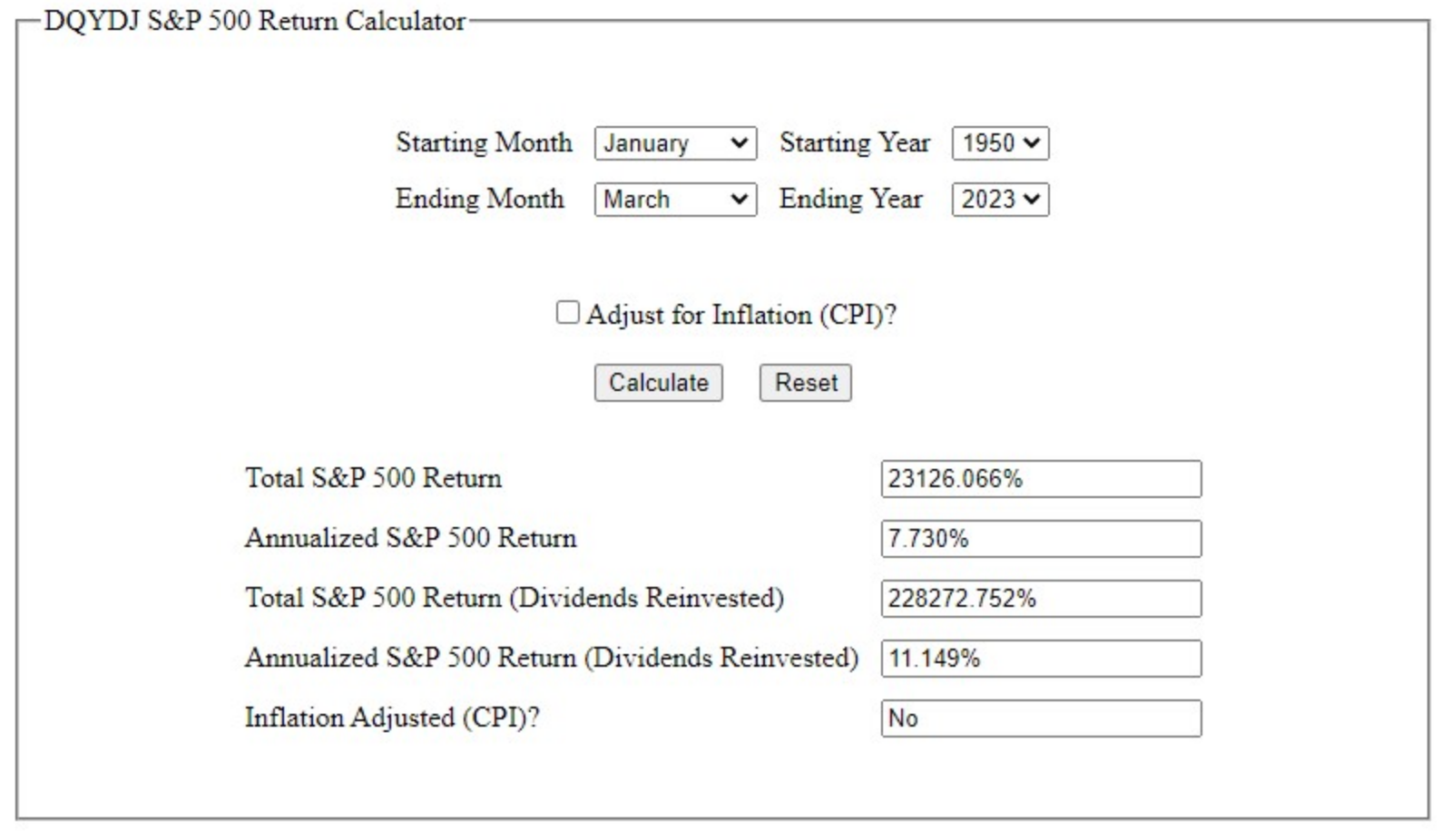
To make the math easy, let’s say you have $1M in your pre-tax account, and your first full year of retirement is 2019. If you had that entire $1M in stocks, here’s what would have happened without doing any Roth conversions (S&P 500 returns from ycharts, including dividends):
In this example, a $1M portfolio would have grown to $2.6M in 6 short years. That’s the power of compounding. Amazing!
Let’s modify the above example, and say you’re doing an annual Roth conversion of $50k.
How much impact would Roth conversions make? Not much…
Despite doing annual Roth conversions of $50k, the pre-tax value has still doubled, to $2.15 M!
A More Realistic Scenario – $500k
Ok, I hear you. No one has $1M in their pre-tax account. I got your attention, though, right?
Fair enough, let’s assume the starting balance is $500k (which compares nicely with the average 401(k) balance of $573k for folks in their 60’s):
The problem remains.
With a $500k starting balance and $50k annual Roth conversions, the account has still grown by $357k (to $857k), or 71%.
Bottom Line: It’s difficult to reduce your pre-tax account balance due to the power of compound interest.
In fact, the only way to reduce your pre-tax account is to do annual Roth conversions in excess of the annual return generated by the pre-tax portion of your portfolio. Sticking with the $500k example, an average annual Roth conversion of $89k would have been required to maintain the pre-tax balance at $500k, as shown below:
(Note: you could argue about my $0 Roth conversion in a down year, but it’s just an example. Quit whining and do your own math – wink.)
What About A 60/40 Portfolio @ $500k?
No one has a 100% stock portfolio in their pre-tax accounts, right? Let’s see what things look like if our retiree had a 60/40 stock/bond allocation in their pre-tax accounts. We’ll use the S&P 500 for stocks, and Vanguard’s Total Bond Market Index Fund (VBMFX) for bonds, we can find their annual returns here.
Without any Roth conversions, the account would have grown from $500k to $990k, as shown below:
Add in our $50k/year of Roth conversions, and the ending balance is $609k, an increase of 22%:
Bottom Line: Even with a 40% bond allocation, it’s difficult to reduce your pre-tax balance via Roth conversions.
We’ve done aggressive Roth conversions every year, yet I continue to be frustrated by how little we’ve moved the needle. In full transparency, we’ve reduced it, but only by 15% of its starting value. That’s far less than I would have expected, given the size of the conversions we’ve done. Continue Reading…
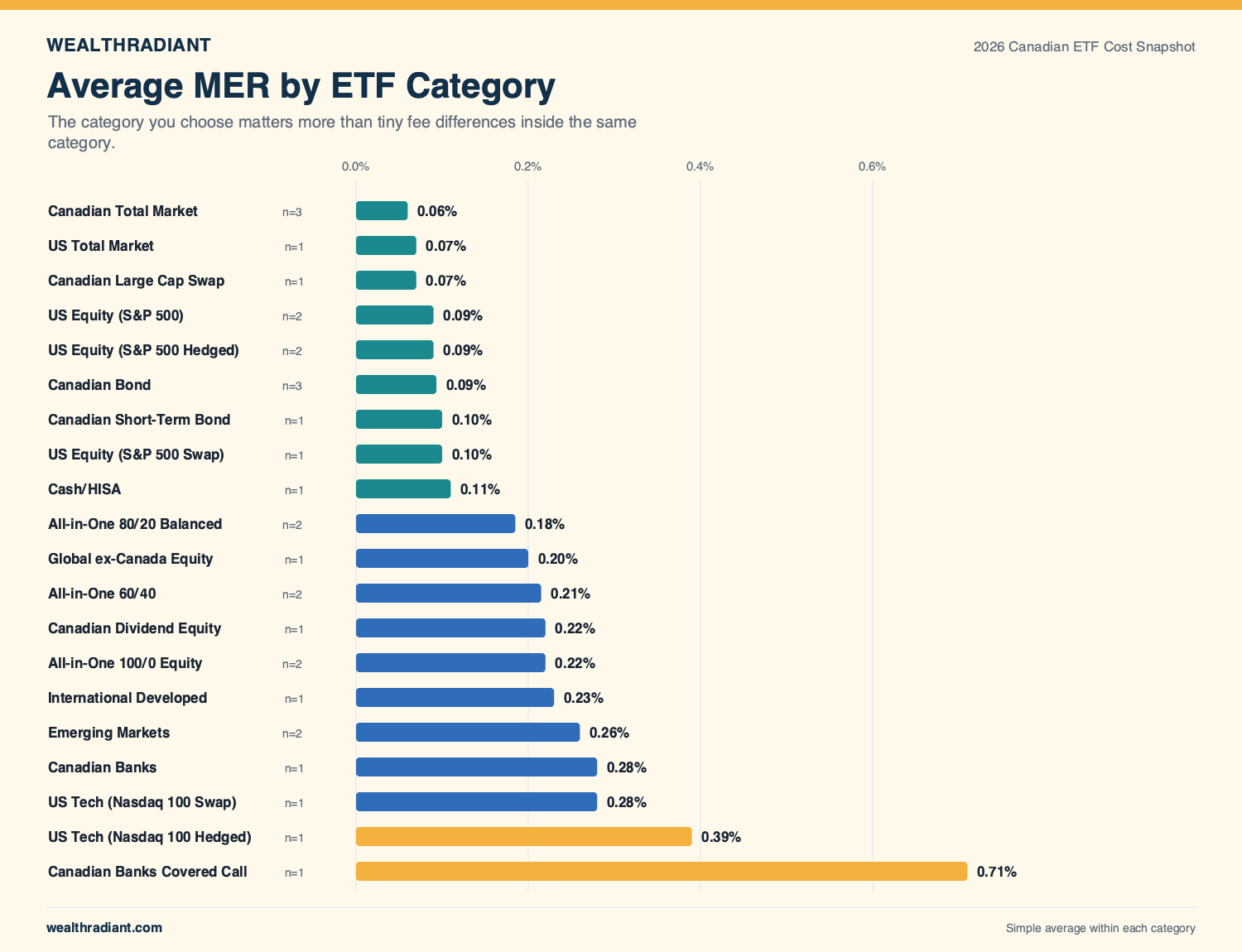
Many aspects of personal finance have changed in the 36 years since The Wealthy Barber classic book first appeared.
To update it, author David Chilton had to not only do an extensive rewrite, but he had to come up with new advice. He did a great job of making The Wealthy Barber 2025 update fully relevant to Canadians today.
Chilton takes important topics that are usually dry and hard to understand and brings them alive in an entertaining story format. But this book is much more than just a fun take on personal finances; the advice is excellent. Chilton gives insights you won’t find elsewhere. The book is like a course on personal finance requiring no previous knowledge, and even discussions of insurance and wills are funny and compelling enough to be page-turners.
The bulk of the book is a set of financial lessons mainly aimed at Canadians between 20 and 45. The early chapters introduce the characters, make it clear that the lessons require no prior expertise, and that the lessons really will help with seemingly impossible problems like the high cost of housing. These early chapters do a good job of convincing readers that they really can improve their financial lives.
Between the jokes and identifying with the characters, readers will find themselves enjoying lessons that would normally be boring. Chilton uses dialogue to emphasize important points, to voice objections to his advice, and to clarify common misunderstandings.
I often find things I disagree with in books, but that really isn’t the case here. Chilton had to make some tough decisions about which details to include and which to leave out, and most readers could come up with a topic or nuance they wish was covered. One topic I think could have made the cut is that some investors think they don’t pay investment fees. I’ve heard people recommend their advisor because he doesn’t charge any fees. All advisors get paid out of their clients’ money in one way or another, no matter what anyone says to the contrary.
I won’t try to summarize the lessons because the result wouldn’t be useful. Without Chilton’s explanations of the whys behind his advice, too much would be lost. Instead, I’ll comment on several areas.
Artificial Intelligence (AI)
Chilton didn’t really discuss AI except to make a good joke that I won’t spoil. He was asked the question “What happens if AI takes away most of our jobs and the economic system collapses?” There are some bad things AI could do such as cyber war, monitoring all of our actions, preventing us from doing “unapproved” things, and limiting our movements. However, I don’t see negatives in AI doing jobs for us. If AI together with machines will eventually grow our food, make clothes and other goods, and build houses, why will we need money? Until we get to that point, we’ll still need money and people to do jobs.
Pay yourself first
One of the book’s characters says “Save first, spend the rest, good. Spend first, save the rest, bad.” This core piece of advice survived from the original book, but there are some caveats now. For example, some diligent savers “offset the growing value of their assets on their net-worth statements with matching, or near matching, debts on the liability side. From excessive car loans to large credit-card balances to massive lines of credit, many [live] beyond their means to a scary level.”
Watching other people, I’m convinced that it’s important to set aside savings from your pay first and then spend later, but my wife and I are weirdos who never needed to do this. Our natural tendency to spend little usually left plenty of savings at the end of each pay period. We’re the type who had to learn to spend more as our income and savings grew.
Index investing
I thought the passage explaining why we should just buy all stocks instead of trying to pick the best ones was well done. It included “No, we can’t just buy the winners. No, there is no way for us to consistently pick them ahead of time. No, the people we hire to do it for us aren’t any good at it either.”
Like most experts who are trying to help their audiences, Chilton is a fan of all-in-one asset allocation ETFs. “Not only does the fund buy the individual stocks for you, it does so across the world,” and “These funds also do all the rebalancing for you.” These funds handle everything so there is no need to monitor your progress. In fact, to avoid making emotional decisions, you’re best to “pay almost no attention” to the daily or weekly changes in the value of your savings.
“One of the most important factors, if not the most important, as you choose what type of investments to make, is the associated time frame. How long are you able to set the money aside? How long until you need it?” Stocks in the form of all-in-one ETFs are for the long term. For something like a house down payment, “unless I thought my purchase was at least five to seven years away,” I wouldn’t invest it aggressively.
Starting early
I’m a fan of advising people to start the saving habit early. Chilton gives an example to motivate this advice where saving $1000 per month for 8 years is more valuable than saving $1000 per month for the subsequent 24 years. Continue Reading…
Understand the factors that affect investment decisions so you maximize your portfolio returns
TSInetwork.ca
It’s generally a waste of time to obsess about a short-term downward movement in the economy, stock market or both. These downward movements can occur for a wide variety of reasons, at any time: even outside the kind of significant downturn caused by COVID-19 or, more recently, higher inflation and the Russian invasion of Ukraine.
Still, for every “real” short-term downturn, you can spot a dozen fake-outs: situations where the market or economy looked like it was going into a tailspin but pulled out of the drop and began rising at the last minute.
On the other hand, it does pay to obsess about factors that affect investment decisions like portfolio diversification, investment quality, and the extent to which your portfolio suits your personal goals and temperament.
1. What is the appropriate asset allocation for my portfolio?
A diversified investment portfolio should be spread across multiple asset classes for risk management and potential growth. The main components typically include:
Stocks provide growth potential and can help protect against inflation over the long term. They tend to be more volatile but historically offer higher returns.
Bonds offer steady income and help reduce overall portfolio risk. They generally provide more stability than stocks but lower potential returns.
Cash equivalents, like money market funds or GICs, offer safety and liquidity but usually provide the lowest returns.
The specific percentage allocated to each depends on your personal circumstances, but maintaining this basic diversification helps balance risk and return potential.
Remember that regular rebalancing helps maintain your target allocation as market values change over time.
Spread your money out across most if not all of the five main economic sectors (Finance, Utilities, Manufacturing, Resources, and the Consumer sector). The proportions should depend on your objectives and the risk you can accept. The Finance and Utilities sectors generally involve below-average risk. Manufacturing and Resources tend to be riskier, and the Consumer sector is in the middle.
As well, balance aggressive and conservative investments in your portfolio, in line with your investment objective and the market outlook. Above all, avoid the urge to become more aggressive as prices rise and more conservative as prices fall.
Quality investments can be identified by examining key financial metrics such as consistent revenue growth, stable profit margins, low debt levels, strong cash flows, and competitive advantages within their industry.
The best blue-chip stocks offer strong investment quality. When the market suffers a significant downturn like that prompted by the emergence of the coronavirus pandemic, these stocks generally keep paying their dividends, and they are among the first to recover when conditions improve.
In keeping with the Successful Investor philosophy, we feel stocks that have been paying dividends for five years or more are some of the safest investments you can have. Dividends are a sign of quality and a company’s financial health. Canadian banks and utilities are among the income-paying stocks that we consider to be safer investments.
3. Why is it important to have a disciplined savings plan?
A disciplined savings plan creates financial stability by building wealth consistently, protecting against emergencies, and helping achieve long-term goals through the power of compound growth.
If there is one piece of personal wealth management advice you should immediately implement, it’s to have a disciplined plan for saving during your working years. This, above all things, can set you up for optimal investment gains. We talk more about this in 9 Secrets of Successful Wealth Management, which is free for you to download. Continue Reading…
Back in December 2023, we looked at how a barbell bond strategy works. In this piece, we will explore the barbell investing strategy from a different perspective. Conceptually, this investment strategy seeks to strike a balance between risk and reward by investing in high-growth “risk-on” assets, and defensive “risk-off” assets. By accessing the benefits of both “extremes,” this strategy aims to achieve balanced capital gains.
Today, we will review the barbell strategy using six Harvest ETFs on each end. Three defensive-oriented ETFs that also provide access to monthly cashflow through an active covered call option strategy, and three “risk-on” ETFs that offer exposure to growth-oriented areas, while also delivering consistent cashflow every month.
Reducing Risk | Defensive Income ETFs
HHL | Healthcare exposure plus monthly income
In August, we provided an overview of the healthcare space and how it has impacted the Harvest Healthcare Leaders Income ETF (TSX: HHL), Canada’s largest healthcare ETF. To reiterate; the health care sector has shown both defensive and growth-oriented qualities through its history. Healthcare is defensive due to the essential nature of it services, whereas its growth qualities stem from the high demand for specialized products as well as technological innovations.
Healthcare equities have faced challenges in North American and global markets through the first three quarters of 2025. As we highlighted in our recent monthly commentary, valuations have been compressed relative to the market and investors have looked for catalysts for a rebound in this climate. To that end, it is worth highlighting some stock-specific catalysts that are starting to surface.
Those catalysts have included Warren Buffett’s UnitedHealth purchase and headlines focused on the issue of reshoring and repatriation. More stock-specific catalysts have included some positive earnings released across select names. The most recent examples came in the form of Intuitive Surgical Inc., which jumped double-digits on the back of an improved medical devices market and large-capitalization biopharmaceutical innovator Regeneron Pharmaceuticals that posted strong returns following and upbeat quarter. Compared to previous quarters when strong earnings went virtually un-noticed by the markets, seeing strong stock performance matching the strong reported earnings is perhaps a more subtle sign that sentiment has stabilized in the sector.
HHL offers exposure to a defensive sector that also has growth qualities. The portfolio is composed of 20 large-cap U.S. healthcare stocks, overlayed with an active covered call option writing strategy to generate high levels of monthly income. Indeed, HHL has delivered income every month for over a decade since its inception.
HUTL | Why utilities right now?
Utilities have long been regarded as a mainstay for those seeking stability, income, and defensive positioning in their portfolios. However, rising power demand, technological progress, policy shifts, and the ongoing global energy transition has made utilities a unique target for those who also want growth qualities. The Harvest Equal Weight Global Utilities Income ETF (TSX: HUTL) offers unique advantages as a utilities ETF, due to its global reach and its income generation.
HUTL | Benefits of utilities and steady income
Essential services with stable cash flows
Utilities deliver critical services like electricity, gas, water, and telecommunication, which are largely immune to economic cycles. Because of this, utilities are a stable source of revenue and cashflow.
Clean energy investment is projected to reach $2.2 trillion this year, more than double fossil fuel investment. HUTL offers exposure to leaders in this space, including VERBUND AG, Endesa, Fortum, Brookfield Renewable, and others. Meanwhile, the IEA forecasts that $450 billion will go into solar investment in 2025, with additional spending in grid and storage spending.
Diversification and the global advantage
Utilities are critical, but these companies also face risks from climate events and changing regulatory policy. HUTL’s global equal-weighted portfolio means that utilities exposure is spread across regions, reducing concentration risk. This helps to mitigate that regulatory risk as well as geographic challenges like storms, wildfires, and a changing political landscape.
Income generation and lower volatility
HUTL utilities Harvest’s active covered call option writing strategy to generate option premiums, which also serves to reduce portfolio volatility. Meanwhile, the utilities sector has historically outperformed during turbulent market periods. This is an added benefit in an uncertain market.
HVOI | A low volatility strategy with monthly income
In April, broader markets were reeling from the uncertainty that emerged in the wake of the “Liberation Day” tariff announcement. Markets have calmed in the months that followed, with the U.S. administration rolling back significantly on the high tariffs it originally had promised. That said, the CNN Fear and Greed Index shows that investors remain concerned at this late stage in 2025.
CNN Fear & Greed Index
Source: CNN.com, Fear & Greed Index, October 29, 2025.
Harvest launched the Harvest Low Volatility Canadian Equity Income ETF (TSX: HVOI) in April 2025. This ETF holds 40 top Canadian equities, which are ranked and weighted by their risk score and market cap weight, with a 4% maximum weight per name. The equities are scored according to risk and fundamental metrics.
Low Volatility | Portfolio Construction
Source: Harvest Portfolios Group, Inc. April 2025.
Benefits of HVOI
Access to rules-based portfolio that manages risk
Covered call strategy to generate monthly cashflow and lower volatility
Flexibility to employ cash-secured puts to generate additional income
Rules-based and disciplined portfolio construction process
Pressing Offense | 3 Growth-Oriented Income ETFs
HHIS | One ETF with top U.S. stocks built for a high monthly yield
In August 2024, Harvest ETFs launched the Harvest High Income Shares™ ETF suite. High Income Shares™ are single-stock ETFs that offer exposure to top companies in both the United States and Canada. The ETFs are overlaid with an active covered call writing strategy, seeking to generate high monthly income. Harvest High Income Shares™ have reached above $3 billion in total AUM since inception at the time of this publication. Continue Reading…