Building Wealth

For the first 30 or so years of working, saving and investing, you’ll be first in the mode of getting out of the hole (paying down debt), and then building your net worth (that’s wealth accumulation.). But don’t forget, wealth accumulation isn’t the ultimate goal. Decumulation is! (a separate category here at the Hub).

If an enhanced CPP takes you off GIS rolls, count your blessings!

Let’s HOPE this advisor’s financial plan means this senior couple won’t qualify for the GIS!

Here’s my latest MoneySense column, which looks at the headline-grabbing “news” that an  Enhanced Canada Pension Plan (CPP) would mean roughly 243,000 low-income seniors might not be eligible for the Guaranteed Income Supplement (GIS) once the full-bore enhanced CPP system is in place in the year 2060.

Click on the highlighted headline for the full piece: Retirees should be happy not to qualify for GIS.

None of the five financial experts whose input appears in the piece disagreed with this article’s premise: that far from being a bad thing to make so much from CPP (or any other source of retirement income) that you exceed GIS minimum income thresholds, it’s actually a good thing. Yes, you have to work at a job to earn CPP benefits, whether “enhanced” or not, and yes, this entails payroll contributions taken off the top. That’s no different than anyone with a good employer pension or who saves in RRSPs or any other vehicles.

That’s what saving is all about: providing for future needs by taking a little out of current income. It’s all about living within your means, being responsible for your own future and all the other themes that the Financial Independence Hub espouses every day.

The Hub and MoneySense recently looked in-depth at OAS and the GIS, which you can find here.  And earlier today we looked at Survivor benefits for CPP, OAS, GIS and other sources of retirement income.

One of the sources for the GIS article was TriDelta Financial’s wealth advisor, Matthew Ardrey. Time and space limitations meant we could include only a snippet of Matthew’s analysis in the MoneySense column itself but he has given us permission to run his whole opinion below:

TriDelta Financial’s Matthew Ardrey

The government plans to enhance CPP through two measures. One, increasing the contribution amount from 25% to 33% and two by increasing the income limit on which contributions are made to $82,700. Combined these two measures will take the maximum pension of $13,370 today to about $20,000 in the future.

There will be some measures to offset these contributions for the employee including an enhanced Working Income Tax Benefit (WTIB) to help offset the cost for lower income workers and making the enhanced contributions a tax deduction instead of a tax credit. Though that helps out today it does nothing for the low-income earner in retirement.
Continue Reading…

Ask Tyler: Should I sell my stocks, given the North Korea situation?

By Tyler Mordy, Forstrong Global

Special to the Financial Independence Hub

Diversifying Fire & Fury

What danger does the North Korea situation present for global investors? Clearly, Trump’s indulgence in nuclear brinksmanship carries risk. Pyongyang potentially firing missiles at US territory in the Western Pacific is also real. And there is a global existential threat should it ever escalate into intercontinental warfare.

Yet, rather than add to the volumes of prognostications about North Korea’s specific situation, consider the track record of major events and their impact on markets.

Most geopolitical events are false alarms

First, most geopolitical events are false alarms. As card-carrying members of the change-anticipation field, we understand the desire to divine the big events: to be first to spot the outlines of a looming disaster can be glorious (and career-enhancing).

But most warnings are false alarms simply because big turns are rare events. Remember Y2K, Saddam Hussein’s so-called “weapons of mass destruction” and, recently, Brexit? None of these widely-feared threats materialized or they delivered benign outcomes.

Second, more often than not, geopolitical events create opportunity. Rummaging through past post-crisis periods produces a long list of stellar returns after the initial event. For example, the Cuban Missile Crisis in October 1962 was a 13-day confrontation between the US and the Soviet Union, widely considered the closest the Cold War came to full-scale nuclear warfare.

However, after the crisis subsided, the Dow went on to gain more than 10% that year. Or take the Korean War, when the North invaded the South. This conflict lasted from June 1950 — July 1953. During that time, the Dow was up an annualized 13.6%. History is brimming with similar examples.

Such events often have binary outcomes

Finally, geopolitical events may have binary outcomes. By this we mean that a negative scenario would either produce an extremely large portfolio loss or gain. There is no knowing which ahead of time. As such, narrowly focusing on one type of risk is speculative at best.

Continue Reading…

Sharing mortgages with unequal incomes

By Alyssa Furtado, RateHub.ca  

Special to the Financial Independence Hub

When you decide to buy a home with another person, there’s a good chance there will be a difference in your incomes. Whether the difference is big or small, it raises questions about how expenses will be split up. Two people with unequal incomes getting a mortgage together is a very common occurrence: couples make up a vast majority of homebuyers. But you can also buy a home with a friend or family member.

If you’re planning on sharing a mortgage with someone else, here’s what you need to know to make it work.

How will the home be owned?

If you’re purchasing a home together, you need to discuss how the ownership will be structured. If you’re a married or common-law couple, you’ll probably opt for what lawyers call joint tenancy. Both parties share a 100% stake in the property and both are fully responsible for everything related to the home, including the mortgage, taxes, and maintenance. If one partner dies, the other becomes the sole owner of the home.

If you’re buying with a friend or family member, you might opt for what lawyers call tenancy in common. With this structure, each person owns a separate share in the property and is responsible for their share. If you’re planning on being tenants in common, and one of you earns a higher income, you’ll need to discuss how that affects each partner’s ownership stake in the home and who will be responsible for what payments.

Who pays for what, and why?

When making decisions about how to share expenses, couples in joint tenancy usually take on equal responsibility. Since both partners are 100% owners of the home, finances are joined and mortgage payments are made using a joint account. Household income is the only thing that matters in this situation. Couples have to work together to make decisions about their budget to ensure the mortgage, property tax, and maintenance costs are all paid.

For tenants in common, you can choose to split up ownership and expenses a few different ways:

Continue Reading…

Most Canadians aren’t researching financial products before purchase

By John Shmuel, LowestRates.ca

Special to the Financial Independence Hub

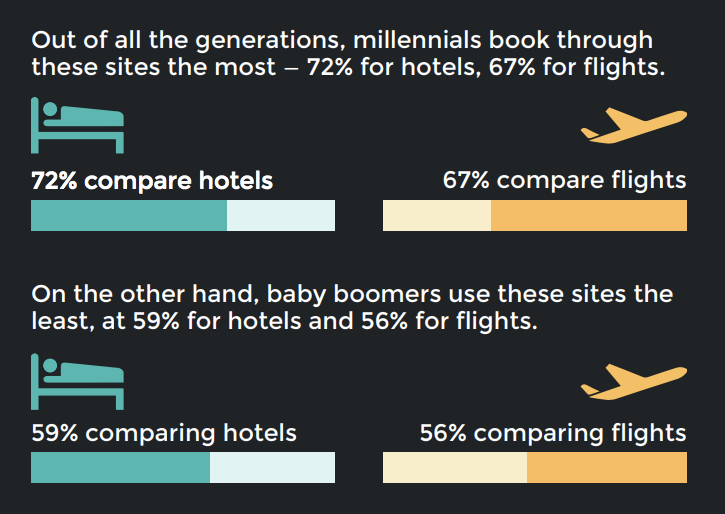
Canadians love using comparison websites when it comes to booking flights to exotic locales, but when it comes time to make big decisions on major financial products, they’re skipping out.

That’s what we found in our latest survey conducted in partnership with Ipsos. The survey found that 60% of Canadians use comparison websites when looking for a flight, and 63% use them when booking a hotel.

Then we started asking about whether they did the same for financial products. We expected to find a gap — but not by such a wide margin.

Less than half of Canadians are really researching their options when it comes to these products. Only 47% do “a lot of” research when they’re buying car insurance, while only 45% do a lot of research when they’re applying for a credit card.

Those numbers rose to 60% when it came to mortgages. Reassuring, right? Not really. It seems that when mortgages come up for renewal, Canadians are just taking the rates their broker or bank hands them. Only 42% did a lot of research into interest rates before renewing their mortgage. Continue Reading…

India’s ambitious renewable energy plans

By Caroline Grimont

(Sponsor Content)

Greater access to electricity — one of the pillars of Prime Minister Narendra Modi’s reform program –is powering increased economic activity, enhanced efficiency and improved productivity in India.

Modi has pledged to achieve universal electrification in India by the end of 2022; and to make increasingly greater use of solar power. In fact, India hopes to derive at least 40% of its energy needs from renewable sources by 2030.[i]

Although India is the 6th largest country in the world in terms of power consumption,[ii] almost 300 million of its people, particularly in rural areas, did not have access to 24×7 power supply prior to Modi assuming office. As of June 30, 2017, 14,834 census villages out of 18, 452 have been electrified.[iii]

Even as it expands the production of coal-generated electricity, India has started ramping up its solar capacity and hopes to generate 100 Giga Watts of solar energy by 2022, which will make it one of the largest users of solar power in the world. This will help to bring sustainable, clean, climate-friendly electricity to millions of India’s people.

“The world must turn to (the) sun to power our future,” Modi is reported to tell the 2015 COP21 climate conference in Paris. “As the developing world lifts billions of people towards prosperity, our hope for a sustainable planet rests on a bold, global initiative.”

And to support India’s solar power ambitions, the World Bank has approved a $625 million loan that will support the Government of India’s Grid Connected Rooftop Solar program by financing the installation of solar panels on rooftops across India. The project draws funds together from the Bank, as well as from the Clean Technology Fund of the Climate Investment Funds (CIF), and will mobilize additional funding from public and private investors.[iv] Continue Reading…