For the first 30 or so years of working, saving and investing, you’ll be first in the mode of getting out of the hole (paying down debt), and then building your net worth (that’s wealth accumulation.). But don’t forget, wealth accumulation isn’t the ultimate goal. Decumulation is! (a separate category here at the Hub).
The good news for Canadians who build their own stock portfolios is that if you simply buy enough of those blue-chip companies, then get out of your own way, you’ll likely be a very successful investor. At least on the Canadian equity front.
Research shows that big ‘boring’ blue-chip stocks outperform the TSX Composite. Low volatility and high yield are top of the heap for Canadian equity over the last 25 years. On the Sunday Reads we’ll look at Canadian stock portfolios.
Here’s the post that offered Norm Rothery’s graphic on the performance of Canadian stock portfolios.
Yes we have to remember that the big dividends help us find those blue-chip stocks (and value at times), but the dividend payments don’t contribute to the wealth creation: as the dividend is merely a removal of value from your stock holding. The share price drops by equal on ex dividend day. That said, the dividends can help us find those great companies, and well, they make investors feel good.
From that post, the BTSX is having a good 2025 after a couple of years of underperformance. Of course, the big dividend payers suffered during the inflationary rising rate environment.
While the Beat the TSX invests in the top 10 yielding stocks from the TSX 60, I’d suggest investors consider more stocks from the sectors where the BTSX hunts: more financials, more utilities including pipelines. Remove some of the concentration risk. The approach has a very considerable long-term record of outperformance, but it can be very volatile. You might even consider the top 20 yields as I have suggested in the past.
Canadian wide moat portfolios
Personally, I like the Canadian wide moat portfolio approach. Greater returns, less volatility, that floats my boat in semi-retirement. I’ve updated the post for the Canadian Wide Moat Portfolios.
Be sure to give that post a full read, but here’s the wider moat portfolio:
And the returns comparison. There’s a nice beat with lower risk:
In that Canadian Wide Moat post I also offer an update on my wife’s Canadian Wide Moat portfolio. We added more financials and ditched the cyclical railways. There’s more than one way to ‘wide moat.’
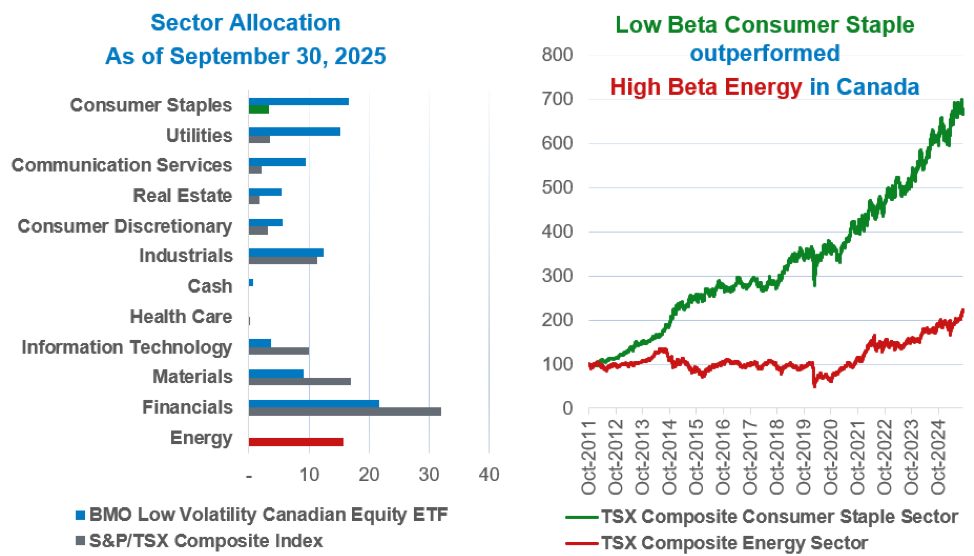
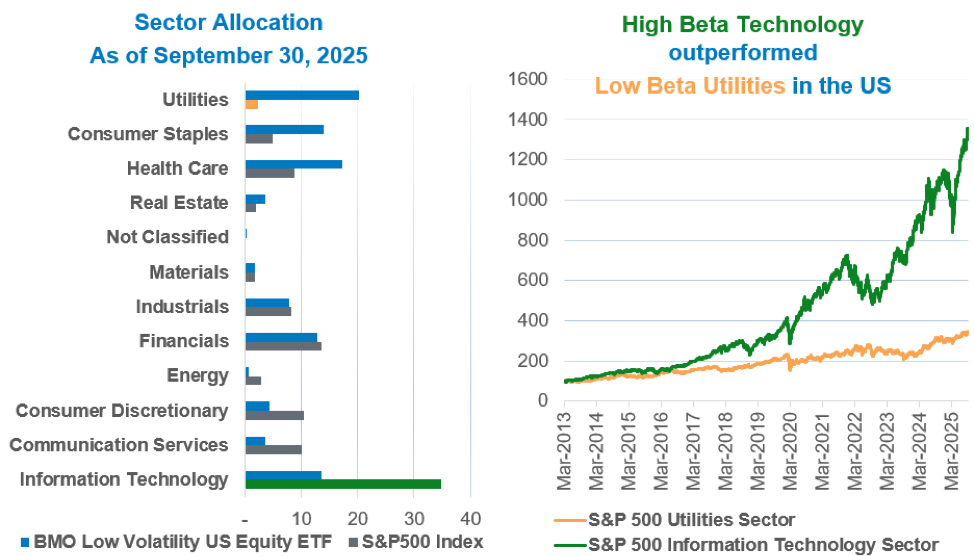
What does a diversified portfolio look like? A well-diversified portfolio balances risk by spreading investment holdings out across industry sectors and more
TSInetwork.ca
What does a diverse portfolio look like? It’s a question we hear often from the Pat McKeough Inner Circle. We believe a well-diversified portfolio has a few specific qualities, including holdings spread out across most if not all of the five main economic sectors, geographic diversification, both conservative and more-aggressive holdings, and both market leaders and laggards. These asset allocation strategies help ensure long-term stability.
All in all, you will improve your chances of making money over long periods, no matter what happens in the market, if you diversify your holdings as we recommend, and so successfully answer the key question: what does a diverse portfolio look like?
What does a diversified portfolio look like? Holdings in the five main sectors
As we recommend to the Pat McKeough Inner Circle, we believe you spread should your money out across most, if not all, of the five main economic sectors: Manufacturing & Industry; Resources & Commodities; Consumer; Finance; and Utilities.
Here are some tips on diversifying your stock portfolio by sector:
When it comes to answering the question what does a diverse portfolio look like? remember stocks in the Resources and Manufacturing & Industry sectors expose you to above-average share price volatility.
Stocks in the Utilities and Canadian Finance sectors, however, entail below-average volatility.
Consumer stocks fall in the middle, between volatile Resources and Manufacturing companies, and the more stable Canadian Finance and Utilities companies.
Most investors should have investments in most, if not all, of these five sectors to successfully answer the question what does a diverse portfolio look like? The proper proportions for you depend on your investment temperament and circumstances. These asset allocation strategies should be reviewed regularly.
The Pat McKeough Inner Circle, like most conservative or income-seeking investors, may want to emphasize utilities and Canadian banks for their high and generally secure dividends. Regardless, it always pays to look closely at a company’s recent acquisitions and the risk associated with that growth strategy.
More-aggressive investors might want to increase their portfolio weightings in Resources or Manufacturing stocks. However, at the same time, you’ll want to spread your Resource holdings out among oil and gas, metals and other Resources stocks for diversification within the sector, and for exposure to a number of areas.
What does a diverse portfolio look like? Balanced across geography
As it’s a mistake to focus your portfolio on a company that relies on a number of recent acquisitions for growth, one of the worst things you can do is invest so that your portfolio would suffer a great deal due to a localized downturn in any one city, province or state. Good portfolio management also means balancing your investments geographically.
Like the Pat McKeough Inner Circle’s most successful investors, you should avoid focusing your portfolio on any one country or region. And a lower-risk way to add international exposure to your portfolio is to hold multinational U.S. stocks such as, say, IBM, McDonald’s and Walmart. We cover all three of these companies in our Wall Street Stock Forecaster newsletter. Continue Reading…
While having a conversation with a podcast guest recently, I was introduced to a term I had never heard before: VUCA. That’s an acronym that stands for volatility, uncertainty, complexity, and ambiguity.
According to my guest, all four are touchstones for the global environment in the middle of 2025. Many people have commented on how the world is becoming less predictable and more dangerous, but that was the first time I heard someone come up with a term that tried to encapsulate everything at once. Having heard the term, I thought I would take a moment to point to some specific examples of each of the four elements:
Volatility
In early April, the so-called ‘liberation day’ tariff announcement caused stocks to tumble almost 10% in one day. Then, less than a week later, those same punitive tariffs were postponed for 90 days and replaced with new, across the board 10% tariffs. Markets reacted swiftly and began a rapid ascent so that now, at the end of the quarter, most market levels are near where they were at the start of the quarter.
The VIX indicator has been more volatile than usual in the recent past. Many commentators see this as a ‘new normal.’
Uncertainty
Recently, the American administration was crowing about how it had utterly and totally destroyed Iranian nuclear capabilities. In the days that followed, the veracity of that boast was called into question. At the time of writing, it is unclear where the truth lies.
Similarly, ceasefire agreements are on again and off again. The stakes are high, but few people would go so far as to suggest that the end game is in any way obvious.
Complexity
Has there ever been a point in history where investors and policy makers alike need to contend with so many interwoven mega threats? The United States now has a $37 trillion accumulated debt and is adding to it by over $2 trillion annually. Climate change is an ongoing threat that demands our attention. Income and wealth inequality are the highest they have been in nearly a century. Political polarization is increasing throughout the world. Demographic challenges make meaningful economic growth nearly impossible …. and so on.
Solving one problem might well exacerbate another. There are several highly credible commentators who insist that for the first time in half a century, the stars are aligning for a prolonged bout of stagflation. Fighting inflation means central bankers need to be willing to raise interest rates. Then again, if economic growth really is grinding to a halt, higher rates will merely pump the brakes on economic growth and would also accelerate the aforementioned debt problem.
Ambiguity
If you can figure out what’s really going on, you’re either brilliant, or, more likely, deluding yourself with a false sense of control. Markets went up when it looked as though the Iranian nuclear facility was destroyed, then went up further when that appeared not to be the case. Political tensions caused people to worry about the security of oil supply through the straits of Hormuz, yet the price of oil dropped precipitously. Up seems to be becoming the new down.
Nothing seems to make sense anymore. In a previous blog post, I questioned the efficacy of the efficient market hypothesis. I remain surprised that markets seem unresponsive to tariff developments. There has been no material change over the quarter, even though the largest economy in the world has effectively slapped a new 10% tariff on all other nations.
No one really knows where all this will lead us. Will the conflict in the Middle East intensify or de-escalate? Will Canada and the United States reach a trade deal before the end of June? If so, what will it take entail, and what will American deals with other nations look like if Canada chooses to go first? Continue Reading…
Time grabs you by the wrist, directs you where to go
So make the best of this test and don’t ask why
It’s not a question, but a lesson learned in time
It’s something unpredictable, but in the end is right
I hope you had the time of your life
— Good Riddance (Time of Your Life), by The Green Day
By Noah Solomon
Special to Financial Independence Hub
The Latin term sine qua non literally means “Without which, not.” It refers to something that is indispensable. With respect to investing, this term applies to risk management, which is essential for achieving better than average results over the long term.
In this month’s commentary, I will discuss the advantages and drawbacks of the more commonly used approaches to reduce portfolio volatility. I will also explain why volatility management for its own sake is a value-destroying endeavour. Lastly, I will provide a contextual framework for measuring managers’ risk management skills.
Macro Forecasting: Failing Conventionally
Ever since tariff-related concerns unsettled markets in April, I have been asked countless times what I think is going to happen and how investors should be positioned. Relatedly, to improve performance by predicting macro developments, you need the ability to:
Consistently predict short-term developments, and
Make portfolio changes that produce results that are better than what would have been the case had you simply done nothing.
By no means is this failure due to lack of effort, diligence, or intelligence. However, the simple fact is that interest rates, inflation, unemployment, and economic growth are all influenced by thousands of factors. Not only do these factors influence economic conditions on an individual level but also influence each other. In other words, millions of complex interactions affect macroeconomic conditions, thereby making forecasting a thankless endeavour.
How prices respond to events is not merely a function of the events themselves but also of the degree to which events are already discounted in prices before they occur (i.e. investor expectations). This observation explains why overly optimistic expectations can result in a company’s stock falling after it reports stellar results. Similarly, it also explains how excessively pessimistic expectations can result in price increases after disappointing news.
In short, with respect to price movements and events, it’s not about whether an event is positive or negative, but rather about how the event compares with what was expected. Unfortunately, when it comes to gauging expectations, and by extension, how much of a given event is “baked in” to security prices, investors are by and large flying blind. There is no place where you can determine exactly what investors are expecting regarding inflation, GDP, or unemployment. Whereas asset prices offer some clues in this regard, they by no means offer any reasonable degree of precision.
Finally, even if people could predict future events and accurately estimate broad-based expectations of such events, it is still unclear if such knowledge would lead to superior performance, as shorter-term price movements are largely a function of swings in investor psychology, which are impossible to predict.
If I am correct in my assertion that basing one’s investment strategy, either in whole or in part, on forecasting future developments is at best impractical, then why does doing so remain popular? All I can offer in this regard is the following:
1.) The proverbial “size of the prize” is so large that investors can’t resist the temptation, regardless of how poor the odds: if you could consistently profit from short-term market movements, your performance would make even Buffett’s look poor!
2.) Entertainment value: predicting economic trends can be intellectually engaging and even a “sport” for some.
3.) Following the herd: Managers may engage in forecasting for the simple reason that everyone else is doing it, and that it would therefore be irresponsible not to. According to John Maynard Keynes, “Worldly wisdom teaches that it is better for reputation to fail conventionally than to succeed unconventionally.”
Volatility: Winning the Battle but Losing the War
Considered in isolation, portfolio volatility is undesirable. However, like almost anything desirable, volatility reduction comes at a price. All else being equal, the more you tilt your portfolio in favour of lower-volatility securities and strategies, the lower your returns will be. I suspect that most people who allocate a portion of their portfolios to lower-volatility assets have a reasonable appreciation for what they are getting. However, I also believe that they have little appreciation for what they are giving up in exchange for this benefit, or more specifically for the magnitude of this sacrifice.
The aftermath of the late ’90s Tech Bubble involved a three-year decline in stocks. During this time, hedge funds weathered the storm relatively well, far outperforming their traditional, long-only peers.
Predictably, the pain of those years in combination with an augmented appetite for stability prompted investors to pile into hedge funds, which caused assets to grow from several hundred billion dollars in 2000 to over $2 trillion by 2007 and to over $4 trillion today.
Just as Adam Smith’s theory of supply and demand would have predicted, the aftermath was far less rosy than hoped for. While the average hedge fund made good on its promise of stability, returns were sorely lacking, resulting in massive opportunity costs for their investors. Over the past 10 years, the HFRX Global Hedge Fund Index has delivered an annualized return of 1.87%, as compared to 9.8% for the MSCI All Country World Equity Index. Using these figures, a $10 million investment in the HRRX Index ten years ago would currently have a value of $12,035,470, while the same amount invested in global stocks would be worth $25,469,675.
Given this stark difference, investors should ask themselves whether their aversion to volatility is mostly financial or mostly emotional. By definition, the answer is the latter for those with long-term horizons. In such cases, the emotionally driven component of volatility aversion has proven, and likely will prove to be very costly indeed!
Private Assets: See no Evil, Hear no Evil, Speak no Evil
Over the past decade or so, private assets have become increasingly viewed as a “you can have your cake and eat it too” panacea which can deliver strong returns while simultaneously shielding investors from high volatility and severe losses in challenging environments. These perceived attributes have led to explosive growth in private investment funds, with assets under management increasing from roughly $600 billion in 2000 to $7.6 trillion as of the end of 2022.
There is good reason to be somewhat suspect of private asset funds’ low volatility and short-term, unrealized returns. While most funds may provide accurate asset values for their holdings, this may not always be the case. Although 2022 was a horrific year for both stocks and bonds, many private equity, private debt, and private real estate funds reported negligible losses. Continue Reading…
Let’s talk about something that doesn’t always get the spotlight but absolutely deserves it: ETF fee cuts. BMO Exchange Traded Funds recently lowered the management fees on some of its All-in-One Asset Allocation ETFs, and this is a meaningful win for investors who care about long-term growth.
Lowering fees, even by a small amount, can have a big impact over time. Here’s what the change means, why it matters, and how it could make a difference in your portfolio.
First, What’s an Asset Allocation ETF?
If you’re into DIY investing but don’t want to micromanage your portfolio, these ETFs are your best friend. With just one ticker, you get:
Instant diversification across stocks, bonds, and global markets
Automatic rebalancing to keep your risk level in check
Options for every risk profile, from conservative to all-equity.
In short: they’re a low-cost, low-maintenance way to invest.
The management fee change: 0.18% ➡️ 0.15%
As of this year, BMO has trimmed the management fee on some of its Asset Allocation ETFs: from 0.18% to 0.15%. That includes portfolios in the suite from ZCON, BMOs Conservative ETF all the way to ZEQT, the BMO All-Equity ETF.
These already-cost-efficient ETFs are now providing even greater value to investors. Over time, that reduction can translate into meaningful savings: especially when you factor in compounding.
Let’s do the Math
Say you invest $50,000 in an Asset Allocation ETF and leave it for 25 years, earning an average return of 6% annually:
With a 0.18% fee, your portfolio would grow to around $204,384.
At a 0.15% fee, it would grow to $205,926.
That’s $1,542 more in your pocket just from a lower management fee. And remember: this is with no extra effort, no added risk, and no change in your investment approach. Just more of your money working for you.
And if you’re investing more, contributing regularly, or holding for longer? The savings become even more impactful.
Why this matters
We’re all keeping a closer eye on costs these days, and rightfully so. Lower fees help ensure more of your investment returns stay with you. That’s especially important in periods of market volatility or when you’re working toward long-term goals like retirement, homeownership, or education savings. Continue Reading…