Building Wealth

For the first 30 or so years of working, saving and investing, you’ll be first in the mode of getting out of the hole (paying down debt), and then building your net worth (that’s wealth accumulation.). But don’t forget, wealth accumulation isn’t the ultimate goal. Decumulation is! (a separate category here at the Hub).

How RRSP meltdown strategies could jeopardize your retirement

1
Patrick McKeough, TSInetwork.ca

By Patrick McKeough, TSInetwork.ca

Special to the Financial Independence Hub

Investment tip: “RRSP meltdown strategies promise to ease your tax burden on withdrawals, but these complicated manouvres are usually more lucrative for brokers than for investors.”

Investors sometimes ask us what we think of the so-called “RRSP meltdown.” This is a strategy that would let them make withdrawals from their RRSPs without paying income tax.

How the RRSP meltdown works

When you take money out of your RRSP, you have to pay tax on your withdrawal at the same rate as ordinary income in the year you make the withdrawal. However, under an RRSP meltdown strategy, you would offset the additional tax by taking out an investment loan and making the interest payments from funds you withdraw from your RRSP (the withdrawals must be equal to the interest payment).

Since the interest on the loan is tax deductible, the tax on the RRSP withdrawal is cancelled out. This, in theory, results in zero tax owing on your withdrawal.

You can then use the investment loan to buy dividend-paying stocks, which you would use to provide income during retirement. Dividend-paying stocks also have the advantage of being very tax efficient.

RRSP meltdown by the numbers

Continue Reading…

Ontario Retirement Pension Plan to roll out from 2017 to 2020

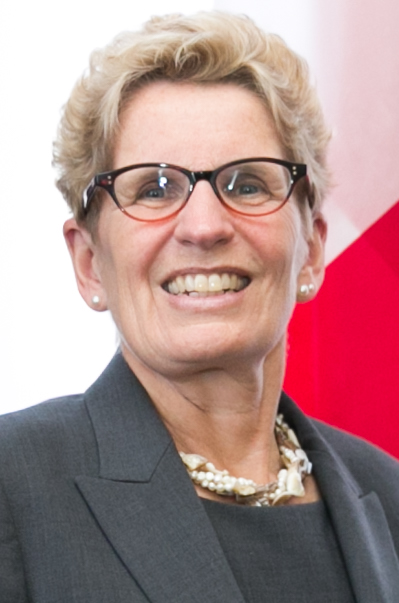
Minister Robb with Ontario Premier Kathleen Wynne, Northern Development and Mines Minister Michael Gravelle, HOM Tony Negus and Consul General/Senior Trade and Investment Commissioner Portia Maier.
Ontario premier Kathleen Wynne (Wikipedia)

The National Post today reports the Ontario Government has revealed more detail today about its oft-criticized Ontario Retirement Pension Plan or ORPP. As it reported in a later update, staff at the province’s bigger employers will have to start paying into the plan by 2017, with a full rollout by 2020.

Employers will be exempt only if they already offer a mandatory Registered Pension Plan that Ontario deems comparable to the ORPP.

In 2022, Ontario residents who are 65 or older can start drawing benefits from the ORPP. Full-time or part-time workers  can  start contributing at 18 and continue until they turn 70.

While Premier Wynne has not released cost estimates of the program, the Post reported the plan will collect 1.9% of a workers’ income up to $90,000 from both employers and employees to a total of 3.8%, or a combined total of $3,420 a year

Meanwhile, proponents and critics of the plan got a little more ammunition from two different retirement reports produced by the Fraser Institute and the Mowat Centre.

Released Tuesday, the Fraser Institute report is titled Lessons for Ontario and Canada from Forced Retirement Savings Mandates in Australia. It suggests that if Canada really needs more “forced” retirement savings, Ontario should look for global examples that could be alternatives to its current plans for the ORPP. For example, it should look at Australia’s “superannuation” program, a contribution-based scheme to which both employers and employees must contribute. Australia’s system of “individual accounts” provide more flexibility and choice than, for example, the Canada Pension Plan (CPP.)

Like the CPP, the ORPP is a “collective” pension plan that pay out defined benefits over a lifetime. The paper by the Mowat Centre (titled Lower Risk, Higher Reward: Renewing Canada’s Retirement Income System) says the Australian plan has had “mixed” success because as a Defined Contribution plan it doesn’t guarantee a set income for life, as does the CPP and DB pensions in general.

Middle-to-upper income earners may need more help

Continue Reading…

“Stop Doing” #2: Stop Reacting to Market Noise

SL Picture - Full Colour
Steve Lowrie

By Steve Lowrie, Lowrie Financial

Special to the Financial Independence Hub

In recently revisiting Jim Collins’ classic, bestselling business book “Good to Great,” I was reminded of this timeless tip:

Successful business owners make as much use of “stop doing” lists as they do of “to do” lists.

“Most of us lead busy but undisciplined lives,” says Collins. “We have ever-expanding ‘to do’ lists, trying to build momentum by doing, doing, doing – and doing more. And it rarely works.”  In his related piece, “Pulling the Plug,” He adds: “One key decision about what to stop doing might have as much impact as five new initiatives.”

Stop Reacting to Market Noise

Having a “stop doing” list seems like a fantastic idea – in business, in life and especially in your financial management. So often, I see investors who would probably be doing fine if they would just form a plan that reflects their personal goals, build a low-cost, globally diversified portfolio that complements those plans … then STOP reacting to near-term market noise that distracts them from their focus.

And Stop Reacting to Others Who React to Market Noise

Continue Reading…

Investment Fees Are Costing You Way More Than You Think … Here’s Why

vitatv_big_left-150x150
Vita Nelson

 By Vita Nelson, Editor and Publisher of Moneypaper’s Guide to Direct Investment Plans

Special to the Financial Independence Hub

You may not give much thought to the investment fees you pay. That’s because they seem so small. Right?

According to an October, 2014 survey by investment management firm Rebalance IRA, many Americans incorrectly believe they pay no fees in their retirement accounts. Among baby boomers between ages 50 and 68, all with full-time jobs, “forty-six per cent believed they paid nothing, and 19 per cent were under the impression that their fees totaled less than 0.5 per cent.” (In fact, research reveals that actual expenses average 1.5 per cent of their assets per year every year.)

Chances are that fees are costing you much more than you realize! Why?

Because the fee itself isn’t the real culprit. The real killer is the opportunity cost of not investing the money you’re spending on fees. That’s why John Bogle, founder of Vanguard, calls investment fees the “tyranny of compounding costs” in a recent Forbes interview.

The real cost of investment fees is the value of the shares you never bought, and how much those shares would have increased your wealth over the long term. That is, you’ve lost the compounding effect of owning those shares: the dividends that would have been paid to you on the shares and the compounding effect on those dividends. Continue Reading…

Are Your Elderly Parents Easy Targets For Financial Scammers?

MarieEngen
Marie Engen, Boomer & Echo

By Marie Engen, Boomer & Echo

I was visiting my parents at the retirement home and prominently displayed on the elevator was a sign warning the residents not to give out personal information on the phone to people claiming to be from the bank, credit card company, or the government.
I find it bizarre that the same old scams keep cropping up time and time again, but they do because they work. 

Older adults are particularly susceptible to financial scams, but the crimes often go unreported because they are embarrassed or don’t even realize they are being scammed.  Also, elderly victims my not report crimes because they may be concerned that their relatives may think they no longer have the capacity to handle their own affairs. Their trusting nature may be their biggest liability.

Are your elderly parents easy prey? How do you protect them from becoming victims? Here are some signs to watch for:

  1. They claim to have won a prize

Ask whether they had to pay anything to claim their winnings. Typically scammers tell victims they have to make some kind of payment – taxes or shipping – in order to get their prize. Or, they may have to agree to some sort or demonstration, e.g. vacuum cleaner, to claim their prize. Then they are pressured into a sale.

Let your parents know that legitimate sweepstakes don’t require any initial payment – or, especially, a bank account or credit card number. And, say “No, thanks” to the demo offer.

  1. They go to “free meal” financial seminars

These seminars target seniors through mailings – and even their church or club – and offer gourmet meals, expert advice and “risk free investment opportunities” with “guaranteed” returns. The food and tips may be free but people who are persuaded to buy these investments end up paying a big price with their unsuitable or risky investment products.

Financial scams are devastating to older adults. It’s not just the wealthy that are targeted and it’s not always strangers who perpetrate them. Especially vulnerable are older widows who may not have had much experience in managing their finances.

  1. They offer personal information over the phone

Watch for signs that they are giving out personal information such as bank account and credit card numbers, and social insurance numbers.

Be aware of things they are buying over the phone, such as low cost prescriptions, funeral services, reverse mortgages. Some scammers promise to provide credit card or identity theft protection. Watch for pledges to donate money, especially automatic withdrawals.

Once information is given out to one scammer it might be shared with others, sometimes defrauding the same person repeatedly.

To help your parents avoid telemarketing scams you can register their phone number on the National Do Not Call Registry, although this is not always successful.

Talk frankly with your parents about common scams and tell them to hang up on anyone calling who isn’t a friend or family member.

Marie Engen is the “Boomer” half of Boomer & Echo. In addition to being co-author of the website, Marie is a fee-only financial planner based in Kelowna, B.C. This article originally ran on the site on July 28th and is republished here with permission.