
Building Wealth

For the first 30 or so years of working, saving and investing, you’ll be first in the mode of getting out of the hole (paying down debt), and then building your net worth (that’s wealth accumulation.). But don’t forget, wealth accumulation isn’t the ultimate goal. Decumulation is! (a separate category here at the Hub).

How to overweight your portfolio for an oil comeback (and avoid Gambler’s Ruin)

Oil pumps on sunset

By Jonathan Chevreau

Here’s my latest Motley Fool blog, entitled (nicely by them, I thought!) How to overweight your portfolio for an oil comeback — and avoid Gambler’s Ruin.

Gambler’s ruin is a phrase popularized by Rotman Business School finance professor Dr. Eric Kirzner and refers to having a good idea about a sector (example energy) but choosing the wrong individual stock to capitalize on it (example Enron back in the day or in the telecommunications sphere a stock like Nortel Networks). The risk reduction via diversification is the strength of specialized ETFs focused on particular sectors.

The piece explores the idea of whether Canadian investors already have sufficient exposure to oil and gas via ETFs or index mutual funds based on the broad indices.

Because the Motley Fool requires full disclosure of the individual holdings of the writer, those curious can see my personal holdings in the energy sector in the disclaimer at the end of the piece. As per the full article, there will of course be more exposure to the energy sector via the broad ETFs.
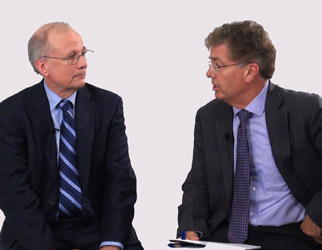

TFSA makes progressive retirement system slightly less so: Malcolm Hamilton


Here’s my latest MoneySense blog, a followup to all the media coverage on two controversial reports that called for the Tories to renege on its promise to double TFSA contribution room once the federal books are balanced. The blog, entitled Leave the TFSA Alone, is based on an email exchange with retired actuary Malcolm Hamilton, who led off the MoneySense Retire Rich event last November. Speaking of which, another is scheduled this April.

By Jonathan Chevreau

Hamilton_Chevreau_3_3221
Malcolm Hamilton (L) & Jon Chevreau, 2012, MoneySense.ca

One of Canada’s better-known retirement experts, Malcolm Hamilton, doesn’t think limits need to be doubled on Tax-Free Savings Accounts but his reason for saying so is not the fiscal consequences for Ottawa. “I just think that a larger TFSA will ultimately threaten RRSPs and that the existing TFSA is sufficiently large for most Canadians.”

In an email exchange, Hamilton said he worries about the “apparently coincidental release of two reports highly critical of the TFSA in an election year.” Given its close affiliation with the NDP party, the critique of TFSAs is to be expected from the Broadbent Institute, he said.

Feds backing away from TFSA?

But the other report, from the Parliamentary Budget Officer (PBO) is more of a concern, since “it may signal that the federal government is backing away from the TFSA.”

Continue Reading…

Tax issues for Americans with ties to Canada (& vice versa)

Brian preferred small
Brian Wruk

By Brian Wruk, CFP

Special to the Financial Independence Hub

As the Canadian tax deadline quickly approaches, the process of gathering all your tax slips, back-up for your deductions and getting them to your accountant begins or, maybe you are installing the latest tax software. Regardless, if you are a Canadian with some form of tax ties to the U.S., you may need to file a U.S. tax return as well. What kind of ties?

Let’s go through three of the most common ones:

  1. U. S. Citizenship – With all the media coverage, it is becoming common knowledge that being a U.S. citizen means you have to file a U.S. Form 1040 tax return. This is even more difficult to hide from the IRS since Canada signed an agreement that requires Canadian financial institutions to report all financial information tied to a “U.S. person.” This is all part of the IRS Foreign Account Tax Compliance Act (FATCA) initiative to crack down on U.S. citizens evading taxes through foreign accounts. Canadian financial institutions are reporting this information to Canada Revenue Agency, which in turn will provide that to the IRS as permitted by the Canada/U.S. Tax Treaty and the IRS will be looking for a tax return and the appropriate disclosures (FBARs).

Continue Reading…

Try to do a dry-run on your taxes today before RRSP contribution deadline passes

Wealthy Nest EggBy Jonathan Chevreau

As every red-blooded Canadian investor surely must know by now, today is the last day to make an RRSP contribution for the 2014 tax year.

As I wrote for Motley Fool Canada/MSN Money in two pieces in February (one on RRSPs, the other on the looming tax-filing deadline), today (or better yet the weekend just passed) would be a good time to at least do a preliminary dry run on your taxes.

Why? If you’re a salaried employee, you should by now have received your T-4 slip, which means if you enter the slip into your tax program, you’ll have a pretty good idea of how much tax you’ve already paid and how much you may yet need to pay.

T-4s are here; time to stop procrastinating

Sure, the filing deadline isn’t until Thursday, April 30th, roughly two months from now. But if you wait even until tomorrow, it will be too late to check out your past RRSP contributions Continue Reading…

Taking a long-term view of your finances

robb-engen
Robb Engen, Boomer & Echo

By Robb Engen, Boomer & Echo

Special to the Financial Independence Hub

I like to keep tabs on my finances for both the short and long term. A monthly spending summary is great for keeping track of where your paycheque goes, and an annual forecast works well for spotting trends and opportunities for your money.


But it’s also nice to gaze into the future. I want to know what my finances will look like in 20+ years so I use a spreadsheet to take a 50,000-foot view of my long-term finances.

Long-term financial outlook Continue Reading…