Building Wealth

For the first 30 or so years of working, saving and investing, you’ll be first in the mode of getting out of the hole (paying down debt), and then building your net worth (that’s wealth accumulation.). But don’t forget, wealth accumulation isn’t the ultimate goal. Decumulation is! (a separate category here at the Hub).

The Mathematics of Catastrophe

dougdahmer
Doug Dahmer

By Doug Dahmer, Emeritus Retirement Income Specialists

Special to the Financial Independence Hub

I was not the best math student in the world but I certainly enjoyed numbers. I especially liked prime numbers and their unique indivisibility. I still cannot figure out how they come to be.

In the course of my retirement-income planning career I had another math lesson that now holds my interest even more. Here is the lesson. If you halve a number, you have to double the new number to get back to the original number.

Now put your income-generating capital into that equation and you will see why it holds my interest. If you are deriving income from X and it goes to 1/2 X … well, you don’t have to be Einstein to see the problem.

iStock_000034496492_Medium (640x427)When you draw a predetermined dollar amount from your investment portfolio and it drops by ½ you are about to experience the mathematics of catastrophe. Continue Reading…

5 low-risk investments for your TFSA


tsi_network_daily

By TSI Network and Jonathan Chevreau

TFSAs let you earn investment income—including interest, dividends and capital gains—tax free.

The federal government first made the Tax-free Savings Account (TFSA) available to Canadian investors in January 2009. These accounts let you earn investment income — including interest, dividends and capital gains — tax free. You could contribute $5,000 in 2009 to start your Tax-free Savings Account.

Every year until 2013, you could contribute an additional $5,000 to your TFSA. If you contribute less than the maximum to your TFSA in any given year, you can carry the difference forward. That means your TFSA contributions for 2009 and 2010 totalled $10,000, rising to $15,000 in 2011, $20,000 in 2012 and so on.

As of January 1, 2013 the annual contribution limit increased to $5,500, in line with the initial promise to adjust limits with rising inflation. It remains at $5,500 for 2015. That means that if you haven’t contributed yet (and were 18 years or older in 2009) you can now contribute up to $36,500. At some point, once the federal books are balanced, the Conservative government is on record that it will boost the annual TFSA limit to $10,000.
Canadian Tax-Free Savings Account concept word cloudHow to shelter your gains with a Tax-free Savings Account

Use your TFSA to complement your RRSP.

Generally speaking, your TFSA can hold the same investments as an RRSP. This includes cash, mutual funds, publicly traded stocks, GICs and bonds.

Contributions are not tax deductible, as they are with an RRSP. However, unlike withdrawals from RRSPs (or withdrawals for RRIFs to which most RRSPs are converted), withdrawals from a TFSA are not taxed. In this respect, RRSPs and TFSAs are mirror images of each other in the way they impact your taxes.

This makes the TFSA a good vehicle for more short-term savings goals, like saving up for a down payment on a first home. If funds are limited, you may need to choose between RRSP and TFSA contributions. RRSPs may be the better choice in years of high income when you’re in the top tax brackets, since RRSP contributions are deductible from your taxable income. In years of low or no income — such as when you’re in school, beginning your career or between jobs — TFSAs may be the better choice.

Investing in a TFSA in low-income years will provide a real benefit in retirement. When you’re retired, you can draw down your TFSA first, incurring zero tax liabilities. After that, you can begin making taxable RRSP withdrawals.

Hold low-risk investments in your TFSA.

patmckeough Continue Reading…

The Robo Generation: Robo-Advisers now Magazine Cover Stories

teanicola
Tea Nicola, WealthBar

By Jonathan Chevreau

Interesting cover story on robo-advisers  in the current issue of Financial Post Magazine, delivered with Tuesday’s National Post.

As an ex magazine guy myself, I find it fascinating that robo-advisers have made it to magazine cover status so quickly. A year ago they were barely known in Canada, although they’ve been a rising force in the U.S. for a few years now (chiefly via WealthFront).

In the FP feature story, deputy editor Andy Holloway describes veteran financial planner John Nicola, founder of Vancouver-based Nicola Wealth Management, which targets the 1% of investors with at least $1 million in investible assets.

Then the article moves on to the next generation: WealthBar Financial Services Inc., a (so-called) robo-adviser service headed by John Nicola’s eldest son, Christopher, and daughter-in-law Tea (pictured). Continue Reading…

Advice is Often Helpful; Stock Picking Less So

By John De Goey, CFP

New promo Photo
John De Goey

Special to the Financial Independence Hub

One thing that I notice both in the media and in speaking with other advisors is the dual presumption that passive investment products are made for Do-It-Yourself (DIY) investors and that active ones are made for people who work with advisors.

To hear some people tell it, it’s as if those who are using mutual funds have to have an advisor and those using ETFs are always DIYers.

In fact, there are two separate decisions at play here. The two mutually exclusive decisions are:

  1. Should I use an advisor or be a DIY investor?

  2. Should I use stocks, actively managed mutual funds or passive products like ETFs or index funds?

Continue Reading…

The case for unhitching trailer fees on mutual funds

robb-engenBy Robb Engen, Boomer & Echo

Special to the Financial Independence Hub

One of the strongest arguments made by investment industry groups against banning embedded commissions – or the trailer fees paid to advisors when you purchase mutual funds – is that investors don’t want to pay up-front for financial advice.

xboomerandecho2-12.jpg.pagespeed.ic.3_5T_n6dOWjFMaguzvlI Advocis, which represents financial advisors across Canada, as well as the Mutual Fund Dealers Association, believe things are fine just the way they are, claiming, “investors prefer to pay for financial advice through fees that are part of their mutual funds.”

These arguments are used to convince regulators that a ban on trailer fees would only hurt investors, with potentially “devastating consequences” for those who are just starting out and don’t have the means to pay directly for advice.

I’ve tried to debunk this argument in a recent post, stating that it’s up to the investment industry to adapt and deliver new service (and cost) models to meet the needs of consumers.

But a recent study by Morningstar India shed further light on the gap between investor expectations and what advisors perceived to be investors’ expectations.

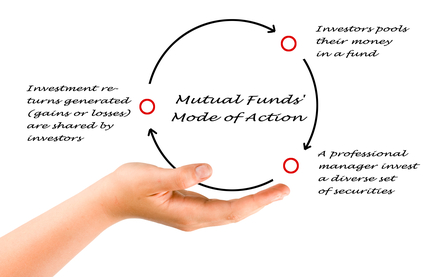
How Do Mutual Funds Work?
Hub Extra for Newcomers: Primer on how mutual funds work

A third of investors don’t seek professional advice

The study found that over one-third of investors do not seek out professional advice when it comes to their finances, instead relying on their own knowledge or help from family, friends or colleagues.

Continue Reading…