Building Wealth

For the first 30 or so years of working, saving and investing, you’ll be first in the mode of getting out of the hole (paying down debt), and then building your net worth (that’s wealth accumulation.). But don’t forget, wealth accumulation isn’t the ultimate goal. Decumulation is! (a separate category here at the Hub).

What do you seek in online financial content? A good night’s sleep, a rude awakening, challenging content?

Bruce Redstone Photography-4466-3
Andrew Teasdale (photo: Bruce Redstone)

By Andrew Teasdale, CFA

Special to the Financial Independence Hub

What do people look for in online financial content, especially a site dedicated to Findependence?   Are they looking for technical information on pensions, investments, private equity, complex products, opinion pieces, confirmation of their own decisions or their advisors/advisers, reassurance in times of financial crisis, or something else?

Personally I find basic technical information, beyond a point, boring. You can find basic information anywhere:  just type in the key words into your browser and bam!  Likewise, there are now books galore on every facet of personal finance, so much so that I fear we have long ago overloaded on dry rudimentary comment. Continue Reading…

“Robo Advisers” — Rise of the machines

dougdahmer
Doug Dahmer

By Doug Dahmer, Emeritus Retirement Income Specialists

Special to the Financial Independence Hub 

I know Isaac Asimov’s Three Laws of Robotics, I read Arthur C. Clarke’s 2001: A Space Odyssey and I love the Terminator movies (I’ll be back!).

From all this I know three things: Robots are very smart. Robots always start off to help you. Robots have a tendency to turn on you.

One of the newest crazes and buzzwords in personal finance is: “Robo-Adviser.” If you’re not familiar with the term, it refers to investment management by algorithm in the absence of human input.

With a “Robo” you are asked to complete an on-line risk assessment questionnaire. Your responses determines the prescribed portfolio of ETFs (Exchange-Traded Funds) with a built-in asset allocation best suited to your needs. Once a year the portfolio is rebalanced to this prescribed asset allocation recipe.

Dynamics change as shift from Saving to Spending

Continue Reading…

7 things you may not know about TFSAs

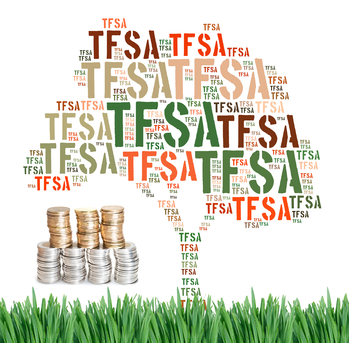
Canadian Tax-Free Savings Account concept word cloudFrom the latest issue of MoneySense comes this list of 7 things you don’t know about Tax Free Savings Accounts. Note to any American readers: Canada’s TFSA is similar to Roth IRAs.

Here are senior writer Julie Cazzin’s seven facts. Click through above link for more complete explanation.

1.) Whatever amount you withdraw from a TFSA is added to your contribution room in the following calendar year.

2.)  Interest, dividends and capital gains in your TFSA are not considered income, even when you withdraw the money. Continue Reading…

Why Boomer & Echo’s Robb Engen dumped stocks to be 100% an indexer

robb-engen
Robb Engen, Boomer & Echo

By Robb Engen, Boomer & Echo

Special to the Financial Independence Hub

For a while now I’ve dithered over when to sell my portfolio of dividend stocks and implement my two-fund ETF solution.  The tanking stock market didn’t help – particularly with oil and gas stocks plummeting and a few of my holdings underwater.  Behaviourally, I badly wanted to wait until oil prices recovered so I didn’t have to sell those stocks at a loss.

But last Thursday I finally took the plunge and sold 24 dividend stocks, worth roughly $100,000, and immediately replaced them with two ETFs from Vanguard.  I’m not going to lie; it was hard to sell my babies:

Continue Reading…

Rethinking Retirement and Home Ownership

gbgorr
Gary Gorr, CHFC

By Gary Gorr, Chartered Financial Consultant

Special to the Financial Independence Hub

Recently I have been doing retirement assessments for several new customers. What amazed me as I spoke with them was how resigned to defeat the clients were. It was like they knew in their guts that they had started saving too little and too late to attain the retirement they wanted.

One answered my question on when do you want to retire by saying “around 120 is the only way I could.”

After the initial meetings I reflected on other circumstances from planning for customers in 2014 and noticed some commonalties.

  • Age range: 45-55
  • They own homes with attractive Fair Market Values
  • Had fairly decent equity positions in homes
  • Most would carry a mortgage into retirement
  • All had projected incomes at retirement far less than their desired outcome

Many Canadians, including these clients, have grown up with the belief that home ownership is an important goal. The home represents a significant part of their net worth.

Not easy to unlock home equity

Continue Reading…