For the first 30 or so years of working, saving and investing, you’ll be first in the mode of getting out of the hole (paying down debt), and then building your net worth (that’s wealth accumulation.). But don’t forget, wealth accumulation isn’t the ultimate goal. Decumulation is! (a separate category here at the Hub).
My latest MoneySense Retired Money column is a bit of a departure in that its focus is on 57-year old blogger and YouTuber Alain Guillot, who came to Canada from Columbia with nothing but entrepreneurial gumption and a dream of being part of the North America depicted on TV at home.
The re-election of Donald Trump is almost certain to make Immigration an even more contentious issue. However, as I am myself the child of (British) immigrants I am naturally sympathetic to those who are brave or desperate enough to leave the land of their births to find opportunities in North America.
Which is one reason that over the past year, I’ve been corresponding with an interesting blogger and former financial advisor, Alain Guillot, and occasionally republish his blogs on my site, Findependence Hub. It’s called simply AlainGuillot.com
He aims to write at least one blog a week and has 600 subscribers on his YouTube channel, where he is more than half way to being able to monetize it. Now Guillot has just self-published a short e-book entitled The Wealth Paradox: Navigating Money, Free will, and Success, which you can find on Kindle for a very reasonable price. The subtitle explains more: How unconventional thinking influences your Financial and Personal Life.
Side hustles and Entrepreneurism
One reason Guillot got my attention in the first place was that he emigrated to Canada from Colombia, a place I once visited (San Andres). He soon discovered he was almost forced to become an entrepreneur in Canada. Continue Reading…
Long-term investments in index funds can secure your financial future, but what strategies do the experts use? In this article, insights from business leaders and Financial Officers shed light on successful investment tactics.
Learn why diversifying across sectors and regions is crucial, and discover the benefits of adopting a set-it-and-forget-it approach.
This post compiles nine valuable tips to help you navigate your investment journey.
Diversify Across Sectors and Regions
Start Early and Invest Consistently
Maintain Consistency Through Market Fluctuations
Stay the Course During Market Downturns
Diversify Across Global Markets
Avoid Over-Diversifying with Index Funds
Automate and Regularly Invest
Stick with a Single Index Fund
Adopt a Set-It-and-Forget-It Approach
Diversify across Sectors and Regions
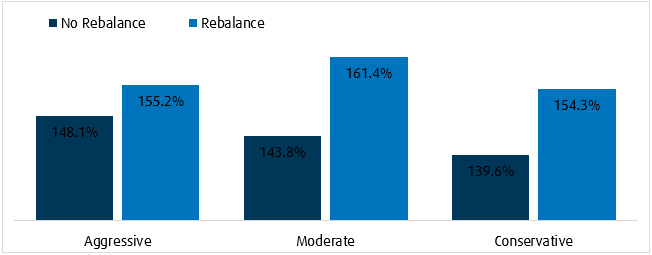
When I invest in index funds for the long-run, I like to spread my money across different sectors and regions. This way, I’m not putting all my eggs in one basket, and can buffer against any market downturn. I also regularly rebalance my portfolio to keep everything in the right proportions as the markets move. By consistently adding to my investments, and avoiding the urge to time the market, I’ve found a reliable way to achieve steady growth over time. — Shane McEvoy, MD, Flycast Media
Start Early and Invest Consistently
The approach is simple: Start early and invest consistently, regardless of market conditions. This method, known as dollar-cost averaging, has proven effective based on my analysis of market trends and investment patterns.
Here’s the gist: Choose a broad, low-cost index fund (like one tracking the S&P 500) and invest in it regularly: monthly or quarterly. The key is maintaining this routine even during market turbulence.
This strategy works by removing the stress of timing the market and allowing you to buy more shares when prices dip. Over time, this can lead to significant returns. — Markus Kraus, Founder, Trading Verstehen
Maintain Consistency through Market Fluctuations
One key tip for long-term investments in index funds is consistency. Regularly invest through dollar-cost averaging, regardless of market fluctuations. This strategy reduces the impact of market volatility and allows you to benefit from compounding returns over time. Additionally, stay focused on your long-term goals and avoid reacting to short-term market noise. Patience and discipline are essential when investing in index funds, as they provide steady growth over extended periods. — Jocarl Zaide, Chief Financial Officer, SAFC
Stay the Course during Market Downturns
One personal tip for making long-term investments in index funds is to stay the course and avoid timing the market. Index funds are designed to mirror the performance of entire markets, and over the long term, markets tend to grow despite short-term volatility. Based on my experience, consistently investing — even during market downturns — through a strategy like dollar-cost averaging can help smooth out the effects of market fluctuations and take advantage of buying opportunities when prices are lower.
Patience is key. By keeping a long-term perspective and regularly contributing to your index fund, you allow compound growth to work in your favor. Resist the urge to react to market drops by selling or trying to predict market highs, as this often results in missed gains. The power of index funds lies in their diversification and ability to grow with the broader market over time, making them a reliable choice for long-term wealth-building. — Rose Jimenez, Chief Finance Officer, Culture.org
Diversify across Global Markets
My top recommendation for long-term index-fund investing is to diversify across global markets. While many investors focus solely on domestic indices, incorporating international exposure can significantly enhance your portfolio’s resilience and growth potential. Consider allocating a portion of your investments to index funds tracking developed and emerging markets worldwide. This approach helps spread risk across different economic cycles and currencies, potentially smoothing out returns over time.
On top of that, as the global economy becomes increasingly interconnected, you’ll be better positioned to capture growth opportunities wherever they arise. Remember, diversification doesn’t guarantee profits or protect against losses, but it’s a powerful tool for managing risk. Regularly review and adjust your global allocation based on changing market conditions and your risk tolerance, always keeping your long-term objectives in sight. — Brandon Aversano, CEO, The Alloy Market Continue Reading…
I see it all over social media, people promoting self care while taking a bubble bath, or attending a yoga class. The problem is that most who need self care, can’t afford it. And those who can afford it, don’t need it.
You’ll see Elon musk, Warren Buffett, Bill Gates, Jeff Bezos, or Mark Zuckerberg promoting the idea of going to the spa and getting a massage and a bubble bath. They don’t need it. They have multiple streams of income and don’t feel the stress of someone who’s struggling to pay the rent.
Traditionally, self-care has been associated with activities that promote mental, emotional, and physical well-being, such as taking a bubble bath or practicing yoga.
Do you know what’s the major cause of stress, anxiety and depression? Lack of money.
Most of the problems we have are money related: housing, car payments, retirement, etc. If we have several streams of income, most of our problems would dissolve.
A bubble bath is nice but several streams of income is nicer
Here is a list of how having several streams of income can be the most important form of self-care: Continue Reading…
By Billy and Akaisha Kaderli, RetireEarlyLifestyle.com
Special to Financial Independence Hub
Once someone learns that we retired at the age of 38 in 1991 and have been traveling the world ever since, they ask, “How could you afford such a lifestyle? It must cost a fortune for airfare, to live in guesthouses, hotels, apartments and eating out!”
When we tell them that this lifestyle hasn’t cost us anything — in fact, we made money — they’re floored. Remember, it’s a lifestyle, not a vacation.
When we left the conventional working world in January, 1991, the S&P 500 Index was 312.49. Today it is over 5300. That’s an average of roughly a 10% per year return including dividends. See the calculator below.
Sure, we had expenses, but our net worth has outpaced both spending and inflation because we created a money machine.
The cost of not retiring
Whenever we’re considering a trip, we ask ourselves, “Can we afford it?” Our answer shocks some: “We can’t afford not to go.”
We’re no spring chickens at 72. We’ve experienced enough in life to know that we will be more disappointed if we don’t try new things than if we make mistakes at the ones we attempt. We’re only getting one shot at this life, and find that our travel list is getting longer, not shorter.
Over the years many of our friends have passed on: some who never got a chance to retire from their jobs, and they had plenty of money. For the last 3 decades we have been spending about $30,000 per year. We have mentioned a few times about loosening the purse strings and this is what we have done.
We have seen dozens of countries, stayed in resort hotels, purchased new computer equipment and digital toys, refreshed our wardrobes countless times, drank fine wine, had maids, gardeners, and ate at some of the most fashionable restaurants in the world. We have hiked, biked, and scuba’d, lived on tropical islands and in million dollar homes, lived with the Maya, met musicians and magicians and generally enlarged our perspective about the world.
After all this traveling, spending and inflation, our net worth is still higher than when we retired.
Business finances are important for any company to pay attention to, but perhaps more so for small- and medium-sized enterprises (SMEs) given their limited capital and their need to make the most out of every single buck.
Errors or miscalculations in an SME’s financial records can potentially lead to disastrous consequences, such as an untimely shortage of funds, inefficient business decisions due to wrong financial forecasts, and — if worse comes to worst — a state of being in the red.
One of the best safeguards against troubles like these is a full financial audit. To that end, here is a quick guide on what financial audits entail, why they’re a must for your small business, and how to prepare for one.
Accounting vs. Auditing
To rookie entrepreneurs who are just getting a handle on their business finances, accounting and auditing may seem like the same thing: and the latter may even seem unnecessary. However, these processes actually serve different purposes.
While accounting is concerned with the regular record-keeping of a business’s financial transactions, auditing is a less frequent procedure meant to check if those records are indeed accurate and error-free. In addition, given that a financial auditor is typically an independent party, their services are invaluable for providing an unbiased look into a business’s finances and giving an entrepreneur a more objective appraisal of their company’s financial standing.
What are the Benefits of a Full Financial Audit?
To those who know the process better, getting a full financial audit yields multiple benefits for small businesses. One is that it helps spot any inconsistencies or errors made during the bookkeeping and accounting process. As mentioned above, identifying and correcting those mistakes are crucial for ensuring that an entrepreneur is basing their business decisions on accurate data.
Having an audited financial statement on hand can be helpful when dealing with various financial institutions, such as some business banking Philippines providers, just in case they happen to need exhaustive documentation about the business’s financial standing. If you’re exploring a banking solution like the Philippines’ Maya Business Deposit or financing through Maya Flexi Loan, it would be a good idea to complete a full financial audit of your SME first.
A financial audit can also be beneficial for cost-cutting measures, as the process will allow you to identify areas where you might be overspending and pinpoint expenses to be streamlined.
Lastly, having your business audited will make it easier for you to spot fraudulent activities from bad actors in your company. That means that you’ll also have better chances of neutralizing them quickly and, overall, improve the integrity of your financial processes.
In turn, this could elevate the reputation and credibility of your business: especially among potential investors, as they can be assured that you’re constantly on top of your finances.
Tips for Overseeing a Smooth Audit
Philippine businesses whose gross annual sales have reached or exceeded a sum of PHP 3 million are required by the Bureau of Internal Revenue (BIR) to submit an audited financial statement (AFS) every year. If your small business happens to meet that threshold, then you’ll need to work with a third-party auditor to conduct a financial audit on your business for full compliance with the country’s laws.
To make sure that the auditing process goes smoothly, have all the pertinent records prepared beforehand. Include your ledgers, financial statements, tax-related documents, and other accounting records. You can lessen the burden of collating all these documents by ensuring that your day-to-day record-keeping is transparent and organized, so that there won’t be a need for a last-minute scramble to locate what’s necessary. Continue Reading…