

 Posted By

There must be some misunderstanding
There must be some kind of mistake
- Misunderstanding, by Genesis
By Noah Solomon
Special to Financial Independence Hub
In conversations with clients, there is barely a month that goes by that I don’t learn something new about some widely held views on investing. While some of these views are rooted in reason, logic, and evidence, others are not. In this month’s commentary, I will address some of these common beliefs and offer some analysis of their respective validities.
Active vs. Passive Management: A No-Brainer
There is a growing sentiment among investors that passive funds (i.e., index-tracking mutual funds or ETFs) are generally a superior alternative to actively managed portfolios. To be blunt, there is no reasonable counterargument to this assertion.
According to the most recent S&P Index vs. Active (SPIVA) Canada scorecard, the vast majority of managers have underperformed their benchmarks in almost every single investment category.
Percentage of Funds Underperforming their Benchmarks (Based on Absolute Return)

What about Risk?
Many investors are not focused solely on return but are also concerned with volatility and risk-adjusted returns. They are often willing to sacrifice some return in exchange for lower volatility (particularly in challenging environments). As such, condemning a manager for lower returns may be unjust in instances where their clients are compensated in the form of reduced volatility.
However, even when volatility is factored in, the facts remain extremely damning. The percentage of funds that underperform their benchmarks on a risk-adjusted basis is similarly high to that based on simple returns.
Percentage of Funds Underperforming their Benchmarks (based on Risk-Adjusted Return)

The one anomaly lies in Canadian Dividend Focused and Income Equity. Although 88.06% of managers have underperformed their benchmark over the past 10 years in terms of absolute return, only 51.92% have done so on a risk-adjusted basis. In other words, although most managers in the category have underperformed the TSX Dividend Aristocrats Index, almost half of them have done so with commensurately lower volatility. However, a higher rate of return can result in materially greater wealth when compounded over the long term. As such, accepting a lower rate of return in exchange for marginally lower volatility is less than desirable, in my view.
All things considered, the evidence is brutally compelling: arguing that active management is generally preferable to passive investing is akin to insisting that the earth is flat.
It’s not about the Wrapper … It’s What’s inside that Counts
A growing number of investors have been ditching fund investments in favour of index-tracking ETFs. This shift is in no small part due to the media, which has established the term “mutual fund” as a dirty word.
All else being equal, the only difference between a mutual fund and an ETF is the wrapper (i.e., the legal structure). If a mutual fund and an ETF have the same underlying portfolios and charge the same fees, then investors should be indifferent between the two. However, most mutual fund assets are actively managed, whereas most ETF assets are in passive, index-tracking mandates. As such, the problem isn’t that mutual funds are inferior to ETFs per se, but rather that most actively managed portfolios underperform their index-tracking counterparts. Alternatively stated, it’s not the wrapper that’s the problem, but what’s inside.
Granted, active mandates charge higher fees than passive ones. However, if an active fund outperforms its benchmark by a sufficient margin to more than offset its higher fees, then investors would be better off investing in it as opposed to a comparable, passive alternative. In other words, investors would be well-served to expend the effort to identify actively managed funds that have and are likely to add value. Importantly, to understand why some actively managed portfolios have outperformed, one must identify the reasons why most have not.
It’s Hard to Win if you’re not even Trying
Although one would think that every active manager strives to outperform, the evidence suggests otherwise. Many active managers limit the degree to which their portfolio holdings deviate from those of their benchmark indexes. This practice, which is pejoratively referred to as closet indexing, tends to produce gross returns that lie within a few basis points of indexes and net returns that lag them, which is the only logical outcome (no pun intended). If an actively managed portfolio is essentially the same as its benchmark, then its returns will also be the same, less fees (i.e., a quasi-guarantee of underperformance). This practice is more prevalent than you might think.
A 2013 paper titled “The Mutual Fund Industry Worldwide: Explicit and Closet Indexing, Fees, and Performance,” analyzed the prevalence of closet indexing in different countries. Out of the 20 countries that the study analyzed, Canada ranked highest in terms of its percentage of actively managed funds that were not truly active, with over 40% identified as closet indexes.
Imitation, Flattery, and Underperformance
Although imitation may be the greatest source of flattery, it is value destroying when it comes to investing. When managers strive to outperform using the same approach, their respective efforts will cancel each other out, thereby leading to average results that generally range from mediocre to subpar. This paradigm notwithstanding, there seems to be no shortage of managers who subscribe to John Maynard Keynes’ conclusion that “Worldly wisdom teaches that it is better for reputation to fail conventionally than to succeed unconventionally.”
Bigger isn’t Better
Research shows that small and emerging fund managers often outperform their large, household-name peers by a significant margin with less risk. And yet, larger managers tend to dominate asset growth.
As Buffett’s longtime partner Charlie Munger stated, “Show me the incentive and I’ll show you the outcome” (again, no pun intended). Smaller firms need to grow to survive and thrive. Conversely, for larger firms, growth is a “nice to have” rather than a necessity. Moreover, smaller managers lack the sales and marketing budgets of their larger peers and thus are more dependent on performance to grow.
The visibility and familiarity of large fund companies give investors comfort. This reassurance can dull people’s critical thinking and come at the cost of mediocrity and frequent underperformance. Even when these household names underperform, people give them the benefit of the doubt and overlook better-performing yet lesser-known managers. There have been countless instances where I have been asked by clients and prospective clients to analyze brand-name manager funds in which they have been longtime investors. In the vast majority of cases, these funds underperform, and often meaningfully so.
Our Commitment
At Outcome, we are committed to adding value for our clients. To this end, we employ a different approach to investing based on data science and machine learning. We also have no reservations whatsoever about deviating materially from benchmark indexes, on the understanding that doing so is a necessary precondition for outperformance. Lastly, we are sufficiently small to take advantage of opportunities which larger firms cannot and will remain steadfast in limiting our growth so that this advantage remains intact.
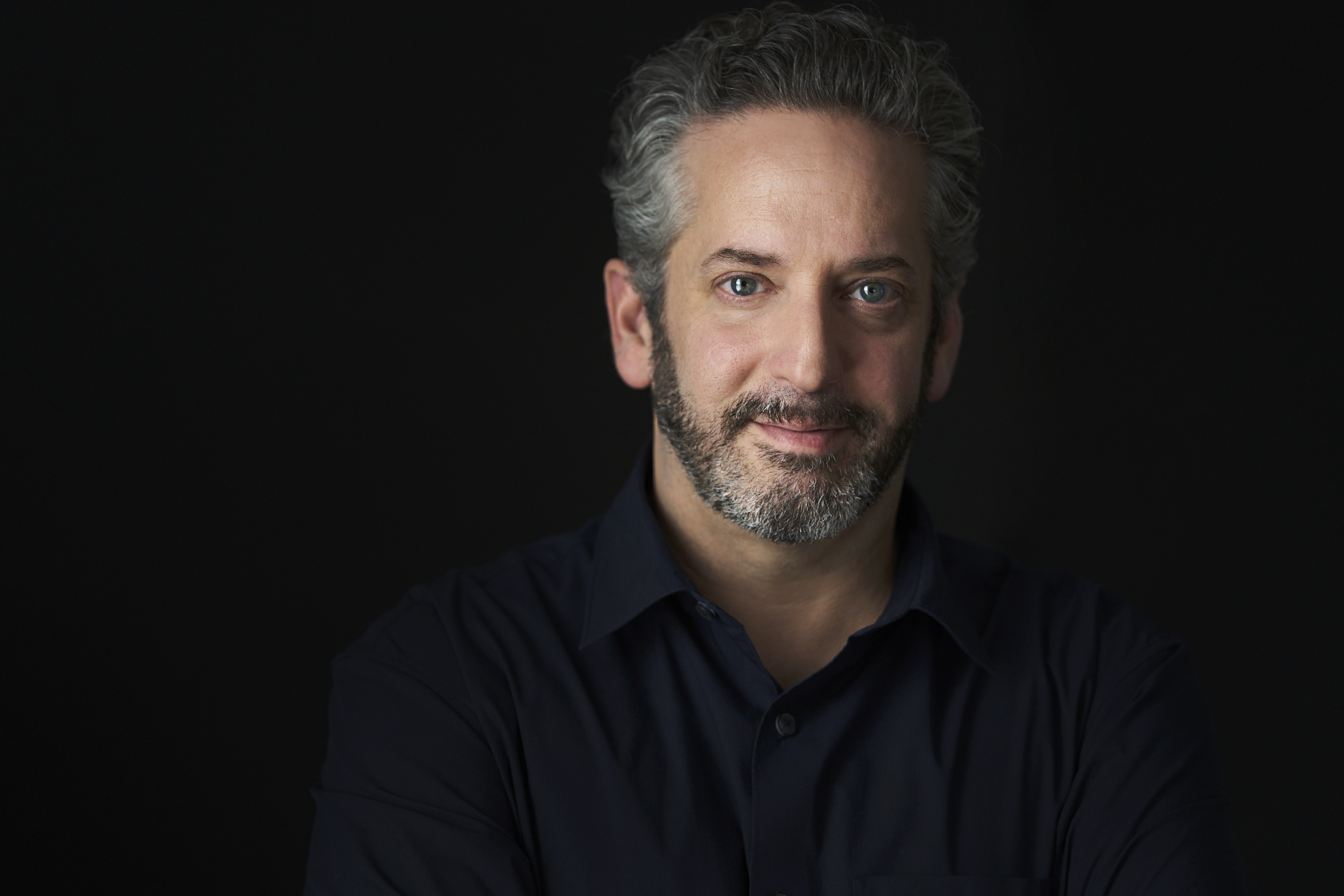 Noah Solomon is Chief Investment Officer for Outcome Metric Asset Management Limited Partnership. From 2008 to 2016, Noah was CEO and CIO of GenFund Management Inc. (formerly Genuity Fund Management), where he designed and managed data-driven, statistically-based equity funds. Between 2002 and 2008, Noah was a proprietary trader in the equities division of Goldman Sachs, where he deployed the firm’s capital in several quantitatively-driven investment strategies.Prior to joining Goldman, Noah worked at Citibank and Lehman Brothers.
Noah holds an MBA from the Wharton School of Business at the University of Pennsylvania, where he graduated as a Palmer Scholar (top 5% of graduating class). He also holds a BA from McGill University (magna cum laude). Noah is frequently featured in the media including a regular column in the Financial Post and appearances on BNN. This blog originally appeared in the July 2025 issue of the Outcome newsletter and is republished here with permission
