Tag Archives: bonds

Q&A with Mawer’s Jim Hall: Deflation and rising interest rates

MAWER_Cameron-Webster-4x6-Formal-blue-bg
Cameron Webster

By Cameron Webster, CFA
Institutional Portfolio Manager, Mawer Investment Management Ltd.

Special to the Financial Independence Hub

At Mawer, we spend a great deal of time asking and answering the question: So What? A company’s share price is down 6% … so what? A central bank moved interest rates up … so what?” Google re-named itself Alphabet … so what?”

It is not always an easy question to answer and often leads us to ask even more questions in an effort to develop key investment insights.

“So what?” is one of the questions that can lead us to investment action (or inaction) in our process of building well-diversified, resilient portfolios. In an effort to pass on our “so what” learnings, I interviewed our Chief Investment Officer, Jim Hall, with specific questions pertaining to his views on risks in the current environment.

Cameron Webster: Jim, Mawer conducts a quarterly risk review, rating macro risks on both probability of occurrence and degree of severity. I see a few with 9/10 on probability but lower severity and a few with the opposite profile, high severity, lower probability. Help us understand the way Mawer is viewing some of the broader risks at the top of the list right now.

MAWER_Jim Hall 4x6 Formal blue bg
Jim Hall

Jim Hall: It is not enough to just look at the rankings. We need to ask ourselves is it something we need to do something about? Is this something upon which we need to act? Is it a biggie? Is it important? That’s the value in evaluating these risks on both probability of occurrence and severity of consequence.

Continue Reading…

Bob Cable’s case for seasonal market timing (Review of Inevitable Wealth)

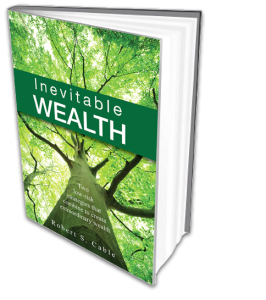
inevitablewealth-266x300While stocks are viewed by most of the financial industry as the main ingredient for creating wealth, it’s well known that the price for higher expected returns is higher risk. The paradox is that in order to increase the odds of creating greater wealth, you have to be willing to lose some wealth at least in the short term.

All of which makes Robert S. Cable’s newly published book (his second) of more than theoretical interest. Inevitable Wealth bears the subtitle Two low-risk strategies that combine to create extraordinary wealth.

We have touched on this book and its belief in the long-term power of equities in a recent review I did at the Financial Post, where I compared Inevitable Wealth to David Trahair’s Enough Bull. You can also find guest blogs by both authors here at the Hub, where the pair make the cases for mostly stocks in the first case, and mostly fixed income (i.e. GICs) in the second.

I had read both books earlier in the summer, well before the extreme market volatility of late August. Ironically, both books would have helped you preserve capital, depending on how you implemented the suggestions: Continue Reading…

Weekly wrap: ETFs pass hedge funds, stocks beat bonds but do Boomers own too many stocks?

Interview Jan 2014
Deborah Fuhr, ETFGI LP

As The Economist reported this week, assets of exchange-traded funds (ETFs) have now surpassed those of hedge funds. In one of its “Leaders,” the British weekly described hedge funds as a “fatal distraction” for pension funds. It also ran a longer piece on the same story, saying ETFs are roaring ahead of hedge funds.

Back in 1999, ETFs had only 10% of the assets under management enjoyed by hedge funds. Today, according to research firm ETFGI LP of London, UK, assets in the global ETF industry were US$2.971 trillion (that’s Trillion with a T!), compared to US$2.969 trillion for hedge funds.  But of the $36 trillion (US$) invested in pension funds worldwide, only $3 trillion are in hedge funds. It noted that CalPERS, a huge US pension fund, has “concluded putting money in hedge funds is not worth the bother.”

I talked to ETFGI managing partner Deborah Fuhr (who left BlackRock four years ago) after the Economist article came out this week. She said the ETF industry likely became bigger than hedge funds back in May of 2015, when ETF assets reached US$3 trillion but as Hedge Fund Research only provides quarterly data rather than monthly, it could not be confirmed until now.

It’s a big milestone for ETFs but there’s still a long way to go before ETFs catch mutual funds. Fuhr says global ETFs have just 8.4% of the assets claimed by the mutual fund industry.

Stocks versus Bonds

Here at the Hub the past week we had a study in contrasts, with two financial expert/authors running guest blogs with quite disparate views on asset allocation. Continue Reading…

Stocks beat bonds, hands down: Bob Cable

Here at the Hub we like to present all points of view. On Tuesday, we ran a guest blog by author and chartered accountant David Trahair about the new second edition of his book, Enough Bull, which explained why he is 100% in fixed-income vehicles like GICs. Today, we do the same thing with a guest blog by Scotia McLeod’s Robert S. Cable, who argues almost the polar opposite in his new book, Inevitable Wealth. We’ll review both books formally in the coming weeks. Meanwhile, over to Bob! – – JC

Stocks beat bonds, hands down

010
Robert Cable

 By Robert S. Cable

Special to the Financial Independence Hub

All of the research I’ve carried out since I began doing this in 1980 and every piece of research I’ve seen comparing stocks to bonds– every single time comes to the same conclusion — that is that stock returns don’t just beat the returns of bonds, stocks clobber bonds. It’s absolutely no contest.

In my book, Inevitable Wealth, I compare 40 years of returns, from 1975 through 2014. I show $100,000 invested in Government of Canada five-year bonds, with money reinvested every five years, to the same $100,000 invested in stocks by way of the TSX Composite Index.

In 1975, those bonds yielded 7.25% so your annual income started out at $7,250. Stocks paid somewhat less, $5,360. Advantage bonds—initially. However just four years later, the dividends paid on stocks had moved higher to the point where the dividends paid on stocks was greater than the bond’s income.

But check out these numbers. In 2014, your bonds paid an annual income of just $2,770, down from $7,250, 40 years earlier. Talk about taking a pay cut! Meanwhile in 2014, stocks paid dividends of $49,560. Your stock income was more than 17 times what bonds paid.

What’s really interesting though is this: while stocks paid a much superior and growing income, they really aren’t income investments. The dividend income paid is simply a by-product of these companies sharing their profits with shareholders.

But as they say, that’s only half the story. We’ve looked at the income stocks and bonds produced. But what about the value of each of these investments over those 40 years?

Stocks beat bonds by 17 to 1 over 40 years

Well, that $100,000 you invested in bonds back in 1975 is still worth right around the same $100,000. If you took inflation into account, your $100,000 would actually be worth more like $15,000. The $100,000 invested in stocks? Well, not including the dividends, at the end of 2014 your stocks would be worth a bit more, $1,732,060. Continue Reading…

Why David Trahair is 100% in fixed income

David Trahair
David Trahair

By David Trahair

Special to the Financial Independence Hub

I have been writing about personal financial issues for over 12 years now. I have also been giving seminars to other accountants on my ideas since 2008.

Suffice it to say I have spent a large amount of time thinking about and analyzing the best way to get ahead financially and I have had a tremendous amount of feedback along the way.

And I still have 100% of my family’s investments in guaranteed fixed-income products.

Zero exposure to stock market

That’s correct, I have zero exposure to the stock market. It’s all in Guaranteed Investment Certificates (GICs) or provincial government bonds using a three-year laddered approach.

Sound crazy? Well I’ll tell you why it’s not.

First of all, the assumption is that you have to have exposure to the stock market because it’s the only thing that will give you excellent returns. But how good are those returns versus plain old GICs?

I have done an analysis for my Enough Bull course that will give you some idea. Continue Reading…