Tag Archives: Financial Independence

How to achieve “Flow” — or optimal experience

flowBy Jonathan Chevreau,

Financial Independence Hub

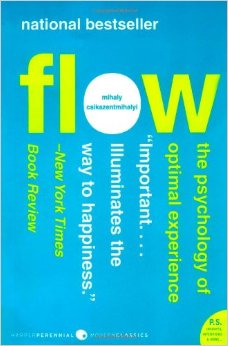
In a book on happiness we reviewed here recently, I came across a book called Flow, billed in the subtitle as “The psychology of optimal experience.”

This book, first published as a hardcover way back in 1990, became a New York Times bestseller and has spawned several followup titles elaborating on the concept of flow and creativity. The author’s name is not easily recalled: Mihaly Czikszentmihalyi, a psychology professor at California’s Drucker School of Management and also director of the Quality of Life Research Center at Drucker. (Incidentally, if you find the name unpronounceable and unmemorable, as I do, one of his books helpfully suggests the surname can be pronounced “chick-SENT-me-high.”)

Here’s what Wikipedia says about Flow and the author who coined the term.

I must say that I was a bit skeptical about the term at first: Continue Reading…
How to get the new TFSA limit to work for you

Illustration depicting a red and white road sign with a taxt free concept. Blue blurred sky background.

By Jonathan Chevreau

Financial Independence Hub

Here’s my latest column from the print edition of MoneySense magazine, written right after the federal budget: Get the new TFSA limit to work for you.

Click on the link for details, but in a nutshell — and has been extensively reported in the media, such as this piece by Gordon Pape (subscribers only)  — there’s no reason why you can’t add another $4,500 to your Tax Free Savings Account right now, in addition to $5,500 you may have contributed anytime on or after Jan. 1, 2015. (Note to American readers: the TFSA is the equivalent of Roth IRAs, providing no upfront tax deductions but which let you eventually withdraw money tax-free in Retirement or for other purposes).

That means a whopping $20,000 per couple. Now while Liberal Leader Justin Trudeau seems to think only “rich” people have that kind of money available, the fact is that many hard-working middle class people have been saving and investing for the better part of two or three decades, and built up substantial non-registered or “taxable” portfolios. Even though they may have paid income tax to acquire the capital in the first place, over those decades they have been paying annual taxes on interest, dividends and (often) capital gains generated by that capital.

As the column points out, those who have built such “open” portfolios don’t have to use new cash to put $10,000 per annum into their TFSAs. They merely have to start transferring their non-registered securities into their TFSAs. This is called a “transfer-in-kind” Continue Reading…

How to find your Encore Career

By Sheryl Smolkin, Retirement Redux

Special to the Financial Independence Hub

cf-old-and-new--timelines_500pxI recently interviewed Lisa Taylor,  president of Challenge Factory, for savewithspp.com. Challenge Factory helps individuals make career transitions and employers dealing with an aging workforce.

Her organization draws on the talents of a wide variety of professionals as required by individual clients. But what’s really interesting is that they have a roster of over 160 people who are experts in their own jobs, who have agreed to take on Challenge Factory clients for one-day test drives.

“If you’re in one occupation, and you’re thinking that you might want to go and do something totally different, the best way to make a decision is to do a dry run,” Taylor says. “This gives our clients an opportunity to spend a day with an expert in that particular field to find out if their assumptions are really true and whether the job is really as great as they thought it would be.”

A life stage that can last 20 or 25 years

I asked Taylor what the terms second act, encore or legacy careers really mean to her. Continue Reading…

Weekly wrap; Getting Financially Real, Post-budget politics, 50 top financial sites

2015-carnivalA group of (mostly American) financial blogs and a few international ones have teamed up to create We are Financially Real, part of the 2015 Financial Literacy Awareness Carnival.

It’s hosted by Los Angeles-based Certified Financial Planner Shannon Ryan and her website, The Heavy Purse.

As you can see via this link, there’s a nice list of financial blogs participating, including Broke Millennial and its post, The Day I Got Bullish With Money, and many more from blogs like Club Thrifty, Color Me Frugal, Financially Blonde and Reach Financial Independence (now there’s a blog title we can relate to!)

shannon-ryan-pic
Shannon Ryan, CFP

“For the past three years, it’s been my privilege to host a Financial Literacy Awareness Carnival where I gather top finance bloggers to share their stories and motivate readers to become financially literate,” Shannon told the Hub via email, “Money is something every single adult handles, and too few make confident money decisions due to a lack of financial literacy. The mistakes they make, sometimes without even realizing it, have a lasting impact. It’s my hope through the carnival that we inspire readers to get Financially Real with their lives and reclaim their financial power.”

Budget Redux Continue Reading…

What’s the right amount of retirement income?

MarieEngen
Marie Engen, Boomer & Echo

By Marie Engen, Boomer & Echo

Special to the Financial Independence Hub

“Money may not be the most important thing in life, but it’s way up there with oxygen.” – Zig Ziglar

How much is enough? That’s a question that’s asked often. Everyone measures the concept of “enough” differently. Some of us think in terms of dollars per month or year:

  • $50,000 per year
  • $5,000 per month

Or, you may think of a percentage of pre-retirement income:  70-85%.

Many want to know what the “average” Canadian needs, or what “most” people require.

The proper question is, “What is enough for me?”

Related: Budgets, Cash Flow Plans, and Spending. Yawn.

If you are retired, or close to it, I’m going to give you an assignment (should you wish to accept it).  Spend some serious time with this. You are going to make three budgets. Continue Reading…