Welcome to another Then and Now post, a continuation of my series where I revisit some older blogposts and either rip them to shreds (because my thinking has totally changed on such subjects) or I’ll confirm my position on various personal finance topics or specific stock and ETF investments.
Back in 2015 when the original post was shared, I referenced this quote that frames my own portfolio management approach when it comes to my bias to owning stocks over bonds:
“If you want to make the most money, you should invest in stocks. But if you want to keep the money you made in stocks, you should invest in bonds.” – Paul Merriman.
Bonds are essentially parachutes when equity markets fall; bonds will cushion the portfolio landing. And equity markets can fail big at times!
While I understand there are different ways to measure the “equity risk premium,” the summary IMO is the same: the risk premium is the measure of the additional return that investors demand or expect for taking on a particular kind of risk, relative to some alternative.
Buy a bond and hold it until it matures and you know what you will get back.
Invest in equities and the range of outcomes is wide.
With equities, you could make a lot of money, but you could lose a lot.
Equities have to have a higher expected return to compensate investors for taking on this risk.
Otherwise, if the risk premium is not there – why bother with stocks at all?
Now – on bonds
That’s the rub these days, for many investors. Why invest in stocks when interest rates are higher and you can earn 4-5% essentially risk-free?
Of course, there is no way of knowing how equities or bonds will perform until returns for each happen. You can consider rebalancing your portfolio from time to time between stocks and bonds because you expect equities will do better longer-term but that doesn’t mean they will short-term.
Which brings me back to this: risk is the price of the entry ticket to buy and hold stocks. Continue Reading…
In the quest for Financial Independence, milestones vary from mastering debt to embracing minimalism.
We’ve gathered insights from nine professionals, including Finance Experts and Founders, to share their personal triumphs. Discover how these individuals have navigated their paths from mastering debt through frugality to paying off mortgages independently.
Mastering Debt through Frugality
Achieving Total Debt Freedom
Securing a Higher-Paying Job
Early Retirement through Real Estate
Eliminating Debt with Side Hustles
Embracing a Debt-Free Minimalist Life
Regulating Finances with Nervous System
Strategically Paying off Student Loans
Paying Off Mortgage Independently
Mastering Debt through Frugality
Each milestone marked an important stage towards a more confident future on this road to Financial Independence. One turning point occurred when I became a master of managing Debt and adopted frugality as my way of life.
Although, in my pursuit of financial freedom, it dawned on me that Debt was both a burden and a tool; this happened at the time when I decided to confront my debts openly. Eventually, I divided them by interest rates and then talked with lenders about much better repayment terms. With discipline and focus, little by little, I got rid of a mountain of debts while coming closer to financial liberty after each payment.
Another significant landmark was when I began practicing frugality. For instance, being mindful of small savings that accumulate over time into significant wealth-creation opportunities has been one key lesson that I learned from this approach. In other words, I dissected every expense into what need was involved for its necessity or want and became good at finding creative ways to save without losing sight of the quality of life.
Whether it is meal planning or relying on loyalty programs or DIY solutions; being frugal does not mean living without but instead making conscious decisions towards personal financial objectives.
Whenever I look back on the path that led me toward my financial independence, I don’t see these checkpoints as just what they are; instead, I think of them as turning points in how I think and act. Learning how to manage debt properly and adopting a saving lifestyle have given me complete autonomy over my financial future, thus laying down a foundation for abundance and stability. –– Arifful Islam, Finance Expert, Sterlinx Global LTD
Achieving Total Debt Freedom
One of the biggest milestones on my journey to Financial Independence was finally becoming 100% debt-free. This achievement felt especially meaningful because it required a serious commitment to smart money management and embracing a frugal lifestyle.
Early in my career, I was weighed down by a ton of student loans and racked up credit-card balances. I realized all that debt was just holding me back from reaching my bigger financial goals and living the life I really wanted. So, I made a decision to make paying it all off as fast as possible my top priority.
I started by creating a super-detailed budget that accounted for every dollar of income and expenses. Then I looked for any areas where I could cut back on non-essential splurging: like eating out, entertainment, shopping sprees, etc. Any money I could free up got funneled directly towards making bigger debt payments, focusing on the highest-interest accounts first.
At the same time, I fully embraced a more frugal, minimalist lifestyle overall. I learned to appreciate simple, free pleasures and find joy in experiences over buying a bunch of material stuff. I also hustled to increase my income through side gigs like freelancing or selling unwanted items.
Through diligent budgeting, living frugally, and a strategic debt repayment plan, I managed to become 100% debt-free within just a few years. Not only did it drastically improve my overall financial situation, but it gave me this incredible sense of freedom and control over my life. It laid the foundation for even bigger money wins down the road while teaching me the value of living below my means to prioritize long-term goals. –– Loretta Kilday, DebtCC Spokesperson, Debt Consolidation Care
Securing a Higher-Paying Job
The most critical milestone I reached was getting a job that paid more than just “enough.” I’ve tried freelancing, selling online, starting a website, doing social media, and I even tried digital marketing for a startup. But it wasn’t until I got a plain old job that just paid more than I needed that I found everything I needed: peace of mind, freedom from debt, the start of a retirement fund, and more.
For anyone who’s struggling even $50 makes the difference between starving or surviving: I suggest just building your skills and portfolio and moving up to better-paying jobs. Get the certainty and security that comes from a regular salary, one that allows you to pay all your bills and gives you breathing space.
Once that’s done, you have the room to plan for the future, to pay off debt, to organize your finances so that if you want to budget, it’s actually possible. — Debashri Dutta, Founder, Dmdutta.com
Early Retirement through Real Estate
Being able to retire in my early Thirties was a significant milestone toward Financial Independence. I started investing in real estate in my twenties, and I had to work two jobs and live frugally to afford a down payment.
But today? I don’t have to worry about working a job I’m not particularly passionate about. Instead, I can spend my time doing what matters more to me, like coaching others who want to escape the rat race and build financial security for themselves.
Bottom line: If you have a goal in mind, short-term sacrifices will be worth it in the long run. — Ryan Chaw, Founder and Real Estate Investor, Newbie Real Estate Investing
Eliminating Debt with Side Hustles
I gained Financial Independence through hard work and side hustles. The biggest milestone I achieved was paying off US$60,000 in student loans. That debt was debilitating, and I was able to pay it all off by devoting all the money I made from side hustles to debt reduction. After I paid off my student loans, I used the same methods to pay off the house.
The next milestone that was incredibly important to me was having US$250,000 in savings. That milestone was important because it felt like the investment income began to snowball. It also felt like my hard work was paying off, and it made it easier to make the effort to save money after that point because I felt it working. — Jonathan Geserick, Managing Attorney, Texas Probate Pros
Embracing a Debt-Free Minimalist Life
I had a business go very south about 10-15 years ago. I held on way too long because it was “my baby.” Because of this, I racked up a lot of debt that I really knew I shouldn’t have, trying to save the business.
I moved that debt into a very low-interest situation long ago, which allowed me to pay a very small amount towards the principal and interest every month. That was a great solution; however, I recently decided to just pay the whole thing off. Continue Reading…
Added Note on July 4, 2024, America’s Independence Day
American stock markets are closed today for Independence Day. I wish all Americans a happy holiday.
This blog originally ran in February but in light of the momentous events of the past week, we’re republishing and updating it. In fact, emotions have been so raw the last week that some corners of the web fret that July 4, 2024 may turn out to be the last Independence Day.
I doubt that but the events since last Thursday certainly have grabbed the world’s attention, as well as Canada’s: as ever, when the elephant south of the border sneezes, we in the great white north catch a cold.
Those new developments are of course President Biden’s disastrous debate last Thursday, June 27th, and then this week’s equally dismaying Supreme Court ruling (on July 1) to grant the Former Guy immunity for any official acts while he was president.
If Democracy seemed on shaky footing back in February, it seems doubly so today, roughly four months from the November election. But that’s still enough time to read the four books highlighted in this blog, and perhaps act on them.
Back to the original text in the blog, which has also been revised and updated where appropriate:
While Findependence Hub’s focus is primarily on investing, personal finance and Retirement, Findependence has given me sufficient leisure time to absorb a lot of content on politics and the ongoing battle to preserve democracy and in particular American democracy. What’s the point of achieving Financial Independence for oneself and one’s family, if you find yourself suddenly living in a fascist autocracy?
To that end, I have recently read four excellent books that summarize where we are, where we have come from and where we likely may be going. (Note, this blog is an update of what I wrote in late November, but with two books added.)
In contrast to two of the books mentioned below, Heather Cox Richardson’s Democracy Awakening is disturbingly current and explicitly names names. There is an extensive recap of The Former Guy’s attempt to highjack the 2020 election and the subsequent event of January 6th and everything that has occurred since.
Yes, I’m sick of reading about him too, which is why I don’t even name him here (even on social media accounts I prefer to use 45). But after his deranged Thanksgiving rant and an equally insane Christmas greeting on the soon-to-be defunct Truth Social (aka Pravda Social), his behaviour has become nothing short of alarming.
On other words, what may have seemed alarmist warnings in these books six months ago now seem scarily more relevant and likely to pass. So what do these books actually say about past dictatorships of history and the possibility of another one coming to pass in the not-too-distant future?
Reclaiming America
Richardson is a history professor at Boston College. For Canadians in particular the book is a valuable primer on the founding of America, the Declaration of Independence, the civil war, the Constitution and its many amendments, the creation of the Democratic and Republican parties, and the politics of the last few centuries. I assume most well-read American readers are taught this in grade school (although maybe not, judging by the millions of deluded MAGA zealots.)
The book itself is divided into three main parts: Undermining Democracy, The Authoritarian Experiment, and Reclaiming America.
Richardson make frequent references to Adolf Hitler and the Nazis. As she writes in the foreword:
“Hitler’s rise to absolute power began with his consolidation of political influence to win 36.8 percent of the vote in 1932, which he parlayed into a deal to become German chancellor. The absolute dictatorship came afterward. Democracies die more often through the ballot box than at gunpoint.”
She goes on to write that a small group of people “have made war on American democracy,” leading the country “toward authoritarianism by creating a disaffected population and promising to re-create an imagined past where those people could feel important again.” In other words, MAGA.
I’ll skip to the ending but again urge readers to get a copy and read everything between these snippets:
“Once again, we are at a time of testing. How it comes out rests, as it always has, in our own hands.”
Amazon.ca
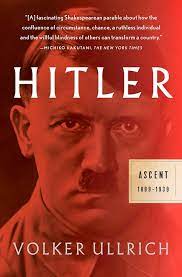
Hitler: Ascent 1889-1939
Even since I wrote the original version of this blog in November, the press has been full of alarming reports of 45’s Hitler-like rhetoric early in 2024: famously his references to vermin and to immigrants poisoning the blood of the American people, both from the original Hitler playbook. And who can forget his “dictator only on the first day,” an alarming recent example of many a truth said in jest?
A two-book series by Volker Ullrich looks first at Hitler’s political rise and then to his decline and defeat in the second World War that he created.The second book is titled Hitler: Downfall: 1939-1945.
While most of us may think we know this history going back to high-school history classes, not to mention numerous histories, novels and films about World War II, Hitler: Ascent is nevertheless a bracing refresher course.
Ullrich charts Hitler’s improbable rise from failed artist to political rabble rouser, to his failed beerhall putsch in the 1920s, his writing of Mein Kampf after a too-short prison sentence and ultimately his stunning January 1933 manoeuvre to become the Chancellor of Germany, which he soon consolidated as combined chancellor/president and ultimately the dictator he is now known to be.
The book also makes clear his goals for creating a Greater Germany at the expense of most of his European neighbours (famously Poland and France), and his plans for impossibly grandiose architectural structures to be implemented by Albert Speer, with Berlin (to be renamed Germania) the centre of what he hoped would be a global dictatorship.
The second Ullrich book — Hitler: Downfall, 1939-1945 — is also well worth reading. The final sentences are particularly relevant to today’s environment:
If Hitler’s “life and career teaches us anything, it is how quickly democracy can be prised from its hinges when political institutions fail and civilizing forces in society are too weak to combat the lure of authoritarianism; how thin the mantle separating civilization and barbarism actually is; and what human beings are capable of when the rule of law and ethical norms are suspended and some people are granted unlimited power over the lives of others.”
Of course, for most of us, reading yet another book (or two) about Adolf Hitler doesn’t usually create undue anxiety, since it all seems to be comfortably in the faraway past. Ancient history, as they say. Continue Reading…
When deciding which ETFs to invest in, follow these criteria for maximum success
Image courtesy TSInetwork.ca
ETFs aim to provide broad market exposure with low cost and our Best ETFs for Canadian Investors advisory covers ETFs like no other publication in North America.
Notably, we recently released our top ETF to buy in 2024 in this newsletter. However, you’ll need to subscribe to find out what that top ETF to buy in 2024 is!
This ETF offers a solid 1.4% yield, while at the same time charging you a very low 0.0945% MER. Going forward, the fund — and its investors — should gain from an expanding U.S. economy. Plus, the ETF’s U.S. dollar exposure provides valuable currency diversification for Canadian investors; that’s a long-term positive.
When it comes to ETFs, we take a close look at the following criteria:
6 Important considerations for choosing ETFs to invest in:
Know how broad the ETF’s stock holdings are, so you can determine its volatility. The broader the ETF, the less volatility it may have. A sector-based ETF, like one that tracks resource stocks, may be more volatile.
Know the economic stability of countries that an international ETF invests in. It’s also worth mentioning that foreign leaders may not be your ally when it comes to passing laws or imposing regulations that can affect your investments
Know the liquidity of ETFs you invest in; look at the volume of shares that trade hands on a daily basis.
Consider buying ETFs in a lump sum rather than with periodic small amounts, so you can cut down on brokerage fees.
ETFs can still be volatile, even with the diversification they offer.
Don’t invest in ETFs that show wide disparities between the stocks they hold and the investments that the sales literature describes. Despite the increased attention for ETFs, many ETF managers continue to describe their investing style in vague (or sometimes misleading) terms.
Meanwhile, rather than using the six criteria above, some investors decide when to buy an ETF using technical analysis.
Technical analysis is a useful tool in deciding when to buy ETFs, but only if you recognize it as one of many tools. Before making any recommendations or transactions in client accounts, I always look at a chart. However, I don’t look at the chart for a prediction of what’s going to happen. I look to see if the pattern on the chart seems to support the view I’ve formed of the stock/ETF based on its finances and other fundamental factors. Continue Reading…
If you had told me in my early twenties that I’d be already planning for retirement before my first major job promotion, I might have laughed it off.
Like many young professionals, I was more concerned with navigating the beginnings of my adult life and my first ‘real’ job than retirement, far in the future.
However, a deep dive into the financial world revealed the concept of ‘Financial Independence’ or ‘Findependence,’ a state where you have sufficient personal wealth to live without having to work actively for basic necessities. Essentially, what it means is that you can retire way earlier than what society considers ‘retirement age’ and enjoy your retirement while you’re still relatively young.
Today, as I share my experiences and the strategies that I’ve learned along the way, I hope to inspire you to start thinking about retirement sooner rather than later. After all, achieving financial independence is not just a goal; it’s a journey that offers profound peace of mind.
Start Early and Embrace the Power of Compound Interest
Let’s talk about the first and most important strategy I adopted; harnessing the power of compound interest.
Compound interest is like a snowball rolling downhill; as it rolls, it picks up more snow, growing bigger and faster. When you save money, compound interest works by earning interest on both your initial amount and the interest already earned.
This means your money grows faster over time. For example, investing just $200 a month starting at age 25 could grow to more than $500,000 by age 65, assuming an average annual return of 7%.
Diversify your Investment Portfolio
Diversification is key to managing risk and maximizing returns over the long term.
I’m going to say it again … DO NOT invest all of your money in one single asset!
My approach has been to spread investments across a variety of asset classes including stocks, bonds, real estate, and even some alternative investments like cryptocurrencies.
But again, if you spread your investments into too many different assets, the profit you might obtain from each investment could become very small and not that significant. So, not too many but also not too few.
Take advantage of Tax-Efficient Accounts
In both Canada and the U.S., you can take full advantage of tax-advantaged retirement accounts. How? Let me elaborate.
In Canada, utilizing the RRSP (Registered Retirement Savings Plan) and the TFSA (Tax-Free Savings Account) can significantly enhance your savings growth by deferring taxes or allowing tax-free gains.
In the U.S., similar benefits are offered through IRAs (Individual Retirement Accounts) and 401(k)s.
The amazing thing about these accounts is that they not only reduce your tax liability but also allow your investments to grow unhindered by taxes, which can make a substantial difference over the decades.
Consider Real Estate Investments
When talking about investments, it’s impossible to leave out investing in Real Estate.
Real estate can be an excellent addition to any retirement strategy, offering both capital appreciation and potential rental income. Continue Reading…


 Posted By

 Posted By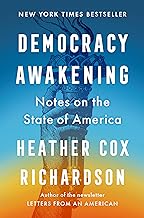
 Posted By