Tag Archives: investing

How to turn a Little Money into a Lot of Money

Alain Guillot in Cascais, Portugal, a rich neighborhood.

By Alain Guillot

Special to Financial Independence Hub

Learning how you can turn a little bit of money into a lot of money is a great way to get your finances on the right track. After all, this can help with everything from paying off debt and credit card bills to growing your savings.

With that in mind, here are some top tips that you can use to do exactly that!


Add money to your savings immediately after getting paid

Don’t wait until the end of the month (i.e., when you have spent all your money) to think about transferring cash into your savings account. Instead, transfer a pre-designated amount of money into your savings account each payday. This way, you are reducing the chances of spending money you’d originally wanted to save!

By regularly adding to your savings account, you put yourself in the best possible position to improve your finances in the long term. When setting up a savings account, make sure you choose one with a great interest rate!

Start investing

Whether you’re going to buy and sell Cyrpto currency or going down a more traditional investment pathway, investing money is a great way to turn a little cash into a lot of cash. This can also be a great way to earn passive income, as a lot of the work is out of your hands once you’ve made the initial investment.

Of course, you should make sure to do plenty of research ahead of time so that you are protecting your best interests as much as possible. Remember, while no investments are risk-free, some are more stable than others, and you should not invest money you cannot afford to lose.

Turn your hobby into a side-hustle

Turning your hobby into a side hustle can also help you to turn your finances around, and could even become a real money-maker over time. While it may not seem that way to begin with, you can monetise just about every hobby. Whether you’re a painter or a writer, you simply need to be willing to put the work in to refine your craft and get your name out there. Continue Reading…

Experts on how investors can use AI tools to invest and plan Retirement

Deposit Photos

Below we canvassed more than 20 retirement experts and financial planners in both Canada and the United States about how they and their clients can use new AI Tools to help investors pick stocks or ETFs and plan their retirement.

These experts were gathered by Featured.com, which has been supplying Findependence Hub with quality content for several years now. It has changed its procedure so that editors like myself can request input on particular topics we think will interest our readership. The sources are all on LinkedIn, as you can see by clicking on their profiles below.

Here’s what we asked:

What is your top recommendation for using AI tools like Grok or ChatGPT to enhance the investing experience or financial planning process for retirement?

Their answers are below, which have been re-ordered by me and in some instances edited down, using an ellipsis (…) to indicate cut passages.

“AI doesn’t replace financial advisors: it elevates investors to think and plan like one.”

One of the most powerful ways investors and retirees can use AI tools like Grok or ChatGPT is to transform information overload into clear, actionable insight not just faster, but smarter. These tools allow individuals to run scenario-based retirement models, stress-test investment ideas against historical data, and translate complex financial language into plain English they can actually act on. What I recommend most is using AI as an always-available financial co-pilot a tool that helps you ask better questions, explore tax and withdrawal strategies, and stay disciplined when emotions run high. Of course, AI should enhance, not replace, professional advice; but when paired with fiduciary guidance, it becomes a force multiplier for better decision-making. The future of retirement planning is not just automated:  it’s augmented, where every person can access institutional-grade research and personalized planning at a fraction of the cost. — Justin Smith, CEO, Contractor+

Use AI for Grunt Work & Routine Analysis

I use AI to handle the grunt work for my finances. It’s great for automating my investment tracking and finding savings opportunities. For my SaaS business, I have ChatGPT audit expenses and run tax simulations. It catches small details I would definitely miss, but I always double-check with my accountant before making any big moves. — Cyrus Partow, CEO, ShipTheDeal

Running a fintech team, I use AI like Grok to track portfolios and summarize complex financial statements. I have it monitoring global trends that might affect Canadian retirement planning. Integrating these tools took some time, but the process is way less stressful now. My rule is to let AI handle the routine analysis while I double-check any critical decisions myself. — Sreekrishnaa Srikanthan, Head of Growth, Finofo

A good way to use AI tools like Grok or ChatGPT for investing and retirement planning is to treat them as helpful guides that explain financial topics, summarize current market information, and assist with planning choices. These tools can make complex financial ideas easier to understand, break down how different investment options work, and help create scenarios based on your retirement goals. You can ask questions to check your knowledge about topics like spreading your investments or tax rules related to retirement accounts, getting clear answers that fit your situation.

These AI tools also provide updated summaries of financial news and alert you to changes that could affect your retirement plans, like new laws or required withdrawals. While they do not replace a human financial advisor’s insight, they give you useful information that helps you talk to professionals with more confidence. Regular use helps keep you informed about your progress and reminds you of important details, making managing your retirement plan easier. — Richard Dalder, Business Development Manager, Tradervue

Use to summarize Market Trends

I work in tech marketing, so I’ve started using ChatGPT to research retirement investments. I’ll have it summarize market trends in telecom or healthcare IT, then cross-check with mainstream financial sources. This saves me hours of initial screening time. My advice is to never act on an AI’s take without fact-checking it first, but it’s a great way to get the lay of the land quickly.  — Andrew Dunn, Vice President of Marketing, Zentro Internet

Use AI as a Personalized Planning Engine

My top recommendation is to use AI as a personalized planning engine. Feed it your retirement goals, income range, expected timeline, and risk comfort. Ask it to build draft scenarios, compare tax-advantaged account strategies, summarize differences between contribution options, or outline the impact of shifting a portion of your portfolio into metals, equities, or fixed income. This gives you a structured starting point before you meet with a licensed advisor.

AI also helps people evaluate items of value they already own. Many Americans keep gold or silver tucked away because they are unsure where to start or who to trust. Ask AI to walk you through how precious metal markets move, how payouts are typically calculated, and what reputable U.S. buyers offer. When people understand what their gold is actually worth, they make smarter decisions about whether to sell, hold, or incorporate it into their retirement strategy.

Using AI this way puts you in control. It speeds up research, cuts through noise, and helps you prepare with confidence before talking to a financial professional. — Brandon Aversano, CEO, The Alloy Market

I work with AI and financial data, and here’s what I’ve found: nobody reads those static retirement planning sheets. We switched to interactive simulations using tools like ChatGPT, letting people play out different investment choices and actually see the results. Engagement went way up. If you’re planning retirement in the U.S. or Canada, this gives you a much better feel for your financial future than any document. — John Cheng, CEO, PlayAbly.AI

Use to plan Retirement and support Financial Literacy

AI tools like Grok and ChatGPT shine brightest in retirement planning when used to simplify complex financial decisions. One powerful approach is creating personalized scenario models: quick projections that show how small adjustments in savings, expenses, or timelines can change long-term outcomes. This turns retirement planning from an abstract, overwhelming challenge into a set of clear, data-driven choices.

Another strong use case is ongoing financial literacy support. AI assistants can distill dense market insights, tax rules, or investment updates into plain-language summaries tailored to an individual’s stage of life. From my experience building learning systems at Edstellar, the real value comes when AI acts as a translator: cutting through jargon and helping people understand the “why” behind decisions. That level of clarity dramatically improves confidence, especially for long-horizon goals like retirement. — Arvind Rongala, CEO, Edstellar

An on-demand Analytical Partner

In my opinion, the best use of AI tools like Grok or ChatGPT when it comes to retirement planning is to enlist it as a personalized, on-demand analytical partner. When you present an AI with your financial data (savings, trajectory, risk profile, retirement age), it has the ability to remit stress testing of your assumptions at a breadth and speed most people will never do for themselves. I have even gone a step further and even asked the AI model to create a variety of long term simulations: good markets, flat markets, inflationary periods, tax shifts, and a few unexpected life surprises here and there. This is when you will feel a much better understanding of what the reality will look like on your retirement path versus static projections.

Where I do think AI can take the planning to another level is the rigor of thinking it is going to force on you. It will find blind spots you didn’t even know to look for, it will challenge your assumptions, it will allow you to show up to your advisor meeting with the potential to be prepared. In the U.S. and Canada—complex situations in retirement planning to say the least, not to mention personal—AI will present a great utility. It won’t replace your financial professional, but it might very well allow you to ask better questions and gain confidence in your decision making. — Kevin Baragona, Founder, Deep AI

AI is NOT a financial advisor

Running a finance team, I’ve found AI like ChatGPT is great for the first pass at retirement planning. It can explain jargon or summarize options way faster than reading a 20-page PDF. But here’s the thing: it’s not a financial advisor. Use it to get the lay of the land, but always talk to a licensed professional before you put any real money in.  — Edward Piazza, President, Titan Funding

Treat AI tools as a Scenario Partner 

One of the most useful ways I’ve leveraged AI tools like ChatGPT and Grok in the investing and retirement-planning process is by treating them as a “scenario partner.” Not a financial advisor, not a spreadsheet replacement, but a way to explore the assumptions behind long-term decisions.

When I was first building Zapiy, I didn’t have the luxury of long planning sessions with advisors. I needed quick clarity on questions like how much I should be contributing, how aggressive my allocations should be, or how different timelines would reshape my retirement targets. What I found was that AI excels at helping you pressure-test your thinking before you make any commitments.

I’d feed ChatGPT a basic profile — income, savings rate, intended retirement age, preferred account types like a Roth IRA or TFSA — and ask it to model a few “what if” versions: what if I increase contributions by five percent, what if I shift to a more conservative allocation in my forties, what if I retire earlier but maintain the same lifestyle? The answers weren’t perfect, but they gave me a clearer sense of how small behavioral changes compound over time.

The real value is that this preparation makes every conversation with a human advisor more productive. You walk in understanding your own priorities, trade-offs, and risk tolerance instead of starting from zero. For many investors in the U.S. and Canada, this hybrid approach — AI for exploration, experts for validation — seems to strike the right balance.

If I had to give one recommendation, it would be this: use AI to sharpen your financial instincts, not to substitute professional judgment. Let it help you see the landscape more clearly so you can plan with confidence and ask better questions when it’s time to make real decisions. — Max Shak, Founder/CEO, Zapiy

Large-language models aren’t crystal balls

With new AI tools, the first impulse is always to ask for a prediction. People want to find the next winning stock or time the market perfectly. I’ve seen this happen for decades with every new wave of technology.

But these large language models aren’t crystal balls. They’re incredibly good at synthesizing information and finding patterns in past data, but they also have a tendency to invent things with absolute confidence.

The hardest part of long-term investing isn’t about finding more data. It’s about managing your own psychology, your biases, and the emotional urge to react to every bit of market noise. This is where AI’s real, and more subtle, value comes in.

My top recommendation is to stop treating these tools like an analyst and start using them as a sparring partner to challenge your own thinking. Instead of asking something simple like, “What are the best Canadian dividend stocks for 2025?”, give it a much more powerful prompt.

Try something like this: “Act as a skeptical financial advisor. My plan is to invest 30% of my retirement portfolio in Canadian dividend stocks for income. Poke holes in this strategy. What are the biggest risks I’m ignoring, what behavioral biases might be at play, and what alternative approaches should I consider?”

What this does is force the AI to act as a “red team” for your own ideas. It uses its vast knowledge of economic principles and market history to find the flaws in your logic before you commit real capital.

This reminds me of a brilliant young engineer I once mentored. He had designed this complex, theoretically perfect trading algorithm and was in love with its elegance. Instead of telling him it would fail, I just spent an hour asking questions.

What happens if this data source is delayed by two seconds? How does the model behave in a flash crash? What’s the single point of failure? He came back two days later and scrapped the whole thing, starting over with a simpler, more resilient design.

The AI can be that patient questioner for you. True financial security isn’t built on finding the perfect answer, but on developing the wisdom to question your own. — Mohammad Haqqani, Founder, Seekario AI Job Search

Use for Stress Testing Assumptions

My top recommendation for using AI tools like Grok or ChatGPT to enhance retirement planning is not to use them for advice, but for stress testing assumptions. Never take financial advice from a large language model. That is a path to financial ruin. Instead, use the AI to aggressively challenge the core numbers you are already getting from a human financial advisor.

The effective use is feeding the AI a series of complex, negative scenarios based on your existing US or Canadian retirement plan. Ask the AI: “If inflation averages 5% over the next ten years, and my portfolio only returns 4%, where does the system fail?” or “If I move to a high-tax state and health care costs double, how does the plan survive?”

This approach works because it turns the AI into a powerful, objective risk auditor. It exposes the hidden vulnerabilities in your human-designed plan without the emotional filter of your advisor. This is the only high-value application: using AI to force clear, honest conversations about competence and failure points in your retirement strategy, ensuring you have the strongest system possible. — Flavia Estrada, Business Owner, Co-Wear LLC

Use to get a head-start on when to retire

Use AI tools like Grok or ChatGPT to get a head start on how to retire. These services will evaluate the state of your finances and most can administer a wide array of retirement and other accounts then recommend investments that fit your criteria. They demystify complicated financial subjects. They can help you with budgeting, monitor progress and shift plans as markets change. Ask questions in a frame where hopefully will receive clear and good advice. Bots driven by AI help save you time, reduce mistakes and change the way you think about money. It makes retirement planning much simpler and more straightforward. — Keith Sant, Founder & CEO, Kind House Buyers Continue Reading…

The simple strategies that set you up for Retirement Success

By Dale Roberts, CutTheCrap Investing, Retirement Club

Special to Financial Independence Hub

More Canadians feel nervous and unsure about retirement. About 60% of Canadians feel they will outlive their money. I’m here to bring good news. There are a few, simple strategies that will set you up for retirement success. If you read the retirement experts, if you watch all of the wonderful Canadian advice-only financial planners’ YouTube videos, you’ll notice they all repeat the same core strategies. It’s a version of going around the internet and back. Eventually you can stop and realize ‘wow, this is easier than I thought’. It is a good feeling when you discover that creating a successful retirement plan is not that difficult, at all.

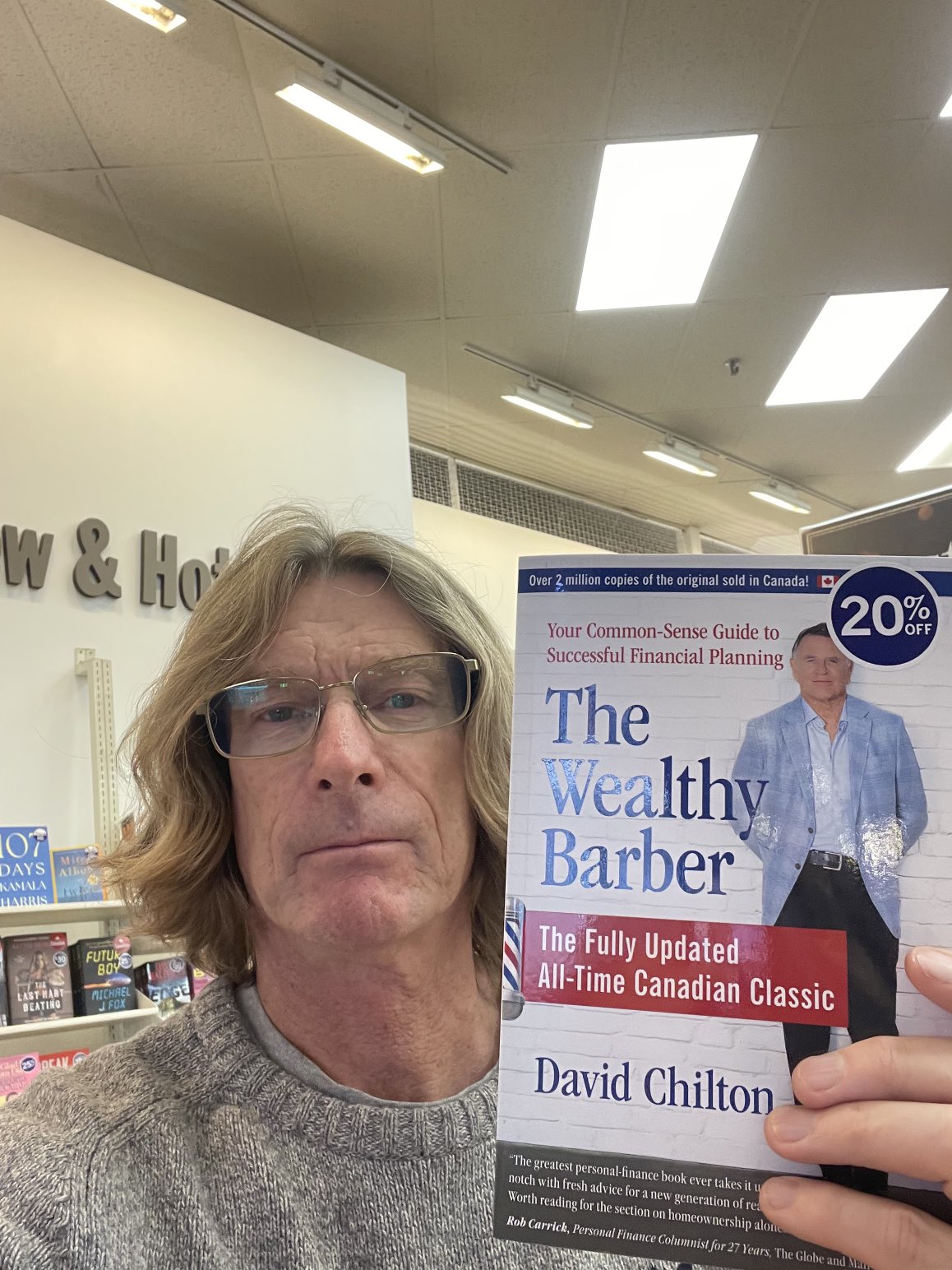
Let’s assume that you’ve done most everything right. You’ve read The Wealthy Barber books. You need to pick up another one, and ask your kids, nieces and nephews to read it, as well.


I condensed my financial planning book down to 1200 words …

Oh look, I just found $888,000 in your coffee.

Dave needed 250 pages this time. 😉

You paid yourself first, you invested successfully, on a regular schedule, in a low-fee manner (stocks and ETFs).

How much do you need to invest to become a millionaire?

You cleared your debt, good debt and bad debt. You got the house purchases right, you got the car purchases right. Perhaps you’re entering retirement with no mortgage and no vehicle payments (not a bad idea). You have or had proper insurance, created a will, etcetera, etcetera. If need be, you took advantage of the Spousal RRSP account.

You’re in very good shape.

The retirement basics

Now on to the simple core strategies that will set you up for a successful retirement. You’ve been a very successful DIY investor in the accumulation stage. You might create your own retirement plan. With some research and the retirement tools available, it is certainly ‘doable’ for most Canadians.

And that’s why we started Retirement Club for Canadians.

If you want more help or a second opinion you can certainly contact an advice-only planner. Yup, those same folks who (many of them) offer the advice for free in blogs and via video channels. You can pay a one-time fee, there’s no need to have an advisor in your pocket every day. You’ll receive conflict-free advice, they are not attached to any poor performing Canadian mutual funds, ha. 😉

Retirement Cash Flow Plan

You’ll use a free-use or very affordable retirement cash flow calculator to discover an optimized, tax-efficient spending strategy. There’s comfort in seeing and knowing that your money is going to last.

Delay CPP and OAS for greater payments

Most Canadians (many planners suggest it’s almost all Canadians) will benefit if they delay The Canada Pension Plan (CPP) and Old Age Security (OAS) payments. From age 65 to age 70 you’ll receive a 42% boost to your CPP payments and a 36% boost to your OAS payments.

The retirement cash flow calculator will show you the way. It’s different for everyone, of course. To enable the delay of those government monies (let’s call those pensionable earnings), you’ll enact the RRSP meltdown strategy.

The RRSP / RRIF meltdown. A Canadian retiree’s greatest hack?

You’ll spend down your RRSP / RRIF in an accelerated fashion early in retirement to provide a bridge as you await those larger pension-like earnings from CPP and OAS.

The flexible cash flow plan

You’ll embrace a variable withdrawal strategy. The retirement cash flow calculator will show you that a flexible spending plan offers a much higher success rate compared to a static or rigid plan. For example, you might set a desired spending range of $90,000 – $100,000 annual after taxes, compared to a rigid $100,000. If we enter a severe recession and market correction you’re OK to spend a little less.

The investment returns and life events will shape your retirement plan over time. We will certainly evaluate the plan every few years.

The U or You-Shaped spending plan

Speaking of life events, out of the gate you might start with a U-shaped retirement spending plan.

Of course, we build the cash flow plan around your life plans, and the life you want to live in retirement. You might embrace and plan for a U-shaped retirement plan.

  • Spend more in the early go-go years
  • Spend less in the mid slow-go years
  • Boost spending in the no-go years

Spend more when you have your health and energy. Be prepared for surprisingly high healthcare and residence costs in the late-in-life stage.

Income splitting, sharing is caring

When you run a retirement calculator you might be shocked by the low-tax environment you are entering if you are ‘with spouse’.

To lower the tax burden you can split employer pensions, RRIF amounts and even CPP in some situations. Income splitting with strategic use of your RRIF, TFSA and Taxable accounts can enable a ridiculously low effective tax rate for many Canadian retirees. Continue Reading…

Simplifying Investing for Financial Independence

By Billy and Akaisha Kaderli

RetireEarlyLifestyle.com

Special to Financial Independence Hub

Now that 2024 is in the books, I thought I would look back financially to where we started this adventure, from January of 1991. The chart below shows the ascent of the S&P 500 Index over our 34 years of retirement.

On our retirement date of January 14, 1991, the S&P 500 index closed at 312.49. It has recently closed over 6000, making over 8% annual gains plus a couple per cent counting dividends. Hard to imagine, right? With all of the market ups and downs, global turmoil, governments coming and going, businesses expanding and failing, and still producing a better than 10% annual return.

But is this really a one-off period and not the norm?

Using a calculator, we can see that the S&P 500 returns for the last 100 years, including dividends, is 10.660%.

 And recalculating for the last fifty years, total return is 11.411%. Clearly there is a trend here.

Does this mean that every year you invest you are going to have a 10% return? No!

But what it does tell us is that over longer time periods the return on your investment is handsomely rewarded.

However, if we look at the returns since the year 2000 they have been sub par at an annualized rate of just 7.817%.

And finally, since the financial crisis in 2009, the S&P 500 Index produced a total return of 14.934% including dividends.

Investing is not rocket science and does not need to be complicated.

Getting your house in order for retirement or financial independence is not that difficult. Many investment professionals, journalists, and commentators seem to complicate the issue to the point that even we can’t understand it. Safe withdrawal rates, stocks, bonds, balanced funds, commodities, options, laddered portfolios, annuities, offshore accounts, hedge funds, life insurance … are you kidding? No wonder some people are confused and scared!

What’s a person to do?

First, you need to recognize your needs. Let’s be realistic here. How much are you spending now? Not how much do you make a year, but how much are you paying out? With today’s computer online tools and spreadsheets, this is a very easy task to compute.

The longer you keep track of current consumption, the more confident you’ll become of your future spending habits.

Once you know your expenditures per year, take a look at where that money is going. If it’s to pay credit card bills or other consumer debt, you need to pay that off first. It’s fine to use credit cards as long as you completely pay off your balance monthly. And stay out of debt. I know this is not easy, but it’s your future, and the money you were paying in interest can now be invested.

With your debts paid off, you can commit to financial independence. Analysts say a guideline of 25 times your annual capital outlay should be enough to sustain your current lifestyle. With the data you’ve collected in your chart, you can easily calculate a target amount.

It’s really that simple. Continue Reading…

Low-Volatility ETFs for a Volatile World

Image courtesy Harvest ETFs

By Ambrose O’Callaghan, Harvest ETFs

(Sponsor Blog)

Canadians in retirement, or those nearing retirement, are faced with unique challenges in the present-day market. Interest rates have moved up from their historic lows since 2022. The benchmark rate for the Bank of Canada (BoC) reached its zenith of 5.00% in July 2023. Economic headwinds forced the hand of the BoC in 2024 and 2025. The benchmark rate now stands at 2.75%, with more rate cuts expected before the end of the year. (The BOC stood pat on April 16th).

This downward trend for interest rates means that investors who want a secure investment while outpacing inflation may have to look beyond GICs and other fixed-income products in this changing climate. Market volatility is another headwind investors are now contending with, spurred on by a new and aggressive U.S. administration.

There was enthusiasm surrounding the broader economy and the stock market coming into 2025. The previous GOP administration cultivated a reputation as a market-friendly one in the late 2010s. That momentum ground to a halt due to the COVID-19 pandemic, but the perception of a market-friendly GOP largely remained.

Investor outlook has soured in the late winter and early spring, in large part due to the uncertainty surrounding U.S. government policy, particularly when it comes to tariffs.

Source: American Association of Individual Investors, Bloomberg, Harvest ETFs. As of March 21, 2025.

This uncertainty has resulted in elevated levels of market volatility. Some names have suffered retracements of 50% or more over the past two months. This market is unique in that the sell-off was not triggered by one significant catalyst. Indeed, it is lingering trade policy uncertainty that is fuelling negative sentiment.

Source: American Association of Individual Investors, CNN (Fear and Greed Index). As of March 20, 2025.

The S&P 500 has dropped 8% in the year-to-date period as of close on Friday, April 10, 2025. A research note from Vanguard recently speculated that volatility was likely to remain due to factors like policy uncertainty, disruptive currents in the economy like artificial intelligence development, and the shifting policy of the Federal Reserve.

Demand for Low Volatility products has increased in this environment. These ETFs offer Canadian retirees a pure low volatility play with exposure to 100% Canadian equities. Moreover, we have introduced Harvest’s trusted option writing strategy to the second Low Volatility ETF. It aims to lower portfolio volatility while generating high monthly cash distributions.

Harvest Low Volatility ETFs:  A smoother Investment Experience

Harvest’s new Low Volatility ETF suite could be appealing to defensive and long-term investors. This approach to equity investing is factor-based, disciplined, outcome-oriented, is designed to mitigate risk, as well as provide long-term growth. Moreover, the suite includes a high-income solution that generates monthly cash distributions through an active covered call writing strategy. Continue Reading…