Tag Archives: investing

5 sensible steps to improve your 2018 game plan

“Your future depends on many things, but mostly on you.”
—Frank Tyger (1929–2011), cartoonist, columnist and humourist

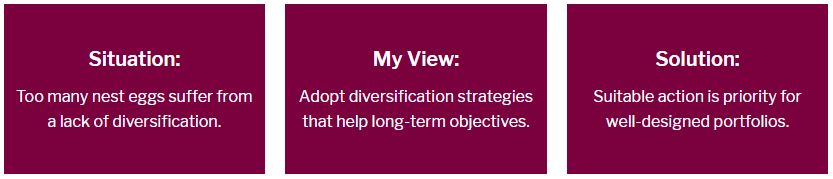
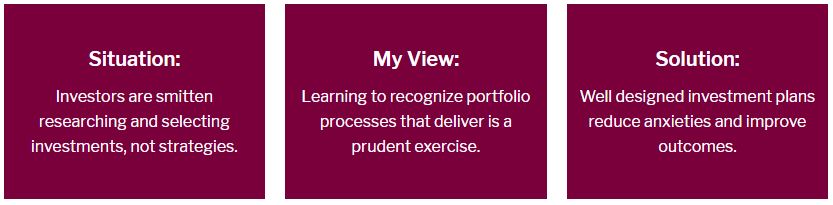
Designing the investment plan for the long haul requires much serious thought. Unfortunately, investors shortchange themselves on two fronts. Firstly, they spend far too much time selecting investments. Secondly, and more important, they spend too little time researching and establishing their investment policies and strategies. The ones that the plans should put into effect to reach personal goals.

In my experience, few investors actually have a sensible game plan that is being followed. Too often, this results in a collection of “flavour of the day” investment selections. Designing the appropriate investment plan is essential, particularly the asset mix targets.

“Understanding the major investment risk factors brings perspective to the plan. The ability, willingness and need to take risks are your top three.”

Happily, this situation is easy to rectify. A new year is about to make its grand entrance. Let us take a breather to contemplate a few improvements.

Stewarding the finances is truly a long journey. If you were my client, I would start with this question, “What is important about investing to your family in 2018 and beyond?

My observation is that many investors opt for preservation of capital. Others focus on portfolio growth. The rest concentrate on the retirement income stream. Lifestyle needs are also high on the pecking order.

I touch on a handful of key steps in designing your game plan:

1.) Retirement prospects

Determine the family’s desired retirement income goal in today’s dollars. Calculate the size of portfolio to reach and sustain the goal. This provides portfolio direction and purpose. Estimate the personal rate of return required to achieve the retirement nest egg ballpark. Then treat that rate of return as the “investment benchmark” for the game plan.

Once the personal rate of return is identified, there is likely no need to incur higher investment risk than necessary. This is especially important to retired investors. Consider all the investment accounts owned as part of the big picture, not in isolation. Revisiting your “asset location” best practices helps fine tune the game plan.

2.) Investor profile

Analyze which type of investor profile suits and feels best. The most familiar ones are labeled as preservation, income, balanced, growth and aggressive. In my experience, investor profiles change infrequently.

The majority of investors are comfortable within 40% to 60% allocated to stocks and the remainder to cash and bond selections. For example, a balanced profile typically allocates about 50% to stocks, 40% to bonds and 10% to cash instruments.

3.) Asset mix 

Asset mix decisions have the greatest impact on portfolio outcomes than any other factor. Studies show that these decisions explain a substantial amount of variations in total portfolio returns. Continue Reading…

10 financial lessons to share with friends

The personal finance community can be a bit of an echo chamber, reinforcing and repeating the same ideas on how to save, invest, and spend our money. This sort of tribalism can be intimidating for outsiders who are eager to learn but afraid to ask questions or know where to start, especially when it comes to more complicated topics.

The truth is not all Canadians are financially savvy. In fact, a Tangerine survey last year found that only half of Canadians consider themselves knowledgeable when it comes to personal finances.

As personal finance enthusiasts it’s our duty to move beyond this little corner of the Internet and start talking to our friends and family about money.

It’s not easy to talk in real-life about what we do with money, how much we save, how much we spend, and the foolish mistakes we make. But these are crucial conversations to help each other deal with money and the complex decisions about it that we all face.

We can start by sharing the kinds of tips and tricks that helped us build lifelong financial habits and skills. It’s what financial literacy is all about, right?

That’s why I was excited to partner with Tangerine for Financial Literacy Month and list my top 10 financial lessons to share with friends:

1.) Avoid credit card debt like the plague

It’s impossible to go through life without incurring at least some debt. I’ve had student loans, credit card debt, a car loan, line of credit, and finally a mortgage.

Carrying a balance on my credit card was by far the most harmful to my finances. Making the minimum monthly payment hardly puts a dent into the balance, and 19 percent interest ensures that balance will continue to grow.

Tackle it with the debt avalanche or debt snowball method, and once it’s gone commit to never again paying one cent of credit card interest.

2.) Track your spending

To free up that additional cash flow you need to understand how much money comes in and how much goes out every month. There’s no other way around it – how else will you know what you can afford to save?

Whether you use a mobile app, budgeting tool, or good old-fashioned Excel spreadsheet, the point is to track every transaction until you can glean some insight into how you spend your money. Use this information to make informed decisions on which areas of your budget you can cut, and where you’d like to direct any additional savings.

Related: Track your habits, save money

3.) Automate your savings

The key to building a life-long habit of saving is to make your contributions automatic and as painless as possible. Pick a day that coincides with your paycheque and set up an automatic transfer into your RRSP, TFSA, savings account, or RESP.

It’s called paying yourself first. Start with as little as $25 and increase it annually, or as your budget allows. This powerful strategy works because it treats your savings goals as ‘mortgage-like’ fixed expenses that come out of your account on a specific day.

4.) Save a percentage of your income

One rule of thumb suggests saving 10 percent of your take home pay for retirement. I say save a percentage – any percentage – of your income as long as you start with something and make it automatic.

One cool trick I learned was to bump up that percentage in tandem with a salary increase each year. So, for example, let’s say you earn $50,000 and saved 5 percent of that amount ($2,500). Then you get a 4 percent raise in the New Year, so now you make $52,000. Well, don’t just continue saving $2,500 – bump that up to $2,600 to stay in-line with your 5 percent savings rate. Continue Reading…

Do men and women have different Savings Habits?

By Danielle Kubes

Special to the Financial Independence Hub

In an online survey about savings habits, financial comparison site Ratehub.ca reports that although Canadian men and women save almost the same amount of money, men have a greater level of confidence in their financial planning.

Inspired by 2014 Statistics Canada data that says Canadian women have lower financial literacy scores than men and were less likely to consider themselves “financially knowledgeable” (31% of women versus 43% of men), Ratehub.ca set out to discover if there truly is a gender divide. 

The company digitally surveyed a random sample of 1,087 Canadians in November, with respondents self-identifying their gender.

“Our survey revealed that while men and women differ in aspects of their financial planning, at the core, their personal finance goals and concerns are nearly identical,” the report says.

Both genders have similar financial goals

Indeed, both genders report almost the exact same financial goals. At the top of list of priorities is retirement, followed by travel and then having an emergency fund.

Both men and women prefer to save and invest in registered accounts, especially the registered retirement savings plan (RRSP) and tax-free savings account (TFSA). What they choose to invest in within these accounts — guaranteed income certificates (GICs), exchange traded funds (ETFs), stocks, or other products — is unknown.

Yet men and women diverge most in how confident they are that they’ll have enough money to retire: less than half of women, 41%, say they’re confident compared to over half of men surveyed, at 56%.

Odd, because both genders save almost the same amount of their salaries, with women saving 26% and men 29%.

The gap could potentially be explained in how able they are to grow those savings through investing. Eighty-five per cent of men invest their money, while only 76% of women do.

Of those that do invest, less women than men self-manage their investments, potentially indicating another worrisome lack of confidence in their financial knowledge.

This is supported by the original Statistics Canada data, which found women were less likely to state they “know enough about investments to choose the right ones that are suitable for their circumstances.”

Confidence doesn’t mean financial knowledge

But does confidence translate to actual financial knowledge? Apparently not. When Statistics Canada quizzed Canadians who rated themselves financially literate, one in every three women failed, while one in every four men failed. Continue Reading…

Large taxable foreign portfolio? Watch $100K and $250K thresholds for CRA’s T1135 form

If you’re a Canadian investor with a large taxable foreign portfolio, you need to be aware of your cost base, since exceeding $100,000 of so-called Specified Foreign Property (SFP) has to be reported to the Canada Revenue Agency.

This is examined in my (monthly) High-Net Worth column for the Globe & Mail Report on Business which was published online on Friday and was in the physical paper Wednesday, Nov. 15. You may be able to retrieve it by clicking on the highlighted headline: Pay Close Attention to Your Foreign Assets to Avoid Tax Troubles. (Depending on how often you access the site, access may be restricted to subscribers. I’ve summarized the main points below.)

If you file your own taxes, you may have noticed an innocuous looking “box” you may or may not tick each year that ask whether you own “Specified Foreign Property.” If you have a cost base of more than $100,000 of SPF you have to tick that box and fill out a CRA form called the T1135. For most Canadian investors the relevant investments will probably consist primarily of individual US stocks, ADRs and/or foreign equity ETFs trading on US and other foreign stock exchanges.

There is also a higher threshold of $250,000 you also should be aware of because this entails even more detailed reporting and paperwork, and the article suggests you may wish to avoid reaching that higher threshold. The $100,000 and $200,000 thresholds are per individual, not household, and again, it’s based on cost base not current market value.

Failure to comply can entail serious penalties.

How to stay below the threshold and still have foreign content

If you would rather not deal with more CRA paperwork and capital gains hassles, I’d argue you should try to stay below the $100,000 threshold, in which case you don’t have to tick the box on your tax return. Continue Reading…

Paycheque to paycheque: the fate of half of Canada’s employees

Living paycheque to paycheque? You’re hardly alone. As my latest Financial Post blog reprises today, almost half of Canadian workers (47%) told the Canadian Payroll Association’s 2017 survey that they’d find it hard to meet their financial obligations if their pay cheque were delayed by even a single week.

You can find the full blog by clicking on the highlighted headline here: Nearly half of Canadians would face a financial crunch if paycheque delayed by even a week, survey shows. The  article also appears in the Thursday print edition, page FP5, under the headline Nearly half of Canadians walk financial tightrope.

As I point out at the end of the FP piece, there’s some irony in that the way out of this savings conundrum is to make an effort to save paycheque by paycheque: a strategy the CPA and other financial experts generally term “Pay Yourself First.”

That means using your financial institution’s pre-authorized chequing arrangements (PACs) to automatically divert 10% of net pay into savings the moment a paycheque hits your bank account. Just like income taxes taken off “at source,” the idea is that you won’t miss what you don’t actually receive.

Pay Yourself First

Continue Reading…