Tag Archives: TFSA

Duking it out: The RRSP vs TFSA

By Brandon Hill, CFP

Special to the Financial Independence Hub

I’ll never forget when I was growing up hearing my parents talking about “buying RSPs” (I got excited about saving money. I know… I’m a weirdo).

In my mind, they were this magical investment that people bought so they could multiply their money to one day retire. This term, “buying RSPs” is still used today; however, I think it adds to the confusion of what a RRSP really is.

I’m here to explain in plain English the difference between the RRSP (Registered Retirement Savings Plan) and the TFSA (Tax Free Savings Account).

What are they?

The best way to think of an RRSP or a TFSA is simply as an account that has special tax benefits. Just like your chequing account, you are able to deposit and withdraw money into a RRSP or TFSA; however, the special tax benefits make it slightly more complicated.

RRSP: When you deposit money into an RRSP, you’re allowed to deduct this amount on your tax return, saving you tax and increasing your refund. However, when you withdraw money from your RRSP, you have to pay tax on this amount.

TFSA: When you deposit money into a TFSA you do not get a tax deduction, although when you withdraw from your TFSA, you do not have to pay any tax.

All growth within an RRSP and TFSA is tax free.  

You can invest in many different ways inside the RRSP or TFSA, including: stocks, bonds, GIC’s, Mutual Funds, ETFs, and other more advanced options.


Continue Reading…

Top secret tax saving tips for shrewd investors

By David J. Rotfleisch

Special to the Financial Independence Hub

While the most common tax savings tips such as contributing to an RRSP are well publicized, there are tricks that are not well known except by tax professionals.

So, here are obscure ways that we, as long-time Canadian tax lawyers, recommend for you, or people you know, to save on your taxes. After all, you have to make it to spend it.

Reduce Source Deduction Amounts

If you have income tax deductions that result in a large tax refund when you file your 2016 income tax return, then you can submit a form TD-1 form early in 2017 to reduce the amount of source deductions withheld by your employer from each subsequent paycheque.

This will mean money in your pocket every week instead of in 2018 when you file your 2017 tax return.

First Time Donor Tax Credit

2017 is the last year that you can benefit from an additional 25% tax credit for charitable donations made by a Canadian taxpayer who has never claimed a charitable donation in the past. So, if you’ve never made a charitable donation this is your chance to top it off at CRA’s expense.

Medical Expense claims for Spouse or Dependent

You can claim all medical expenses paid not only for yourself but also for your spouse and dependents, even if they have their own income and file their own tax returns.

Continue Reading…

Raising Retirement Age: Can the Liberals find a way in upcoming Budget to tempt us to wait until 67 for OAS & CPP?

PM Trudeau reversed the Conservatives’ plan to raise OAS from 65 to 67, making it harder to follow advice to raise the Retirement Age going forward.

My latest Motley Fool blog looks at whether the Liberal Government intends to implement any suggestions by its Economic Advisory Council about raising the Retirement Age. See Will the Looming Federal Budget Try to Slip by Another Senior’s Benefit?

Of course, as one source says, the Government officially doesn’t want to raise the age of OAS and CPP eligibility from the current 65 to 67. After all, if it wanted to do that, all it had to do was leave in place the Harper administration’s policy that would have done just that for Old Age Security, albeit phased in gradually by the year 2023.

Even so, they must be sorely tempted, considering the fact that so many other Governments around the world are raising the retirement age to accommodate rising life expectancy patterns. The number of OAS recipients is expected to double over the next two decades, as more and more Baby Boomers take the plunge into Retirement, or at least Semi-Retirement.

Still, there’s more than one way to skin a cat. As I point out in the blog, anything as radical as raising the retirement age needs to be implemented gradually so as not to wreck the well-laid plans of financial advisors and clients who may have been counting on the rules as they now exist.

Delaying retirement age should be voluntary, not compelled by Government

Continue Reading…

How TFSAs can aid your Victory Lap

depositphotos_43073977_xs-300x295My latest MoneySense Retired Money column on TFSAs is now online. You can read the whole thing by clicking on this highlighted link: How retirees can use TFSAs to save on tax.

I’m a huge fan of The Tax-free Savings Account or TFSA both for young people and for seniors, and everyone between.

It’s the single most powerful investment tax shelter available to Canadian investors. (For any American readers, the TFSA is roughly the equivalent of Roth IRAs).

So if you’re a member of the much-touted “Millennial” generation, you should move heaven or earth to maximize the annual $5,500 contribution as soon as you turn 18 – even if you have to solicit a “matching” contribution from your parents.

If you’ve not yet opened up a TFSA,  as of 2017 the cumulative TFSA room built up since the plan’s debut in 2009 will be $52,000. As I say in the column, for millennials the combination of the newly expanded Canada Pension Plan and a TFSA maximized from age 18 on means that by the time they are old enough to read the Retired Money column, they will be well positioned for retirement.

While late for Boomers, TFSAs can still be a boon in retirement

But as this particular MoneySense column has been dubbed “Retired Money,” the focus is on what the TFSA can do for near-retirees and seniors already retired. When it first came out in 2009, we aging baby boomers lamented the fact the TFSA hadn’t been available when we we were just starting out.

Continue Reading…

Federal Budget 2016: don’t expect much relief for personal finances or retirement

image
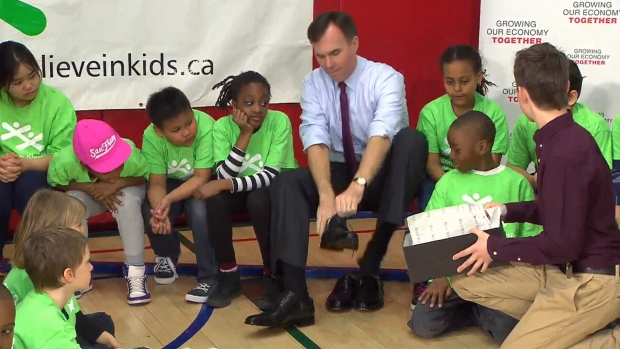
Federal finance minister Bill Morneau selects Canadian-designed shoes for upcoming federal budget

Here’s my latest column in the Financial Post, which provides a look ahead to the federal budget, which will go live at 4 pm Tuesday afternoon.

You can find the column here by clicking on this headline: Why Tuesday’s budget may not hold much good news for your personal finances. It’s also in the print edition of today’s paper.

Here is info on the media lockup, which starts at 9:30 am.

Once the floodgates open on or shortly after 4 pm Tuesday, you should be able to get access to the budget by clicking on the Department of Finance website here. We will update this site as necessary and also watch my Twitter feed @JonChevreau, as we disseminate coverage once available. This feed also shows up on the right side of the Hub’s main page.