All posts by Financial Independence Hub

Making investing better for every type of trader

New QuestMobile app from Questrade

By Scarlett Swain, Director, Investment Products at Questrade

Special to the Financial Independence Hub

It’s no secret that over the past few years more and more people have started trading and investing. Maybe it’s more time on their hands, maybe they’re becoming more focused on their future and want their money to work harder for them. Regardless of the reason, at Questrade we’ve seen a real increase in the influx of new customers and have heard loud and clear from them that they need trading to be less complex. This is their money, their future, and they don’t want to make mistakes while they learn or want a busy platform full of things they don’t use.

On the other hand, we’ve also heard very experienced and active traders tell us, they want more. More order types, more tools, greater speed, and they want it all in the mobile app. So, we dove deep into customer feedback and conducted a ton of research, through all this emerged themes which created the crystal clear path we’re on today: we need a platform and mobile experience for customers that only want to do basic investing AND we need an even more sophisticated mobile experience for our advanced and option trading customers. One tool could not do it all, so we got to work on building three.

Two new platforms launched

Two of our three new platforms launched on September 27: the new Questrade Trading, a web-based platform specifically designed for those who just opened their first self-directed account and also for people who want to stick to the basics of investing, and its mobile companion, QuestMobile. Screen by screen, we worked to implement the features that gave investors the information they needed to make good decisions. Continue Reading…

Why we took Social Security at age 62

By Billy and Akaisha Kaderli

Special to the Financial Independence Hub

We decided to take Social Security at age 62. We know there are as many ways to consider this decision as there are days in a year. And many experts advise against taking social security “early” so that you get a bigger check at full retirement age. It is hard to argue against that.

We have always lived an unconventional lifestyle and the fact that so many experts agree on waiting for payment gives us pause for thought. Here is our logic.

First, the S&P 500 index has averaged over 8% per year, plus dividends, since we retired in 1991. If we take social security early and invest it, we won’t be losing the 8% per year the experts claim is the annual increase of waiting – although one is guaranteed and the other is not. Maybe the markets will trend sideways or go down or even up, no one knows. For the last 30 years we have lived off of our investments through up and down markets, so investing the monthly check is definitely an option. More likely, we will just not spend our stash and look for opportunities in the markets as our cash positions grow. Plus we have control of the money at this point, adding to our net worth.

Next let’s look at some numbers

For easy math, say at 62 you are going to receive $1000.00 per month in benefits, but if you wait until you are 66, your payment will be $1360 ($1000 x 8% for the four years you have waited). Sounds great, right? However, you would have missed receiving $48,000 dollars in payments from the previous 48 months. Continue Reading…

Should you own a lot or a little in Canadian stocks?

By Steve Lowrie, CFA

Special to the Financial Independence Hub

It’s not easy being a Canadian investor, is it?  Given recent elections, we’re unlikely to see a pro-business surge anytime soon … to say the least. (It’s not investable info, but did you notice I happened to accurately forecast this?)

Plus, we’ve had to watch other countries’ stock markets beat the pants off our own during the past decade.  U.S. glamour or FAANG stocks (Facebook, Amazon, Apple, Netflix and Google) have been living especially fat and larger than life lately.

It’s no wonder I’ve been fielding questions about how to best allocate among the global equity markets these days.  How much is too much in Canada? Should we just dump everything into the U.S. market?  Is diversification dead?

My short answers are:  It depends. No. And, I wouldn’t bet on it. This is an admittedly incomplete response, so let’s consider four points and counterpoints to fill in the blanks.

1.) Canada’s market cap is tiny, and concentrated

While we’re rich in land mass, Canada represents just 3% of the world’s stock market capitalization. Plus, that 3% isn’t very well-diversified, with relatively heavy exposures to banking and natural resources.

2.) Canadians and everyone else have a home bias

Home bias means we prefer familiar objects close to home.  If (like me) you’re rooting for your kid’s hockey team, cheer on. But in the markets, this tempts most investors – and many financial professionals – to pile too heavily into their own countries’ stocks.

For example, despite recent underperformance, the typical Canadian still allocates 60% of their investments to Canadian stocks.  The Behavioral Investor author Daniel Crosby reports that U.S. investors typically allocate 90% of their holdings to the U.S. market; U.K. investors allocate about 80% of their holdings to the U.K.  No matter where you roam, home bias is right at home.

3.) Markets are unpredictable

Before you ship all your investments across the border or overseas, remember:  Markets can turn on you, abruptly and without warning.   While it might seem like a distant memory, it should be noted, from 1999–2009, Canadian stocks (S&P/TSX composite) returned 7.7% per year, whereas U.S. stocks (S&P 500 in Cdn$) seemed cursed in the new millennium, delivering  –2.5% per year … yes that is a negative return for 10 years! Continue Reading…

Our early withdrawal strategies: How to keep more money

By Bob Lai, Tawcan

Special to the Financial Independence Hub

As many of you know, we have been busy adding new capital and buying dividend paying stocks over the last few years. During the COVID-19-caused short recession last year, our portfolio was down as much as $250,000. We didn’t panic and liquidate our portfolio. Instead, we saw the recession as an opportunity to buy discounted stocks and we added $115k to our dividend portfolio.

I’m a believer in time in the market, rather than timing the market. Therefore, we try to be fully invested in the stock market as much as we can. We use our monthly savings to add new shares and take advantage of any downturns. We also strategically move any long term savings for spending account to buy dividend paying stocks whenever there are enticing buying opportunities. We then “put back” money in the LTSS account over time.

Although we are in the accumulation phase of our financial independence retire early journey, I have done a few calculations and scenarios to plan out our early withdrawal strategies and plans. But they are what the names suggested – strategies and plans. Nothing is written in stone and things can certainly change by the time we decide to live off our dividend portfolio.

Recently Mark from My Own Advisor appeared on Explore FI Canada to discuss FI Drawdown Strategies. Since Mark is a few years ahead on the FIRE journey than us, or FIWOOT (Financial Independence Working on Own Terms) as Mark calls it, it was great to hear about what Mark is thinking and the considerations he has.

Speaking of living off dividends and early withdrawal strategies, it was really awesome to be able to pick on Reader B’s brain on this topic:

After listening to the Explore FI Canada episode, I thought about our early withdrawal strategies. Are there effective ways to minimize taxes so we get to keep more money in our pocket?

For Canadians, we can receive CPP and OAS when at age 65. I have not included CPP and OAS in our FIRE number calculation because I always considered them as the extra income and didn’t want to rely on them during retirement. Having said that, are there things we can do to receive the full CPP and OAS amounts without clawbacks?

A few things to note before I go any further…

  1. We plan to live off dividends and only sell our principal if we absolutely have to.
  2. We plan to pass down our portfolio to our kids, future generations, and leave a lasting legacy.
  3. Ideally it’d be great to be able to pass down our portfolio to future generations. But we also don’t want them to take money for granted. Therefore, we are also not against the idea of not passing anything to future generations.
  4. I’d love to write a million dollar cheque and donate it to a charity.

Our Investment Accounts

Our dividend portfolio comprises the following accounts:

  • 2x RRSP
  • 2x TFSA
  • 2x taxable accounts

I also have an RRSP account through work. Every year I have been moving my contribution portion to my self-directed RRSP at Questrade. I can’t touch my employer’s contribution portion until I leave the company.

Neither Mrs. T nor I have work pensions so that may make the math slightly simpler.

The only complication I need to consider is what to do with income from this blog. This blog now makes a small amount of money. For tax efficiency, it might make sense to consider incorporating. Many bloggers I know have gone down this route for tax efficiency reasons. This is something I will have to consult with a tax specialist in the near future and crunch out some numbers to see what makes the most sense.

Shortcomings of RRSP

As the name suggests, the RRSP is a great retirement savings vehicle. But there are three important caveats people often skim over:

  1. RRSPs must be matured by December 31 of the year you turn 71. You can convert an RRSP into a RRIF or purchase an annuity. Most people convert their RRPs into RRIFs.
  2. A RRIF has a mandatory minimum withdrawal rate each year.
  3. The minimum withdrawal rate increases each year (5.4% at age 72 and jumps to 6.82% at age 80).
  4. RRSP and RRIF withdrawals are counted as normal income and taxed at your marginal tax rate.

Personally, I don’t like the restrictive nature of the RRIF. Imagine having $500,000 in your RRIF and having to withdraw a minimum of $27,000 at 72. If your RRSP/RRIF has a bigger value, it means you are forced to make a bigger withdrawal!

By plugging the amount currently in our RRSPs into a simple RRSP compound calculator, assuming no more contributions and an annualized return of 7%, I discovered that we’d end up with more than $2M in each of our RRSP!

Holy moly!

At 5.4% minimum withdrawal rate, that means we’d have to withdraw at least $108,0000 each. This would then put both of us into the third federal tax bracket. More importantly, we’d get hit with OAS clawback (more on that shortly).

Therefore, it makes sense for Mrs. T and me to consider early RRSP withdrawals and perhaps consider collapsing our RRSP before we turn 71.

CPP Clawbacks

Contrary to many Canadian beliefs, there are no clawbacks for CPP.

You pay into the Canada Pension Plan (CPP) with your paycheques. Each year that you contribute to the CPP will increase your retirement income. Therefore, the amount of CPP you will receive at 65 depends on your contributions during your working life.

In 2021, the maximum CPP benefit at age 65 is $14,445.00 annually or $1203.75 monthly. The CPP benefit is taxed at your marginal tax rate.

But not everyone will get the maximum CPP amount since it is based on how long and how much you pay into the CPP.

  • You must contribute to CPP for at least 83% of the CPP eligible contribution time to get the maximum benefit. You are eligible to contribute to CPP from 18 to 65, so 83% would mean you need to contribute to CPP for at least 39 years.
  • In addition, you also need to contribute CPP’s yearly maximum pensionable earnings (YMPE) for 39 years to qualify for the maximum CPP amount. For 2021, the YMPE is $61,600.

Not many people can meet these two requirements, hence the average CPP payment received in 2020 was $689.17 per month or $8,270.04 annually.

Since we plan to “retire early” eventually, it’s unlikely that we will qualify for the maximum CPP benefits.

OAS Clawbacks

Unlike the CPP, there are clawbacks or a pension recovery tax for OAS. If your income is over a certain level, the OAS payments are reduced by 15% for every dollar of net income above the threshold. In 2021, the OAS clawback threshold starts at $79,845 and maxes at $129,260. So, if you’re making over $79,845, you will receive reduced OAS payments. And if you’re lucky enough to have a retirement income of over $129,260, you get $0 OAS payments. Continue Reading…

Why would anyone own bonds now?


By Mark Seed, myownadvisor

Special to the Financial Independence Hub

Many investors have been saying for years that rates can only go up from here, rates can only go one direction, rates will eventually go up. Will they? This begs a question I get from readers from time to time given bonds pay such lousy interest:

Why would anyone own bonds now?

Today’s post shares a few reasons to own bonds including some counter-arguments why I don’t own any – at least right now.

Why own bonds?

Personally, I believe the main role of fixed income in your portfolio is essentially safety – not the investment returns and certainly not the cash flow needs. In other words, if all else fails per se, if/when stocks crash, then bonds should historically speaking offer a flight to safety for preserving principal.

So, they are there for diversification purposes.

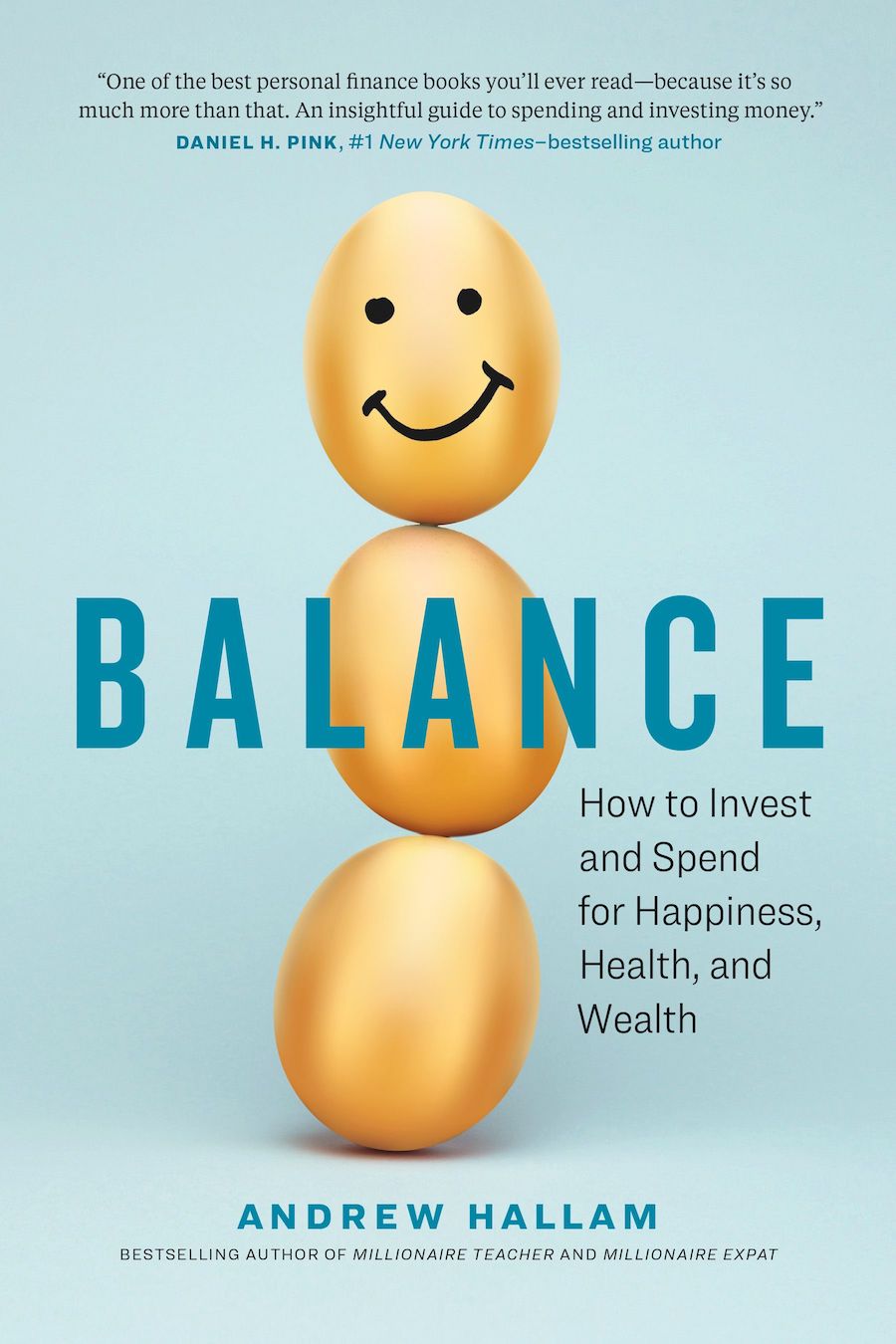
As Andrew Hallam, Millionaire Teacher has so kindly put it over the years: when stocks fall hard, bonds act like parachutes for your portfolio. Bonds might not always rise when the equity markets drop. But broad bond market indexes don’t crash like stocks do.

Is that enough to own bonds in your portfolio? Maybe.

Here are a few reasons to own bonds in no particular order.

1. Bonds as a hedge for stock market volatility.

Call them parachutes or anchors or use any other metaphor you wish but bonds tend to do their jobs when stock markets tank. More importantly maybe, they provide a psychological edge to avoid tinkering with your portfolio and selling any stocks/equities when stock markets correct.

Many investors, dare I say most investors (?), have a hard time with market volatility. I’m certainly not immune to it. The ups and downs, especially the big market downs, can be gut-wrenching to live through. Owning bonds in your portfolio can help bring the overall portfolio volatility down a few notches through prudent asset allocation. It is however not always necessary to own bonds.

When you own bonds, my experience has been for the last 20+ years you are trading away long-term, more positive, generous equity returns for accepting less risk and less long-term returns.

If you don’t want to take my word for it, check out this page courtesy of Vanguard when it comes to long-term returns. Check out the “worst year” stats as well.

Why would anyone own bonds - bias to bonds Vanguard Canada

Sure, a 40/60 stock/bond portfolio has hardly done poorly for the last century. But overall, you are absolutely giving up (historically speaking) returns on the table when you own more fixed income in your portfolio. Will the future be the same?

Why would anyone own bonds - bias to stocks Vanguard Canada

Personally, I’ve tried to learn to live with stocks as much as possible for as long as possible. Depending on your goals, taking into account long-term potential reward against short-term price fluctuations, some investors may not be comfortable with a 100% equity or near-equity portfolio. That’s A-OK. If that’s your case, some bonds in your asset accumulation years could be right for you.

2. Bonds can be used to rebalance your portfolio. 

Even though I’m not a huge fan of bonds myself, this might be one of the most compelling reasons to own bonds at any age.

When the stock market sells off, that’s ideally the time you want to dive in and buy your stocks on sale. However, unless you are very comfortable with leveraged investing – you need money to buy such stocks on sale. That can come from cash savings for sure but for many investors, that can also come from bonds within your portfolio.

Mind you, some levels of diversification don’t work very well if you don’t have any asset allocation targets in mind. The process of rebalancing is a systematic way to buy low and sell high; sell your bonds when markets are tanking and sell-off some stocks when markets are euphoric.

In our portfolio, because we’ve largely learned to live with stocks, we tend to buy more stocks when they come on sale and/or we buy stocks periodically during the year to increase our equity holdings. More specifically, to help me gravitate away from my bias to Canadian dividend paying stocks for income we’re owning more low-cost U.S. ETFs for extra growth over time.

Check out some changes I’ve made to our portfolio to increase equity diversification.

Instead of selling bonds to buy our stocks, I use cash savings. I tend to save up cash during the year and make a few lump-sum stock or equity ETF purchases instead.

I will continue to use cash savings to make more equity purchases as I enter semi-retirement.

Consider keeping this much cash on hand yourself – in your asset accumulation years or retirement years.

3. Bonds can be used to spend cash when essential. 

Can you have too much money saved? Too much money in your RRSP?

For most people, I highly doubt it.  Continue Reading…

Powered by the Financial Independence Hub.
© 2013-2026 All Rights Reserved.
Financial Independence Hub Logo

Sign up for our Daily Digest E-Mail!

Get daily updates from the FindependenceHub.com straight to your inbox.